



Mobile app development is shaping the way businesses connect with people every day. Most are surprised by just how enormous this shift is and the fact that 299 billion mobile app downloads are expected globally by 2023 grabs attention fast. Yet building an app goes far beyond flashy screens because the real power comes from how these apps transform the ways companies reach and engage their audiences directly.
Table of Contents
- What Is Mobile App Development And Why Is It Important?
- Key Concepts And Technologies In Mobile App Development
- The Mobile App Development Process: What To Know
- Common Platforms And Their Impact On Development Decisions
- Real-World Applications: How Businesses Leverage Mobile Apps
Quick Summary
| Takeaway | Explanation |
|---|---|
| Mobile app development enhances customer engagement. | Businesses use apps to build direct connections with users, improving interaction and satisfaction. |
| Strategic planning is crucial for successful apps. | Understanding user needs and market conditions helps define clear objectives and tailor app functionality. |
| Cross-platform frameworks save time and resources. | Frameworks like React Native allow development for multiple platforms simultaneously, reducing workload and cost. |
| Measuring app performance drives business growth. | Tracking metrics like user engagement allows businesses to refine strategies and improve customer retention. |
| Robust architecture is essential for app success. | Effective mobile app architecture ensures scalability, performance, and a seamless user experience, vital for user retention. |
What is Mobile App Development and Why Is It Important?
Mobile app development represents a critical digital strategy for businesses seeking growth in the modern technological ecosystem. Mobile app development services transform innovative ideas into functional digital experiences that connect companies directly with their target audiences.
Understanding Mobile App Development
Mobile app development is the intricate process of creating software applications specifically designed to run on mobile devices like smartphones, tablets, and digital assistants. This specialized field involves designing, coding, testing, and deploying applications across various mobile platforms such as iOS and Android. Developers utilize programming languages like Swift, Kotlin, and Java to build applications that provide seamless user experiences.
Key characteristics of mobile app development include:
- Creating platform-specific or cross-platform applications
- Designing intuitive user interfaces
- Implementing robust functionality
- Ensuring smooth performance across different device types
The Strategic Importance of Mobile Applications
The strategic significance of mobile app development cannot be overstated. According to Statista, global mobile app downloads are projected to reach 299 billion by 2023, underscoring the immense potential for businesses to engage customers through digital platforms.
Businesses leverage mobile applications to:
- Enhance customer engagement
- Create direct marketing channels
- Improve brand visibility
- Generate additional revenue streams
- Provide personalized user experiences
By investing in mobile app development, companies can transform traditional business models, offering innovative solutions that meet evolving consumer expectations in an increasingly digital world.
Key Concepts and Technologies in Mobile App Development
Mobile app development encompasses a complex ecosystem of technologies, programming languages, and design principles that enable businesses to create powerful digital solutions. Mobile app development requires understanding multiple interconnected technological components that work together to deliver seamless user experiences.
See exactly where your profile stands right now.
Our GBP audit shows your current rank position across your market, how your profile completeness scores against competitors, and the specific gaps holding you back from the Map Pack.
Programming Languages and Frameworks
Developers utilize specialized programming languages and frameworks tailored to different mobile platforms. For iOS applications, Swift and Objective-C remain primary languages, while Android development predominantly uses Kotlin and Java. Cross-platform frameworks like React Native and Flutter have emerged, allowing developers to create applications that function across multiple operating systems with a single codebase.
Key programming technologies include:
- Native development languages (Swift, Kotlin)
- Cross-platform frameworks
- Integrated development environments (IDEs)
- Version control systems
Mobile App Architecture and Design
Successful mobile applications rely on robust architectural principles that ensure performance, scalability, and user engagement. Modern mobile app architecture emphasizes modular design, separating concerns between user interface, business logic, and data management. Developers implement design patterns like Model-View-Controller (MVC) or Model-View-ViewModel (MVVM) to create structured, maintainable code.
According to Gartner Research, effective mobile app architecture considers:
- Responsive user interface design
- Efficient data handling
- Performance optimization
- Security implementation
- Scalability for future updates
By understanding these fundamental technologies and architectural principles, businesses can develop mobile applications that not only meet current user expectations but also provide a foundation for future digital innovation.
The Mobile App Development Process: What to Know
The mobile app development process is a strategic journey that transforms innovative concepts into functional digital experiences. Automotive app development illustrates how specialized industries leverage technology to create targeted solutions that address specific business needs.
Strategic Planning and Conceptualization
Successful mobile app development begins with comprehensive strategic planning. This initial phase involves deeply understanding user requirements, market dynamics, and specific business objectives. Developers conduct thorough market research, analyze competitor offerings, and define clear project goals that align with organizational strategies.
Key strategic planning considerations include:
- Identifying target user demographics
- Analyzing market competition
- Defining unique value propositions
- Establishing performance metrics
- Determining monetization strategies
Technical Design and Development Workflow
The technical implementation of mobile applications follows a structured workflow that transforms conceptual designs into functional software. Developers utilize iterative development methodologies like Agile, which emphasize continuous improvement and flexible adaptation throughout the project lifecycle.
According to Forrester Research, effective development workflows typically encompass:
- Prototype creation
- User interface design
- Backend infrastructure development
- Frontend implementation
- Comprehensive testing protocols
By maintaining a disciplined approach to mobile app development, businesses can create robust digital solutions that deliver exceptional user experiences and drive meaningful technological innovation. Integrating DevOps services into this workflow ensures seamless collaboration between development and operations teams, enabling faster deployments, automated testing, and continuous delivery of high-quality mobile applications.
Common Platforms and Their Impact on Development Decisions
Mobile app development platforms represent critical technological ecosystems that shape how businesses create digital solutions. Mobile app development requires strategic platform selection that aligns with project goals, technical requirements, and target audience expectations.
Native Platform Landscapes
Native platforms like iOS and Android dominate the mobile development landscape, each offering unique development environments and programming languages. iOS utilizes Swift and Objective-C within Xcode, while Android developers leverage Kotlin and Java through Android Studio. These platforms provide developers with specialized tools, robust APIs, and platform-specific design guidelines that optimize application performance and user experience.
Key native platform characteristics include:
- Platform-specific programming languages
- Integrated development environments
- Unique design and interaction guidelines
- Direct hardware and system integration
- Optimized performance capabilities
Cross Platform Development Frameworks
Cross-platform frameworks have revolutionized mobile app development by enabling developers to create applications that function across multiple operating systems using a single codebase. Frameworks like React Native, Flutter, and Xamarin provide developers with powerful tools to build versatile applications that reduce development time and maintenance complexity.
According to Gartner Research, effective cross-platform development considerations include:
- Code reusability
- Performance optimization
- User interface consistency
- Native feature integration
- Cost-effective development strategies
By understanding the strengths and limitations of various mobile development platforms, businesses can make informed decisions that balance technical requirements, budget constraints, and user experience goals.
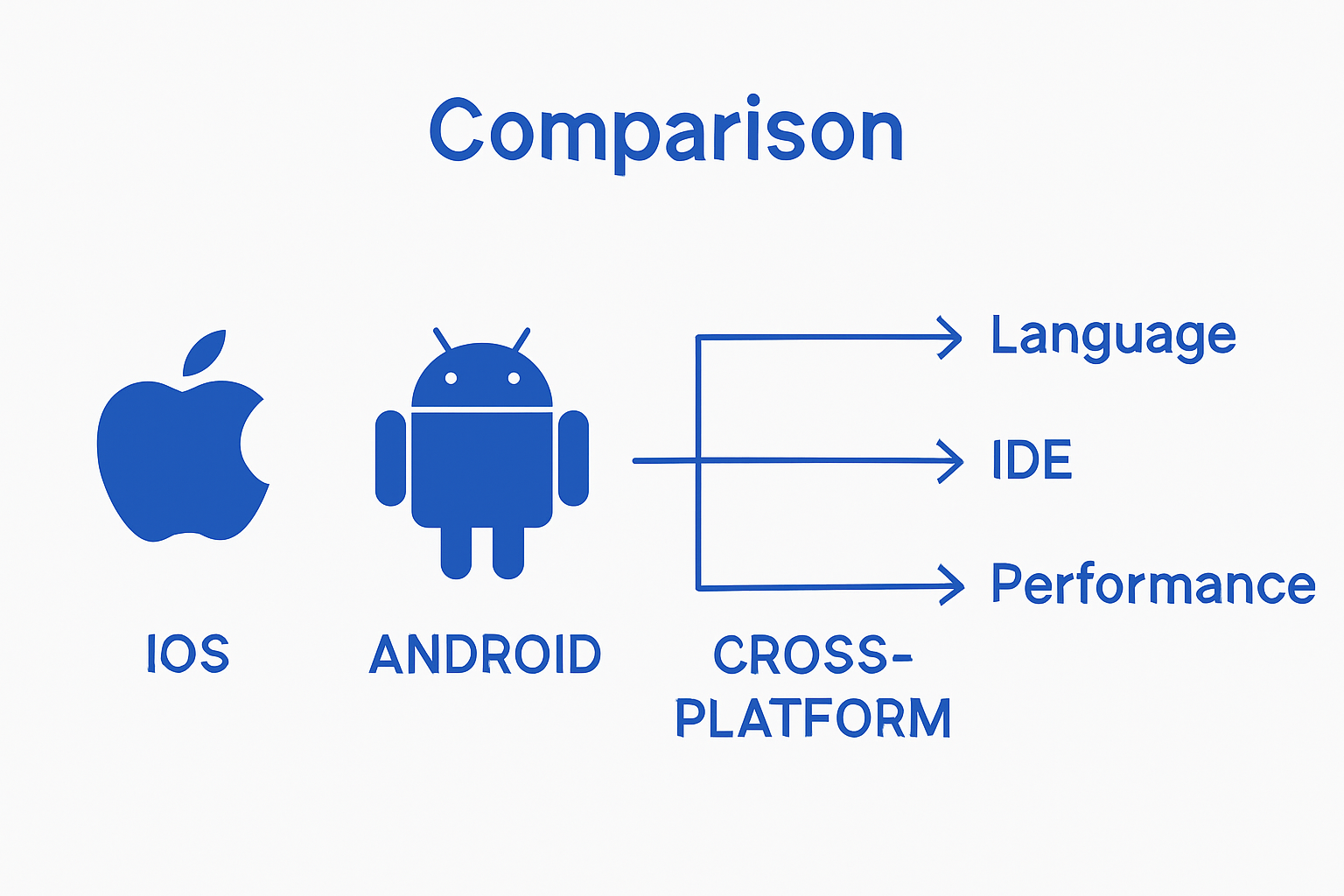
To help clarify the differences between native platform development and cross-platform frameworks, the following table compares their main characteristics and impact on development decisions.
| Development Approach | Programming Languages | Development Environment | Performance | Code Reusability | User Experience |
|---|---|---|---|---|---|
| Native (iOS, Android) | Swift, Objective-C, Kotlin, Java | Xcode (iOS), Android Studio | Optimized | Low | Platform-optimized |
| Cross-Platform Framework | JavaScript (React Native), Dart (Flutter), C# (Xamarin) | Visual Studio Code, VS, others | Near-native | High | Consistent across platforms |
Real-World Applications: How Businesses Leverage Mobile Apps
Mobile applications have transformed how businesses interact with customers, streamline operations, and create competitive advantages. Why law firms need their own apps exemplifies how specialized industries can utilize mobile technology to enhance service delivery and client engagement.
Industry-Specific Mobile App Strategies
Different industries leverage mobile applications uniquely to address specific business challenges and customer needs. Healthcare providers use apps for telemedicine and patient record management, while retail businesses implement mobile platforms for seamless shopping experiences and personalized marketing. Financial institutions deploy mobile banking apps that enable secure transactions and real-time account monitoring.
Key industry application strategies include:
- Enhancing customer communication channels
- Providing on-demand service access
- Collecting and analyzing user behavior data
- Streamlining internal operational processes
- Creating personalized user experiences
Performance and Business Growth Metrics
Mobile applications serve as powerful tools for measuring and driving business performance. Companies can track user engagement, conversion rates, and customer satisfaction through sophisticated analytics integrated directly into mobile platforms. These metrics provide actionable insights that enable businesses to continuously refine their digital strategies and improve overall customer experience.
According to Forrester Research, successful mobile app implementation can:
- Increase customer retention rates
- Reduce operational costs
- Generate additional revenue streams
- Improve brand visibility
- Enhance competitive positioning
This is the work we do for you. Every week, without exception.
Managing GBP at this level takes 6–8 hours a week when done right. Nova handles the entire system — posts, photos, reviews, Q&A, citations, heatmap tracking — so you can focus on running your business.
By strategically developing mobile applications tailored to specific business objectives, organizations can transform digital interactions into meaningful, measurable growth opportunities.
To illustrate how mobile apps are leveraged for industry-specific strategies, this table summarizes the primary ways different sectors use mobile applications as mentioned in the article.
| Industry | Key App Strategies | Example App Features |
|---|---|---|
| Healthcare | Telemedicine, patient record management | Appointment booking, virtual consultations |
| Retail | Seamless shopping, personalized marketing | Loyalty programs, in-app purchasing |
| Financial | Secure transactions, real-time account monitoring | Mobile banking, payment processing |
| Law Firms | Enhanced client service, communication | Case updates, document management |

Ready to Turn Your App Vision Into Real Growth?
Are you struggling to keep up with rapid digital changes and feeling uncertain about how to bring your mobile app idea to life? Many businesses face the same obstacles when navigating the basics of mobile app development, from understanding complex technology requirements to ensuring seamless user experiences. This article covered the importance of strong technical frameworks, strategic planning, and platform choice, but realizing these goals in practice can feel overwhelming. Our team knows what it takes to transform your ideas into high-performance mobile solutions that actually drive results.
Do not let your business fall behind in an app-driven world. Partner with digital experts who specialize in delivering custom strategies powered by the latest development tools and proven marketing tactics. Take the next step now by reaching out through our contact page to schedule a personalized consultation. Discover how our experience in mobile app development services and AI-backed marketing strategies can bring your mobile presence to life and accelerate your business growth.
Frequently Asked Questions
What is mobile app development?
Mobile app development is the process of creating software applications specifically designed to run on mobile devices like smartphones and tablets. It involves designing, coding, testing, and deploying applications across platforms like iOS and Android.
Why is mobile app development important for businesses?
Mobile app development is crucial for businesses as it enhances customer engagement, creates direct marketing channels, improves brand visibility, and generates new revenue streams, ultimately transforming traditional business models.
What programming languages are commonly used in mobile app development?
Common programming languages in mobile app development include Swift and Objective-C for iOS applications, and Kotlin and Java for Android apps. Cross-platform frameworks like React Native and Flutter also allow developers to use a single codebase for multiple platforms.
What are the key stages in the mobile app development process?
The key stages in the mobile app development process include strategic planning and conceptualization, technical design, development workflow, comprehensive testing, and deployment. This structured approach helps ensure that the final app meets user needs and business objectives.

