




Email marketing is everywhere and the numbers prove its power. Some studies show targeted email campaigns can increase customer loyalty and engagement by over 30 percent. Most people think email is just another tool for promotions and clutter in your inbox. That is far from the truth. The biggest surprise is how a well-crafted email can feel more personal than a phone call and actually spark real, lasting connections.
Table of Contents
- What Email Marketing Is And Why It Matters
- The Importance Of Audience Segmentation In Email Campaigns
- Key Elements Of Effective Email Design And Content
- Metrics That Matter: Measuring Success In Email Marketing
- Future Trends Shaping Email Marketing Best Practices
Quick Summary
| Takeaway | Explanation |
|---|---|
| Email marketing fosters customer loyalty. | Personalized messages retain customers and enhance their loyalty through tailored engagement. |
| Audience segmentation boosts engagement. | Grouping subscribers by specific traits increases the relevance of messages, leading to higher engagement rates. |
| Effective design enhances communication. | Visually appealing and well-structured emails improve recipient interaction and convey value effectively. |
| Measuring key metrics is essential. | Tracking open rates, click-through rates, and conversions provides critical insights for optimizing email strategies. |
| AI is transforming email personalization. | Utilizing AI technology offers dynamic and real-time adjustments to email content, enhancing user experience significantly. |
What Email Marketing Is and Why It Matters
Email marketing is a powerful digital communication strategy that enables businesses to directly connect with their audience through targeted, personalized electronic messages. Unlike traditional marketing channels, email provides an intimate, permission-based platform where brands can deliver valuable content, promotions, and updates straight to a subscriber’s inbox. Research demonstrates that this approach not only retains existing customers but also significantly increases customer loyalty through personalized engagement.
The Strategic Value of Email Marketing
At its core, email marketing represents a sophisticated communication method that goes beyond simple advertising. It allows businesses to build meaningful relationships with customers by delivering relevant, timely, and valuable content. Companies can segment their audience, track engagement metrics, and craft highly personalized messages that resonate with specific customer groups.
Key strategic advantages of email marketing include:
- Direct and personal communication channel
- Cost-effective compared to traditional marketing methods
- Measurable and trackable performance metrics
- High return on investment potential
- Ability to nurture leads and maintain customer relationships
How Email Marketing Drives Business Growth
Modern email marketing transcends basic communication. It serves as a sophisticated tool for driving business objectives, from lead generation to customer retention. By leveraging data analytics and sophisticated targeting techniques, businesses can create automated email campaigns that guide potential customers through their purchasing journey.
The real power of email marketing lies in its ability to deliver right message, right time experiences. Discover how our enterprise email marketing strategies can transform your digital communication approach and help you connect more effectively with your target audience. Whether you are a small local business or a large enterprise, understanding and implementing strategic email marketing can significantly enhance your customer engagement and business growth potential.
The Importance of Audience Segmentation in Email Campaigns
Audience segmentation represents a sophisticated strategic approach that transforms generic email communications into precisely targeted, highly personalized marketing experiences. Research demonstrates that marketers who effectively segment their audiences can significantly increase engagement rates by delivering messages that resonate more specifically with recipients’ interests and behaviors.
See exactly where your profile stands right now.
Our GBP audit shows your current rank position across your market, how your profile completeness scores against competitors, and the specific gaps holding you back from the Map Pack.
Understanding Audience Segmentation Strategies
At its core, audience segmentation involves dividing your email subscriber list into distinct groups based on specific characteristics, behaviors, or demographic attributes. Strategic segmentation allows businesses to move beyond one-size-fits-all communication and create nuanced, relevant messaging that speaks directly to each group’s unique needs and preferences.
Key segmentation criteria typically include:
- Demographic information (age, gender, location)
- Purchase history and customer lifetime value
- Engagement levels with previous email campaigns
- Specific interests and behavioral patterns
- Professional roles or industry sectors
Transforming Email Marketing Through Precise Targeting
Effective audience segmentation enables businesses to craft highly personalized communication strategies that dramatically improve email marketing performance. By understanding and categorizing subscriber groups, companies can develop targeted content that feels more like a tailored conversation than a mass broadcast.
Learn more about our advanced media outreach strategies that complement sophisticated email segmentation techniques. The goal is not just to send emails, but to create meaningful connections that drive engagement, build trust, and ultimately convert subscribers into loyal customers. Precision in audience segmentation represents the difference between generic messaging and a compelling, results-driven communication approach.

Key Elements of Effective Email Design and Content
Email design and content represent the critical intersection of visual communication and strategic messaging that determines whether recipients will engage with or ignore your marketing communication. Best practices for email design emphasize creating clear, accessible, and compelling messages that capture attention and drive desired actions.
Crafting Compelling Visual Experiences
Successful email marketing hinges on creating visually appealing and strategically structured content that immediately communicates value. Effective email design goes beyond aesthetic appeal, focusing on intuitive layout, responsive formatting, and purposeful visual hierarchy that guides the reader’s eye and reinforces key messaging.
Critical visual design elements include:
- Clean, professional typography
- Balanced color schemes that reflect brand identity
- Strategic use of white space
- Mobile-responsive layouts
- Consistent and recognizable branding elements
Content Strategy for Maximum Engagement
Content represents the soul of email marketing, transforming visual design into meaningful communication. Compelling email content requires a delicate balance of information, persuasion, and value proposition that speaks directly to the recipient’s needs and interests.
Learn more about improving design aesthetics that can be applied across digital marketing channels. The most effective emails communicate their message quickly, provide clear value, and include a strong, unmistakable call-to-action that motivates readers to take the next step. By combining thoughtful design with strategic content, businesses can create email experiences that not only capture attention but also drive meaningful engagement and conversion.
Metrics That Matter: Measuring Success in Email Marketing
Measuring email marketing performance requires a strategic approach that goes beyond surface-level analytics. Key metrics for assessing email marketing success provide nuanced insights into campaign effectiveness, audience engagement, and potential areas of improvement.
Understanding Critical Performance Indicators
Email marketing metrics serve as essential diagnostic tools that reveal how effectively your communication strategies resonate with target audiences. These quantitative measurements transform abstract marketing efforts into concrete, actionable intelligence that drives strategic decision making.
Primary performance metrics include:
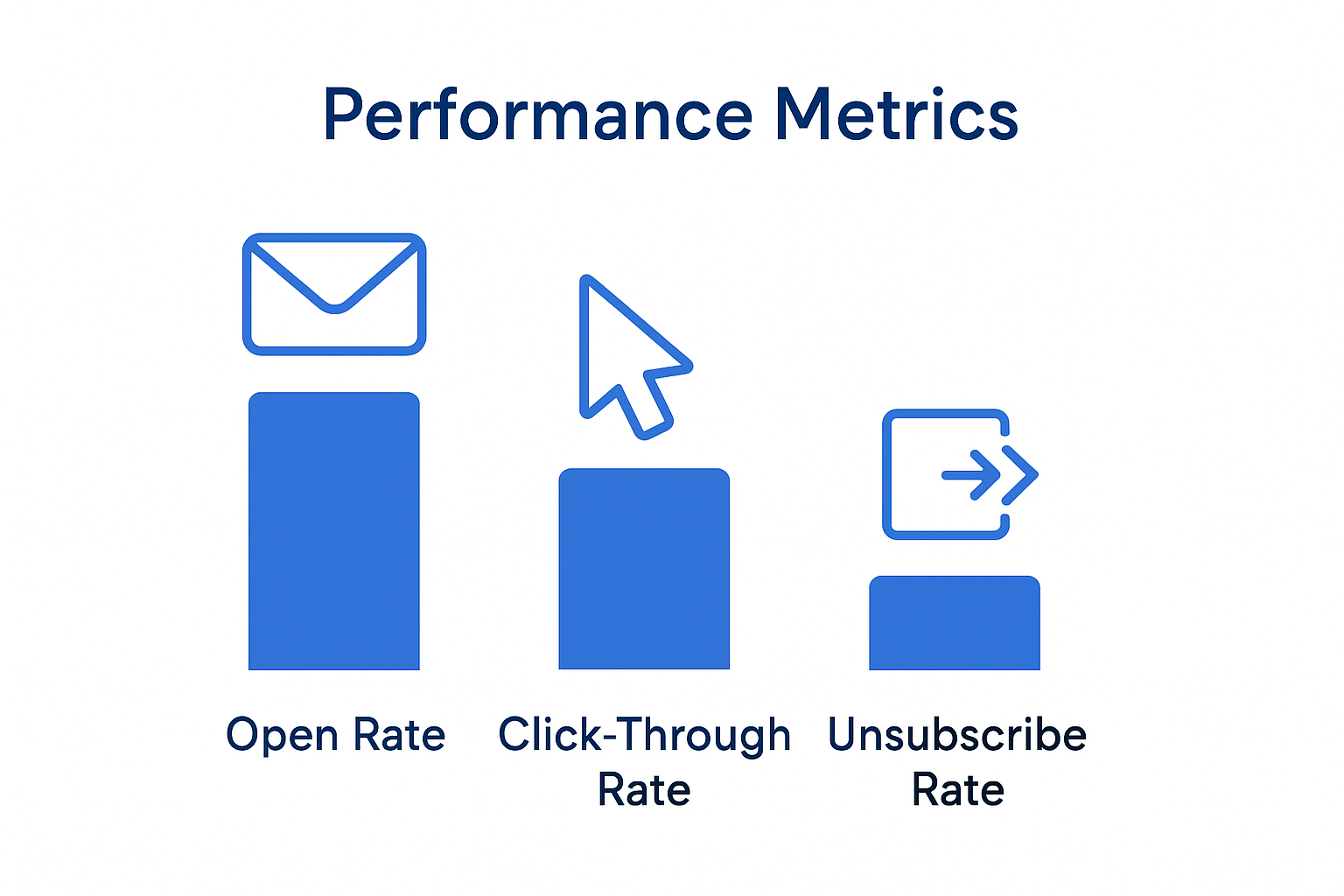
- Open rates indicating initial message appeal
- Click-through rates measuring content engagement
- Conversion rates tracking ultimate business objectives
- List growth and subscriber retention percentages
- Unsubscribe rates signaling potential communication misalignment
Advanced Analytics for Strategic Insights
Successful email marketing demands a comprehensive approach to data interpretation. Sophisticated analytics enable businesses to move beyond basic numerical assessments, uncovering deeper patterns of audience behavior and preferences.
Learn more about understanding digital marketing ROI metrics that provide comprehensive performance evaluation. By continuously monitoring and analyzing these critical indicators, businesses can refine their email marketing strategies, optimize content relevance, and create more targeted, impactful communication experiences that drive meaningful engagement and sustainable growth.
Future Trends Shaping Email Marketing Best Practices
The landscape of email marketing continues to evolve rapidly, driven by technological advancements and changing consumer expectations. Emerging trends in email marketing demonstrate a profound shift towards more intelligent, personalized, and interactive communication strategies that prioritize user experience and data-driven insights.
AI and Personalization Revolution
Artificial intelligence is transforming email marketing from a one-size-fits-all approach to a hyper-personalized communication channel. Modern AI technologies enable marketers to create dynamic content that adapts in real-time, analyzing individual user behaviors, preferences, and engagement patterns to deliver precisely tailored messaging.
Key technological innovations include:
- Machine learning algorithms for predictive content recommendations
- Advanced segmentation powered by behavioral analytics
- Real-time personalization based on user interactions
- Automated content generation and optimization
- Intelligent send-time optimization
Next-Generation Email Technologies
The future of email marketing extends beyond traditional communication methods, incorporating interactive and advanced technological capabilities. Cutting-edge email technologies are breaking down traditional barriers, enabling more engaging and functional email experiences that blur the lines between communication and interactive platforms.
Explore our insights on digital marketing trends that are reshaping communication strategies. By embracing these emerging technologies, businesses can create more meaningful connections, transform passive communication into dynamic interactions, and stay ahead in an increasingly competitive digital marketing landscape.
Turn Expert Email Strategies Into Real Business Growth Now
This is the work we do for you. Every week, without exception.
Managing GBP at this level takes 6–8 hours a week when done right. Nova handles the entire system — posts, photos, reviews, Q&A, citations, heatmap tracking — so you can focus on running your business.
If you feel overwhelmed by the demands of audience segmentation, effective content design, and tracking critical email metrics, you are not alone. Many businesses struggle to make their email marketing truly personal, measurable, and growth-driven as explained in the article “Understanding Email Marketing Best Practices for Growth.” Applying these best practices takes time, deep expertise, and continual analysis to stay ahead. Without professional guidance, your emails risk being ignored or failing to drive real results.
Ready to stop guessing and start seeing real, quantifiable growth from your email marketing? The team at 12AM Agency specializes in custom campaign planning, advanced segmentation, and data-driven content creation that aligns perfectly with your business goals. See how our enterprise email marketing strategies and digital marketing ROI expertise can power your business forward today. Visit https://12amagency.com/contact-us/ to schedule your personalized consultation and take the next step toward smarter, more effective email marketing now.
Frequently Asked Questions
What is email marketing and why is it important?
Email marketing is a direct digital communication strategy that allows businesses to connect with their audience through personalized electronic messages. It is important because it helps retain customers, increases loyalty, and provides a cost-effective means of communication.
How can audience segmentation enhance email marketing campaigns?
Audience segmentation improves email marketing by dividing the subscriber list into specific groups based on demographics, behaviors, or interests, allowing for targeted messaging that resonates more deeply with recipients.
What key metrics should I track to measure the success of my email marketing efforts?
Key metrics include open rates, click-through rates, conversion rates, list growth rates, and unsubscribe rates. These metrics provide insights into how well your campaigns are performing and where improvements may be needed.
Below is a table comparing the core email marketing performance metrics mentioned in the article and what each metric reveals about your campaign effectiveness.
| Metric | What It Measures | Insight Provided |
|---|---|---|
| Open Rate | Percentage of recipients who open emails | Gauges subject line appeal and sender reputation |
| Click-Through Rate | Percentage clicking a link in the email | Indicates content engagement and relevance |
| Conversion Rate | Percentage completing desired actions | Shows effectiveness at driving goal completions |
| List Growth | Change in number of subscribers | Tracks audience expansion and retention efforts |
| Unsubscribe Rate | Percentage opting out of emails | Flags issues with relevance or email frequency |
How can I improve the design and content of my email marketing campaigns?
To improve email design and content, focus on creating visually appealing layouts, using clear typography, incorporating a responsive format, and developing compelling content with a strong call-to-action that engages readers.
Recommended
- Proven Email Marketing Strategies for Business Success | 12AM Agency
- Understanding Enterprise Email Marketing: Key Concepts Explained | 12AM Agency
- Essential Media Outreach Strategies for Brand Growth | 12AM Agency
- Email Marketing for Local Businesses: Strategies for Growth | 12AM Agency
- Email Campaigns and SEO: Winning Strategies for 2025

