





Most business owners know lead generation matters, yet nearly 68 percent say they struggle to consistently deliver quality leads. That number is surprising and it is even more common than you might think. What really stands out is that your lead flow can change dramatically just by fine-tuning a few simple steps you already control.
Table of Contents
- Step 1: Assess Your Current Lead Generation Strategy
- Step 2: Identify Your Target Audience And Their Needs
- Step 3: Optimize Your Website For Lead Generation
- Step 4: Leverage Social Media To Attract And Engage Leads
- Step 5: Implement Email Marketing Campaigns To Nurture Leads
- Step 6: Measure And Analyze Your Lead Generation Efforts
Quick Summary
| Key Point | Explanation |
|---|---|
| 1. Assess Your Lead Generation Strategy | Understand current performance metrics to identify strengths and weaknesses. Analyze data from all marketing channels for better insights. |
| 2. Deepen Audience Understanding | Create detailed buyer personas focusing on specific needs and behaviors. Tailor marketing efforts based on audience segmentation. |
| 3. Optimize Your Website | Make your website user-friendly and mobile-responsive. Use compelling calls-to-action to improve lead capture effectiveness. |
| 4. Leverage Social Media | Engage on platforms where your audience spends time. Create valuable content that builds trust and encourages interactions. |
| 5. Track and Measure Performance | Regularly review metrics and analytics to adjust strategies. Use robust tracking tools for a comprehensive understanding of lead generation effectiveness. |
Step 1: Assess Your Current Lead Generation Strategy
To successfully boost your business growth, you must first understand your current lead generation performance. Think of this initial assessment as a diagnostic health check for your marketing strategy. Knowing exactly where you stand is crucial before implementing any improvements.
Start by gathering comprehensive data from all your existing marketing channels. This means pulling analytics from your website, social media platforms, email marketing campaigns, and any paid advertising efforts. Look beyond surface-level metrics and dig deep into conversion rates, engagement levels, and the actual quality of leads you’re currently attracting.
Analyze your lead sources methodically. Which channels are delivering the most qualified leads? Are your current strategies generating high-value prospects or just generating noise? Learn more about optimizing lead conversion strategies to understand how to transform raw data into actionable insights.
Your assessment should include a critical examination of key performance indicators such as:
- Cost per lead
- Lead-to-customer conversion rate
- Average lead value
- Time to conversion
Don’t just collect numbers—interpret them. A low conversion rate might indicate misalignment between your marketing message and target audience. Inconsistent lead quality could suggest your targeting parameters need refinement. Each metric tells a story about your current lead generation ecosystem.
Document your findings systematically. Create a clear snapshot of your current lead generation landscape, highlighting strengths, weaknesses, and immediate opportunities for improvement. This baseline assessment will serve as your strategic roadmap for the subsequent steps in enhancing your lead generation efforts.
Here is an overview table summarizing the major lead generation steps, their primary focus, and key outcomes to help you visualize the entire process at a glance.
| Step | Main Focus | Key Outcome |
|---|---|---|
| Assess Your Strategy | Analyze current lead generation performance and metrics | Identify strengths, weaknesses, and improvement opportunities |
| Identify Target Audience | Develop buyer personas, research needs and preferences | Gain deep understanding of audience segments |
| Optimize Website | Enhance user experience, add lead capture CTAs | Increase website conversions and lead submissions |
| Leverage Social Media | Choose platforms and create engaging content | Attract and engage new leads via social channels |
| Implement Email Marketing | Segment lists, nurture leads with campaigns | Move prospects through the sales funnel |
| Measure & Analyze | Track performance across all channels | Refine strategy using actionable insights |
Step 2: Identify Your Target Audience and Their Needs
Understanding your target audience is the critical foundation of effective lead generation. This step transforms generic marketing efforts into precision-targeted strategies that speak directly to potential customers’ specific pain points and desires. Think of audience identification as creating a detailed map that guides your entire lead generation journey.
Begin by developing comprehensive buyer personas that go beyond basic demographics. Dive deep into your ideal customer’s professional challenges, personal motivations, decision-making processes, and communication preferences. Explore our guide on building a strong digital brand to understand how audience perception shapes marketing effectiveness.
Conduct thorough research using multiple methodologies. Leverage customer interviews, survey existing clients, analyze website analytics, and examine social media interactions. Pay special attention to the language customers use when describing their problems—these insights will help you craft messaging that resonates authentically.
Your research should uncover critical audience characteristics such as:
- Primary professional challenges
- Typical decision-making timelines
- Preferred communication channels
- Budget considerations
- Psychological barriers to purchasing
Segmentation is key to precision targeting. Not all potential leads are created equal. Break down your broader audience into specific subgroups with distinct characteristics. A legal professional seeking marketing services will have different needs compared to an automotive business owner. By creating nuanced audience segments, you can develop tailored approaches that speak directly to each group’s unique requirements.
Verify your audience research by cross-referencing multiple data sources and continuously refining your understanding. The most successful lead generation strategies are dynamic, adapting as market conditions and customer preferences evolve. Your goal is to create a living, breathing profile of your ideal customer that guides every subsequent marketing initiative.
Step 3: Optimize Your Website for Lead Generation
Your website is more than a digital brochure—it’s your most powerful lead generation tool. Transforming your website from a passive information platform to an active lead capture machine requires strategic optimization that guides visitors seamlessly toward conversion.
Start by analyzing your current website’s user experience. Navigation should be intuitive, with clear pathways that naturally lead potential customers toward taking action. **Eliminate unnecessary complexity and create a frictionless journey from initial interest to lead submission.
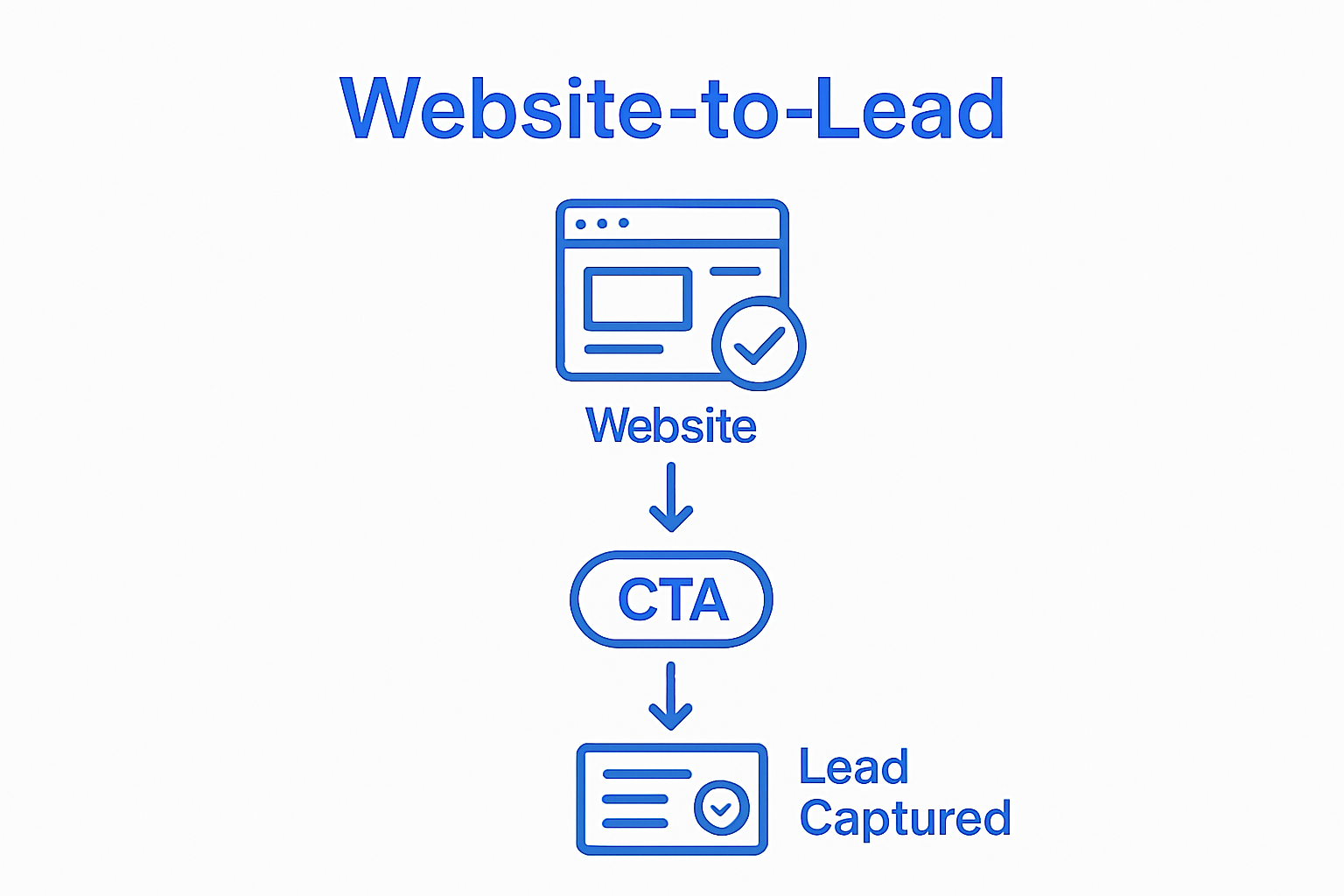 ** Discover advanced strategies for generating leads online to refine your approach and maximize conversion potential.
Craft compelling calls-to-action (CTAs) that are visually striking and strategically positioned. These aren’t just buttons—they’re conversion opportunities. Each CTA should communicate clear value, using action-oriented language that speaks directly to your target audience’s needs. Experiment with placement, design, and messaging to find the most effective combinations.
Your lead capture elements should include:
- High-converting contact forms with minimal required fields
- Prominent phone numbers and email addresses
- Live chat functionality
- Downloadable resources like whitepapers or case studies
Mobile responsiveness is non-negotiable. With over 60% of web traffic coming from mobile devices, your website must provide a seamless experience across smartphones and tablets. Slow-loading pages or difficult-to-navigate mobile interfaces will immediately drive potential leads away.
Implement advanced tracking tools like Google Analytics to monitor user behavior. Study metrics such as bounce rate, time on page, and conversion paths. These insights will help you continuously refine your website’s lead generation capabilities.
 Remember, optimization is an ongoing process—what works today might need adjustment tomorrow.
Step 4: Leverage Social Media to Attract and Engage Leads
Social media is not just a platform for sharing content—it’s a powerful lead generation engine that can transform how you connect with potential customers. Modern businesses must move beyond passive posting and develop strategic approaches that actively attract and nurture leads through meaningful online interactions.
Begin by selecting social media platforms that align precisely with your target audience’s preferences. Not all platforms offer equal value—a B2B technology company will find more success on LinkedIn, while a lifestyle brand might thrive on Instagram. Learn how to manage social media effectively in the evolving digital landscape to maximize your strategic approach.
Develop a content strategy that provides genuine value to your audience. This means creating posts that solve problems, answer questions, and demonstrate your expertise without overtly selling. Educational content, industry insights, and behind-the-scenes glimpses into your business can establish trust and position your brand as a thought leader.
Your social media lead generation toolkit should include:
- Targeted sponsored content
- Interactive polls and surveys
- Webinar and event promotions
- Downloadable resources
- Engaging video content
Engagement is the cornerstone of social media lead generation. Respond promptly to comments, participate in industry discussions, and create opportunities for two-way communication. Use social listening tools to understand audience sentiment and identify potential leads who are actively discussing challenges your business can solve.
Implement robust tracking mechanisms to measure your social media lead generation performance. Monitor metrics like engagement rates, click-through rates, and conversion paths. Continuously test and refine your approach, understanding that social media strategies must evolve as rapidly as digital technologies change.
Step 5: Implement Email Marketing Campaigns to Nurture Leads
Email marketing remains one of the most powerful tools for transforming interested prospects into committed customers. Unlike social media or paid advertising, email provides a direct, personalized communication channel that allows you to build relationships systematically and strategically.
Begin by segmenting your email list based on the detailed buyer personas you developed earlier. Each segment represents a unique audience with specific needs, challenges, and interests. Explore our proven email marketing strategies for business success to understand how targeted communication drives engagement.
Design a comprehensive email nurture sequence that guides potential leads through a carefully crafted journey.
Your initial welcome email should establish trust and set expectations. Subsequent emails must provide progressive value—share industry insights, offer practical solutions, and demonstrate your expertise without overwhelming recipients with sales pitches. To ensure these carefully crafted messages reach inboxes consistently and perform as intended, starting with an email warmup helps build sender credibility and improves overall campaign effectiveness.
Your email marketing campaign should incorporate:
- Personalized content matching audience segments
- Clear and compelling subject lines
- Strategic calls-to-action
- Mobile-responsive design
- Consistent brand messaging
Timing and frequency are critical elements of successful email campaigns. Develop a consistent schedule that keeps your brand top-of-mind without becoming intrusive. Most businesses find success with weekly or bi-weekly communications. Use advanced email marketing platforms that offer automation, allowing you to create sophisticated drip campaigns that respond dynamically to user interactions.
Implement rigorous tracking and analysis of your email performance. Monitor key metrics like open rates, click-through rates, and conversion rates. These insights will help you continuously refine your approach, ensuring your email marketing remains a potent lead generation tool that adapts to changing audience preferences.
Step 6: Measure and Analyze Your Lead Generation Efforts
Measurement transforms lead generation from a guessing game into a precise science. Without robust analytics, your marketing efforts are like navigating without a compass—you might move, but you won’t know if you’re heading in the right direction. Effective measurement provides the insights needed to optimize your strategy and accelerate business growth.
Dive deeper into understanding digital marketing KPIs to gain comprehensive insights into performance tracking. Start by establishing a comprehensive dashboard that captures critical metrics across all lead generation channels. This holistic view allows you to understand how different strategies interconnect and contribute to your overall business objectives.
Focus on tracking both quantitative and qualitative metrics. Quantitative data like conversion rates, cost per lead, and total lead volume provide numerical insights. Qualitative metrics—such as lead quality, engagement depth, and progression through your sales funnel—offer nuanced understanding of your lead generation effectiveness.
Your key performance indicators should include:
- Conversion rate by channel
- Lead acquisition cost
- Average lead value
- Sales cycle length
- Lead-to-customer ratio
Implement advanced tracking technologies that provide granular insights. Use tools like Google Analytics, customer relationship management systems, and specialized lead tracking software to monitor each touchpoint in your lead generation process. These platforms enable you to create detailed customer journey maps, identifying exactly where prospects engage most and where they might drop off.
Establish a regular review cycle—weekly for tactical adjustments and monthly for strategic planning. Treat your lead generation strategy as a living system that requires constant refinement. By consistently analyzing performance data, you’ll develop an adaptive approach that responds dynamically to market changes and emerging opportunities.
To help clarify the most important metrics to monitor your lead generation, the table below organizes key performance indicators by what they measure and why they are important.
| Metric | What It Measures | Why It Matters |
|---|---|---|
| Conversion Rate by Channel | Percentage of leads converting on each channel | Reveals most effective lead sources |
| Lead Acquisition Cost | Average cost to acquire each lead | Helps optimize marketing spend |
| Average Lead Value | Revenue or potential value per lead | Prioritizes high-impact leads |
| Sales Cycle Length | Time from lead to customer conversion | Identifies bottlenecks in the funnel |
| Lead-to-Customer Ratio | % of leads that become customers | Indicates quality of lead generation |
Ready to Transform Your Lead Generation Results?
If you are struggling to turn website visits and social media clicks into real business growth, you are not alone. Many businesses find it challenging to identify high-quality leads, improve conversion rates, and make every marketing dollar count, as highlighted in our latest article. At 12AM Agency, our proven SEO management and PPC advertising solutions are custom-built to solve these exact issues. We do more than just analyze your data—we craft personalized strategies using AI-driven technology so you can finally see meaningful improvements in both lead quality and sales.
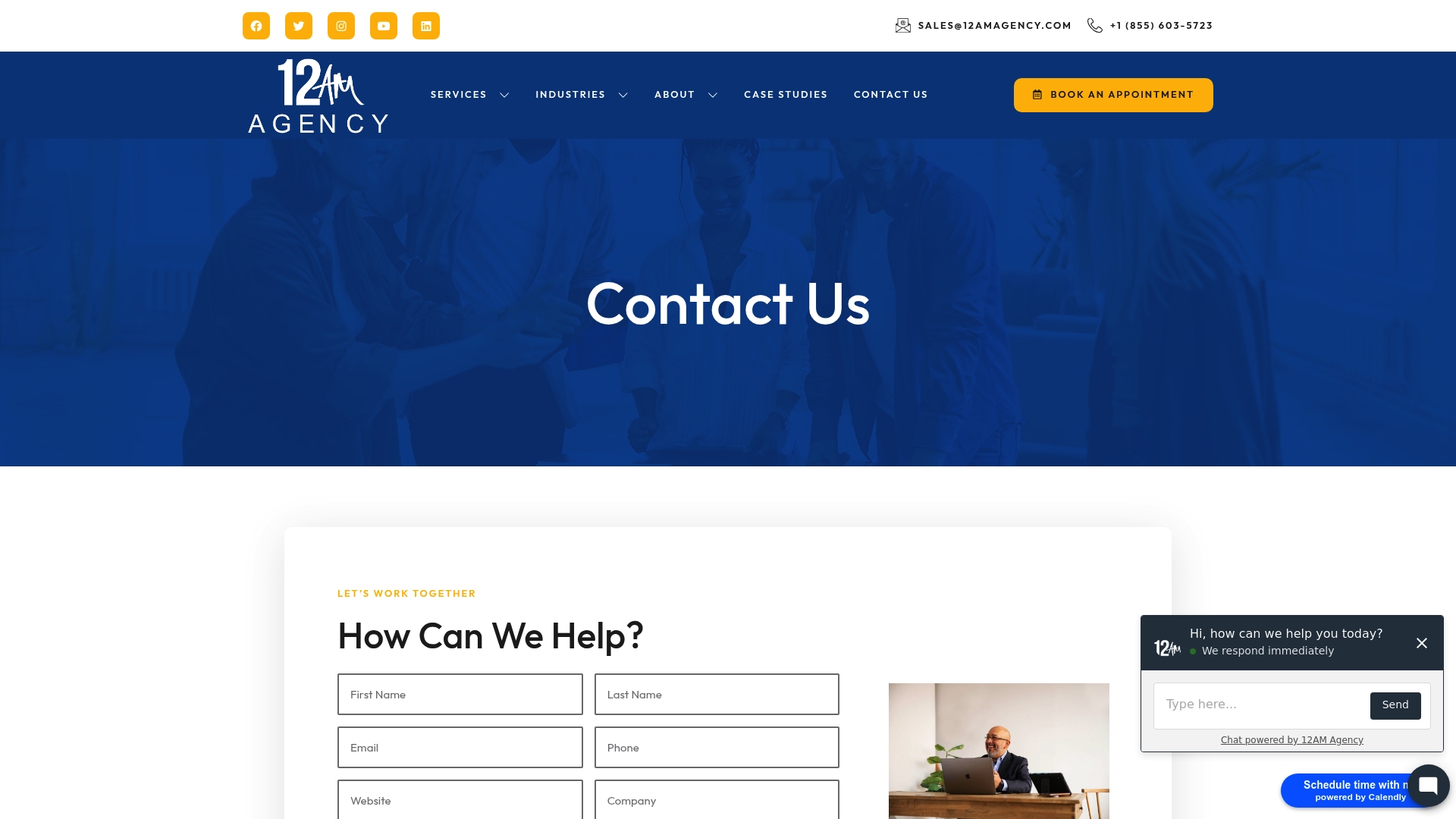
Take action now and stop leaving potential clients on the table. Partner with our expert team to build a high-converting customer journey and measurable marketing campaigns tailored to your business needs. Reach out today for your free strategy call at https://12amagency.com/contact-us/ and unlock new growth opportunities before your competitors do.
Frequently Asked Questions
How can I assess my current lead generation strategy?
To assess your lead generation strategy, gather data from all marketing channels including your website, social media, and email campaigns. Analyze key performance indicators like conversion rates, lead quality, and cost per lead to understand your current performance and identify improvement areas.
What are effective ways to identify my target audience?
Start by developing detailed buyer personas based on demographics, professional challenges, and motivations. Conduct customer interviews, surveys, and analyze website analytics to better understand your ideal customers and tailor your marketing efforts to their needs.
How do I optimize my website for lead generation?
To optimize your website, ensure intuitive navigation, clear calls-to-action, and a user-friendly design. Implement lead capture elements like contact forms and live chat, and make sure your website is mobile-responsive to improve user experience and increase conversion rates.
Why is social media important for lead generation?
Social media is crucial for lead generation as it allows businesses to engage with potential customers and nurture relationships. By creating valuable content and participating in discussions, you can attract leads and establish your brand as a thought leader in your industry.
Recommended
- How SEO Companies Can Generate More Leads: A Step-by-Step Guide | 12AM Agency
- Master Lead Conversion Strategies for Business Success | 12AM Agency
- Unlock Growth: Essential Digital Marketing Strategies for Small Business Owners in 2025 | 12AM Agency
- SEO and Digital Marketing: A Powerful Duo for Lead Generation | 12AM Agency