


Managing social media in 2025 is a whole new ballgame. Brands are no longer just sharing updates—they’re doubling down with strategy and smart tools. But hang on. Even with all these advancements, most businesses still struggle to see real results. Here’s what stands out. Companies that document their content strategy are actually 313 percent more likely to report success. That might flip your idea of what social media management should look like.
Table of Contents
- Building A Strong Social Media Strategy
- Choosing The Right Platforms For Your Business
- Streamlining Content Creation And Scheduling
- Measuring Success And Optimizing Performance
Quick Summary
| Takeaway | Explanation |
|---|---|
| Define clear and measurable goals | Use SMART criteria to align your social media objectives with overall business targets for effective management. |
| Understand your audience before platform selection | Analyze demographics, interests, and behaviors to select the most effective social media platforms for your business. |
| Create a strategic content calendar | Plan diverse content types and posting frequency to ensure consistent engagement and timely communication with your audience. |
| Leverage AI and automation tools | Utilize technology to streamline content management while maintaining authenticity and engagement with your audience. |
| Measure success with relevant KPIs | Focus on key performance indicators like engagement rate and ROI to assess and optimize your social media strategies effectively. |
Building a Strong Social Media Strategy
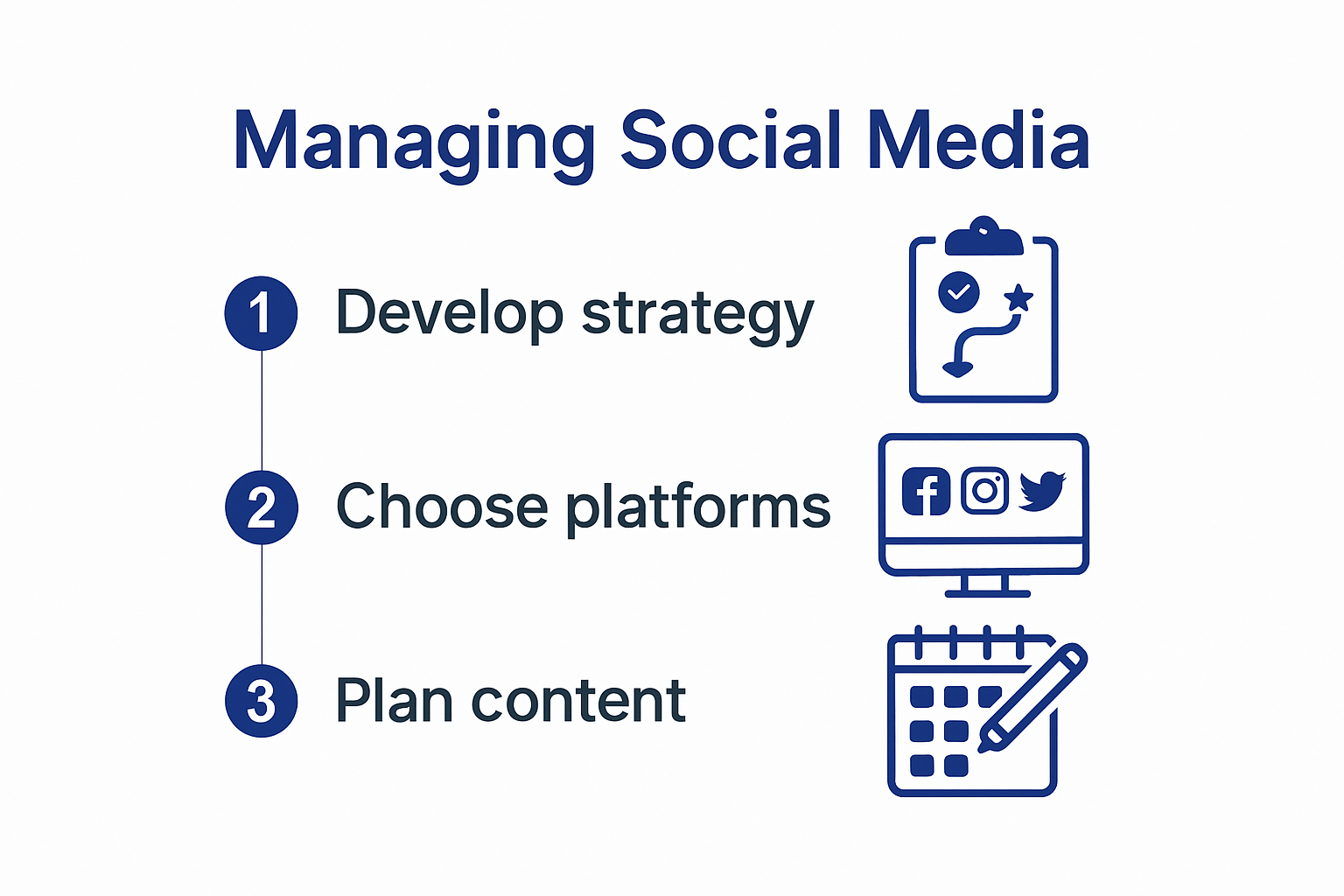
Successful social media management requires a strategic approach that transforms random posts into a powerful business growth engine. For businesses seeking to optimize their online presence, developing a robust social media strategy is no longer optional—it’s essential.
Defining Clear and Measurable Goals
Establishing precise objectives is the foundation of effective social media management. Our guide on strategic digital growth recommends adopting SMART goals that align with broader business objectives. According to Penn State University’s research, businesses must develop goals that are specific, measurable, and actionable.
Consider objectives such as:
- Brand Awareness: Increase social media followers by 25% in six months
- Engagement: Boost post interactions by 40% through targeted content
- Lead Generation: Convert 10% of social media interactions into qualified leads
Audience Understanding and Platform Selection
Knowing your target audience is crucial for effective social media management. Worcester State University’s strategic framework emphasizes the importance of comprehensive audience research.
To develop a precise audience profile, analyze demographic data, interests, online behaviors, and preferred social media platforms. Each platform offers unique advantages:
- LinkedIn: Professional networking, B2B marketing
- Instagram: Visual storytelling, younger demographics
- Facebook: Broad reach, diverse audience segments
- TikTok: Short-form video, Gen Z engagement
- X (Twitter): Real-time updates, industry conversations
The University of Florida recommends integrating research-driven insights to refine platform selection and content strategy. This approach ensures your social media efforts are targeted, efficient, and aligned with audience preferences.
See exactly where your profile stands right now.
Our GBP audit shows your current rank position across your market, how your profile completeness scores against competitors, and the specific gaps holding you back from the Map Pack.
Content Creation and Consistent Engagement
Content remains the cornerstone of social media success. Develop a content mix that balances:
- Educational posts
- Behind-the-scenes glimpses
- Customer testimonials
- Industry insights
- Interactive elements like polls and Q&A sessions
Consistency is key. Create a content calendar that maintains regular posting schedules, ensuring your audience receives steady, valuable information. Monitor engagement metrics, adapt your strategy based on performance data, and continuously experiment with content formats to discover what resonates most with your audience.
By implementing these strategic approaches, businesses can transform social media from a mere communication channel into a powerful tool for growth, brand building, and meaningful audience connection.
Choosing the Right Platforms for Your Business
Selecting the appropriate social media platforms is a critical decision that can significantly impact your business’s digital marketing success. Not all platforms are created equal, and understanding the unique characteristics of each can help you make strategic choices that maximize your online presence.
Understanding Platform Demographics and Audience Reach
Each social media platform attracts a distinct user demographic, making platform selection crucial for targeted marketing. Learn more about strategic digital targeting to refine your approach.
According to Pew Research Center, platform usage varies significantly across age groups:
- Facebook: Strongest among 30-49 age range
- Instagram: Predominantly 18-29 years old
- LinkedIn: Professional network, ages 25-54
- TikTok: Heavily skewed towards 16-24 demographic
- X (Twitter): Balanced across 25-49 age groups
Businesses must align platform selection with their target audience’s online behavior. A B2B technology company will find more value on LinkedIn, while a fashion brand might thrive on Instagram and TikTok.
A quick comparison of major social media platforms by their primary audience and content strengths can help inform your decision:
Here is a comparison table of popular social media platforms by demographics and content features:
| Platform | Primary Age Demographic | Content Strengths |
|---|---|---|
| 30-49 | Community building, ads, wide reach | |
| 18-29 | Visual content, stories, influencers | |
| 25-54 | Professional networking, B2B | |
| TikTok | 16-24 | Short-form video, viral challenges |
| X (Twitter) | 25-49 | Real-time updates, conversations |
| YouTube | Broad (esp. <35) | Long-form video, tutorials, education |
Evaluating Platform Features and Marketing Potential
Beyond demographics, each platform offers unique features that can enhance your marketing strategy. Hootsuite’s platform analysis reveals distinct capabilities:
- Instagram: Visual storytelling, product showcasing, influencer partnerships
- LinkedIn: Professional networking, thought leadership content
- Facebook: Comprehensive advertising tools, community building
- TikTok: Short-form video content, viral marketing potential
- YouTube: Long-form video content, tutorial and educational marketing
Consider your content type, brand personality, and marketing objectives when selecting platforms. A technology firm might prioritize LinkedIn for professional networking, while a lifestyle brand could leverage Instagram’s visual storytelling.
Resource Allocation and Content Strategy
Managing multiple social media platforms requires significant time and resources. Sprout Social’s research suggests businesses carefully assess their capacity:
- Analyze team bandwidth
- Evaluate content creation capabilities
- Consider budget for paid promotions
- Measure potential return on investment
It’s better to excel on two or three platforms than to spread resources thin across many. Start with platforms most aligned with your audience and gradually expand as your capabilities grow.
Strategic platform selection is not about being everywhere but about being where your audience is most engaged. By understanding platform nuances, audience demographics, and your own marketing capabilities, you can create a focused, effective social media presence that drives meaningful business results.
Streamlining Content Creation and Scheduling
Effective social media management hinges on a well-organized content creation and scheduling approach. In 2025, businesses must leverage advanced strategies and tools to maintain a consistent, engaging online presence that resonates with their target audience.
Developing a Strategic Content Calendar
Learn more about creating high-impact content strategies to optimize your social media workflow. According to CoSchedule’s content marketing research, businesses that document their content strategy are 313% more likely to report success.
A robust content calendar should include:
- Thematic Planning: Align content with business goals, seasonal trends, and industry events
- Content Diversity: Mix formats including videos, infographics, blog posts, and user-generated content
- Posting Frequency: Determine optimal posting times based on audience engagement metrics
- Compliance Tracking: Ensure content meets brand guidelines and platform-specific requirements

Leveraging AI and Automation Tools
Buffer’s social media automation report highlights the transformative potential of technology in content management. Modern businesses can significantly reduce manual workload by implementing smart scheduling and content generation tools.
Key automation strategies include:
- Batch Content Creation: Dedicate specific time blocks for content development
- Scheduling Platforms: Utilize tools like Hootsuite, Buffer, and Sprout Social
- AI Content Generation: Explore AI-powered writing assistants for draft creation
- Performance Analytics: Integrate real-time tracking and optimization features
Maintaining Authenticity and Engagement
While automation streamlines processes, maintaining a genuine connection with your audience remains paramount. Sprout Social’s engagement research reveals that audiences crave authentic, human-centered content.
Strategies to preserve authenticity:
- Personal Touch: Incorporate team stories and behind-the-scenes content
- Real-time Interaction: Allocate time for immediate responses and community engagement
- User-Generated Content: Encourage and showcase audience contributions
- Continuous Learning: Regularly analyze performance metrics and adapt strategies
By implementing a structured yet flexible approach to content creation and scheduling, businesses can transform their social media presence from sporadic posts to a strategic, growth-driving communication channel. The key is balancing technological efficiency with genuine human connection.
Measuring Success and Optimizing Performance
In the rapidly evolving digital marketing landscape of 2025, measuring social media performance goes beyond vanity metrics. Businesses must adopt a sophisticated, data-driven approach to understand and enhance their social media strategy.
Key Performance Indicators (KPIs) for Social Media Success
Explore our comprehensive guide to digital performance tracking to elevate your measurement strategy. According to Google Analytics, the most critical social media KPIs include:
- Engagement Rate: Measures likes, comments, shares, and overall interaction
- Reach and Impressions: Total number of unique viewers and content displays
- Conversion Rate: Percentage of social media interactions leading to desired actions
- Click-Through Rate (CTR): Effectiveness of content in driving website traffic
- Return on Investment (ROI): Direct revenue generated from social media efforts
Hootsuite’s performance analysis emphasizes the importance of tracking these metrics consistently. Advanced businesses use these indicators to create a comprehensive performance snapshot that goes beyond surface-level analytics.
To help you quickly understand the most important metrics, here’s a summary table of social media KPIs and their purpose:
| KPI | What It Measures | Why It Matters |
|---|---|---|
| Engagement Rate | Likes, comments, shares, interactions | Gauges audience interest and activity |
| Reach & Impressions | Unique viewers and content displayed | Indicates content visibility and awareness |
| Conversion Rate | % interactions that become conversions | Tracks effectiveness in driving business |
| Click-Through Rate | Clicks per impression or post | Measures ability to drive web traffic |
| Return on Investment | Revenue relative to costs | Assesses profitability of social media |
Advanced Analytics and Predictive Insights
This is the work we do for you. Every week, without exception.
Managing GBP at this level takes 6–8 hours a week when done right. Nova handles the entire system — posts, photos, reviews, Q&A, citations, heatmap tracking — so you can focus on running your business.
Modern social media management requires sophisticated analytical tools that provide predictive and actionable insights. Sprout Social’s research reveals three critical approaches:
- AI-Powered Trend Analysis: Machine learning algorithms that predict future engagement patterns
- Sentiment Tracking: Understanding audience emotions and perception
- Competitive Benchmarking: Comparing performance against industry standards
- Cross-Platform Performance Comparison: Analyzing effectiveness across different social media channels
Businesses can leverage these advanced analytics to make data-driven decisions, identifying content types, posting times, and strategies that generate maximum impact.
Continuous Optimization and Adaptive Strategies
Successful social media management is an iterative process of continuous improvement. Buffer’s optimization framework suggests a cyclical approach:
- Regular Performance Audits: Monthly or quarterly comprehensive reviews
- A/B Testing: Experimenting with different content formats and strategies
- Audience Feedback Integration: Incorporating direct user insights
- Agile Strategy Adjustment: Quickly adapting to changing platform algorithms and audience preferences
The most successful businesses treat their social media strategy as a living ecosystem, constantly evolving based on data-driven insights. By embracing a holistic approach to measurement and optimization, companies can transform their social media presence from a marketing channel to a strategic business asset that drives meaningful growth and engagement.
Frequently Asked Questions
What are the key components of an effective social media strategy in 2025?
An effective social media strategy should include defining clear goals using SMART criteria, understanding your audience for better platform selection, creating diverse and engaging content, and implementing a strategic content calendar while measuring success through relevant KPIs.
How can I choose the right social media platforms for my business?
To choose the right social media platforms, analyze your target audience demographics, interests, and online behaviors. Select platforms that align with your audience’s preferences, such as LinkedIn for B2B marketing or Instagram for visual storytelling.
What role does automation play in managing social media effectively?
Automation streamlines content creation and scheduling, allowing businesses to save time and maintain consistent engagement. Tools like Hootsuite and Buffer can help schedule posts, while AI can assist in content generation without losing authenticity.
How do I measure the success of my social media efforts?
Measure success by tracking key performance indicators (KPIs) such as engagement rate, reach and impressions, conversion rate, click-through rate, and return on investment (ROI). Regularly analyze these metrics to optimize your social media strategy.
Transform Your Social Media Strategy Into Real Business Growth
Do you feel overwhelmed keeping up with the latest trends and technologies in social media management? Many businesses struggle to set measurable goals or choose the right platforms. This article explained that a documented content strategy and ongoing optimization can make all the difference between sporadic posts and true engagement. If you want to move from just being present online to actually generating results like more leads and increased brand visibility, now is the time to partner with a team that knows how to deliver. Implementing effective engagement strategies for social media is essential for cultivating a loyal audience. By leveraging analytics and audience feedback, businesses can tailor their content to meet the specific interests and needs of their followers. This proactive approach not only enhances customer relationships but also drives organic growth in a competitive landscape.
Ready to stop guessing and start achieving? Discover how our proven strategies and AI-powered solutions at 12AM Agency can help you build smart content calendars, leverage automation, and measure what matters. Whether you want tailored digital campaigns or a complete social media overhaul for your industry, take the first step by visiting our website and booking your complimentary strategy call today. Empower your business to thrive on social media in 2025 and beyond.

