




Digital transformation sounds like the ultimate path to progress for any business. Every company dreams of riding the wave of new technology and leaving old systems in the dust. But nearly 50 percent of organizations say cultural resistance is a bigger headache than the tech itself. Most leaders expect software glitches or expensive upgrades to slow things down and then discover that the real challenge is convincing people to change the way they think and work.
Table of Contents
- Defining Digital Transformation Challenges: What They Are
- The Importance of Addressing Digital Transformation Challenges
- Key Factors Influencing Digital Transformation Success
- Common Obstacles Businesses Face in Digital Transformation
- Strategies to Overcome Digital Transformation Challenges
Quick Summary
| Takeaway | Explanation |
|---|---|
| Digital transformation is a strategic necessity. | It’s essential for businesses to adapt to digital changes for sustainable growth and competitive edge. |
| Cultural resistance is a major barrier. | Organizations face employee skepticism and entrenched workflows that hinder technology adoption. |
| Leadership vision is critical for success. | Strong, forward-thinking leaders can drive effective transformation by articulating a clear digital strategy. |
| Continuous skill development is essential. | Organizations must invest in ongoing training to address workforce skill gaps and enhance digital proficiency. |
| View challenges as opportunities for growth. | Embracing transformation challenges allows organizations to become more adaptive and innovative in a rapidly changing environment. |
Defining Digital Transformation Challenges: What They Are
Digital transformation challenges represent complex obstacles organizations encounter when integrating advanced technologies and reimagining business processes. These challenges extend far beyond simple technological upgrades, encompassing strategic, cultural, and operational shifts that fundamentally reshape how businesses operate and deliver value. One significant aspect organizations must consider is the impact of automation on production processes. By leveraging automation, companies can achieve greater efficiency and reduce errors, ultimately leading to faster turnaround times. However, this shift also requires a reevaluation of workforce roles and a commitment to upskilling employees to navigate the evolving landscape.
The Complexity of Technological Integration
At its core, digital transformation challenges emerge from the intricate process of aligning technological capabilities with existing organizational structures. Businesses must navigate multiple interconnected dimensions simultaneously. Learn more about strategic digital integration reveals that successful transformation requires a holistic approach that addresses technological, human, and procedural elements.
Key challenges in technological integration include:
- Identifying and selecting appropriate technologies
- Ensuring seamless system compatibility
- Managing complex implementation processes
- Overcoming legacy system limitations
Cultural and Organizational Resistance
According to research from IEEE Computer Society, 50% of companies cite cultural barriers as more significant obstacles than technological constraints. This statistic underscores the profound human element in digital transformation. Organizations frequently struggle with employee resistance, skill gaps, and entrenched workflows that impede technological adoption.
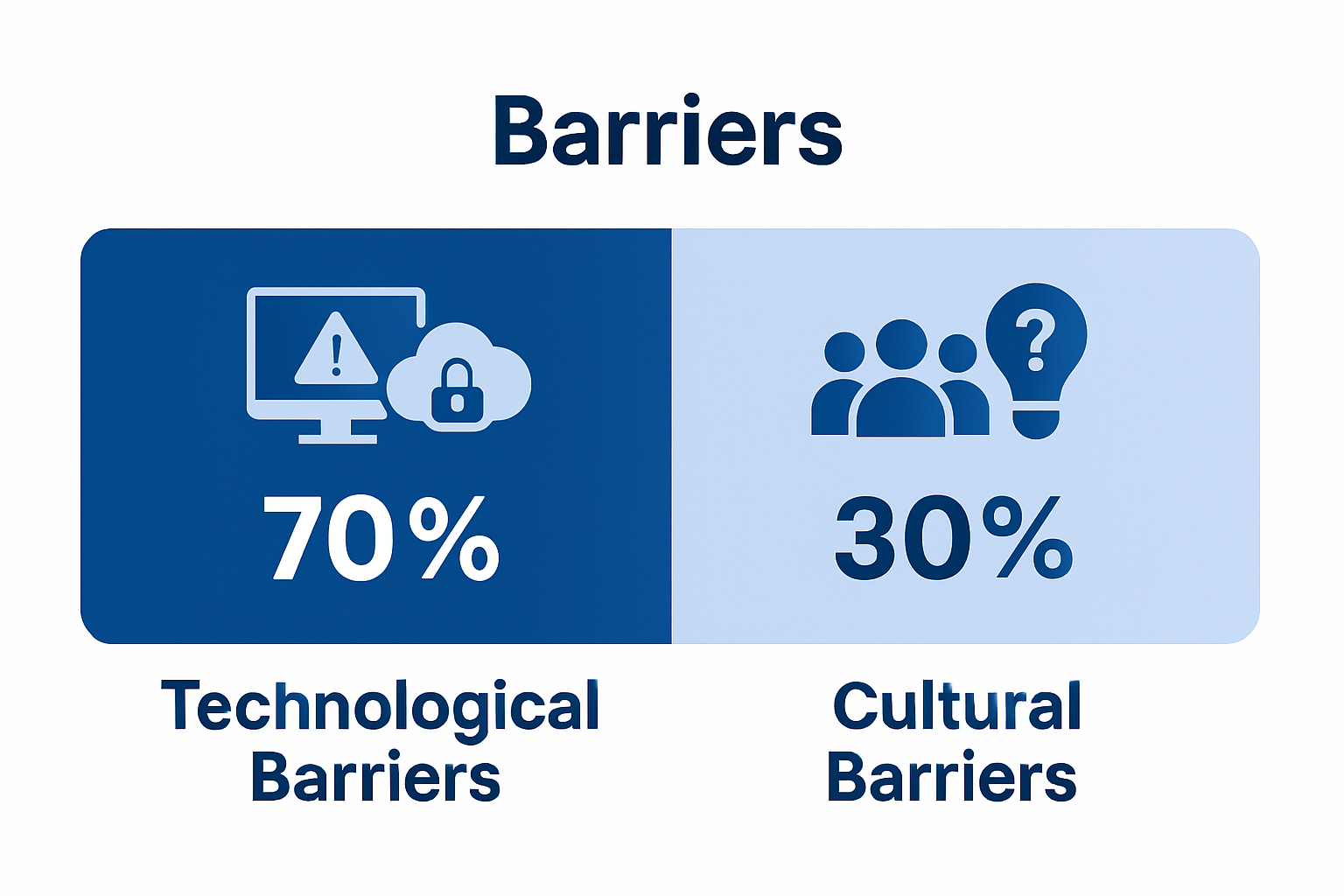
The most critical cultural challenges include:
- Overcoming employee skepticism about technological change
- Developing a continuous learning mindset
- Breaking down departmental silos
- Creating an innovation-friendly organizational culture
Successful digital transformation demands more than technological investment. It requires a strategic, comprehensive approach that simultaneously addresses technological infrastructure, human capabilities, and organizational readiness. Businesses must view digital transformation not as a one-time project but as an ongoing journey of adaptation and innovation.
See exactly where your profile stands right now.
Our GBP audit shows your current rank position across your market, how your profile completeness scores against competitors, and the specific gaps holding you back from the Map Pack.
The Importance of Addressing Digital Transformation Challenges
Addressing digital transformation challenges is not merely a technological imperative but a critical strategic necessity for businesses seeking sustainable growth and competitive advantage in an increasingly digital marketplace. Organizations that proactively recognize and navigate these challenges position themselves to unlock unprecedented opportunities for innovation, efficiency, and market responsiveness.
Strategic Competitive Advantage
Digital transformation challenges represent more than obstacles. Explore strategic digital solutions for small businesses reveals they are strategic inflection points that can fundamentally reshape an organization’s competitive positioning. Businesses that effectively manage these challenges can:
- Accelerate operational efficiency
- Create more personalized customer experiences
- Develop agile, adaptable organizational structures
- Generate new revenue streams through digital innovation
The ability to transform challenges into strategic opportunities distinguishes market leaders from followers. Successful digital transformation is not about technology implementation but about strategic reimagination of business models and processes.
Risk Mitigation and Resilience
According to research from EDUCAUSE, addressing digital transformation challenges is crucial for building organizational resilience. Businesses that proactively manage technological and cultural transitions reduce significant risks associated with technological obsolescence, workforce skill gaps, and market disruption.
Key risk mitigation strategies include:
- Continuous workforce skill development
- Incremental technological integration
- Cross-functional collaboration
- Regular strategic technology assessments
By embracing digital transformation challenges as opportunities for growth and learning, organizations can create more adaptive, innovative, and future-ready business ecosystems. The journey is not about perfect execution but about maintaining a dynamic, learning-oriented approach to technological and organizational change.
Key Factors Influencing Digital Transformation Success
Successful digital transformation extends beyond technological implementation, requiring a sophisticated blend of strategic planning, organizational culture, and adaptive capabilities. Businesses must understand the intricate dynamics that determine the effectiveness of their digital evolution strategies.
Leadership and Strategic Vision
Strategic leadership plays a pivotal role in driving digital transformation. Learn about digital strategies for small businesses demonstrates that organizations with clear, forward thinking leadership are more likely to navigate complex technological transitions successfully. Leaders must not only comprehend technological potential but also articulate a compelling vision that motivates organizational change.
Key leadership characteristics include:
- Commitment to continuous learning
- Openness to technological experimentation
- Ability to articulate clear digital strategy
- Willingness to challenge existing organizational paradigms
Technological Infrastructure and Skill Development
According to research from the International Labour Organization, successful digital transformation requires comprehensive investment in both technological infrastructure and human capital. Organizations must create an ecosystem that supports technological innovation while simultaneously developing workforce capabilities.
Critical infrastructure and skill development considerations include:

- Implementing scalable technological platforms
- Providing continuous employee training programs
- Developing cross functional digital literacy
- Creating mechanisms for ongoing technological assessment
Digital transformation is not a destination but an ongoing journey of strategic adaptation. Successful organizations recognize that technological evolution requires persistent commitment, flexible thinking, and a holistic approach that integrates technological capabilities with human potential. The most effective transformations occur when technological innovation is seamlessly woven into organizational culture and strategic objectives.
Common Obstacles Businesses Face in Digital Transformation
Digital transformation presents a complex landscape of challenges that can derail even the most sophisticated organizational change efforts. Understanding these obstacles is crucial for businesses seeking to navigate the intricate path of technological and strategic evolution.
Technological and Infrastructural Barriers
Legacy systems and technological incompatibility represent significant impediments to digital transformation. Explore digital transformation strategies for small businesses highlights how outdated technological infrastructure can create substantial roadblocks in implementing modern digital solutions. Organizations often struggle with:
- Integrating new technologies with existing systems
- Managing complex technological migration processes
- Addressing cybersecurity vulnerabilities
- Overcoming limited technological scalability
Organizational Culture and Change Management
According to research from EDUCAUSE, organizational inertia represents a profound challenge in digital transformation efforts. Resistance to change, entrenched organizational practices, and insufficient change management strategies can significantly undermine digital transformation initiatives.
Key cultural obstacles include:
- Deeply ingrained traditional working methods
- Lack of digital literacy across workforce
- Insufficient leadership support for transformation
- Fear of technological disruption among employees
Successful digital transformation requires a holistic approach that simultaneously addresses technological, human, and strategic dimensions. Organizations must develop comprehensive strategies that not only introduce technological innovations but also cultivate a culture of continuous learning, adaptability, and technological embrace. The most effective transformations emerge from an understanding that digital evolution is not merely a technological upgrade but a fundamental reimagining of organizational capabilities and potential.
To clarify the two major categories of obstacles businesses face in digital transformation, the following table compares technological and cultural challenges based on the article’s discussion.
| Challenge Category | Key Obstacles | Impact on Transformation |
|---|---|---|
| Technological & Infrastructural | – Legacy systems |
- Compatibility issues
- Cybersecurity vulnerabilities
- Limited scalability | Delay in implementation, increased costs, and potential security risks |
| Organizational Culture & Change| – Employee resistance - Lack of digital literacy
- Insufficient leadership support
- Entrenched practices| Hinders adoption of new processes and limits transformation success |
Strategies to Overcome Digital Transformation Challenges
Overcoming digital transformation challenges requires a multifaceted, strategic approach that addresses technological, cultural, and organizational dimensions simultaneously. Successful organizations develop comprehensive strategies that transform potential obstacles into opportunities for innovation and growth.
Technological Infrastructure and Integration
Modernizing technological infrastructure is fundamental to effective digital transformation. Discover strategic digital solutions for small businesses emphasizes the importance of creating flexible, scalable technological ecosystems. Organizations must develop strategies that:
- Implement modular and adaptable technological platforms
- Ensure seamless system interoperability
- Prioritize cloud based and API driven architectures
- Create robust cybersecurity frameworks
Cultural Transformation and Change Management
According to research from MIT Sloan, successful digital transformation hinges on more than technological upgrades. Organizational culture must be intentionally reshaped to support continuous innovation and technological adaptation.
Key cultural transformation strategies include:
- Developing comprehensive digital literacy programs
- Establishing cross functional collaboration mechanisms
- Creating innovation friendly organizational structures
- Implementing agile and iterative learning approaches
-
Applying change management models to reduce resistance and drive adoption
This is the work we do for you. Every week, without exception.
Managing GBP at this level takes 6–8 hours a week when done right. Nova handles the entire system — posts, photos, reviews, Q&A, citations, heatmap tracking — so you can focus on running your business.
Strategic digital transformation transcends technological implementation. It represents a holistic reimagining of organizational capabilities, requiring persistent commitment, adaptive thinking, and a willingness to challenge existing paradigms. Successful organizations view digital transformation not as a destination but as an ongoing journey of strategic evolution, where technological innovation is seamlessly integrated with human potential and organizational objectives.
Here is a table summarizing the key strategies addressed in the article that help organizations overcome digital transformation challenges by targeting both technological infrastructure and cultural transformation.
| Strategy Area | Representative Actions |
|---|---|
| Technological Infrastructure | – Implement modular, scalable platforms |
- Ensure system interoperability
- Strengthen cybersecurity |
| Cultural Transformation | – Develop digital literacy programs - Foster cross-functional collaboration
- Cultivate innovation culture |
Ready to Break Through Digital Transformation Roadblocks?
Digital transformation can feel overwhelming, especially when technological complexity and cultural resistance slow you down. If you recognize pain points such as legacy systems, change management struggles, or the challenge of aligning innovation with real business goals, you are not alone. Many businesses face similar hurdles as described in the article, and overcoming them is critical to building a resilient and future-ready organization.

Let our expert team help you bridge the gap between your current technology and a seamlessly integrated digital future. At 12AM Agency, we combine years of experience in AI-powered marketing, robust strategic planning, and proven digital tools like SEO, web design, and reputation management. We turn complexity into clear, actionable solutions for you. Your competitors are evolving. Now is the time to get ahead. Visit our contact page for a tailored transformation assessment. Let us guide your digital journey toward improved performance, efficiency, and growth before another opportunity passes you by.
Frequently Asked Questions
What are the main challenges associated with digital transformation for businesses?
Digital transformation challenges include technological integration difficulties, cultural and organizational resistance, legacy system limitations, and managing complex implementation processes.
How can organizations overcome cultural resistance during digital transformation?
Organizations can address cultural resistance by fostering a continuous learning mindset, breaking down departmental silos, and creating an innovation-friendly culture that encourages employee buy-in and collaboration.
Why is leadership important in the success of digital transformation initiatives?
Strategic leadership is crucial as it provides a clear vision, motivates organizational change, and fosters an environment of openness to technological experimentation and continuous learning.
What strategies can businesses implement to enhance their technological infrastructure for digital transformation?
Businesses can modernize their technological infrastructure by implementing modular, cloud-based platforms, ensuring system interoperability, prioritizing cybersecurity, and creating robust mechanisms for ongoing technological assessment.

