





SEO controls who gets seen online and who disappears into the noise. Over half of all website traffic comes from organic search, with organic search driving about 53% of total web visits. Most people expect complicated code or technical tricks to be the key. The real story is much simpler. Modern SEO is about connecting with users exactly when they need answers and building trust long before they ever click a link.
Table of Contents
- What Is Seo And Its Importance For Businesses?
- How Search Engines Function And Rank Content
- Key Components Of Seo: On-Page, Off-Page, And Technical
- The Role Of Keywords And User Intent In Seo
- How Seo Evolves With Market Trends And User Behavior
Quick Summary
| Takeaway | Explanation |
|---|---|
| SEO enhances online visibility. | Effective SEO strategies significantly increase a website’s ranking on search results, attracting more visitors. |
| Content quality is crucial. | High-quality, relevant content helps websites rank higher and fulfill user search intents effectively. |
| Keywords must match user intent. | Understanding and strategically using keywords align your content with what users are searching for, improving engagement. |
| Technical SEO affects rankings. | Factors like site speed and mobile responsiveness are essential for ensuring search engines can crawl and index your website efficiently. |
| Stay updated with SEO trends. | Embracing evolving technologies and user behaviors is vital to maintaining competitive search visibility in a dynamic digital landscape. |
What is SEO and Its Importance for Businesses?
Search Engine Optimization (SEO) represents a strategic digital marketing approach designed to enhance a website’s visibility and ranking on search engine results pages (SERPs). At its core, SEO helps businesses increase their online presence by making their websites more attractive and relevant to search engines like Google. Understanding the key factors influencing serp rankings is crucial for effective optimization strategies. These factors can range from on-page elements such as content quality and keyword usage to off-page considerations like backlinks and social signals. By focusing on these aspects, businesses can target improvements that drive organic traffic and enhance user engagement.
Understanding SEO Fundamentals
SEO works by optimizing various elements of a website to improve its chances of appearing higher in organic search results. Search engines use complex algorithms that evaluate hundreds of factors to determine a website’s relevance and authority. These factors include content quality, website structure, user experience, backlink profile, and technical performance.
Key elements that impact SEO performance include:
- Relevant and high-quality content creation
- Strategic keyword implementation
- Website loading speed
- Mobile responsiveness
- User engagement metrics
The Business Impact of SEO
For businesses, effective SEO is not just about visibility but about connecting with potential customers precisely when they are searching for solutions. Local businesses can significantly benefit from targeted SEO strategies that help them compete more effectively in their specific markets. By implementing local SEO strategies for service businesses, companies can enhance their online presence and attract customers who are searching for their services in the local area. These strategies not only improve search engine rankings but also foster trust within the community, making it easier for potential clients to choose their services. As a result, leveraging effective local SEO can lead to increased foot traffic, higher conversion rates, and sustained growth for small enterprises.
According to Search Engine Journal, businesses that invest in SEO can experience substantial returns. Organic search drives approximately 53% of website traffic, making it a critical channel for customer acquisition. By implementing strategic SEO practices, companies can:
- Increase website visibility
- Attract high-quality website traffic
- Improve brand credibility
- Generate more leads and conversions
Successful SEO transforms a website from being merely an online brochure to a powerful customer acquisition tool that works continuously to attract and engage potential clients.

How Search Engines Function and Rank Content
Search engines operate through a sophisticated process of discovering, analyzing, and presenting digital content to users. This intricate system involves three primary stages: crawling, indexing, and ranking, which work together to deliver the most relevant search results.
The Web Crawling Process
Search engines deploy automated programs called web crawlers or spiders that systematically browse the internet. These digital scouts navigate through websites by following links, discovering new and updated content.
Our comprehensive guide on search ranking explores this mechanism in depth.
Key activities during web crawling include:
- Discovering new web pages and websites
- Following hyperlinks between pages
- Detecting changes in existing content
- Identifying new digital resources
Indexing and Content Evaluation
After crawling, search engines store and organize discovered content in massive databases called search indexes. During indexing, complex algorithms analyze multiple factors to understand the context, relevance, and quality of each webpage. According to Google’s official documentation, this process involves evaluating hundreds of signals to determine a page’s potential value to searchers.
Critical factors considered during indexing include:
- Content quality and originality
- Keyword relevance and context
- Website authority and credibility
- User engagement metrics
- Technical website performance
Ranking and Result Presentation
The final stage involves ranking indexed content based on its perceived relevance to specific search queries. Search engines use advanced machine learning algorithms that continuously evolve to understand user intent and deliver the most appropriate results. Websites that demonstrate expertise, authoritativeness, and trustworthiness are more likely to rank higher in search results, making SEO a critical strategy for digital visibility.
Key Components of SEO: On-page, Off-page, and Technical
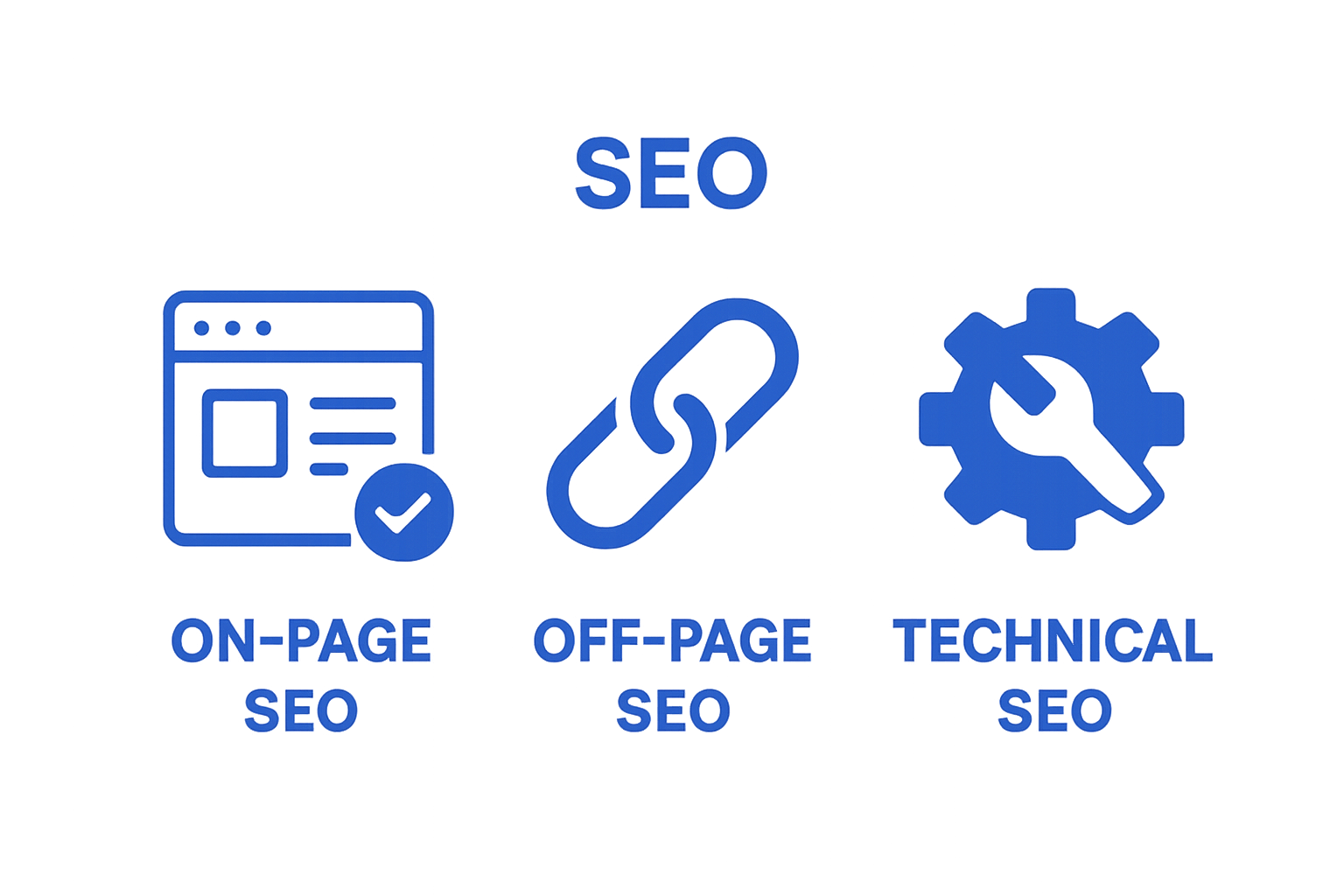
Search Engine Optimization (SEO) is a multifaceted strategy comprising three primary components that work synergistically to improve a website’s search engine performance. Understanding these components allows businesses to develop comprehensive digital marketing approaches that enhance online visibility.
On-Page SEO: Content and Optimization
On-page SEO focuses on optimizing individual web pages to rank higher and earn more relevant traffic. This component involves creating high-quality, contextually rich content that directly addresses user search intent. Learn more about improving page performance and user experience, which are critical factors in on-page optimization.
Key elements of on-page SEO include:
- Strategic keyword placement
- Compelling and informative content
- Proper HTML header tag structure
- Internal linking strategies
- Optimized meta descriptions and title tags
Off-Page SEO: Building Digital Authority
Off-page SEO encompasses activities performed outside of your website to improve search engine rankings. This approach centers on building digital credibility through external signals that demonstrate your website’s trustworthiness and relevance. The primary mechanism involves acquiring high-quality backlinks from reputable websites within your industry.
Critical off-page SEO strategies involve:
- Developing authoritative backlink profiles
- Engaging in digital public relations
- Creating shareable content
- Participating in industry forums and discussions
- Managing online brand reputation
Technical SEO: Website Infrastructure and Performance
Technical SEO addresses the backend elements that impact search engine crawling and indexing. This component ensures that search engines can efficiently understand and interpret website content. According to research from Boise State University, technical optimization involves complex backend configurations that significantly influence search rankings.
Essential technical SEO considerations include:
- Website loading speed
- Mobile responsiveness
- Secure HTTPS protocol
- XML sitemap optimization
- Structured data implementation
By integrating these three SEO components, businesses can create a robust digital strategy that improves search engine visibility and attracts targeted organic traffic.
To clarify the relationship and distinctions among the main pillars of SEO, the table below compares On-Page, Off-Page, and Technical SEO by focus areas and key activities.
| SEO Component | Focus Area | Key Activities |
|---|---|---|
| On-Page SEO | Content & page optimization | Keyword placement, content quality, meta tags, internal linking |
| Off-Page SEO | External authority & reputation | Backlink building, digital PR, forum participation, brand mentions |
| Technical SEO | Site infrastructure & performance | Site speed, mobile responsiveness, HTTPS, sitemaps, structured data |
The Role of Keywords and User Intent in SEO
Keywords form the critical bridge connecting user search queries with relevant digital content. Understanding how keywords interact with user intent represents a sophisticated approach to developing effective SEO strategies that deliver precise, meaningful search results.
Understanding Keyword Fundamentals
Keywords are specific words or phrases that users type into search engines when seeking information, products, or services. Strategic keyword selection goes beyond simple word matching, requiring deep comprehension of user motivations and search behaviors. Learn more about finding the perfect keyword balance to optimize your content effectively.
Key characteristics of effective keywords include:
- Relevance to target audience
- Alignment with user search intent
- Reasonable search volume
- Manageable competition levels
- Natural integration into content
Decoding User Search Intent
User intent represents the underlying purpose behind a search query. According to research from the University of Minnesota, search intent can be categorized into four primary types:
- Informational: Users seeking knowledge or answers
- Navigational: Users looking for a specific website or page
- Transactional: Users prepared to make a purchase
- Commercial Investigation: Users comparing products or services
Successful SEO strategies require content that precisely matches these diverse intent categories, providing users exactly what they seek at each stage of their digital journey.
To help understand how search intent influences SEO strategy, this table summarizes the four types of user intent and the typical user goal behind each search.
| User Intent Type | Primary User Goal |
|---|---|
| Informational | Find information or get answers |
| Navigational | Locate a specific website or web page |
| Transactional | Complete a purchase or specific action |
| Commercial Investigation | Compare products/services before buying |
Keyword Research and Strategic Implementation
Effective keyword research involves comprehensive analysis of search trends, user behaviors, and competitive landscapes. Modern SEO practitioners utilize advanced tools to identify high-value keywords that balance search volume, relevance, and competition. The goal is not merely to include keywords but to create contextually rich content that genuinely addresses user needs.
Critical steps in keyword implementation include:
- Conducting thorough keyword research
- Understanding semantic variations
- Creating topic clusters
- Integrating keywords naturally
- Monitoring performance and adapting strategies
By masterfully connecting keywords with authentic user intent, businesses can develop content strategies that not only improve search rankings but also provide genuine value to their target audience.
How SEO Evolves with Market Trends and User Behavior
Search Engine Optimization is a dynamic discipline constantly reshaping itself in response to technological advancements, shifting user behaviors, and emerging digital landscapes. Understanding these evolutionary patterns is crucial for businesses seeking sustained online visibility and competitive advantage.
The Digital Transformation Landscape
Modern SEO transcends traditional keyword optimization, becoming a sophisticated ecosystem of user experience, technological adaptation, and predictive strategy. Explore how artificial intelligence is transforming SEO strategies and understand the emerging digital trends that drive search engine algorithms.
Key drivers of SEO evolution include:
- Artificial intelligence integration
- Machine learning algorithms
- Voice search technologies
- Mobile-first indexing
- Enhanced user experience metrics
Adapting to Changing User Behaviors
User search behaviors are continuously transforming, driven by technological innovations and societal shifts. Consumers now expect more personalized, contextually relevant search experiences that deliver immediate, precise information. Search engines respond by developing increasingly sophisticated algorithms that prioritize user intent over simplistic keyword matching.
Significant behavioral trends reshaping SEO include:
- Increased mobile device usage
- Preference for conversational search queries
- Growing demand for multimedia content
- Expectations of hyper-personalized results
- Rising importance of local and contextual search
Technological Innovations and Algorithm Updates
Search engine algorithms undergo constant refinement, integrating advanced technologies to improve result accuracy and relevance. According to emerging digital research, these updates focus on creating more intuitive, intelligent search experiences that understand nuanced user intent beyond literal keyword interpretation.
Critical technological developments impacting SEO include:
- Natural language processing
- Semantic search capabilities
- Predictive search recommendations
- Enhanced machine learning models
- Real-time content indexing
Successful digital strategies now require continuous learning, adaptation, and proactive technological integration to remain competitive in an increasingly complex search ecosystem.
Supercharge Your Business Growth with Proven SEO Solutions
You just learned how the right SEO approach can transform your website from a passive presence into an active customer magnet. Still, navigating complex ranking factors like user intent, technical SEO, and keyword alignment can feel overwhelming. Many businesses struggle to compete in search results because they lack tailored strategies and expert guidance that actually move the needle.

Now is your chance to stop missing out on high-quality leads. Partner with digital marketing specialists who turn sophisticated SEO concepts into measurable growth for your business. Connect directly with our team at 12AM Agency to get a personalized SEO strategy, crafted for your industry and goals. Let us help you boost your visibility, draw in the right visitors, and outpace your competitors while you focus on running your business. Schedule your consultation today to unlock the full value of everything you learned in this article.
Frequently Asked Questions
What is SEO and why is it important for businesses?
SEO, or Search Engine Optimization, is a digital marketing strategy that enhances a website’s visibility in search engine results. It’s important for businesses because effective SEO can significantly increase online presence, drive organic traffic, improve brand credibility, and ultimately lead to higher conversions and sales.
How do search engines rank content?
Search engines rank content based on complex algorithms that consider various factors, including content quality, relevance, keywords, website authority, user engagement, and technical performance. The goal is to deliver the most relevant results to users’ search queries.
What are the key components of SEO?
The key components of SEO include on-page SEO (optimizing individual pages for relevant content and keywords), off-page SEO (building site authority through backlinks and external signals), and technical SEO (ensuring the website’s backend is optimized for crawling and indexing).
How can businesses improve their SEO strategy?
Businesses can improve their SEO strategy by conducting thorough keyword research, optimizing web content for both relevance and user intent, enhancing website loading speed, ensuring mobile responsiveness, and actively engaging in off-page initiatives such as backlink building and online reputation management.