




How many keywords for SEO? If that’s your question, you’re in the right place. Here’s the quick answer for anyone in a hurry:
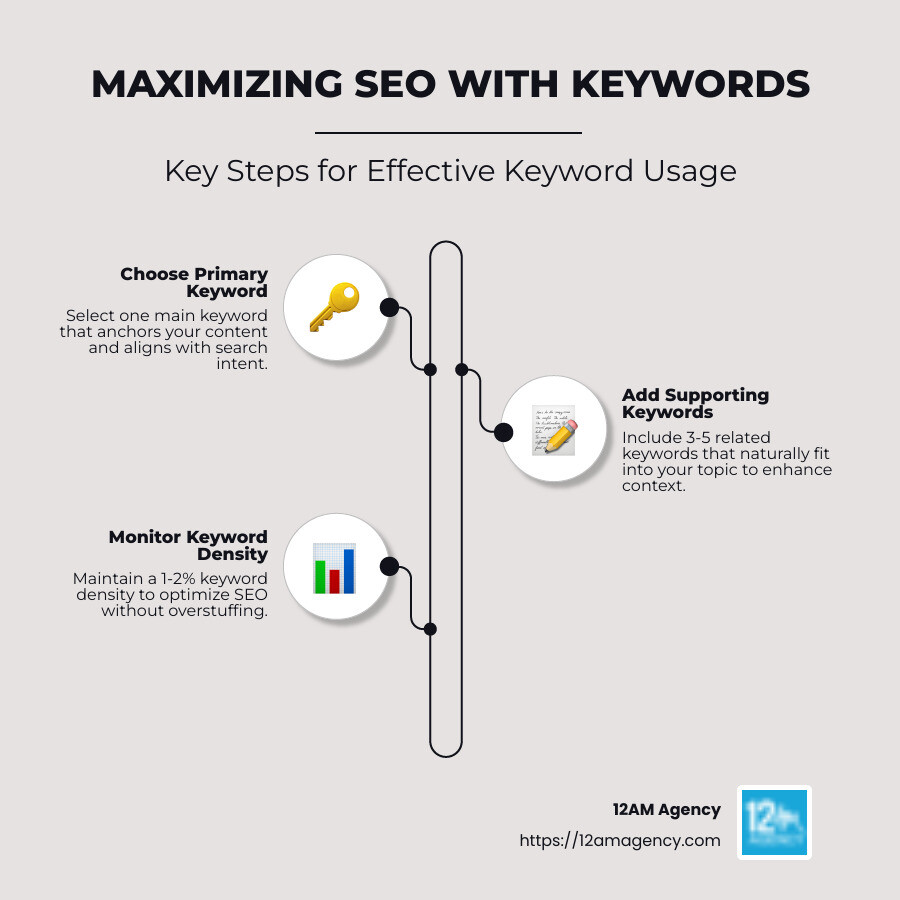
- Use one primary keyword per page to anchor your content.
- Include 3-5 supporting keywords that naturally align with your core topic.
- Aim for a 1-2% keyword density to avoid overstuffing, which can harm your SEO efforts.
Open uping the potential of your website begins with understanding SEO keywords—the terms or phrases that potential customers search for. These keywords are crucial components in boosting your site’s organic traffic. When used effectively, they help people find your business through search engines. The ultimate goal is a well-balanced strategy that aligns with search intent—the user’s purpose when they type something into a search engine.
As business owners strive for better visibility online, deciphering how to effectively use these keywords can seem overwhelming. But don’t worry! I’m Robert Portillo, a seasoned digital marketing expert with a passion for helping businesses thrive online. With years of experience, I can guide you in finding the right balance of keywords for SEO to drive measurable growth for your business.
Understanding SEO Keywords
Before delving into the specifics of keyword count, it’s essential to understand the basics of SEO keywords. These are the terms or phrases that individuals enter into search engines when seeking information, products, or services. By comprehending these keywords, you can better align your content with what your audience is searching for.
Primary Keyword
Consider the primary keyword as the central theme of your page. It’s the main topic you want to rank for in search engines. For instance, if you’re crafting an article about dog training, your primary keyword might be “dog training tips.” This keyword should be prominently featured in your title, headers, and throughout your content.
Why focus on one primary keyword?
Because it provides clarity. It communicates to both search engines and readers what your page is about. A clear focus helps your page rank higher and makes it easier for users to find the information they’re seeking.
Secondary Keywords
While the primary keyword is your main focus, secondary keywords act as the supporting cast. They are related terms or phrases that add context and depth to your content. For example, alongside “dog training tips,” you might include secondary keywords like “puppy training,” “obedience training,” and “positive reinforcement.”
Secondary keywords are vital for covering a topic comprehensively. They help you capture a broader range of search queries and increase your chances of ranking for multiple terms. This strategy aligns with the idea that a well-rounded page can rank for numerous keywords, not just one.
Search Intent
Understanding search intent is crucial for effective keyword use. It’s about knowing why someone is searching for a particular term. Are they looking to purchase something? Do they want to learn how to do something? Or are they simply gathering information?
For example, if someone searches for “best dog training tips,” their intent might be to find actionable advice. Conversely, a search for “dog training classes near me” indicates an intent to find a service.
See exactly where your profile stands right now.
Our GBP audit shows your current rank position across your market, how your profile completeness scores against competitors, and the specific gaps holding you back from the Map Pack.
Knowing the intent behind search queries helps you tailor your content to meet user needs. Aligning your keywords with search intent ensures that your content is relevant and useful, which can boost your rankings and attract the right audience.
In summary, mastering SEO keywords involves a strategic balance of primary and secondary keywords, all while keeping search intent in mind. This foundational understanding sets the stage for optimizing your content effectively.
How Many Keywords for SEO?
When it comes to determining how many keywords for SEO is optimal, several factors come into play: content length, user intent, and competition.
Content Length
The length of your content significantly impacts how many keywords you can effectively use. Longer content naturally allows for more keywords, both primary and secondary. For instance, a 2,000-word article can comfortably accommodate a primary keyword and several secondary keywords without feeling stuffed. On the other hand, a 500-word piece may only support a primary keyword and a couple of secondary ones.
Why does content length matter?
Longer content provides more room to explore a topic in depth, offering value to readers and search engines alike. It allows you to naturally incorporate keywords without overstuffing, which can lead to penalties from search engines.
User Intent
Understanding user intent is crucial when deciding on keyword usage. Different intents require different approaches:
- Informational intent: Users are looking for information. Here, a mix of primary and secondary keywords can help cover various facets of a topic.
- Transactional intent: Users are ready to make a purchase. Focus on keywords that align closely with buying signals.
- Navigational intent: Users are searching for a specific site or page. Keywords should be precise and direct.
Tailoring your keyword strategy to user intent ensures that your content is relevant and meets the needs of your audience, which can improve your ranking and engagement.
Competition
Competition plays a big role in keyword strategy. High-competition keywords might require more effort and a strategic approach to rank for. In these cases, using a combination of primary and secondary keywords can help you target less competitive, long-tail variations that still capture relevant traffic.
How to assess competition?
Tools like Ahrefs and Keysearch can help you analyze keyword difficulty and competition. They offer insights into what your competitors are ranking for and suggest opportunities for targeting keywords that have a better chance of ranking.
By considering content length, user intent, and competition, you can strike the right balance in keyword usage. This approach ensures that your content is optimized for both search engines and users, helping you achieve better visibility and engagement.
Best Practices for Keyword Usage
When it comes to optimizing your content, understanding and applying the best practices for keyword usage is crucial. Let’s explore some key concepts: keyword density, keyword stuffing, and semantic richness.
Keyword Density
Keyword density refers to the percentage of times a keyword appears in your content compared to the total word count. While some experts suggest a density of 1-2%, it’s important to focus on natural integration rather than hitting a specific number.
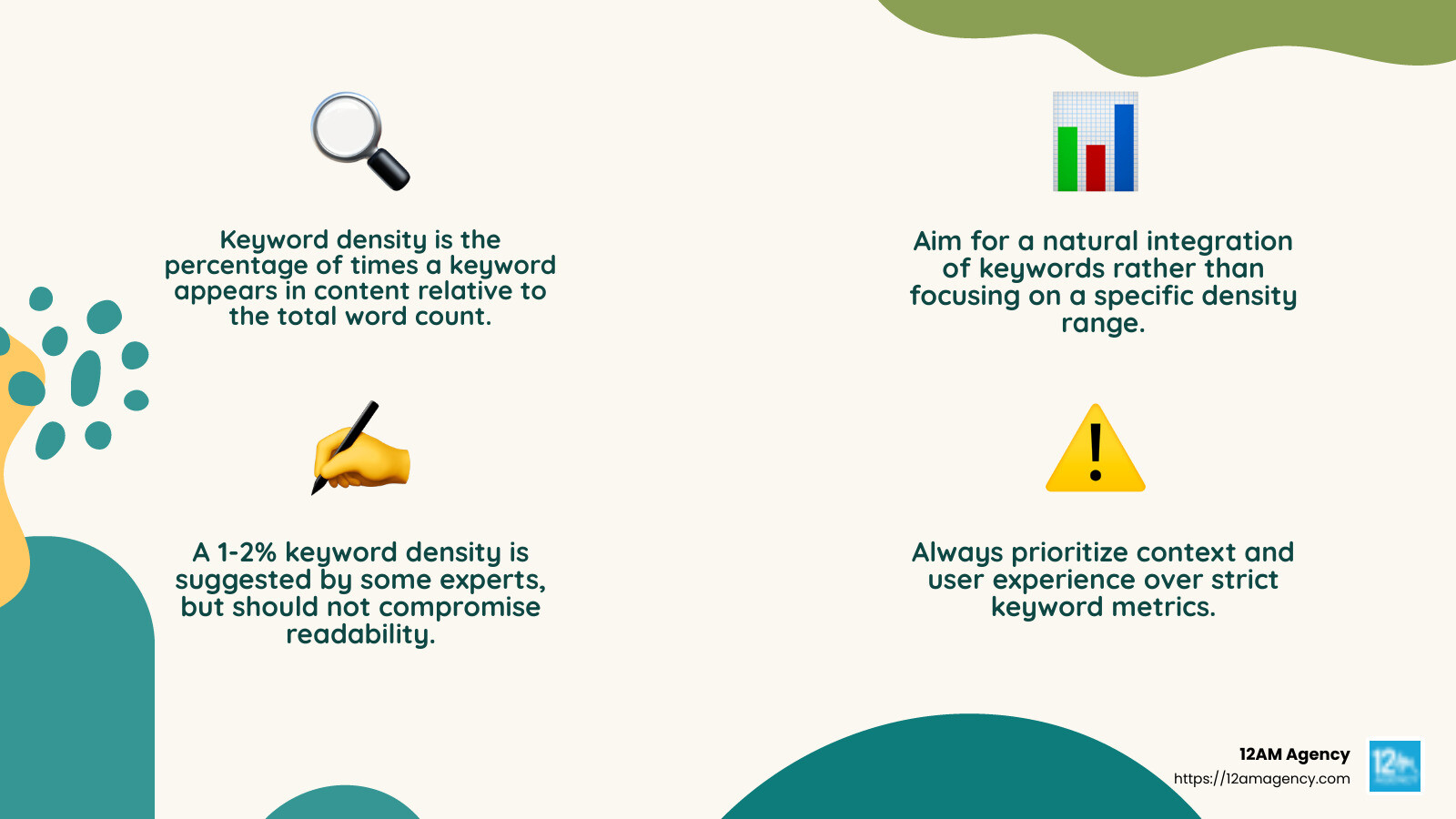
For instance, in a 1,000-word article, you might use your primary keyword 10-20 times. However, always prioritize readability and context over rigid metrics.
Avoid Keyword Stuffing
Keyword stuffing is the practice of overloading a webpage with keywords in an attempt to manipulate search rankings. This outdated tactic can actually harm your SEO efforts. Google and other search engines have evolved to recognize and penalize keyword stuffing.
Here’s a quick tip: If your content reads awkwardly or feels forced, it’s time to revise. Ensure your keywords fit naturally within the text.
Accept Semantic Richness
Semantic richness involves using a variety of related terms and phrases to provide depth and context to your content. Instead of focusing solely on a single keyword, consider the broader topic and incorporate relevant secondary keywords. This approach helps search engines understand the full scope of your content and improves its overall quality.
For example, if your primary keyword is “best travel destinations,” you might include secondary keywords like “budget-friendly travel” or “family vacation spots.” This not only enriches your content but also aligns with different user intents, enhancing your chances of ranking for multiple queries.
By balancing keyword density, avoiding keyword stuffing, and embracing semantic richness, you can create content that is both search engine-friendly and valuable to your readers.
Next, we’ll explore the tools available for effective keyword research, helping you identify the best keywords for your content strategy.
Tools for Keyword Research
Finding the right tools can make keyword research straightforward and efficient. Let’s explore some of the best tools available: Ahrefs, Google Search Console, and Keysearch.
Ahrefs
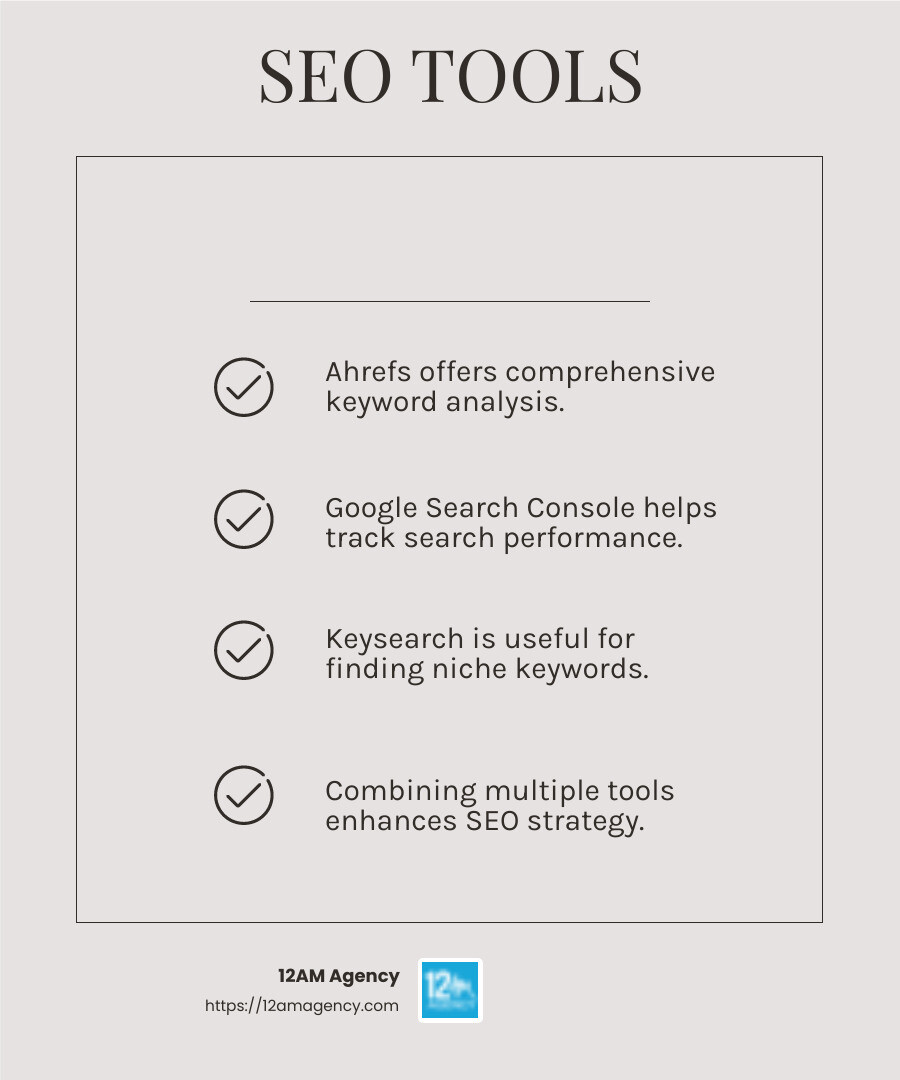
Ahrefs is a robust tool for keyword research, known for its extensive data and intuitive interface. With Ahrefs’ Keywords Explorer, you can discover new keyword ideas and evaluate their potential. It provides metrics like Keyword Difficulty (KD) and Traffic Potential (TP), which are crucial for selecting effective primary keywords.
For example, if you manage a pet supplies website and are considering “dog toys” as a topic, Ahrefs can reveal related keywords and their search volumes, aiding in the creation of content that resonates with your audience.
Google Search Console

Google Search Console (GSC) is a free tool that provides valuable insights into your site’s performance on Google Search. It helps you understand which keywords drive traffic to your site and how your pages rank.
By exploring the Performance section in GSC, you can see the queries generating the most clicks, helping you identify keywords you’re already ranking for. This information is essential for refining your keyword strategy and optimizing existing content.
Keysearch

Keysearch is an affordable option for those new to SEO. It’s ideal for beginners and offers features like keyword analysis and competition checking. With Keysearch, you can easily find long-tail keywords that might be less competitive but still valuable for driving traffic.
For instance, if you’re targeting a niche market, Keysearch can help you find keywords with lower competition, giving you a better chance to rank high in search results. Use the code “sheknowsseo” to get a discount if you decide to try it out.
By leveraging these tools, you can uncover the best keywords to enhance your content strategy. Each tool offers unique features, so consider your specific needs and budget when choosing the right one for your SEO efforts.
This is the work we do for you. Every week, without exception.
Managing GBP at this level takes 6–8 hours a week when done right. Nova handles the entire system — posts, photos, reviews, Q&A, citations, heatmap tracking — so you can focus on running your business.
Next, we’ll address some frequently asked questions about keyword count to further refine your SEO strategy.
Frequently Asked Questions about Keyword Count
Is 500 words enough for SEO?
When it comes to content quality and relevance, the length of your content isn’t the only factor to consider. While 500 words can be enough for some topics, what truly matters is how well the content meets user intent and answers their queries. High-quality content that provides value and engages the reader is crucial.
For example, a concise 500-word article that thoroughly addresses a specific question can perform well in search results. However, more complex topics may require longer content to cover all necessary details. The key is to ensure your content is both relevant and informative, regardless of its length.
How many meta keywords should I use?
Meta keywords have minimal impact on SEO today. Search engines like Google no longer use them as a ranking factor. Instead, focus on crafting a clear and concise meta description that accurately summarizes your page’s content. This helps improve click-through rates by attracting users to your site.
While it might be tempting to stuff meta tags with keywords, it’s better to prioritize quality over quantity. A well-written meta description that aligns with user queries can be more beneficial than a list of keywords.
Can I rank without targeting specific keywords?
Yes, it’s possible to rank without focusing on specific keywords. High-quality content that addresses user queries and provides value can naturally attract traffic. Search engines are getting smarter at understanding the context and intent behind user searches, so they can rank content that meets these needs, even if it doesn’t target specific keywords.
For instance, if your content thoroughly answers a common question or solves a problem, it can perform well in search results. This approach emphasizes the importance of creating content that resonates with your audience and aligns with their search intent.
By focusing on content quality and user intent, you can improve your chances of ranking well, even without targeting specific keywords. This strategy ensures your content remains relevant and valuable to your audience, which is ultimately what search engines prioritize.
Conclusion
At 12AM Agency, we understand that navigating the complexities of SEO can be daunting. That’s why we offer personalized strategies custom to your unique business needs. Our team in Dallas, Texas, is committed to helping you find the perfect balance in your keyword strategy.
Why choose us? We focus on delivering results-driven solutions that improve your online presence without overwhelming you with unnecessary jargon. Our approach combines the latest SEO techniques with a deep understanding of your target audience, ensuring that your content not only ranks well but also resonates with your readers.
Whether you’re a local business looking to boost your visibility or a larger brand aiming to refine your digital strategy, our expertise in digital marketing and branding can guide you to success. By prioritizing content quality and user intent, we help you harness the power of SEO without compromising on authenticity or relevance.
If you’re ready to take your SEO strategy to the next level, explore our keyword density checker for a comprehensive tool that can assist in optimizing your content. Let us help you create a sustainable, impactful presence in the digital world.

