




Search engine algorithms control which websites appear at the very top of your Google results, shaping what billions of people discover each day. Most people think it’s just about matching a few keywords or catchy headlines. Actually, Google now uses thousands of ranking signals and advanced machine learning to analyze everything from content quality to mobile speed. That means the real secret to showing up online is way more complex, and the rules keep changing fast.
Table of Contents
- What Are Search Engine Algorithms?
- The Importance Of Search Engine Algorithms In Digital Marketing
- How Search Engine Algorithms Function: Key Components
- Understanding Ranking Factors: What Influences Search Results?
- The Evolution Of Search Engine Algorithms And Future Trends
Quick Summary
| Takeaway | Explanation |
|---|---|
| Search algorithms rank content based on many signals. | They analyze factors like content relevance, user experience, and site authority to determine rankings. |
| Crawling and indexing are fundamental processes. | Automated web crawlers discover sites, while indexing organizes them for efficient search retrieval. |
| Modern algorithms utilize advanced machine learning. | Algorithms adapt and improve based on user behavior and content quality, making rankings more accurate. |
| SEO strategies enhance online visibility. | Understanding ranking signals can help optimize website content for better search engine performance. |
| Continuous algorithm evolution demands adaptability. | Businesses must stay updated with changes to maintain competitiveness in the digital landscape. |
What Are Search Engine Algorithms?
Search engine algorithms are complex computational systems that determine how websites and web pages are ranked and displayed in search results. These sophisticated mathematical formulas analyze multiple factors to evaluate and prioritize digital content, creating a strategic framework for delivering the most relevant information to users.
The Core Components of Search Engine Algorithms
At their fundamental level, search engine algorithms consist of several critical processes that work together seamlessly. These processes include:
- Crawling: Automated programs called web crawlers systematically browse and index web pages across the internet
- Indexing: Organizing and storing web page information in massive databases for rapid retrieval
- Ranking: Evaluating and sorting web pages based on hundreds of different signals and ranking factors
According to TryEngineering.org, these algorithms are designed to understand user intent, assess content quality, and deliver the most accurate search results possible. The goal is not just to find matching keywords, but to comprehend the context and potential relevance of each piece of digital content.
The table below summarizes the core components of search engine algorithms and their primary functions, offering a quick-reference guide to how digital content is processed.
| Component | Description | Key Function |
|---|---|---|
| Crawling | Automated bots explore the internet to discover web pages | Discover and map new content |
| Indexing | Web page information is stored in massive, searchable databases | Organize and catalog content |
| Ranking | Pages are evaluated based on numerous signals and then sorted | Determine order of search results |
The Intelligence Behind Search Rankings
Modern search engine algorithms go far beyond simple keyword matching. They incorporate advanced machine learning techniques that continuously adapt and improve their understanding of web content. Factors like page loading speed, mobile responsiveness, content quality, user engagement metrics, and website authority all play crucial roles in determining search rankings.
Interested in diving deeper into how search algorithms can impact your digital strategy? Learn more about SEO optimization strategies that can help you navigate these complex digital landscapes.
Search engines like Google employ thousands of ranking signals, making their algorithms incredibly nuanced and dynamic. Each algorithm update represents a refinement in how digital content is evaluated, ensuring that users receive the most accurate and helpful information possible.
See exactly where your profile stands right now.
Our GBP audit shows your current rank position across your market, how your profile completeness scores against competitors, and the specific gaps holding you back from the Map Pack.
The Importance of Search Engine Algorithms in Digital Marketing
Search engine algorithms are the invisible architects of digital visibility, transforming how businesses connect with potential customers in the online marketplace. These complex systems determine which websites rise to prominence and which remain hidden in the depths of search results, making them critical tools for digital marketing success.
Strategic Visibility and Competitive Advantage
For businesses, understanding search engine algorithms represents more than technical knowledge it is a strategic imperative. These algorithms evaluate websites based on hundreds of signals, creating a competitive landscape where digital strategy determines market presence. Effective algorithm optimization can mean the difference between being discovered by potential customers or remaining virtually invisible.
According to OpenStax, search engine optimization strategies are essential for increasing website traffic and improving online visibility. The key signals that algorithms analyze include:
- Content Relevance: How closely web content matches user search intent
- User Experience: Website loading speed, mobile responsiveness, and navigation quality
- Credibility: Number and quality of external links, domain authority, and content authenticity
Adapting to Algorithmic Evolution
Search engine algorithms are not static they continuously evolve, becoming more sophisticated in understanding user behavior and content quality. Businesses must remain agile, constantly updating their digital strategies to align with these changes. This dynamic environment requires a proactive approach to digital marketing.
Explore cutting-edge SEO strategies for the AI era and stay ahead of the algorithmic curve. By understanding these intricate systems, companies can develop targeted approaches that improve their online visibility, attract more qualified leads, and ultimately drive business growth in an increasingly digital marketplace.
How Search Engine Algorithms Function: Key Components
Search engine algorithms are intricate computational systems that transform raw internet data into meaningful, ranked search results. These sophisticated mechanisms operate through a series of complex yet systematic processes designed to deliver the most relevant information to users with remarkable precision.
The Three Fundamental Operational Stages
At the core of search engine functionality are three critical stages that work in seamless coordination. Each stage represents a crucial transformation of digital information, enabling search engines to understand, organize, and present web content effectively:
- Crawling: Automated bots systematically explore the internet, discovering and mapping web pages
- Indexing: Capturing and storing discovered web page information in massive, searchable databases
- Ranking: Evaluating and sorting indexed content based on hundreds of sophisticated signals
According to the National Academies of Sciences, these algorithmic processes involve intricate query processing and relevance evaluation mechanisms that go far beyond simple keyword matching.
Advanced Algorithmic Intelligence
Modern search engine algorithms employ advanced machine learning techniques to continuously refine their understanding of digital content. They analyze complex factors such as user intent, content quality, website authority, and real-time engagement metrics. This dynamic approach allows search engines to adapt rapidly to changing internet landscapes and user behaviors.
Discover the most critical ranking factors that influence modern search engine performance. By understanding these nuanced computational processes, businesses and content creators can develop more strategic approaches to digital visibility and search optimization.
Understanding Ranking Factors: What Influences Search Results?
Search engine ranking factors are the complex criteria that determine a website’s visibility and position in search results. These multifaceted signals represent a sophisticated scoring system that evaluates digital content’s relevance, authority, and user value with remarkable precision.
Core Performance Indicators
Search engines analyze websites through a comprehensive lens, considering numerous interconnected factors that collectively determine search rankings. The most critical performance indicators include:
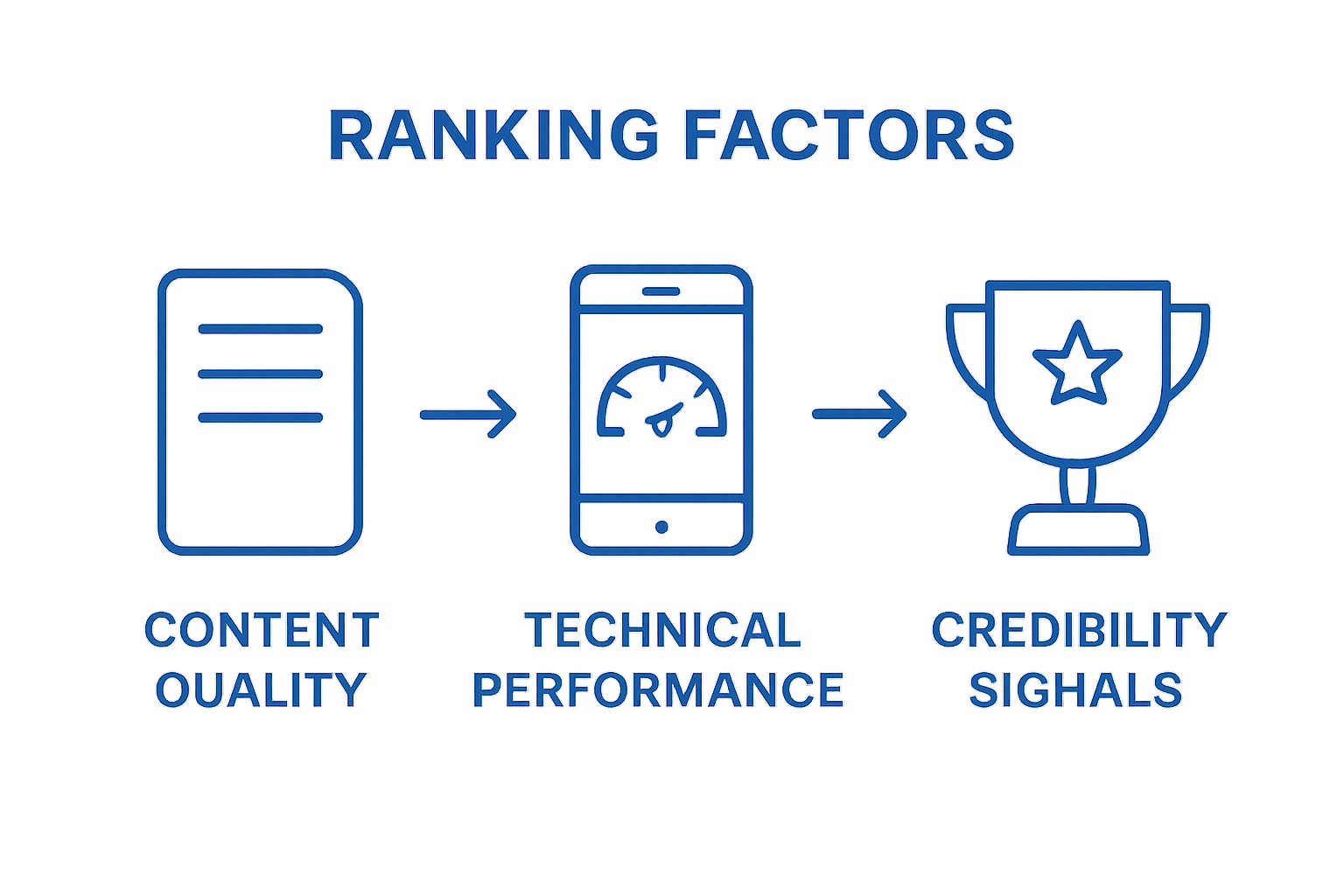
- Content Quality: Depth, originality, and relevance of information
- Technical Performance: Website speed, mobile responsiveness, and security protocols
- User Experience: Engagement metrics, navigation ease, and interaction patterns
- Credibility Signals: Backlink profile, domain authority, and content authenticity
According to research published in the medical journal’s systematic review, ranking mechanisms prioritize authoritative sources that demonstrate comprehensive and trustworthy information.
Dynamic Algorithmic Evaluation
Modern search algorithms do not rely on static metrics. They employ advanced machine learning techniques that continuously adapt and refine ranking criteria. This dynamic approach means websites must consistently optimize their digital presence to maintain competitive search visibility.
Uncover the most impactful ranking factors for 2025 and understand how cutting-edge algorithms evaluate digital content. By comprehending these nuanced ranking mechanisms, businesses can develop strategic approaches to improve their online presence and search performance.
The Evolution of Search Engine Algorithms and Future Trends
Search engine algorithms have undergone a remarkable transformation from simple keyword matching systems to sophisticated, intelligent networks capable of understanding complex human intent. This evolution represents a profound shift in how digital information is discovered, processed, and presented to users worldwide.
This table outlines the evolution of search engine algorithm generations, highlighting their defining characteristics and technological advancements for a better understanding of their historical progression.
| Generation | Defining Feature | Technological Advancement |
|---|---|---|
| First Generation | Basic keyword matching | Simple, linear indexing |
| Second Generation | Link analysis and PageRank | Evaluating web authority via backlinks |
| Third Generation | Semantic contextual understanding | Interpreting user intent and context |
| Fourth Generation | Machine learning and predictive models | Advanced AI-driven relevance and personalization |
The Historical Progression of Search Technologies
Search algorithms have progressed through distinct technological generations, each marked by significant computational breakthroughs. The journey from basic text matching to advanced machine learning demonstrates an incredible technological leap:
- First Generation: Basic keyword matching and linear indexing
- Second Generation: Introduction of link analysis and PageRank principles
- Third Generation: Semantic understanding and contextual relevance
- Fourth Generation: Machine learning and predictive user intent modeling
According to Stanford Encyclopedia of Philosophy, these advancements bring complex ethical considerations regarding algorithmic transparency and potential systemic biases.
Emerging Technological Frontiers
The future of search engine algorithms is intrinsically linked with artificial intelligence and machine learning technologies. Advanced neural networks and deep learning models are reshaping how search engines interpret and rank digital content. These emerging technologies promise more nuanced, personalized, and contextually intelligent search experiences.
This is the work we do for you. Every week, without exception.
Managing GBP at this level takes 6–8 hours a week when done right. Nova handles the entire system — posts, photos, reviews, Q&A, citations, heatmap tracking — so you can focus on running your business.
Explore the cutting-edge AI-driven SEO strategies that are transforming digital visibility. As search algorithms continue to evolve, businesses and content creators must adapt their strategies to leverage these sophisticated technological ecosystems, ensuring maximum digital relevance and user engagement.
Unlock the True Power Behind Search Rankings—Partner with Experts Who Understand Algorithmic Complexity
Are you struggling to make sense of the constant changes in search engine algorithms and how they influence your business’s online visibility? Navigating the maze of factors like content quality, technical performance, and evolving ranking signals can be overwhelming. The article highlighted how advanced algorithms and AI are shaping who gets found online and who gets left behind. Every day, potential customers are searching for services just like yours, but without the right strategy, you risk being invisible.
Take control of your digital future today. See what a personalized, AI-driven SEO approach can do for your brand.
Discover more about modern SEO ranking factors and transition from understanding algorithms to outsmarting them with proven strategies.

Ready to stop guessing and start growing? Connect with the specialists at 12AM Agency for a one-on-one consultation. Our team will craft a tailored plan to help your website rise above algorithm updates, engage your audience, and capture valuable leads. Don’t wait—turn knowledge into measurable results now.
Frequently Asked Questions
What are search engine algorithms?
Search engine algorithms are complex systems that determine how websites are ranked and displayed in search results. They analyze various factors to deliver relevant information to users based on their search intent.
How do search engine algorithms affect digital marketing?
Search engine algorithms significantly influence digital marketing by determining a website’s visibility in search results. Optimizing for these algorithms can enhance traffic and engagement, giving businesses a competitive advantage.
What factors do search engine algorithms consider for ranking?
Search engine algorithms evaluate several key factors, including content relevance, user experience, technical performance, and credibility signals such as backlinks and domain authority.
How often do search engine algorithms change?
Search engine algorithms are continuously evolving. They are updated frequently to adapt to new technologies and user behaviors, which requires businesses to consistently update their digital strategies to remain competitive.
Recommended
- Understanding How SEO Works for Business Growth
- The Ultimate Guide to SEO in 2025
- How Does Page Speed Affect SEO?
- How Does UX Affect SEO Rankings?

