




Content clusters and pillar pages are changing the way websites organize information. Research shows that sites using content clustering can experience major gains in search rankings and user engagement. Most people think SEO is about just stuffing keywords everywhere. What actually matters now is how well your content is connected and how it guides both users and search engines through a topic with real depth.
Table of Contents
- What Are Content Clusters And Pillar Pages?
- Why Content Clusters Matter For Seo Success
- How Content Clusters Improve User Experience And Engagement
- Key Concepts Behind Effective Content Clusters
- Applying Content Clusters In Real-World Seo Strategies
Quick Summary
| Takeaway | Explanation |
|---|---|
| Content clusters enhance SEO strategy | They create interconnected content that helps search engines recognize a website’s authority on topics. |
| Establish a clear content hierarchy | Use a pillar page for a broad overview and link to detailed subtopic articles for structured navigation. |
| Focus on user experience and engagement | Well-organized content keeps users on your site longer, improving interaction, and signaling quality to search engines. |
| Implement strategic internal linking | Link satellite content back to the pillar page to enhance authority and interconnectivity within the site’s information. |
| Conduct thorough keyword research | Identify core and related keywords to ensure comprehensive topic coverage and optimize search visibility. |
What Are Content Clusters and Pillar Pages?
Content clusters represent a strategic SEO approach that transforms how websites organize and interlink their digital content. At its core, this method involves creating a comprehensive pillar page that provides an overarching perspective on a broad topic, surrounded by multiple detailed content pieces that explore specific subtopics in depth.
The Anatomy of Content Clusters
A content clusters strategy functions like an interconnected knowledge network. The pillar page serves as the central hub, offering a broad overview of a primary topic. Surrounding this central page are multiple related articles (also called satellite content) that dive deeper into specific aspects of the main theme. These satellite pieces link back to the pillar page, creating a robust internal linking structure that signals topical expertise to search engines.
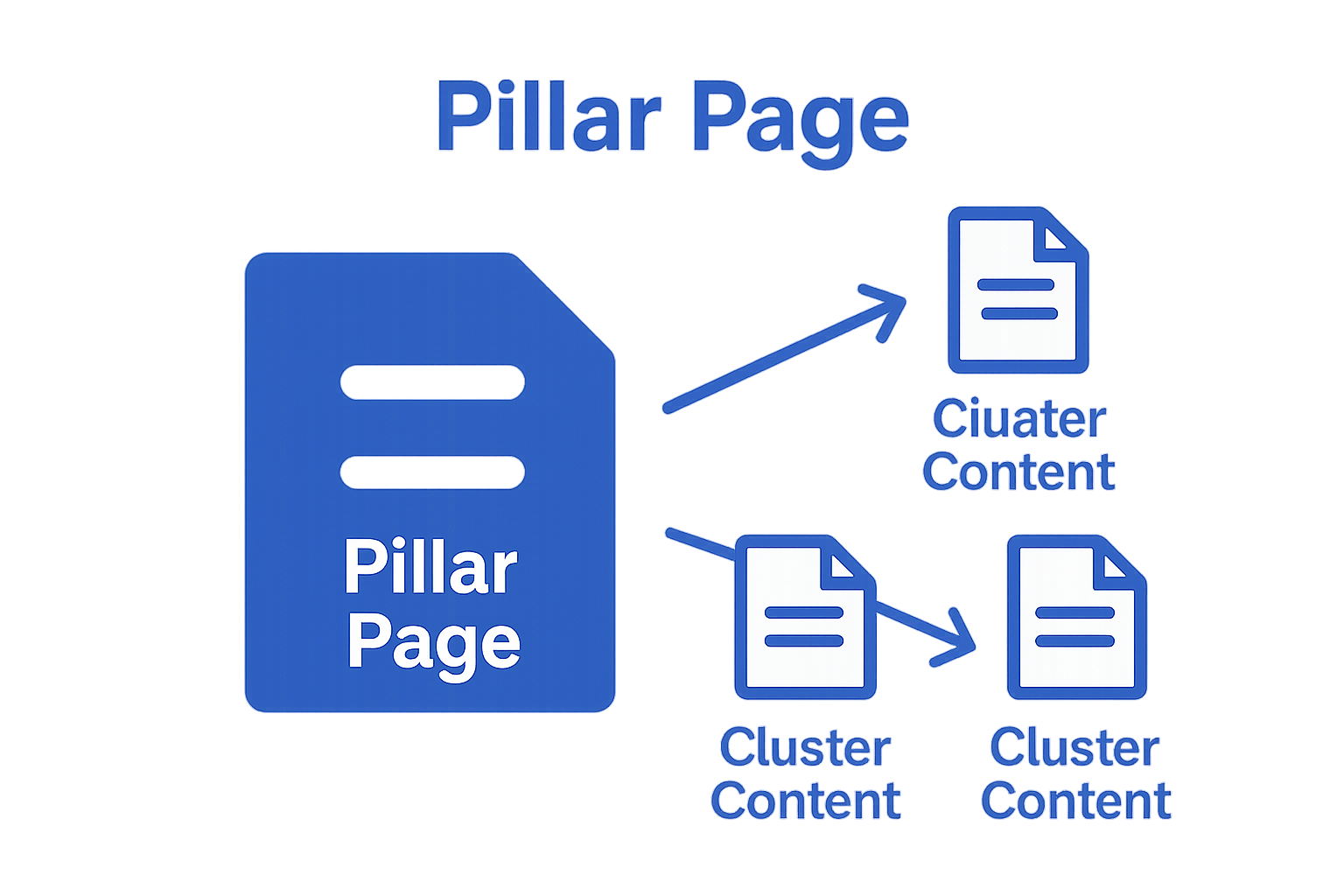
Consider an example: If your pillar page covers “Digital Marketing Strategies,” your satellite content might include detailed articles about:
- Social media advertising techniques
- Email marketing best practices
- Pay per click campaign optimization
- Content marketing approaches
Each of these articles would link back to the main pillar page, establishing a clear topical relationship.
Below is a comparison table highlighting the roles and relationships between pillar pages and satellite content in a content cluster strategy.
| Component | Description | Role in SEO Strategy |
|---|---|---|
| Pillar Page | Central hub page offering a broad overview of a primary topic | Establishes topical authority; acts as the main anchor |
| Satellite Content | Detailed articles focused on specific subtopics | Provides depth; targets long-tail keywords |
| Internal Linking | Hyperlinks between pillar page and satellite content | Enhances site structure and content interconnectivity |
| Keyword Coverage | Broad and related keywords mapped across all content cluster pieces | Expands search visibility and addresses diverse intents |
Strategic Benefits for SEO
Content clusters provide significant advantages in search engine optimization. By creating a comprehensive, interconnected content ecosystem, websites signal to search algorithms that they possess deep, authoritative knowledge on a specific subject. According to William & Mary News, this approach helps search engines understand content relationships more effectively, potentially improving overall search rankings.
Moreover, this strategy allows websites to target a broader range of keywords while maintaining a cohesive thematic structure. Read our guide on advanced content marketing techniques to understand how strategic content planning can elevate your digital presence.
See exactly where your profile stands right now.
Our GBP audit shows your current rank position across your market, how your profile completeness scores against competitors, and the specific gaps holding you back from the Map Pack.
Why Content Clusters Matter for SEO Success
Content clusters are more than just a trendy SEO technique. They represent a fundamental shift in how search engines understand and evaluate website content. By strategically organizing information into interconnected topics, businesses can significantly enhance their digital visibility and search engine performance.
Establishing Topical Authority
Search engines increasingly prioritize websites that demonstrate comprehensive knowledge about specific subjects. Content clusters help websites achieve topical authority by creating a deep, interconnected network of related content. This approach signals to search algorithms that a website is not just producing random articles, but building a robust knowledge base on a particular domain.
Key indicators of topical authority include:
- Comprehensive coverage of a subject
- High-quality, in-depth content
- Logical internal linking between related articles
- Consistent expertise demonstrated across multiple content pieces
Enhanced User Experience and Search Rankings
Content clusters do more than impress search algorithms. They create a superior user experience by providing readers with a comprehensive resource ecosystem. When visitors can easily navigate from a broad overview to specific, detailed information, they spend more time on the website. This increased engagement sends positive signals to search engines about the content’s relevance and value.
This table summarizes the key benefits of content clusters for both search engines and website users, as discussed in the article.
| Benefit Area | Search Engine Impact | User Impact |
|---|---|---|
| Topical Authority | Recognizes comprehensive subject knowledge | Finds reliable, in-depth information |
| Enhanced Navigation | Understands logical content relationships | Easily explores related topics |
| Improved Rankings | Favors cohesive, well-organized sites | Discovers content more efficiently |
| Increased Engagement | Interprets extended user sessions as content value signal | Stays longer, lowering bounce rates |
| Strategic Keyword Targeting | Evaluates coverage of core and related keywords | Receives answers to a variety of questions |

According to research from University of Massachusetts Technology Research, websites employing content clustering strategies can see significant improvements in search rankings and user engagement metrics.
Moreover, this approach allows for strategic keyword targeting across multiple related articles. Instead of competing with yourself, content clusters help you create a comprehensive keyword strategy that covers various aspects of a primary topic. Learn more about integrating SEO with content marketing to maximize your digital strategy’s effectiveness.
How Content Clusters Improve User Experience and Engagement
Content clusters transform website navigation from a linear, often frustrating experience into an intuitive knowledge journey. By creating interconnected content networks, websites can dramatically enhance user engagement, making information discovery seamless and enjoyable.
Creating Intuitive Content Pathways
Traditional websites often present content as disconnected pages, leaving users to hunt for related information. Content clusters solve this problem by establishing clear, logical connections between related topics. This strategic content mapping allows users to easily explore deeper into subjects that interest them, reducing friction in their information-seeking process.
Key benefits of intuitive content pathways include:
- Reduced user cognitive load
- Faster access to relevant information
- Enhanced content discoverability
- Improved overall website navigation
Extending User Session Duration
When users can effortlessly move between related content pieces, they are more likely to spend extended time on a website. Content clusters act like an internal recommendation system, subtly guiding readers from one relevant article to another. This natural progression keeps users engaged, decreases bounce rates, and signals to search engines that the content is genuinely valuable.
According to Kent State University’s digital strategy research, well-structured content significantly improves user interaction and satisfaction. The research highlights how intuitive content organization can transform user browsing from a potential frustration into an enjoyable exploration.
Discover advanced content optimization techniques that can further enhance your content strategy and user engagement. By implementing smart, interconnected content approaches, businesses can create digital experiences that not only inform but truly resonate with their audience.
Key Concepts Behind Effective Content Clusters
Content clusters represent a sophisticated approach to digital content strategy, requiring more than simple link placement or random topic association. Successfully implementing content clusters demands a nuanced understanding of search engine algorithms, user experience principles, and strategic content architecture.
Strategic Keyword Relationship Mapping
At the heart of effective content clusters lies precise keyword relationship mapping. This involves identifying a primary topic and understanding its semantic connections to related subtopics. Successful mapping requires analyzing search intent, identifying user questions, and creating content that comprehensively addresses various aspects of a subject.
Critical elements of keyword relationship mapping include:
- Identifying core topic keywords
- Discovering related long-tail keywords
- Understanding user search intent
- Analyzing keyword difficulty and search volume
- Connecting semantically related terms
Hierarchical Content Structure
Content clusters demand a clear, logical hierarchical structure. The pillar page serves as the foundational comprehensive overview, while satellite content provides deeper, more specialized information. This structure allows search engines to recognize the comprehensive nature of your content and understand the intricate relationships between different pieces.
The hierarchical structure should prioritize:
- Clear topical hierarchy
- Logical internal linking
- Comprehensive coverage of subject matter
- Seamless navigation between related content
According to Columbia University’s SEO guidelines, establishing a clear content hierarchy helps search engines more effectively crawl and understand website content, ultimately improving search rankings and visibility.
Learn more about advanced content optimization strategies to enhance your digital content approach and create more engaging, search-friendly content ecosystems.
Applying Content Clusters in Real-World SEO Strategies
Transforming content clusters from theoretical concept to practical implementation requires strategic planning and precise execution. Successful real-world application involves understanding how to methodically organize, interlink, and optimize content to maximize search engine visibility and user engagement.
Practical Content Mapping Techniques
Effective content clustering begins with comprehensive topic exploration. This means identifying primary topics and creating an interconnected web of related content that comprehensively addresses user questions and search intents. Organizations must move beyond traditional linear content strategies and think holistically about information architecture.
Key practical mapping considerations include:
- Conducting thorough keyword research
- Identifying topic relationships and dependencies
- Creating content that addresses multiple user search intents
- Developing a clear internal linking strategy
- Ensuring content depth and comprehensiveness
Technical Implementation Strategies
Implementing content clusters requires meticulous technical execution. Websites must develop a structured approach that allows search engines to easily understand content relationships. This involves creating pillar pages with comprehensive overviews and developing satellite content that provides in-depth exploration of specific subtopics.
This is the work we do for you. Every week, without exception.
Managing GBP at this level takes 6–8 hours a week when done right. Nova handles the entire system — posts, photos, reviews, Q&A, citations, heatmap tracking — so you can focus on running your business.
Technical implementation best practices involve:
- Using clear, descriptive anchor text for internal links
- Maintaining consistent content quality across all pieces
- Implementing schema markup to enhance content understanding
- Regularly updating and refreshing existing content
- Monitoring performance and adjusting strategy accordingly
According to research exploring web content clustering techniques, strategic content organization can significantly improve search engine comprehension and user experience.
Explore cutting-edge SEO content creation strategies to further refine your approach to developing sophisticated, search-friendly content ecosystems that drive meaningful digital engagement.
Unlock the Full Power of Content Clusters for Your Business Growth
Is your business struggling to stand out online because your content lacks structure and authority? Many organizations face challenges like disconnected articles, poor internal linking, and missed opportunities to prove topical expertise. If you want to outshine competitors and win more leads, it is crucial to move beyond random blogging and start building strategic content clusters and pillar pages as explained in our article. This not only improves your SEO but also creates a seamless experience for your users and boosts engagement. Want to see how industry leaders elevate visibility with advanced SEO techniques? See our guide on integrating SEO with content marketing.
Now is the time to maximize your digital presence and let your expertise shine. Our team at 12AM Agency specializes in custom SEO strategies, content planning, and AI-driven optimization for businesses across fields like legal, dental, automotive, and enterprise. If you are ready to organize your site for greater authority and results, reach out for a tailored digital marketing consultation. Take your first step by visiting our Contact Us page to connect with our experts today. Start building the foundation for better rankings and business growth before your competition does.
Frequently Asked Questions
What are content clusters in SEO?
Content clusters are a strategic SEO approach that organizes website content into interconnected topics. They consist of a pillar page that covers a broad topic and several satellite content pieces that delve into specific subtopics, all linking back to the pillar page.
How do content clusters improve search engine rankings?
Content clusters improve search engine rankings by signaling to search engines that a website has comprehensive knowledge on specific subjects. This interconnected structure and high-quality content enhance the site’s topical authority, potentially leading to better visibility in search results.
What is a pillar page and how does it relate to satellite content?
A pillar page serves as the central hub for a specific topic, providing a broad overview. Satellite content consists of detailed articles that explore specific aspects of the main topic, linking back to the pillar page to create a cohesive content network.
How can I implement content clusters on my website?
To implement content clusters, start by conducting thorough keyword research to identify a primary topic and related subtopics. Create a pillar page that provides an overview of the main topic, then develop satellite content that offers detailed insights on each subtopic, ensuring they all link back to the pillar page.
Recommended
- Keyword Stuffing Checker Tools
- Seo and Content Marketing
- Boost Your SEO with Keyword Clouds
- 7 Ultra-Effective SEO Content Creation Trends

