




Mobile app development is changing the way people live and work, making everything from banking to healthcare available right in your pocket. These tools are not just for tech giants anymore. Any business can tap into this potential and join a market expected to explode to $156 billion with annual growth over 40 percent. Most people think building an app is only about coding, but the real story is about transforming big ideas into seamless, everyday experiences that reshape entire industries.
Table of Contents
- Defining Mobile App Development: What It Is
- The Importance Of Mobile App Development For Businesses
- Key Phases Of The Mobile App Development Process
- Essential Concepts In Mobile App Development
- Real-World Applications And Trends In Mobile App Development
Quick Summary
| Takeaway | Explanation |
|---|---|
| Mobile apps drive business engagement. | Companies increasingly rely on mobile applications to create direct communication channels with customers for personalized interaction. |
| Choose the right app type for your needs. | Understand the differences between native, hybrid, and web apps to select the best development approach for your project. |
| Agile methodologies enhance app development. | Using Agile allows for real-time feedback, enabling continuous improvement and faster iteration in the app development process. |
| Mobile apps improve internal operations. | Custom apps can optimize processes, boost employee productivity, and innovate service delivery in various industries. |
| Emerging tech trends shape future apps. | Integrating AI, IoT, and advanced authentication is revolutionizing mobile app capabilities and user experiences. |
Defining Mobile App Development: What It Is
Mobile app development is a sophisticated software engineering process that creates digital applications specifically designed to operate on mobile devices like smartphones and tablets. Unlike traditional software development, mobile app development requires deep understanding of unique mobile platform characteristics, user interaction patterns, and device-specific constraints.
Core Components of Mobile App Development
At its fundamental level, mobile app development involves creating software solutions that transform complex technological capabilities into user-friendly digital experiences. Our comprehensive mobile app development services specialize in translating innovative ideas into functional mobile applications.
The process encompasses several critical technological dimensions:
- Designing intuitive user interfaces that adapt seamlessly across different screen sizes
- Writing platform-specific code using programming languages like Swift, Kotlin, or JavaScript
- Integrating backend services and APIs to enable dynamic functionality
- Ensuring robust security protocols to protect user data
Types of Mobile Applications
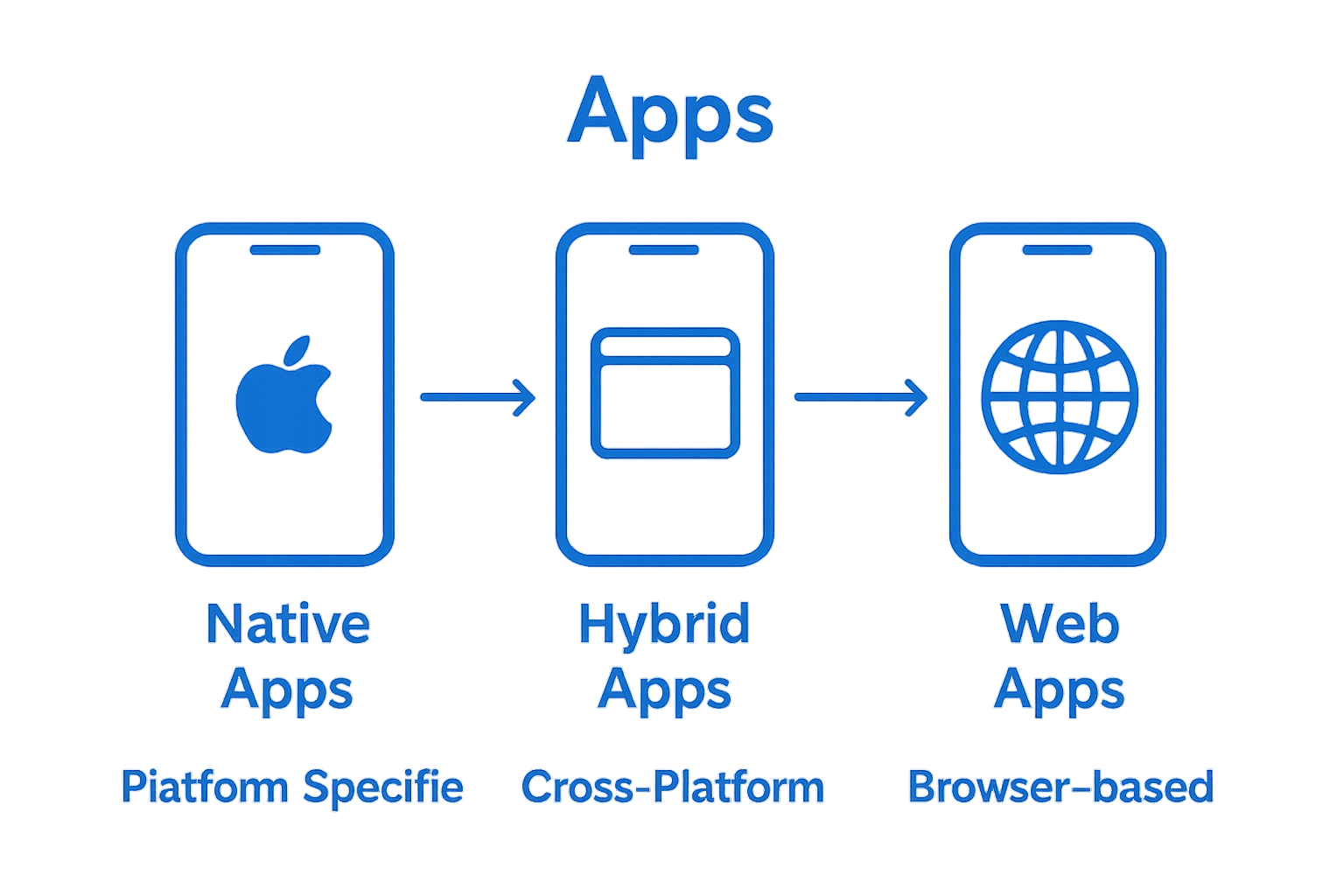
According to Communications of the ACM, mobile applications can be categorized into three primary architectural approaches:
- Native Apps: Developed specifically for one platform (iOS or Android) using platform-specific programming languages
- Hybrid Apps: Web applications packaged within a native container, offering cross-platform compatibility
- Web Apps: Browser-based applications that function across multiple devices without requiring installation
Each approach offers unique advantages and challenges, requiring developers to carefully evaluate project requirements, target audience, performance needs, and budget constraints when selecting an appropriate development strategy.
To help clarify the differences among the main mobile app categories, the following table compares their key characteristics as described in the article.
| App Type | Platform Specificity | Technology Used | Installation Required | Main Advantage |
|---|---|---|---|---|
| Native | Yes (iOS or Android) | Swift, Kotlin, Objective-C, Java | Yes | Best performance and user experience |
| Hybrid | No (cross-platform) | Web tech in native container | Yes | Cross-platform with some native features |
| Web | No (browser-based) | HTML, CSS, JavaScript | No | No installation, accessible on all devices |
Understanding mobile app development means recognizing it as more than just coding an application. It represents a strategic process of transforming complex technological capabilities into seamless, intuitive digital experiences that solve real-world problems for users across various mobile platforms.
See exactly where your profile stands right now.
Our GBP audit shows your current rank position across your market, how your profile completeness scores against competitors, and the specific gaps holding you back from the Map Pack.
The Importance of Mobile App Development for Businesses
Mobile app development has transformed from a technological luxury to a critical business strategy in the digital ecosystem. Companies across industries recognize that mobile applications are no longer optional but essential tools for engaging customers, streamlining operations, and maintaining competitive advantage.
Strategic Business Value
Businesses invest in mobile app development to create direct communication channels with customers, offering personalized experiences that traditional marketing channels cannot match. Explore our specialized mobile app solutions for automotive businesses to understand how targeted mobile strategies can revolutionize industry engagement.
According to research from Oregon State University, the mobile app market is projected to reach $156 billion, with an expected annual growth rate exceeding 40%. This explosive growth underscores the critical importance of mobile applications for modern businesses.
Key Business Benefits of Mobile Apps
Mobile applications provide businesses with multiple strategic advantages:

- Enhanced Customer Engagement: Create direct, personalized interaction channels
- Real-Time Data Collection: Gather actionable insights about customer behavior
- Increased Brand Visibility: Maintain constant presence on customer devices
- Improved Customer Service: Offer instant support and information access
Moreover, mobile apps enable businesses to leverage device-specific features like push notifications, GPS tracking, and integrated payment systems. These technological capabilities transform how companies interact with their customers, making communication more immediate, interactive, and data-driven.
The strategic value of mobile app development extends beyond customer engagement. By creating custom digital solutions, businesses can optimize internal processes, improve employee productivity, and develop innovative service delivery models that differentiate them in competitive markets.
Key Phases of the Mobile App Development Process
The mobile app development process is a structured, iterative journey that transforms conceptual ideas into functional digital solutions. Unlike traditional software development, mobile app creation requires nuanced understanding of platform-specific requirements, user experience design, and technological constraints.
Conceptualization and Planning
Our comprehensive mobile app development services begin with a meticulous planning phase that establishes the foundational blueprint for successful application creation. According to research utilizing the ADDIE model, this initial stage involves critical strategic assessments that determine the project’s trajectory.
The conceptualization phase encompasses several crucial considerations:
- Identifying target user demographics and market needs
- Defining clear application objectives and functionality
- Conducting comprehensive competitive landscape analysis
- Establishing preliminary technical requirements and constraints
Development and Implementation Methodology
Modern mobile app development leverages Agile methodologies, enabling dynamic, flexible approaches that prioritize continuous improvement and rapid iteration. This approach allows developers to:
- Break complex projects into manageable sprint cycles
- Incorporate real-time user feedback
- Continuously refine and optimize application features
- Minimize potential development risks through incremental testing, increasingly supported by AI tools for testing that help teams identify defects faster and improve release confidence.
The implementation phase involves intricate technical processes including frontend and backend development, API integration, and platform-specific optimization. Developers must navigate complex ecosystem requirements, ensuring seamless performance across different mobile devices and operating systems.
Successful mobile app development transcends mere coding. It represents a holistic approach to solving user challenges through intuitive, technologically sophisticated digital experiences that adapt and evolve with changing user expectations.
Essential Concepts in Mobile App Development
Mobile app development represents a sophisticated technological discipline that combines programming expertise, design thinking, and platform-specific knowledge. Understanding its essential concepts is crucial for creating successful digital applications that deliver seamless user experiences across diverse mobile environments.
Core Architectural Components
Our mobile app development services recognize the intricate landscape of mobile application architecture. According to software engineering research, mobile applications are built upon fundamental architectural components that define their functionality and interaction capabilities.
These core architectural elements include:
- User Interface (UI) Layers: Visual components that enable user interaction
- Backend Services: Server-side logic managing data processing and storage
- API Integration Points: Connectors enabling communication between different software systems
- Device Hardware Interfaces: Mechanisms for accessing device-specific features
Platform-Specific Development Considerations
Mobile app development demands deep understanding of platform-specific nuances. Developers must navigate unique ecosystem requirements for iOS and Android, which involve distinct programming languages, design guidelines, and performance optimization strategies.
Key platform-specific considerations encompass:
- Adherence to platform-specific design language (Material Design for Android, Human Interface Guidelines for iOS)
- Understanding native development frameworks like Swift for iOS and Kotlin for Android
- Implementing platform-specific performance optimization techniques
- Managing device fragmentation and varied hardware capabilities
Successful mobile app development transcends technical implementation. It requires a holistic approach that balances technological sophistication with intuitive user experience design, ensuring applications not only function effectively but also provide engaging, seamless interactions that meet evolving user expectations.
Real-World Applications and Trends in Mobile App Development
Mobile app development has dramatically transformed how businesses and individuals interact with technology, creating innovative solutions that address complex challenges across multiple industries. The rapid evolution of mobile technologies continues to push boundaries of what digital experiences can achieve.
Industry-Specific Mobile Solutions
Our specialized mobile app development services demonstrate the incredible versatility of mobile applications across diverse sectors. Contemporary mobile apps are no longer simple communication tools but comprehensive platforms that drive business transformation.
Industries leveraging advanced mobile app technologies include:
- Healthcare: Telemedicine platforms enabling remote patient consultations
- Finance: Mobile banking applications with real-time transaction monitoring
- Education: Interactive learning management systems and virtual classroom environments
- Retail: Personalized shopping experiences with augmented reality features
Emerging Technological Trends
The mobile app development landscape is continuously reshaping through groundbreaking technological innovations. Developers are integrating cutting-edge technologies to create more intelligent, responsive, and user-centric applications.
Key emerging trends driving mobile app development include:
- Artificial Intelligence and machine learning integration
- Advanced biometric authentication technologies
- Internet of Things (IoT) connectivity
- Edge computing for faster, more efficient processing
This is the work we do for you. Every week, without exception.
Managing GBP at this level takes 6–8 hours a week when done right. Nova handles the entire system — posts, photos, reviews, Q&A, citations, heatmap tracking — so you can focus on running your business.
These technological advancements are not merely incremental improvements but represent fundamental shifts in how mobile applications understand, anticipate, and respond to user needs. The future of mobile app development lies in creating seamless, intelligent experiences that adapt dynamically to individual user contexts and preferences.
Unlock the Full Potential of Your Mobile App Investment
Bringing your mobile app idea to life involves overcoming complex challenges, from platform-specific requirements to engaging user experiences and seamless integration with advanced technologies. As highlighted in our article, many businesses struggle to turn strategic vision into a reliable and results-driven mobile app, especially when balancing intuitive design, backend integration, and the ever-changing mobile landscape.
Modern users expect fast, secure, and easy-to-use apps that stand out in a busy digital world. If you want to ensure your project not only meets technical standards but also drives real business results, our team at 12AM Agency is ready to help you bridge the gap between big ideas and measurable outcomes.

Ready to take your app from concept to success? Connect with 12AM Agency today for a consultation tailored to your industry and business goals. Get expert support across all stages of the mobile app development process so you can accelerate time-to-market and maximize your return. Take action now to see how strategic planning and proven execution can transform your digital future.
Frequently Asked Questions
What is the mobile app development process?
Mobile app development is a structured process involving conceptualization, design, development, testing, and deployment of applications for mobile devices. It focuses on creating user-friendly and functional apps tailored to specific platforms.
What are the different types of mobile applications?
Mobile applications can be categorized into three main types: native apps, which are developed for a specific platform (iOS or Android); hybrid apps, which combine web technologies in a native container; and web apps, which are browser-based and accessible across various devices without installation.
Why is mobile app development important for businesses?
Mobile app development is crucial for businesses as it enhances customer engagement, increases brand visibility, enables real-time data collection, and improves customer service. Apps create direct communication channels with customers, providing a competitive edge in today’s digital landscape.
What are the key phases in the mobile app development process?
The key phases include conceptualization and planning, where project goals and user needs are defined; development and implementation, which involves coding and integrating features; and testing and deployment, where the app is evaluated for performance and then launched to users.
To summarize the essential phases involved in building a mobile app, the table below outlines each phase and its primary focus within the overall development process.
| Phase | Main Focus |
|---|---|
| Conceptualization & Planning | Define user needs, goals, and technical requirements |
| Development & Implementation | Code features, integrate APIs, and optimize for platforms |
| Testing & Deployment | Evaluate performance, fix issues, and launch app to end users |


