




Boost Your Online Presence: SEO for Criminal Defense Lawyers
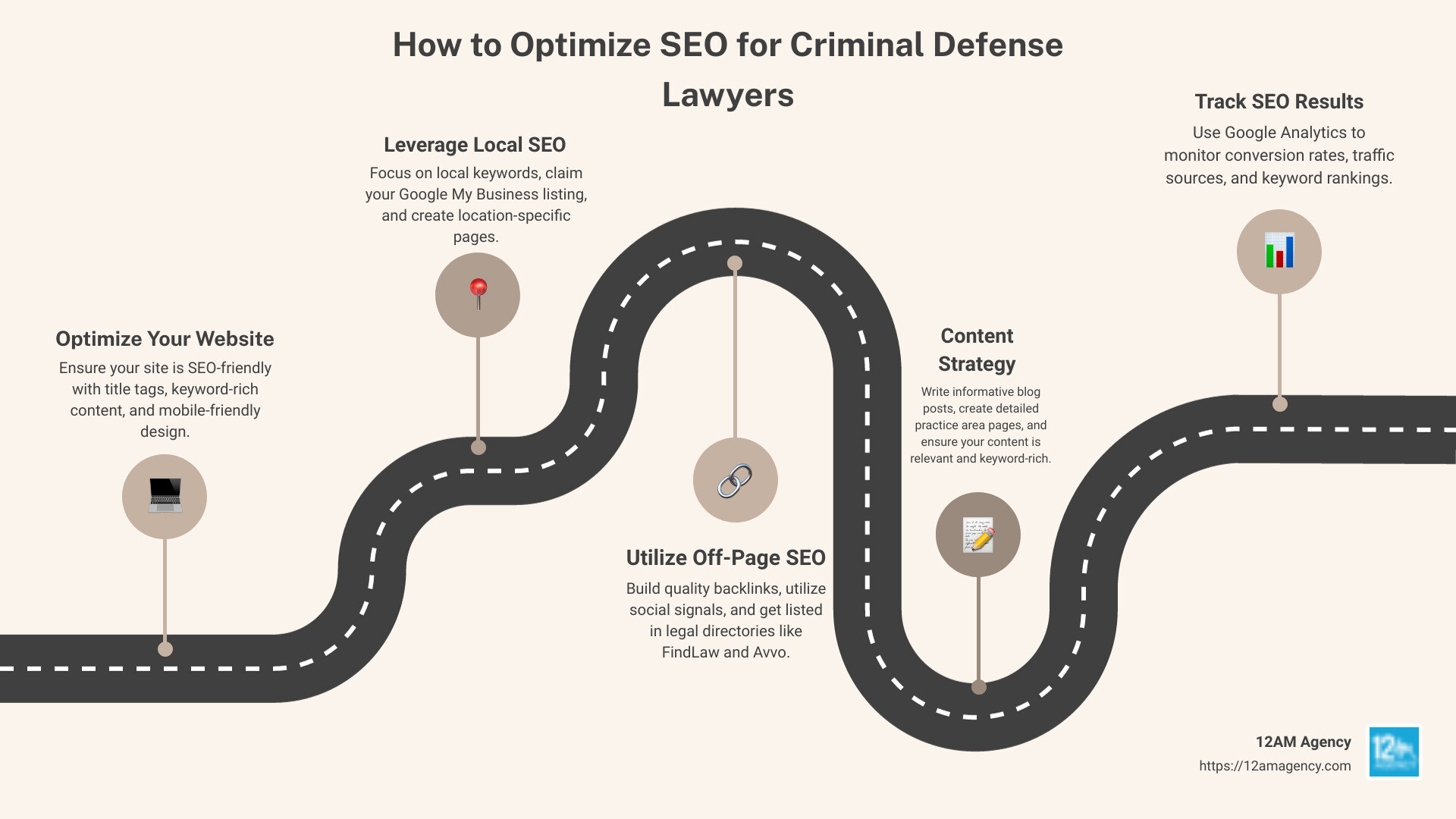
Having a robust online presence is crucial for criminal defense attorneys. SEO for criminal lawyers is no longer optional—it’s essential for connecting with potential clients, improving your visibility, and staying competitive. Here’s a quick rundown on how you can get started:
- Optimize Your Website: Ensure your site is SEO-friendly with well-crafted title tags, keyword-rich content, and a mobile-friendly design.
- Leverage Local SEO: Focus on local keywords, claim your Google My Business listing, and create location-specific pages.
- Use Off-Page SEO: Build quality backlinks, use social signals, and get listed in legal directories like FindLaw and Avvo.
- Content Strategy: Write informative blog posts, articles, and create detailed practice area pages.
I’m Robert Portillo, and with a background in digital marketing and years of experience in SEO for criminal lawyers, I’ve helped countless firms improve their online presence and increase client leads. Understanding and implementing SEO strategies can be challenging but is pivotal for any law firm’s success.
Why SEO is Crucial for Criminal Defense Attorneys
SEO, or Search Engine Optimization, is essential for criminal defense attorneys. It helps your law firm show up in search engine results when potential clients search for legal help. Let’s break down why SEO for criminal lawyers is so important.
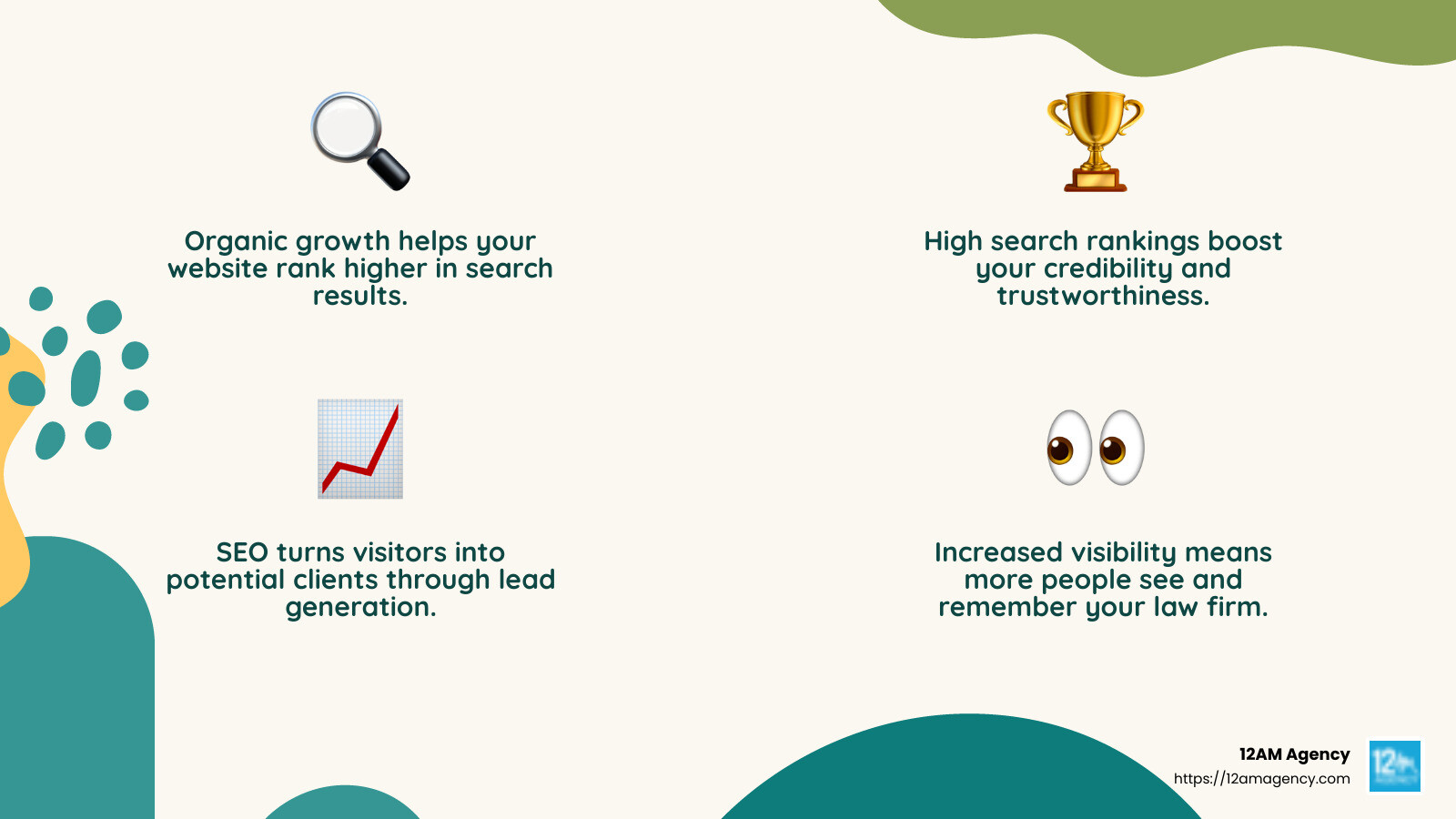
Organic Growth
Organic growth means getting more visitors to your website without paying for ads. When your website ranks higher in search results, more people will find you naturally. This kind of growth is sustainable and cost-effective. For example, if someone searches for “best criminal defense lawyer,” and your website appears on the first page of Google, you’re likely to get more clicks and potential clients.
Lead Generation
Lead generation is about turning website visitors into clients. SEO helps you attract people who are already looking for legal services. By using the right keywords and providing valuable content, you can capture the interest of these visitors. Imagine a potential client searching for “DUI defense attorney” and finding your detailed blog post on DUI defenses. This can lead them to contact you for legal assistance.
Visibility
Visibility means being seen by more people online. When your website ranks high in search results, it’s more visible to potential clients. This visibility builds brand awareness and trust. Think of it like a billboard on a busy highway—if people see your name often, they’re more likely to remember you when they need legal help.
Credibility
Credibility is crucial in the legal field. High search engine rankings can make your law firm appear more trustworthy. Google and other search engines rank websites based on their authority and reliability. If your website is optimized well, it shows that you are a credible source of information. This can make potential clients more likely to choose your services.
Real-World Example
Consider the case of a criminal defense firm that implemented an effective SEO strategy. Within six months, their website traffic increased by 50%, and they saw a 30% rise in client inquiries. This was achieved by optimizing their website content, building quality backlinks, and focusing on local SEO.
Quick Tips
- Optimize Your Content: Use relevant keywords like “criminal defense attorney” and “DUI lawyer” throughout your website.
- Get Listed: Make sure your law firm is listed in legal directories like FindLaw and Avvo.
- Build Backlinks: Reach out to local media or write guest blogs to get quality backlinks to your site.
By focusing on these elements, you can improve your online presence and attract more clients. SEO is not a one-time effort but an ongoing process that can yield significant benefits for your criminal defense practice. Implementing successful defense strategies in Houston can further enhance your credibility in the legal field. It’s essential to stay updated with the latest techniques and trends that resonate with your target audience. This proactive approach will not only improve client engagement but also establish your firm as a leader in the competitive market.
Next, we’ll dive into On-Page SEO Strategies to help you further optimize your website for search engines.
On-Page SEO Strategies
On-page SEO is all about optimizing individual pages on your website to rank higher and earn more relevant traffic from search engines. Here are some key on-page SEO strategies:
Title Tags and Meta Descriptions
Title Tags are crucial for search engine rankings and click-through rates (CTR). They should include relevant keywords and be under 60 characters. For example, a good title tag could be “Top Criminal Defense Attorney in Dallas” instead of just “Criminal Lawyer.”
Meta Descriptions are short summaries that appear under your title tag in search results. They should be compelling and include keywords. Keep them under 160 characters to ensure they display fully in search results.
Header Tags (H1, H2, H3, etc.)
Header Tags help structure your content and make it easier to read. The H1 tag should contain the main topic, like “Criminal Defense Services.” Use H2 and H3 tags for subtopics, such as “DUI Defense” and “Drug Offenses.” This structure helps both users and search engines understand your content better.
See exactly where your profile stands right now.
Our GBP audit shows your current rank position across your market, how your profile completeness scores against competitors, and the specific gaps holding you back from the Map Pack.
Mobile Friendliness
With more people using mobile devices, mobile optimization is essential. Your website should be responsive, meaning it adapts to different screen sizes. A mobile-friendly design improves user experience and can boost your rankings.
Page Load Speed
Page Load Speed affects both user experience and SEO. Faster pages are favored by search engines and users alike. Use image compression and other techniques to speed up your site. For instance, compressing images can reduce load times without sacrificing quality. This can also improve conversion rates, as users are less likely to leave a fast-loading site.
URL Structure
A clean and concise URL structure helps search engines understand your page content. Avoid unnecessary numbers or categories. For example, use “www.yourlawfirm.com/dui-defense” instead of “www.yourlawfirm.com/category/12345-dui.”
Internal Linking
Internal linking helps search engines crawl your site and understand its structure. Link related pages together to keep visitors on your site longer. For instance, link your blog posts on DUI tips to your main DUI defense page.
External Linking
External links to reputable sources can increase your page’s credibility. For example, if you mention a legal statistic, link to the source. This shows search engines that your content is well-researched.
Image Optimization
Image optimization involves using relevant keywords in your image titles and alt text. This helps search engines understand what the images are about and can improve your rankings. For example, use “Dallas-criminal-defense-lawyer.jpg” instead of “image123.jpg.”
Website Content
Your website content should be comprehensive and answer as many questions as possible. Include practice area pages for all types of cases you handle. High-quality, keyword-rich content can help you rank higher and attract more visitors.
Content Quality
Content quality is crucial for SEO. Well-researched, high-quality content that provides value to readers can improve your rankings. Avoid duplicate content, as it can harm your SEO.
Schema Markup
Schema markup is code that helps search engines understand your content better. Implementing schema can improve your visibility in search results. For example, use schema to mark up your contact information and practice areas.
HTTPS
HTTPS is a small ranking factor but important for user trust. Ensure your website is secure to protect user data and improve your SEO.
Design
The design of your website impacts user experience and SEO. A clean, professional design can make your site more appealing and easier to steer, which can improve your rankings.
By focusing on these on-page SEO strategies, you can optimize your website to rank higher in search engine results and attract more potential clients. Next, we’ll explore Off-Page SEO Strategies to further boost your online presence.
Off-Page SEO Strategies
Backlinks
Backlinks are one of the most crucial factors for SEO for criminal lawyers. A backlink is a link from another website that points to your site. Google sees backlinks as votes of confidence. The more high-quality backlinks you have, the more trustworthy your site appears.
However, not all backlinks are created equal. Quality, relevance, and authority matter. A link from a reputable legal directory or a well-known news site is far more valuable than a link from a random blog. Use tools like Semrush to analyze your competitor’s backlink profiles and find potential sources for your own backlinks.
Social Signals
Social signals like shares, likes, and comments on social media platforms can indirectly influence your site’s SEO. When people talk about your law firm on social media, it can boost your brand’s visibility and drive more traffic to your site. While social signals are not direct ranking factors, they can amplify your content and generate more backlinks.
Legal Directory Listings
Being listed in legal directories such as Findlaw, Justia, and Avvo can significantly improve your online visibility. These directories not only provide backlinks but also drive organic traffic to your site. Make sure your listings are complete and up-to-date, including your practice areas, contact information, and client reviews.
Online Reviews
Positive online reviews on platforms like Google and Yelp can improve your visibility in local search results and boost conversion rates. Potential clients often read reviews before making a decision. Encourage satisfied clients to leave positive reviews and respond to any negative feedback professionally.
Video and Image Sharing
Platforms like YouTube and Instagram allow you to share multimedia content, which can be linked back to your site. While these links don’t carry much SEO weight, they can create buzz and increase brand awareness. Videos are particularly effective in explaining complex legal issues and showcasing your expertise.
Press Releases
Press releases can generate natural backlinks and media coverage. While the backlinks from press releases don’t count for much in 2023, they can still create more brand awareness for your law firm. Use press releases to announce major milestones, such as winning a high-profile case or launching a new service.
Competitor Analysis
Keeping an eye on your competitors’ off-page SEO strategies can provide valuable insights. Tools like Semrush can reveal your competitors’ backlink sources and social signals. Use this information to identify opportunities you may be missing. However, don’t rely solely on competitor analysis; always aim to create unique and valuable content.
By focusing on these off-page SEO strategies, you can improve your online presence, build credibility, and attract more potential clients. Next, we’ll explore Local SEO for Criminal Lawyers to further refine your strategy.
Local SEO for Criminal Lawyers
Google My Business Optimization
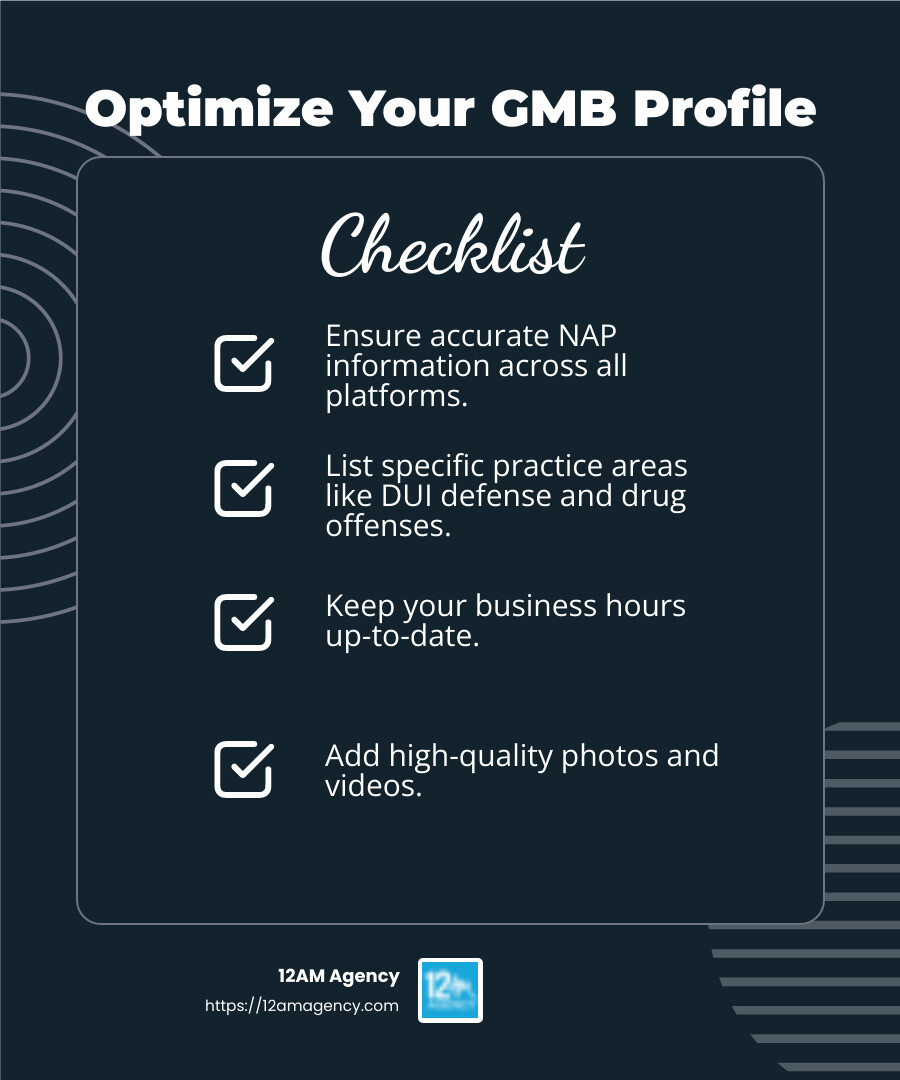
Optimizing your Google My Business (GMB) profile is vital for local SEO for criminal lawyers. Your GMB profile is often the first impression potential clients have of your law firm. It should include your business name, address, phone number (NAP), and other important details.
Steps to Optimize Your GMB Profile:
- Accurate NAP Information: Make sure your business name, address, and phone number are consistent across all platforms.
- Practice Areas: List your specific practice areas, such as DUI defense or drug offenses.
- Business Hours: Keep your operating hours up-to-date.
- Photos and Videos: Add high-quality images and videos of your office, staff, and any awards or recognitions.
- Client Reviews: Encourage satisfied clients to leave positive reviews and respond to them promptly. This boosts your credibility and can improve your local search rankings.
Local Keywords and Content
Using local keywords helps you target clients who are searching for legal services in your area. This is crucial for appearing in local search results.
How to Use Local Keywords:
- Location-Specific Keywords: Incorporate keywords like “criminal defense lawyer in [City]” or “DUI attorney near [Neighborhood]”.
- Location Pages: Create separate pages for each location you serve. For example, if you practice in multiple cities, have a dedicated page for each city.
- Local Content: Write blog posts and articles that address local laws, news, and events. This not only helps with SEO but also establishes you as a local expert.
Example of Local Keywords:
- “Best criminal defense attorney in Dallas”
- “Houston DUI lawyer”
- “San Antonio drug offense attorney”
NAP Consistency
Consistency is key when it comes to your NAP information. Inconsistent data can confuse search engines and potential clients, leading to lower search rankings and lost business.
Tips for Maintaining NAP Consistency:
- Audit Existing Listings: Regularly check your listings on directories like Avvo, Justia, and Yelp.
- Standardize Information: Use the same format for your NAP details everywhere.
- Update Changes Promptly: If you move or change your phone number, update it across all platforms immediately.
Citations
Citations are online mentions of your business that include your NAP information. They can come from directories, social media profiles, or other websites. Citations help improve your local search rankings.
Effective Citation Strategies:
- List in Reputable Directories: Make sure your law firm is listed in top legal directories like Avvo, Justia, and Findlaw.
- Local Business Directories: Don’t ignore local business directories like Yellow Pages and the Better Business Bureau.
- Consistency: Ensure your NAP information is consistent across all citations.
Reviews
Online reviews are a powerful tool for boosting your local SEO. Positive reviews can improve your rankings and attract more clients.
How to Leverage Reviews:
- Request Reviews: Ask satisfied clients to leave a review on your GMB profile, Avvo, or Yelp.
- Respond to Reviews: Respond to all reviews, both positive and negative, in a professional manner.
- Highlight Reviews: Showcase positive reviews on your website and social media profiles.
By focusing on these local SEO strategies, you can ensure that your law firm appears prominently in local search results, making it easier for potential clients to find and trust you. Next, we’ll dive into the importance of a strong Content Strategy for Criminal Defense Law Firms. Implementing expert seo strategies for law firms can significantly enhance your online visibility and attract a steady stream of clients. These strategies not only focus on optimizing your website’s content but also emphasize building a robust backlink profile and engaging with your audience through social media. As we explore further, you’ll discover the critical role that targeted keywords play in driving traffic to your firm’s website.
Content Strategy for Criminal Defense Law Firms
A solid content strategy is crucial for boosting your online presence and attracting potential clients. Here’s how to effectively use blog posts, articles, practice area pages, and FAQs to improve your SEO for criminal lawyers.
Blog Posts and Articles
Blog posts and articles are essential for sharing informative, relevant, and keyword-rich content. They help educate your audience, answer common legal questions, and establish your firm as an authority in criminal defense law.
Tips for Effective Blog Posts:
- Focus on Relevant Topics: Write about criminal defense topics like defenses for criminal charges, how plea bargains work, or the stages of a criminal case.
- Use Keywords Strategically: Incorporate relevant keywords naturally within your content. For example, phrases like “DUI defense attorney” or “drug offense lawyer” can help attract more traffic.
- Keep it Informative: Provide detailed information that helps potential clients understand their legal options. This builds trust and showcases your expertise.
Example Blog Topics:
- “How to Defend Against DUI Charges”
- “Understanding Drug Offense Penalties in Your City”
- “What to Expect During a Criminal Trial”
Practice Area Pages
Practice area pages are dedicated sections on your website that describe the specific services you offer. These pages should be detailed, informative, and encourage visitors to schedule a consultation.
Key Elements of Practice Area Pages:
- Detail Your Services: Explain the types of criminal cases you handle, such as DUI/DWI defense, drug offenses, domestic violence, sexual assault, theft crimes, and white-collar crimes.
- Use Keywords: Integrate keywords like “DUI defense lawyer in Your City” or “domestic violence attorney near me” to improve search visibility.
- Include a Call to Action: Encourage visitors to contact you for a consultation. Make it easy with clear contact forms and phone numbers.
Example Practice Area Pages:
- DUI/DWI Defense: Discuss the consequences of DUI charges, potential defenses, and your experience in handling such cases.
- Drug Offenses: Detail the types of drug crimes you defend against, such as possession, trafficking, and distribution.
- Domestic Violence: Explain the legal process and defenses available for domestic violence charges.
- Sexual Assault: Provide information on the complexities of sexual assault cases and your approach to defending clients.
- Theft Crimes: Describe the different theft-related charges, from petty theft to grand larceny, and your defense strategies.
- White Collar Crimes: Cover financial crimes like fraud, embezzlement, and money laundering, highlighting your expertise in these areas.
FAQs
FAQs (Frequently Asked Questions) are a great way to address common queries from potential clients. They can improve your SEO and provide quick answers to important questions.
How to Create Effective FAQs:
- Identify Common Questions: Think about the questions clients often ask during consultations. For example, “Will I go to jail for a DUI?” or “How do I defend against a drug charge?”
- Provide Clear Answers: Offer concise, easy-to-understand answers that help potential clients feel informed and reassured.
- Use Keywords: Incorporate relevant keywords in your questions and answers to boost SEO.
Example FAQ Questions:
- “How long will a DUI stay on my driving record?”
- “Is a DUI a felony or a misdemeanor?”
- “What are the penalties for drug possession in Your State?”
By implementing these content strategies, you can significantly improve your SEO for criminal lawyers, attract more potential clients, and establish your firm as a trusted authority in criminal defense law. Next, we’ll explore Technical SEO for Criminal Defense Websites to ensure your site is optimized for search engines.
Technical SEO for Criminal Defense Websites
Error-Free Site
An error-free site is crucial for good user experience and SEO. Errors like 404 pages (Page Not Found) can frustrate visitors and signal to search engines that your site is poorly maintained. Here’s how to keep your site error-free:
- Monitor for 404 Errors: Use tools like Google Search Console to identify and fix 404 errors. Redirect these pages to relevant content using 301 redirects.
- Implement Redirects: If you move or delete a page, set up a 301 redirect to guide users and search engines to the new location.
- Use Canonical Tags: Prevent duplicate content issues by using canonical tags to indicate the preferred version of a webpage.
Crawlability and Indexability
To rank well in search engines, your site must be easily crawlable and indexable. This means search engines should be able to steer and understand your content. Here’s how to ensure that:
- Optimize Site Structure: Your site’s structure should be logical and hierarchical. Use clear categories and subcategories for your content.
- Internal Linking: Link to other relevant pages within your site to help search engines understand the relationship between different pieces of content.
- Create an XML Sitemap: An XML sitemap lists all your important pages and helps search engines find and index them. Submit your sitemap to Google Search Console.
- Use Robots.txt: This file tells search engines which pages to crawl and which to avoid. Make sure it’s correctly configured to prevent accidental blocking of important pages.
By addressing these technical aspects, you can improve your site’s performance and search engine rankings. This will help potential clients find your criminal defense services more easily. Next, we’ll discuss Tracking SEO Results and Analyzing ROI to measure the effectiveness of your SEO efforts.
Tracking SEO Results and Analyzing ROI
Key Metrics to Track
This is the work we do for you. Every week, without exception.
Managing GBP at this level takes 6–8 hours a week when done right. Nova handles the entire system — posts, photos, reviews, Q&A, citations, heatmap tracking — so you can focus on running your business.
To understand how well your SEO efforts are working, you need to track key metrics. Here are the most important ones:
- Website Traffic: Use Google Analytics to monitor how many people visit your site. Look at overall traffic, as well as traffic from search engines (organic traffic).
- Search Engine Rankings: Track where your site appears in search engine results for your target keywords. Tools like Ahrefs or Semrush can help you monitor your keyword rankings.
- Conversion Rate: This is the percentage of visitors who take a desired action, like filling out a contact form or calling your office. Google Analytics can help you track conversions and set up goals.
- Traffic Sources: Understand where your visitors are coming from. Are they finding you through search engines, social media, or direct visits? This helps you see which channels are most effective.
Setting Goals and Measuring Success
Setting clear goals is essential for measuring the success of your SEO strategy. Here’s how to get started:
- Define Specific Goals: What do you want to achieve? Examples include increasing organic traffic by 20% in six months or getting 10 new client inquiries per month through your website.
- Use SMART Criteria: Make sure your goals are Specific, Measurable, Achievable, Relevant, and Time-bound. For example, “Increase organic traffic by 20% in six months” is a SMART goal.
- Track Progress: Use tools like Google Data Studio to create dashboards that display your key metrics. This makes it easy to see how you’re progressing towards your goals.
- Analyze ROI: Calculate your return on investment (ROI) by comparing the cost of your SEO efforts to the revenue generated from new clients. For example, if you spend $1,000 on SEO and gain $5,000 in new client revenue, your ROI is 400%.
By tracking these metrics and setting clear goals, you can measure the effectiveness of your SEO strategy and make data-driven decisions to improve your online presence.
Next, we’ll cover Frequently Asked Questions about SEO for Criminal Lawyers to address common concerns and provide further insights.
Frequently Asked Questions about SEO for Criminal Lawyers
What is the cost per lead for criminal defense SEO?
The cost per lead (CPL) for SEO for criminal lawyers can vary. Factors like your location, competition, and the quality of your website play a big role.
For example, if you’re in a densely populated area with high competition, your CPL might initially be higher. Let’s say you spend $4,000 on SEO and get 10 leads in the first month—that’s $400 per lead. As your SEO efforts compound over time, this cost usually decreases. By the third month, if you start getting 30 leads, your CPL drops to around $133. This showcases the long-term benefits of investing in SEO.
How long does it take to see results from SEO?
SEO is a long-term strategy, and it typically takes 3 to 6 months to see significant improvements in search rankings. The timeline depends on several factors:
- Competition: More competitive areas take longer to rank in.
- Website Condition: An older website with existing backlinks might see results faster.
- Content Quality: High-quality, relevant content can speed up the process.
- Technical SEO: Fixing technical issues like page speed and mobile-friendliness can also accelerate results.
It’s important to set realistic expectations and understand that SEO is a marathon, not a sprint.
What are common mistakes in criminal defense SEO?
1. Wrong Keywords: One of the biggest mistakes is targeting the wrong keywords. Make sure to conduct thorough keyword research to find terms that potential clients are actually searching for.
2. Poor Content: Content is king in SEO. If your website lacks high-quality, engaging content, it won’t rank well. Your content should be informative and answer the questions your target audience is asking.
3. Lack of Professional Help: SEO is complex and ever-changing. Trying to do it all yourself can lead to wasted time and money. Hiring an experienced SEO professional can ensure your strategy is executed correctly.
Avoiding these common pitfalls can save you a lot of headaches and help you achieve better results more quickly.
Conclusion
At 12AM Agency, we understand the unique challenges that criminal defense attorneys face in the digital landscape. Our personalized strategies are designed to boost your online presence and drive results. In today’s competitive market, implementing effective AI legal marketing strategies for Dallas can significantly enhance your visibility. By leveraging targeted advertising and data analytics, we can help you connect with potential clients more efficiently. Our focus is on creating engaging content that speaks directly to your audience’s needs, ultimately leading to increased conversions.
Why Choose 12AM Agency?
- Personalized Strategies: We don’t believe in one-size-fits-all solutions. We tailor our SEO strategies to meet the specific needs and goals of your criminal defense firm. Whether you’re targeting DUI cases or white-collar crimes, we ensure your content and keywords align with your practice areas.
- Results-Driven Approach: Our team is committed to delivering measurable results. From increasing your website traffic to improving your search engine rankings, we focus on metrics that matter to your business. We use advanced tools and analytics to track progress and adjust strategies as needed.
- Expertise in Legal SEO: With years of experience in the legal industry, we know what works and what doesn’t. Our proven track record in handling SEO projects for criminal defense firms speaks for itself. We stay updated with the latest SEO trends and algorithm changes to keep your website at the top of search results.
- Local Focus: Based in Dallas, Texas, we have a deep understanding of the local market. We optimize your online presence to dominate local search results and connect with clients in your area. Our local SEO strategies include optimizing your Google My Business profile, ensuring NAP consistency, and creating location-specific content.
By partnering with 12AM Agency, you can focus on what you do best—defending your clients—while we handle your digital marketing needs. Ready to boost your online presence and attract more clients? Contact us today for a free audit of your firm’s website and a customized SEO strategy.
Let us help you stand out in the competitive field of criminal defense law. Your success is our success.
This concludes our guide on SEO for criminal lawyers. We hope you found it helpful and informative. For more insights and personalized assistance, reach out to us at 12AM Agency. Together, we can take your criminal defense firm to new heights. As you explore new strategies, consider enlisting the help of Austin criminal defense marketing experts who understand the unique challenges of your practice. They can provide tailored solutions that resonate with your target audience and enhance your online presence. Investing in specialized marketing can ultimately lead to a stronger client base and increased case opportunities. In addition to these strategies, implementing effective SEO tactics for highurgency leads can significantly boost your visibility when potential clients are most in need. By optimizing your website and content for immediate search intent, you can capture the attention of those seeking urgent legal assistance. This proactive approach not only enhances your online presence but also positions your firm as a go-to resource for clients in critical moments.


