





Online reputation can make or break a business, and it is not just about what you post. A Pew survey found that 57 percent of adults have Googled themselves. Most leaders focus every ounce of energy on their own website or social feeds. But those are just a fraction of the story. What people say about you elsewhere holds even more power and can change how your business grows—sometimes overnight.
Table of Contents
- Understanding Online Reputation Management Basics
- Key Strategies to Manage Online Reputation Effectively
- Handling Negative Reviews and Building Trust
- Tools and Best Practices for Sustained Reputation Growth
Quick Summary
| Takeaway | Explanation |
|---|---|
| Monitor Online Mentions Regularly | Continuously track brand mentions online to manage your reputation effectively. This helps you respond to feedback and control narratives. |
| Respond Professionally to Negative Reviews | Address complaints quickly and empathetically to show commitment to customer satisfaction. Aim to resolve issues and maintain trust. |
| Build a Consistent Digital Presence | Create uniform and professional profiles across all digital platforms to enhance your credibility and avoid mixed messages. |
| Develop Positive, Authoritative Content | Regularly publish content that showcases your expertise and reinforces your brand’s strengths in the digital landscape. |
| Utilize Effective Monitoring Tools | Employ tools like Google Alerts and social media monitoring platforms for real-time insights into your reputation and customer feedback. |
Understanding Online Reputation Management Basics
Online reputation management represents a critical strategy for businesses navigating the complex digital ecosystem. At its core, it involves systematically monitoring, influencing, and managing how an organization is perceived across digital platforms. With digital reputation strategies, businesses can proactively shape their public image and mitigate potential negative perceptions.
The Digital Perception Landscape
Research from Pew Research Center reveals that 57% of adult internet users have searched for information about themselves online, underscoring the significant role digital presence plays in modern perception. This statistic highlights why businesses cannot afford to be passive about their online reputation.
Digital reputation encompasses multiple dimensions beyond simple website content. It includes social media interactions, customer reviews, blog mentions, news articles, and user-generated content across various platforms. Each digital touchpoint contributes to the overall narrative surrounding a business, making comprehensive monitoring essential.
Strategic Reputation Management Approaches
The American Camp Association emphasizes proactive reputation management techniques such as claiming domain names and social media usernames to control search results. These preventative strategies help businesses maintain a consistent and positive digital identity.
Effective online reputation management involves several key components:
To help readers quickly understand and compare the major components of successful online reputation management, here is a summary table based on the approaches discussed:
| Component | Description |
|---|---|
| Continuous Monitoring | Track mentions, reviews, and discussions about your business across digital channels. |
| Rapid Response | Address negative feedback quickly and with professionalism. |
| Content Creation | Develop positive, authoritative content to highlight business strengths. |
| Review Management | Encourage satisfied customers to share their experiences online. |
This table organizes the core activities required for proactive and effective reputation management.
- Continuous Monitoring: Tracking mentions, reviews, and discussions about your business across digital channels
- Rapid Response: Addressing negative feedback quickly and professionally
- Content Creation: Developing positive, authoritative content that highlights your business strengths
- Review Management: Encouraging satisfied customers to share their experiences
Businesses must recognize that online reputation is not a one-time effort but an ongoing process requiring consistent attention and strategic planning. Every interaction, whether positive or negative, contributes to the broader narrative of your brand’s digital presence.
By implementing a robust online reputation management strategy, organizations can build trust, enhance credibility, and create a resilient digital identity that withstands potential challenges. The goal is not just damage control but proactively crafting a compelling and authentic digital narrative that resonates with customers and stakeholders.
Key Strategies to Manage Online Reputation Effectively
Managing online reputation requires a strategic and multifaceted approach. Comprehensive reputation management strategies help businesses navigate the complex digital landscape and maintain a positive public perception.
Building a Proactive Digital Presence
The University of California San Diego recommends starting small and building your online reputation systematically. This involves creating consistent and professional profiles across multiple digital platforms. Key actions include:
- Professional Networking: Develop robust LinkedIn profiles and industry-specific professional networks
- Content Creation: Publish high-quality, authoritative content that demonstrates expertise
- Consistent Branding: Maintain uniform messaging and visual identity across all digital channels
Businesses must intentionally craft their digital narrative. This means regularly updating professional profiles, sharing relevant industry insights, and ensuring all online representations align with the company’s core values and mission.
Monitoring and Responding to Digital Feedback
College & Research Libraries News emphasizes the critical nature of proactive online reputation management. Effective monitoring involves:
- Tracking mentions across social media platforms
- Setting up Google Alerts for your business name
- Regularly reviewing customer feedback on review sites
- Implementing a rapid response protocol for negative comments
The key is not just to monitor but to respond professionally and constructively. When negative feedback occurs, businesses should address concerns transparently, offer solutions, and demonstrate a commitment to customer satisfaction.
Successful online reputation management goes beyond crisis control. It involves creating a positive digital ecosystem that reflects the business’s strengths, values, and commitment to customer experience. By consistently delivering value, engaging authentically with audiences, and maintaining a proactive approach to digital presence, businesses can build a resilient and positive online reputation.
Remember that online reputation is an ongoing process. It requires continuous attention, strategic planning, and a willingness to adapt to changing digital dynamics. Businesses that invest time and resources into managing their digital narrative will ultimately build trust, credibility, and a strong competitive advantage in the digital marketplace.
Handling Negative Reviews and Building Trust
Navigating negative reviews requires strategic finesse and a commitment to transparent communication. Advanced reputation defense techniques can transform potentially damaging feedback into opportunities for demonstrating exceptional customer service.
Professional Response Strategies
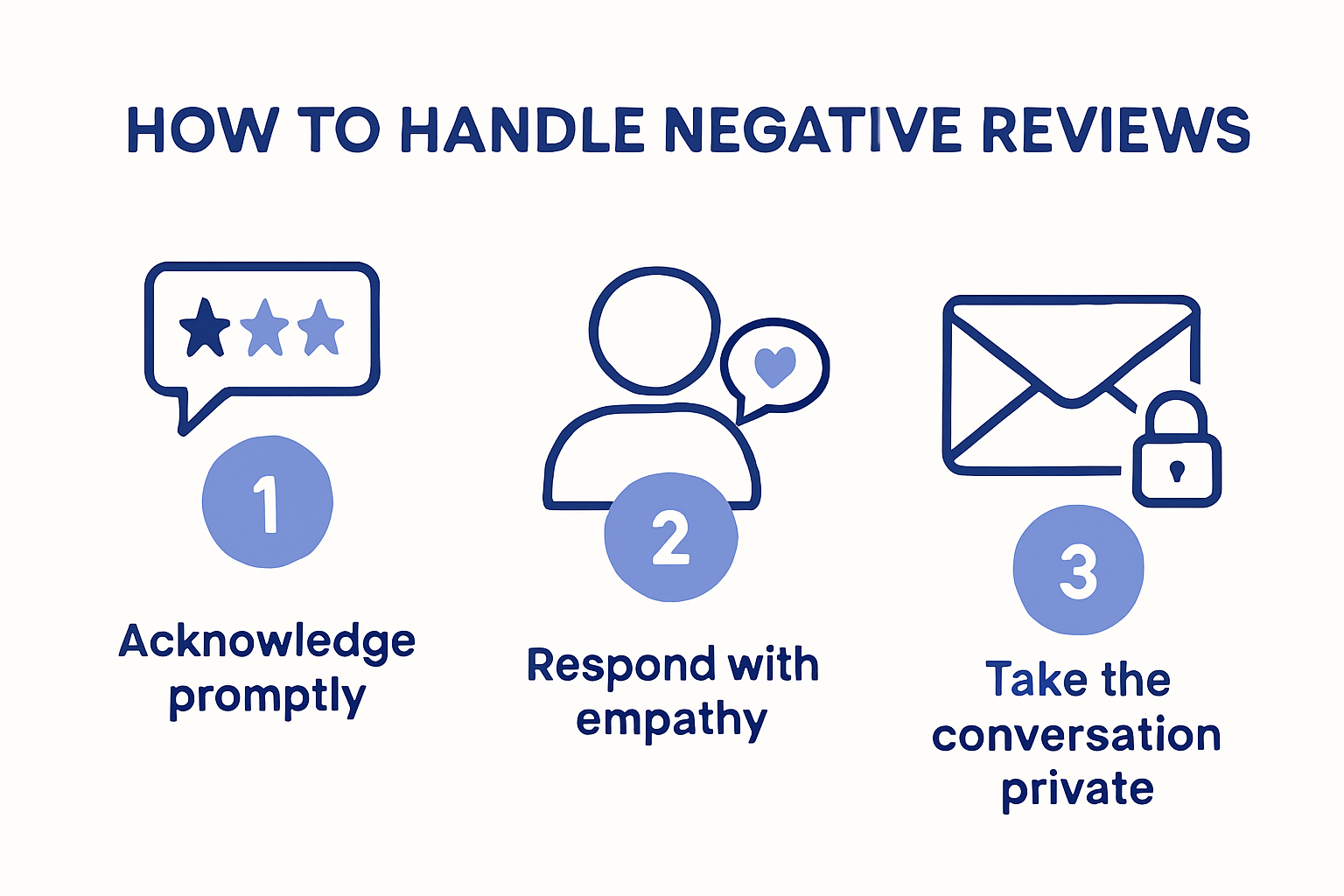
The U.S. Small Business Administration outlines critical guidelines for addressing negative reviews professionally. Businesses must approach such feedback with a measured, constructive mindset. Key response principles include:
- Immediate Acknowledgment: Respond quickly to show active engagement
- Empathetic Tone: Express genuine understanding of the customer’s experience
- Solution-Oriented Approach: Offer concrete steps to resolve the specific complaint
- Move Conversations Private: Invite detailed discussion through direct messaging
The goal is not to argue or defend, but to demonstrate a sincere commitment to customer satisfaction. A well-crafted response can potentially convert a negative experience into a positive perception of your business’s customer service.
Combating Inauthentic Feedback
Research from Penn State University highlights the importance of identifying and managing potentially fraudulent reviews. Businesses should develop robust strategies to:
- Verify the authenticity of negative reviews
- Distinguish between genuine customer feedback and potentially malicious content
- Implement verification processes that protect the integrity of customer reviews
- Develop transparent reporting mechanisms for suspicious review activity
Authenticity is paramount in maintaining credibility. By creating a system that allows genuine feedback while protecting against manipulative practices, businesses can build a more trustworthy online reputation.
Effective reputation management goes beyond simply responding to negative reviews. It requires a holistic approach that integrates proactive communication, continuous improvement, and a genuine commitment to customer experience. Businesses that view negative feedback as an opportunity for growth rather than a threat will ultimately build stronger, more resilient customer relationships.
Remember that trust is not built through perfection, but through honest, transparent, and consistent efforts to address customer concerns. Each negative review presents a unique opportunity to showcase your business’s values, responsiveness, and dedication to customer satisfaction. By approaching these moments with professionalism and empathy, you can transform potential reputation challenges into powerful demonstrations of your commitment to excellence.
Tools and Best Practices for Sustained Reputation Growth
Sustaining a positive online reputation requires strategic tools and disciplined practices. Advanced reputation management solutions empower businesses to proactively monitor, analyze, and enhance their digital presence.
Monitoring and Analytics Tools
Fiveable’s Corporate Communication Guide recommends several critical tools for comprehensive reputation tracking. Key monitoring platforms include:
Below is a table outlining key tools recommended for monitoring and managing your online reputation, as described in the article:
| Tool Type | Examples | Purpose |
|---|---|---|
| Social Media Monitoring | Hootsuite, Sprout Social | Track social mentions and engagement |
| Web Analytics | Google Analytics, SEMrush | Measure digital performance and traffic |
| Reputation Management | ReviewTrackers, Reputation.com | Monitor and manage online reviews |
This table summarizes the categories of tools suggested for effectively monitoring and improving your online reputation.
- Social Media Monitoring: Tools like Hootsuite and Sprout Social
- Web Analytics: Google Analytics and SEMrush for tracking digital performance
- Reputation Management Platforms: ReviewTrackers and Reputation.com for specialized tracking
These tools provide businesses with real-time insights into their online reputation, enabling rapid response and strategic adjustments. By tracking metrics such as Share of Voice, sentiment analysis, and engagement rates, organizations can develop a nuanced understanding of their digital perception.
Ethical Reputation Management Practices
Fiveable’s Online Reputation Management Guide emphasizes the critical importance of maintaining ethical standards. Key principles include:
- Maintaining complete transparency in digital communications
- Respecting user privacy and data protection
- Avoiding manipulative tactics like astroturfing
- Clearly disclosing sponsored or promotional content
Ethical reputation management builds long-term credibility. By prioritizing honesty and integrity, businesses can cultivate trust with their audience and create a sustainable digital reputation.
Cision’s Online Reputation Management Insights recommend creating a dedicated crisis management response team. This team should include roles such as Social Media Manager, Customer Service Representative, PR Specialist, and Legal Advisor to ensure comprehensive and coordinated reputation management.
Successful online reputation management is an ongoing process that requires continuous attention, strategic planning, and adaptability. Businesses must remain proactive, leveraging advanced tools and maintaining ethical standards to navigate the complex digital landscape. By investing in robust monitoring systems, responding thoughtfully to feedback, and consistently delivering value, organizations can build a resilient and positive online reputation that supports long-term growth and success.

Frequently Asked Questions
What is online reputation management?
Online reputation management (ORM) involves monitoring, influencing, and managing how a business is perceived online. It includes tracking mentions, reviews, and interactions across various digital platforms to shape a positive image.
How can I effectively respond to negative reviews?
To respond to negative reviews effectively, acknowledge the complaint immediately, express empathy, offer a solution, and invite the conversation to a private channel. This approach demonstrates commitment to customer satisfaction and can help improve perceptions.
What tools can I use to monitor my business’s online reputation?
You can use social media monitoring tools like Hootsuite, web analytics tools like Google Analytics, and reputation management platforms like ReviewTrackers to track mentions and analyze your online reputation in real time.
How important is content creation for managing online reputation?
Content creation is crucial for managing online reputation as it allows businesses to highlight their strengths, establish authority, and engage with audiences. Regularly publishing positive, authoritative content can enhance credibility and improve public perception.
Ready to Take Control of Your Business Reputation?
Managing your online reputation is more than just responding to reviews or posting on social media. As discussed in this article, staying proactive, monitoring digital mentions, and presenting a consistent digital presence are now expected by customers. However, these steps can feel overwhelming if you lack the right strategy or time. Negative reviews can cause stress, while inauthentic feedback or inconsistent messaging threatens trust with your audience. If you want peace of mind and a strong online identity, you need support from experts who understand how to protect and elevate your brand.
Now is the perfect time to act. At 12AM Agency, our reputation management and AI-driven solutions help businesses like yours stay ahead of risks and seize every opportunity for growth. Our specialists track your mentions in real time, respond to feedback, and create positive, impactful content so you can focus on your core business. Experience the power of advanced monitoring, local optimization, and tailored digital marketing strategies all in one place. Visit https://12amagency.com to book your consultation and start building a resilient reputation today.