





Reputation management is no longer just about putting out fires after a crisis. New research shows that companies with strong reputations can see up to 80 percent higher customer trust and improved financial performance. Most think it is just PR spin or damage control, but the real surprise is that reputation management in 2025 is an active, technology-driven asset that shapes growth long before problems even start.
Table of Contents
- Understanding What Is Reputation Management Today
- Why Reputation Management Matters For Businesses
- Essential Reputation Management Strategies For 2025
- Measuring And Improving Your Online Reputation
Quick Summary
| Takeaway | Explanation |
|---|---|
| Proactive Reputation Management is Essential | Modern reputation management requires a shift from reactive strategies to a proactive digital ecosystem approach that shapes perceptions across multiple platforms. |
| Technology-Driven Strategies are Key | Utilizing advanced technologies like AI-powered analytics and sentiment analysis is crucial for effectively monitoring and managing digital reputation. |
| Ethics Matter in Reputation Management | Transparency, authenticity, and responsiveness in communication are vital ethical considerations that must guide reputation management efforts. |
| Reputation as a Valuable Asset | In today’s digital landscape, a strong reputation is an active resource that directly impacts competitive advantage, customer trust, and financial performance. |
| Comprehensive Measurement Frameworks Improve Reputation | Employing advanced reputation measurement frameworks allows businesses to evaluate and enhance their online reputation based on meaningful metrics rather than superficial ones. |
Understanding What Is Reputation Management Today
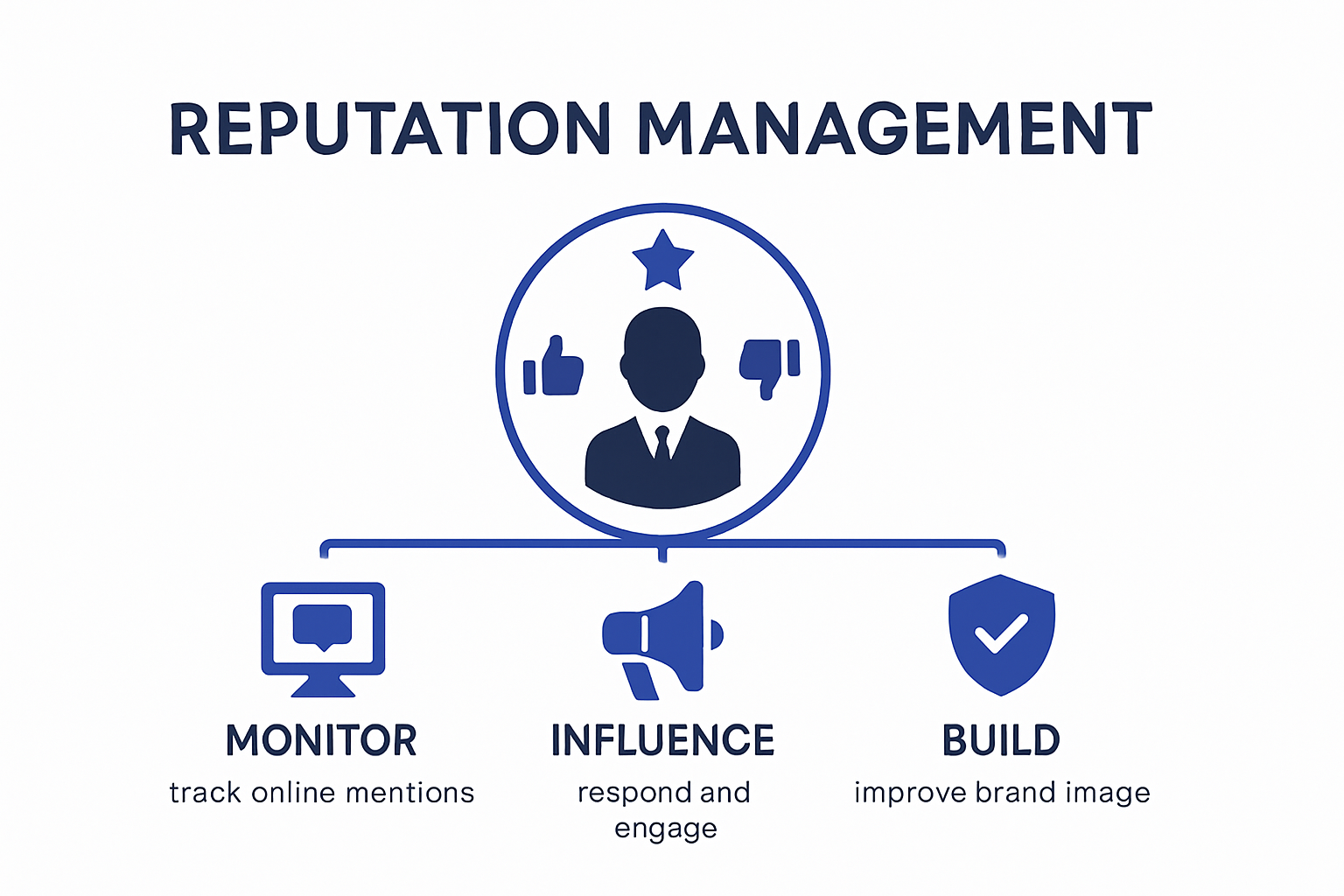
Reputation management has transformed from a reactive defense strategy to a proactive digital ecosystem management approach. Modern reputation management is no longer just about controlling negative information but strategically shaping how businesses are perceived across multiple digital platforms.
The Digital Reputation Landscape
In 2025, reputation management represents a comprehensive approach to monitoring, influencing, and protecting an organization’s digital identity. Comprehensive research from Springer reveals that corporate reputation is now considered a critical intangible asset that directly impacts competitive advantage and financial performance.
Businesses must recognize that every online interaction contributes to their overall reputation. This includes social media posts, customer reviews, search engine results, and digital media mentions. The complexity of managing these channels requires sophisticated strategies that go beyond traditional public relations tactics.
Ethical Reputation Management Practices
Research from communication ethics studies highlights the importance of transparent and authentic reputation management. Organizations must balance strategic communication with genuine transparency, ensuring that their reputation management efforts reflect actual organizational values and performance.
Key ethical considerations include:
- Authenticity: Presenting a genuine representation of the business
- Transparency: Open communication about organizational practices
- Responsiveness: Actively engaging with stakeholder feedback
To make it easier to understand the core ethical principles mentioned above, the following table summarizes key reputation management ethics and their descriptions.
See exactly where your profile stands right now.
Our GBP audit shows your current rank position across your market, how your profile completeness scores against competitors, and the specific gaps holding you back from the Map Pack.
| Ethical Principle | Description |
|---|---|
| Authenticity | Genuinely representing the business in communications and actions |
| Transparency | Openly communicating organizational practices and performance |
| Responsiveness | Actively engaging with and addressing stakeholder feedback |
Strategic Digital Reputation Ecosystem
Modern reputation management integrates multiple digital channels, requiring a holistic approach. Social media reputation management research demonstrates that businesses must proactively monitor and shape their online narrative across platforms.
This strategic approach involves continuous monitoring, rapid response mechanisms, and deliberate content creation that reinforces the organization’s desired image. Companies now utilize advanced analytics, AI-driven sentiment analysis, and real-time tracking tools to understand and manage their digital reputation.
Businesses seeking a deeper understanding of these strategies can explore our comprehensive reputation management guide to develop a robust digital presence strategy.
Why Reputation Management Matters for Businesses
Reputation management has become a critical strategic imperative for businesses across all sectors. In an increasingly digital and interconnected world, a company’s reputation can make or break its ability to attract customers, retain talent, and sustain long-term growth.
Economic and Competitive Impact
Research from the European Management Journal reveals that effective enterprise risk management systems directly correlate with enhanced corporate reputation. Companies with robust reputation management strategies experience significant competitive advantages, including improved investor confidence, customer trust, and market positioning.
Businesses now understand that reputation is more than a passive asset. It’s an active, dynamic resource that requires continuous investment and strategic cultivation. A comprehensive study on small and medium-sized enterprises emphasizes that reputation is a critical intangible asset contributing to competitive advantage and superior performance.
Risk Mitigation and Public Perception
Modern businesses face unprecedented public scrutiny. Experimental research demonstrates that a strong corporate reputation acts as an insurance mechanism, helping organizations buffer negative public reactions during challenging situations. Companies with established positive reputations can more effectively navigate potential controversies and maintain stakeholder confidence.
Key reputation risk factors include:
- Public communication strategies
- Transparency in business practices
- Consistent brand messaging
- Responsive customer engagement
Digital Reputation as a Business Asset
In 2025, digital reputation management transcends traditional marketing. It involves a holistic approach to managing online narratives, customer experiences, and organizational perception. Businesses must proactively monitor digital channels, quickly address potential reputation threats, and consistently demonstrate their value proposition.
Technology plays a crucial role in modern reputation management. Advanced analytics, AI-driven sentiment tracking, and real-time monitoring tools enable businesses to understand and shape their digital identity more effectively than ever before.
Businesses looking to develop a comprehensive reputation management strategy can explore our in-depth reputation management solutions to protect and enhance their digital presence.
Essential Reputation Management Strategies for 2025
In the rapidly evolving digital ecosystem, businesses must adopt sophisticated reputation management strategies that go beyond traditional approaches. Strategic reputation management requires a proactive, comprehensive framework that anticipates challenges and creates robust digital resilience.
Technology-Driven Reputation Intelligence
Research from Harvard Business School emphasizes the critical role of advanced technologies in reputation management. Organizations must leverage AI-powered analytics, real-time monitoring tools, and data-driven insights to understand and shape their digital narrative effectively.
Key technological strategies include:
- Sentiment Analysis: Utilizing AI to track and interpret online conversations
- Predictive Monitoring: Identifying potential reputation risks before they escalate
- Automated Response Protocols: Creating swift, consistent communication mechanisms

Comprehensive Digital Communication Framework
Research from digital communication studies highlights the importance of a multidisciplinary approach to reputation management. Businesses must develop integrated communication strategies that combine transparency, rapid response, and consistent messaging across multiple digital platforms.
Effective communication strategies require:
- Consistent Brand Messaging: Aligning digital communications with core organizational values
- Transparent Engagement: Openly addressing concerns and providing clear information
- Cross-Platform Coordination: Maintaining unified communication across all digital channels
Proactive Reputation Risk Management
Modern reputation management demands a forward-thinking approach that anticipates and mitigates potential risks. Organizations must develop comprehensive risk assessment protocols that continuously evaluate their digital presence and potential vulnerabilities.
Risk management strategies should include:
- Regular Digital Audits: Systematic reviews of online presence and potential reputation threats
- Crisis Response Planning: Developing detailed protocols for managing potential reputation challenges
- Stakeholder Engagement: Creating mechanisms for ongoing feedback and communication
Businesses seeking to enhance their digital reputation can explore our comprehensive reputation management solutions to develop a robust and adaptive strategy for 2025 and beyond.
Measuring and Improving Your Online Reputation
Measuring and improving online reputation requires a strategic, multifaceted approach that goes beyond traditional metrics. Digital reputation assessment demands sophisticated tools, comprehensive analysis, and actionable insights that can transform potential challenges into opportunities for growth.
Advanced Reputation Measurement Frameworks
The Barcelona Principles provide a critical foundation for understanding reputation measurement in the digital age. These guidelines emphasize moving beyond superficial metrics to focus on meaningful outcomes, quality of engagement, and genuine stakeholder perceptions.
Key measurement strategies include:
- Sentiment Analysis: Tracking emotional tone across digital platforms
- Engagement Metrics: Evaluating depth and quality of audience interactions
- Comparative Benchmarking: Understanding reputation relative to industry standards
The following table summarizes key measurement strategies and their purposes for evaluating online reputation, based on the content above.
| Measurement Strategy | Purpose |
|---|---|
| Sentiment Analysis | Track emotional tone across digital platforms |
| Engagement Metrics | Evaluate depth and quality of audience interactions |
| Comparative Benchmarking | Understand reputation relative to industry standards |
Digital Reputation Assessment Technologies
Machine learning research on online reputation systems reveals innovative approaches to evaluating digital reputation. Advanced algorithms can now predict reliability, assess consumer trust, and generate nuanced reputation scores that provide unprecedented insights into organizational perception.
The Webreep model offers a comprehensive framework for understanding online reputation, highlighting four critical factors:
- Navigation: Ease of digital interaction
- Content: Quality and relevance of information
- Performance: Technical efficiency of digital platforms
- Trust: Perceived reliability and transparency
Strategic Reputation Enhancement Techniques
This is the work we do for you. Every week, without exception.
Managing GBP at this level takes 6–8 hours a week when done right. Nova handles the entire system — posts, photos, reviews, Q&A, citations, heatmap tracking — so you can focus on running your business.
Improving online reputation requires a proactive, integrated approach. Organizations must develop targeted strategies that address potential vulnerabilities while consistently reinforcing positive brand narratives.
Effective enhancement techniques include:
- Continuous Monitoring: Regular digital presence audits
- Targeted Content Creation: Developing authoritative, value-driven digital content
- Stakeholder Engagement: Implementing responsive communication protocols
Businesses seeking comprehensive guidance can explore our advanced reputation management strategies to transform their digital presence and build robust online credibility.
Frequently Asked Questions
What is reputation management?
Reputation management is the process of monitoring, influencing, and protecting an organization’s online reputation across various digital platforms to positively shape public perception.
Why is reputation management important for businesses in 2025?
In 2025, reputation management is crucial for businesses as it directly impacts customer trust, competitive advantage, and financial performance. A strong reputation helps attract customers and can buffer negative public reactions during crises.
What are effective strategies for managing online reputation in 2025?
Effective strategies include utilizing technology-driven tools for sentiment analysis, maintaining a comprehensive digital communication framework, and engaging in proactive reputation risk management to anticipate and mitigate potential threats.
How can businesses measure their online reputation?
Businesses can measure their online reputation using advanced frameworks like sentiment analysis, engagement metrics, and comparative benchmarking, which provide insights into the emotional tone, audience interactions, and industry positioning.
Take Control of Your Digital Reputation in 2025
Are you struggling to keep up with the rapid changes in reputation management outlined in our “What Is Reputation Management? A 2025 Guide for Business Growth” article? If your business is feeling the pressure of continuous monitoring, shifting public perception, or managing the complexity of multi-channel digital presence, you are not alone. In a world where negative reviews or outdated information can quickly hurt your brand, it’s vital to have a proactive strategy powered by advanced technology and transparent communication.
Now is the moment to transform your reputation into your most valuable business asset. The team at 12AM Agency delivers integrated solutions tailored to your industry, including advanced AI-driven review management and strategic digital presence optimization. Let us show you how to safeguard your brand, increase trust, and gain lasting growth. Visit https://12amagency.com now to schedule your personalized reputation audit and see how modern, technology-backed strategies can give you the competitive edge you need in 2025.
Recommended
- Reputation Management for Businesses | 12AM Agency
- Reputation Management | 12AM Agency
- Why Reputation Management is Crucial For Law Firm Businesses
- Reputation Management for the Automotive Industry
- Reputation Management Strategies for Cannabis and Local Businesses 2025 – Digital PR Expert | Digital Marketing & Search Leaders
- 5 Marketing Trends For 2024: Stay Ahead Of The Curve


