




Customer communication strategies are shaping how brands build trust and loyalty. Companies using smart communication frameworks can see up to 55 percent higher customer retention rates and 40 percent more revenue potential. Most people focus just on messaging tools and forget one huge detail. The real breakthrough isn’t about sending more messages but knowing exactly who to reach and how to connect in ways that actually matter.
Table of Contents
- What Are Customer Communication Strategies?
- Why Effective Customer Communication Matters
- The Core Components Of Successful Communication
- How To Tailor Communication To Different Audiences
- Measuring The Impact Of Customer Communication Strategies
Quick Summary
| Takeaway | Explanation |
| Prioritize multichannel communication | Use various platforms to connect with customers for better engagement. |
| Leverage data-driven insights | Analyze customer preferences to tailor communication effectively. |
| Focus on personalized messaging | Craft messages that resonate with individual customer needs and behaviors. |
| Measure communication effectiveness | Use key metrics to evaluate the impact of your communication strategies. |
| Build trust through transparency | Foster emotional connections with consistent and clear communication. |
What are Customer Communication Strategies?
Customer communication strategies represent systematic approaches organizations use to interact with and engage customers effectively, ultimately driving business growth and customer satisfaction. These comprehensive frameworks go beyond simple messaging to create meaningful connections that transform transactional interactions into long-term relationships.
Below is a concise table summarizing the core components that make up effective customer communication strategies, helping readers quickly distinguish and recall each essential element.
| Component | Description |
| Multichannel Communication | Using various platforms to engage customers |
| Personalized Messaging | Crafting messages tailored to individual needs |
| Real-Time Response Mechanisms | Responding quickly to customer inquiries |
| Data-Driven Communication Insights | Analyzing data to adapt messaging and engagement |
Core Components of Customer Communication Strategies
At their foundation, customer communication strategies encompass multiple interconnected elements designed to optimize how businesses interact with their audience.
The primary objective of these strategies is to create seamless, responsive interactions that meet customers exactly where they are in their journey. By understanding customer preferences, communication patterns, and technological comfort levels, businesses can design targeted approaches that feel authentic and valuable.
Strategic Communication Principles
Effective customer communication strategies are not about sending more messages but delivering precisely targeted, meaningful interactions. This requires a deep understanding of customer segmentation, communication preferences, and technological channels. Modern strategies leverage digital platforms like email, social media, messaging apps, and customer portals to create integrated communication ecosystems. In specialized verticals, platform selection becomes even more critical — just as a marketer evaluates CRMs, advocacy and civic teams often rely on a thorough political texting platform comparison before committing to an SMS outreach tool.
Professional communication strategies recognize that each customer interaction is an opportunity to build trust, demonstrate value, and reinforce brand positioning. By implementing thoughtful, adaptive communication frameworks, organizations can transform routine exchanges into powerful engagement opportunities that drive customer loyalty and business growth.
Why Effective Customer Communication Matters
Customer communication is not merely a transactional process but a critical strategic function that directly impacts business performance, customer loyalty, and long-term organizational success. In an increasingly competitive marketplace, the quality of communication can be the defining factor that separates thriving businesses from those struggling to maintain customer relationships.
See exactly where your profile stands right now.
Our GBP audit shows your current rank position across your market, how your profile completeness scores against competitors, and the specific gaps holding you back from the Map Pack.
The Economic Impact of Communication
The financial implications of effective communication are substantial. Research from Salesforce reveals that companies with robust communication strategies can experience up to 55% higher customer retention rates and 40% increased revenue potential. These metrics underscore the direct correlation between communication quality and business performance.
Key economic benefits include:
- Reduced customer acquisition costs
- Enhanced customer lifetime value
- Increased brand loyalty and positive word-of-mouth referrals
- More efficient resource allocation
Building Trust Through Communication
Effective communication serves as the foundational mechanism for building customer trust and emotional connection. When businesses demonstrate consistent, transparent, and responsive communication, they create an environment where customers feel valued and understood. Learn more about strategic customer engagement to understand how communication transforms customer relationships.

Beyond transactional interactions, strategic communication helps organizations differentiate themselves in crowded markets. By prioritizing clear, empathetic, and personalized communication, businesses can create memorable experiences that transcend traditional service boundaries. This approach transforms communication from a mere operational necessity into a powerful competitive advantage that drives sustainable growth and customer loyalty.
The Core Components of Successful Communication
Successful communication transcends simple message transmission, representing a complex interplay of strategic elements that enable meaningful organizational interactions. Understanding these core components helps businesses design communication approaches that resonate deeply with their target audiences and drive meaningful engagement.
Foundational Communication Elements
Research from the National Institute of Standards and Technology highlights that effective communication requires deliberate, multifaceted strategies. The fundamental components that distinguish exceptional communication include:
- Clear and concise messaging
- Active and empathetic listening
- Contextual understanding
- Adaptable communication channels
- Consistent brand voice
These elements work synergistically to create communication frameworks that transcend traditional transactional interactions. Successful communication is about creating connections, not just exchanging information. By understanding the nuanced dynamics of communication, organizations can transform routine exchanges into powerful relationship-building opportunities.
Strategic Communication Architecture
Modern communication strategies require a holistic and integrated approach that considers technological capabilities, audience preferences, and organizational objectives. Explore our guide on strategic customer engagement to understand how advanced communication techniques can revolutionize customer interactions.
Organizations must develop communication architectures that are flexible, responsive, and technologically sophisticated. This involves leveraging digital platforms, understanding audience segmentation, and creating personalized communication pathways that feel authentic and valuable.
By treating communication as a strategic asset rather than a mere operational function, businesses can unlock unprecedented levels of customer loyalty and organizational performance.
How to Tailor Communication to Different Audiences
Tailoring communication requires a sophisticated understanding of audience diversity, recognizing that different demographic groups, professional backgrounds, and individual preferences demand nuanced communication approaches. Successful organizations develop adaptive communication strategies that can seamlessly shift between communication styles while maintaining core brand messaging.
Understanding Audience Segmentation
Research published in PubMed demonstrates that persuasive messages become significantly more impactful when carefully aligned with specific audience interests and psychological profiles. This scientific approach to communication reveals that audience segmentation is not just a marketing technique but a critical communication strategy.
Effective communication tailoring requires deep empathy and a willingness to move beyond standardized messaging. Organizations must develop flexible communication frameworks that can dynamically adjust tone, complexity, and delivery method based on audience insights.
To help clarify how audience segmentation can improve communication tailoring, the following table outlines common segmentation factors and their relevance in shaping targeted messaging.
| Segmentation Factor | Relevance to Communication |
| Demographic Characteristics | Helps select appropriate messaging tone and style |
| Professional Backgrounds | Informs content complexity and examples used |
| Technological Comfort Levels | Influences choice of communication channel |
| Generational Preferences | Affects frequency and format of communication |
| Cultural and Linguistic Diversity | Ensures messaging respects language nuances and values |
Adaptive Communication Techniques
Modern communication demands a multilayered approach that recognizes individual communication preferences. Explore our strategies for targeted messaging to understand how precise communication can transform audience engagement.
Business leaders must invest in understanding their audience’s unique communication ecosystem. This involves leveraging data analytics, conducting comprehensive audience research, and creating communication personas that represent different audience segments. By developing a nuanced, empathetic approach to communication, organizations can create more meaningful connections that transcend traditional transactional interactions and foster genuine audience relationships.
Measuring the Impact of Customer Communication Strategies
Measuring the effectiveness of customer communication strategies is not simply about tracking numbers but understanding the complex relationship between communication approaches and organizational performance. Strategic measurement requires a holistic, multidimensional approach that goes beyond traditional metrics to capture the nuanced impact of communication initiatives.
Key Performance Indicators for Communication Effectiveness
Research from the National Academies Press highlights the importance of selecting appropriate measurement tools that capture both quantitative and qualitative dimensions of communication impact. Organizations must develop comprehensive measurement frameworks that assess multiple aspects of communication performance.
Critical metrics for evaluating communication strategies include:
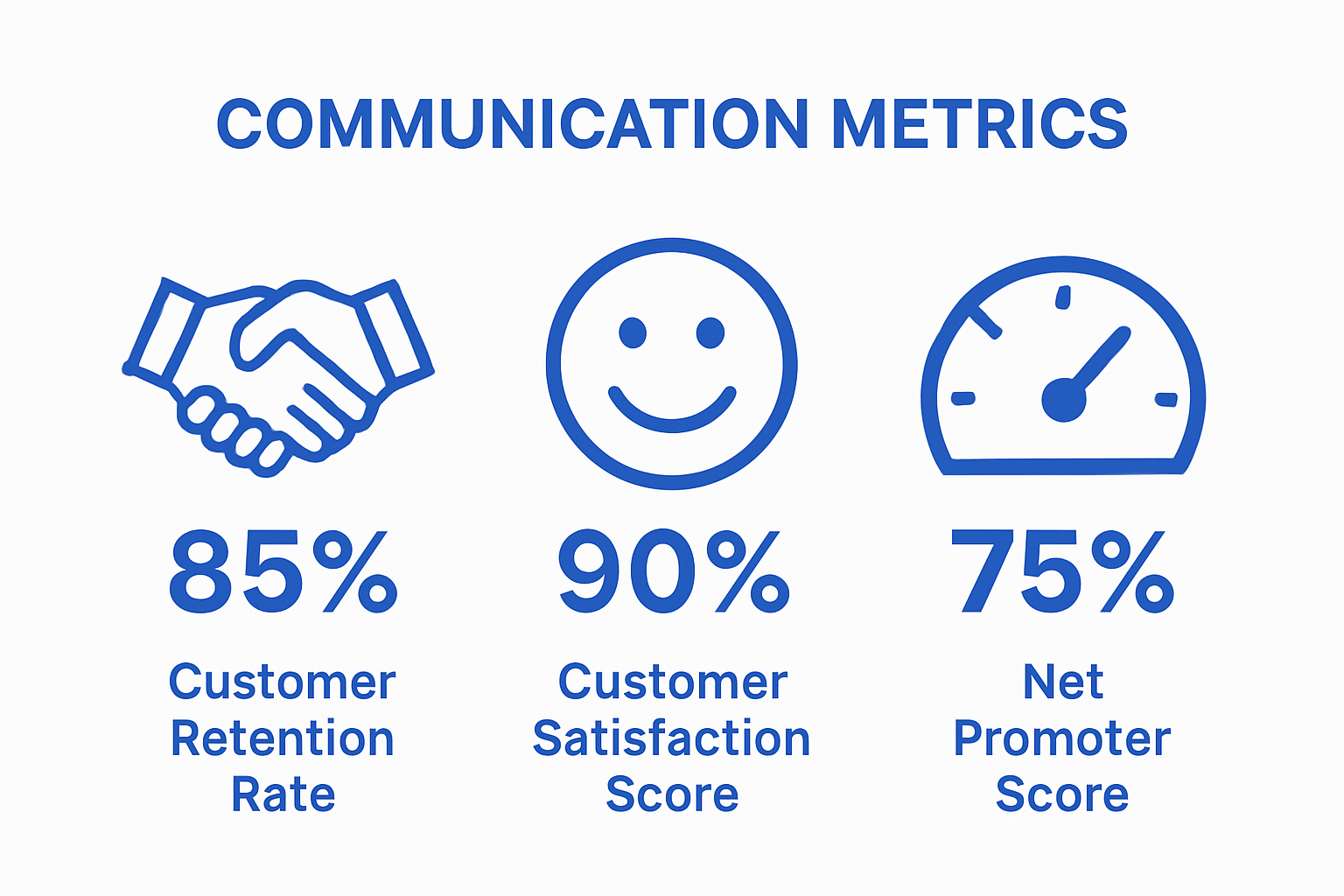
- Customer retention rates
- Response time and engagement levels
- Customer satisfaction scores
- Net Promoter Score (NPS)
- Conversion rates from communication interactions
- Cost per customer acquisition
Advanced Measurement Techniques
This is the work we do for you. Every week, without exception.
Managing GBP at this level takes 6–8 hours a week when done right. Nova handles the entire system — posts, photos, reviews, Q&A, citations, heatmap tracking — so you can focus on running your business.
Sophisticated communication measurement transcends surface level analytics. Learn more about strategic performance tracking to understand how advanced measurement techniques can transform your communication approach.
Modern organizations leverage advanced analytics, artificial intelligence, and machine learning to develop nuanced measurement frameworks. These techniques allow businesses to track not just the immediate outcomes of communication strategies but also their long-term strategic impact. By implementing comprehensive measurement systems, companies can continuously refine their communication approaches, ensuring they remain adaptive, responsive, and aligned with evolving customer expectations and organizational objectives.
Unlock Growth with Smarter Customer Communication
Are you struggling to turn your daily customer interactions into lasting relationships and measurable business gains? The insights from “Understanding Customer Communication Strategies for Growth” reveal that many businesses fall short by treating communication as an afterthought, missing out on trust-building moments and opportunities for higher retention. If your goal is to craft clear messaging, respond in real time, and transform one-time buyers into loyal customers, it is time to move from theory to action.
Take the next step toward building a seamless and impactful communication strategy for your unique industry. At 12AM Agency, our digital experts combine advanced AI-driven techniques with years of experience in sectors like legal, dental, and automotive. We create personalized campaigns that boost engagement and revenue. See how our team turns proven communication principles into real-world results by exploring our client success stories. Ready to connect your customers with the experience they expect? Reach out now using our contact page and watch your growth accelerate.
Frequently Asked Questions
What are customer communication strategies?
Customer communication strategies are systematic approaches organizations use to effectively interact with and engage customers, aiming to drive business growth and enhance customer satisfaction.
Why is effective customer communication important for businesses?
Effective customer communication is crucial as it directly impacts business performance, customer loyalty, and long-term success. Quality communication can lead to higher retention rates and increased revenue potential.
How can businesses tailor communication to different audiences?
Businesses can tailor communication by understanding audience segmentation, including demographic characteristics, professional backgrounds, and individual preferences, allowing for customized messaging that resonates with specific groups.
What metrics should organizations use to measure the effectiveness of their communication strategies?
Organizations should consider key performance indicators such as customer retention rates, response times, customer satisfaction scores, and conversion rates from communication interactions to gauge the effectiveness of their strategies.

