




Customer loyalty can make or break a business. Some companies spend up to five times more to land a new customer than to keep one. So it might sound wild, but just a tiny 5 percent bump in customer retention can boost profits by up to 95 percent. The real surprise is that loyalty is not just about rewards or discounts. It is about weaving emotional connection into every interaction, and that unlocks levels of growth traditional marketing can never touch.
Table of Contents
- What Are Customer Loyalty Strategies?
- Why Customer Loyalty Matters For Businesses
- How Customer Loyalty Strategies Enhance Engagement
- Key Concepts And Elements Of Effective Loyalty Strategies
Quick Summary
| Takeaway | Explanation |
|---|---|
| Focus on customer retention | Retaining existing customers is cheaper than acquiring new ones, driving profitability significantly. |
| Implement personalized experiences | Tailoring customer interactions increases satisfaction and loyalty, fostering emotional connections. |
| Utilize membership rewards systems | Tiered benefits can incentivize repeat purchases and strengthen customer commitment to your brand. |
| Leveraging technology for engagement | Advanced CRM tools enhance customer relations, resulting in improved engagement and loyalty rates. |
| Build interactive customer communities | Engaging customers as active participants fosters loyalty and transforms buyers into advocates for your brand. |
What Are Customer Loyalty Strategies?
Customer loyalty strategies represent systematic approaches businesses use to cultivate sustained relationships with their customers, encouraging repeat purchases and long-term engagement. These strategic frameworks go beyond traditional marketing tactics by focusing on creating meaningful connections that transform occasional buyers into committed brand advocates.
Understanding the Core Concept
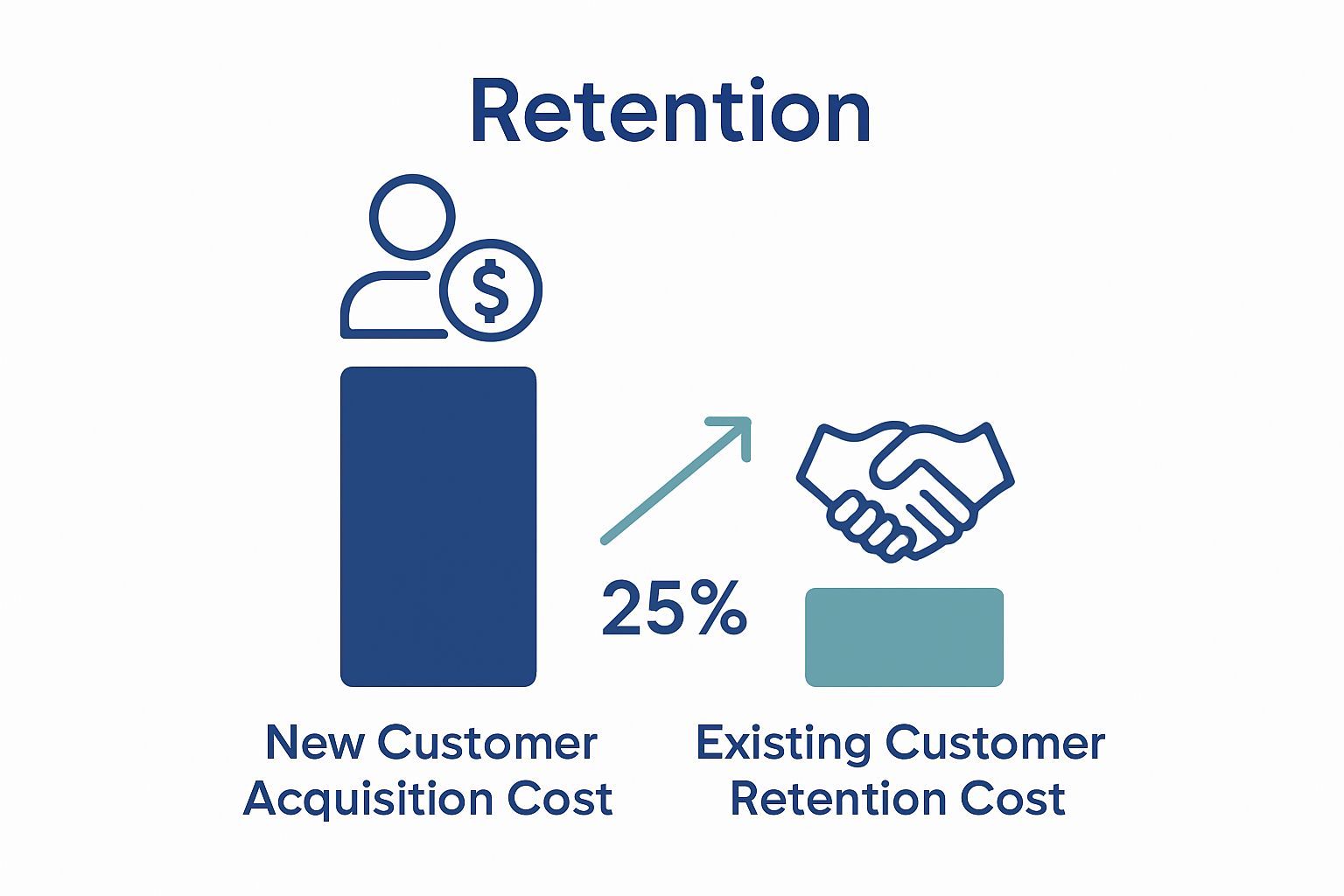
At its fundamental level, customer loyalty strategies are deliberate actions designed to increase customer retention, satisfaction, and emotional investment in a brand. Organizations recognize that acquiring a new customer can cost up to five times more than retaining an existing one. Harvard Business Review research indicates that even a 5% increase in customer retention can boost profits by 25% to 95%.
Key characteristics of effective customer loyalty strategies include:
- Building trust through consistent quality and transparent communication
- Creating personalized experiences that make customers feel valued
- Developing reward systems that provide tangible benefits
- Maintaining responsive customer support channels
Strategic Implementation Approaches
Successful customer loyalty strategies are not one-size-fits-all but require nuanced understanding of specific customer segments. Gartner studies reveal that businesses must integrate data-driven insights, technology, and human-centric design to craft compelling loyalty programs.
Companies typically leverage multiple approaches such as:
- Membership programs with tiered benefits
- Points-based reward systems
- Exclusive access to products or services
- Personalized communication and targeted offers
The ultimate goal of these strategies extends beyond transactional relationships, aiming to create emotional connections that transform customers into brand ambassadors who actively recommend and defend the organization’s reputation.
See exactly where your profile stands right now.
Our GBP audit shows your current rank position across your market, how your profile completeness scores against competitors, and the specific gaps holding you back from the Map Pack.
Why Customer Loyalty Matters for Businesses
Customer loyalty is no longer a peripheral business consideration but a critical strategic imperative that directly impacts organizational sustainability, profitability, and competitive positioning in today’s dynamic marketplace.
Financial Impact and Economic Value
The economic significance of customer loyalty cannot be overstated. McKinsey research demonstrates that loyal customers generate substantially higher lifetime value compared to one-time purchasers. Businesses with robust loyalty programs experience multiple financial advantages:
- Reduced customer acquisition costs
- Higher revenue per customer
- More predictable revenue streams
- Greater market resilience during economic downturns
Competitive Differentiation
In an era of abundant consumer choices, customer loyalty serves as a powerful competitive differentiator. Brand loyalty transcends mere transactional relationships, transforming customers into passionate advocates who actively recommend products and services. Bain & Company studies reveal that companies leading in customer experience grow revenues roughly 4-8% above their market.
Key competitive advantages include:
- Enhanced brand reputation
- Increased customer referral rates
- Lower marketing expenditures
- Superior market positioning
Strategic Business Resilience
Customer loyalty acts as a strategic buffer against market uncertainties. Organizations with strong, engaged customer bases demonstrate greater adaptability and sustainability. Loyal customers provide consistent revenue, offer valuable feedback, and remain more forgiving during organizational transitions or occasional service disruptions.
Below is a table summarizing the key financial and business impacts of customer loyalty as mentioned in the article.
| Impact Area | Description |
|---|---|
| Customer Acquisition Cost | Retaining customers is up to five times less expensive than acquiring new ones. |
| Profitability | A 5% increase in retention can boost profits by 25% to 95%. |
| Revenue Per Customer | Loyal customers generate higher lifetime revenue. |
| Predictable Revenue Streams | Consistent customer base provides stability in cash flow. |
| Market Resilience | Loyal customers help maintain revenue during economic downturns. |
| Marketing Spend | Greater loyalty reduces the need for high marketing expenditures. |
Ultimately, customer loyalty represents a sophisticated business strategy that intertwines emotional connection, consistent value delivery, and strategic relationship management. By prioritizing customer loyalty, businesses create a robust foundation for long-term success, transforming occasional transactions into enduring, mutually beneficial partnerships.
How Customer Loyalty Strategies Enhance Engagement
Customer loyalty strategies serve as sophisticated mechanisms for deepening organizational connections with consumers, transforming passive interactions into dynamic, mutually beneficial relationships that drive sustained business growth.
Psychological Foundations of Engagement
Forrester Research reveals that emotional engagement significantly outweighs transactional interactions in creating lasting customer relationships. Psychological attachment becomes the cornerstone of effective loyalty strategies, where businesses move beyond simple reward mechanisms to create meaningful connections that resonate with customer values and expectations.
Key psychological engagement drivers include:
- Creating personalized experiences
- Demonstrating genuine understanding of customer needs
- Providing consistent and transparent communication
- Delivering unexpected moments of delight
Technology-Enabled Engagement Amplification
Modern customer loyalty strategies leverage advanced technological platforms to create seamless, intuitive engagement experiences. Gartner studies indicate that companies utilizing sophisticated customer relationship management (CRM) technologies can increase engagement rates by up to 45%.
Technological engagement enhancement strategies encompass:
- Artificial intelligence-powered personalization
- Omnichannel communication platforms
- Real-time feedback mechanisms
- Predictive customer behavior analytics
Building Interactive Customer Communities
Progressive businesses recognize that true engagement transcends transactional interactions. By creating interactive communities, organizations transform customers from passive recipients into active participants. Check out our guide on customer communication strategies for deeper insights into building meaningful connections.
Engagement strategies that foster community include:
- User-generated content platforms
- Interactive digital forums
- Collaborative product development initiatives
- Shared learning and development opportunities
By implementing comprehensive customer loyalty strategies, businesses can create dynamic ecosystems where customers feel valued, understood, and intrinsically motivated to maintain long-term relationships.

Key Concepts and Elements of Effective Loyalty Strategies
Effective customer loyalty strategies represent sophisticated frameworks that integrate psychological insights, technological capabilities, and strategic relationship management to transform transactional interactions into enduring brand connections.
Foundational Strategic Elements
Harvard Business Review research demonstrates that successful loyalty strategies are built upon comprehensive, multidimensional approaches. Strategic depth becomes critical in designing programs that genuinely resonate with customers beyond superficial reward mechanisms.
Core foundational elements include:
- Comprehensive customer understanding
- Alignment with brand values
- Measurable and adaptable frameworks
- Holistic customer journey mapping
Data-Driven Personalization Techniques
Modern loyalty strategies leverage advanced data analytics to create hyper-personalized engagement experiences. Deloitte studies indicate that personalization can drive significant improvements in customer retention and lifetime value.
Key personalization strategies encompass:
- Predictive behavior modeling
- Segmentation based on nuanced customer profiles
- Real-time contextual recommendations
- Dynamic preference tracking
Psychological Engagement Frameworks
Successful loyalty strategies transcend transactional mechanics by embedding deep psychological principles. Learn more about local business branding strategies that can complement these engagement approaches.
Psychological engagement principles include:
- Creating emotional resonance
- Establishing trust through consistency
- Providing perceived value beyond monetary rewards
- Generating a sense of exclusive community
This is the work we do for you. Every week, without exception.
Managing GBP at this level takes 6–8 hours a week when done right. Nova handles the entire system — posts, photos, reviews, Q&A, citations, heatmap tracking — so you can focus on running your business.
By integrating these sophisticated elements, businesses can develop loyalty strategies that transform customer relationships from mere transactions into meaningful, mutually beneficial partnerships.
This table compares foundational, technological, and psychological components that make customer loyalty strategies effective, organizing key elements already discussed in the content.
| Core Element | Description | Example Initiatives |
|---|---|---|
| Foundational Strategy | Comprehensive customer understanding, value alignment, measurable frameworks | Customer journey mapping, feedback integration |
| Data-Driven Personalization | Use of analytics for segmentation, real-time recommendations, preference tracking | AI-powered offers, dynamic customer segments |
| Psychological Engagement | Building emotional resonance, trust, and exclusive community | Surprise rewards, user forums, advocate programs |
| Technology Integration | Leveraging CRM, omnichannel platforms, predictive analytics | Automated communications, behavior-based promotions |
Ready to Transform Customer Loyalty Into Tangible Business Growth?
If you are feeling the pressure of rising customer acquisition costs or struggling to turn one-time buyers into lifelong advocates, you are not alone. As covered in our article, building lasting customer loyalty is more than just offering rewards. It needs data-driven personalization, psychological engagement, and innovative digital strategies. Many businesses discover the hard way that inconsistent digital presence or generic marketing fails to create the emotional connections and repeat engagement vital for profitability. Imagine if your loyalty programs were powered by AI and your brand was recognized for customer experience leadership across every channel.
Take control of your business growth today. At 12AM Agency, we use advanced digital marketing, AI review management, and reputation solutions tailored for your industry. Let us show you how our local business branding strategies and customer communication expertise can amplify retention and drive new referrals. Visit our contact page to connect with our specialists now and unlock the potential of loyal, engaged customers before your competitors do.
Frequently Asked Questions
What are customer loyalty strategies?
Customer loyalty strategies are systematic approaches businesses use to cultivate long-term relationships with customers, encouraging repeat purchases and engagement beyond traditional marketing tactics.
Why does customer loyalty matter for businesses?
Customer loyalty is crucial for businesses because it directly affects profitability, reduces acquisition costs, and provides a competitive advantage in a crowded marketplace.
How can businesses enhance customer engagement through loyalty strategies?
Businesses can enhance customer engagement by creating personalized experiences, leveraging technology for seamless interactions, and building interactive communities for customers to engage with each other and the brand.
What are some effective elements of customer loyalty strategies?
Effective customer loyalty strategies include comprehensive customer understanding, measurable frameworks, psychological engagement principles, and data-driven personalization techniques.
Recommended
- Top Local Business Marketing Ideas for 2025 Growth | 12AM Agency
- Unlock Growth: Essential Digital Marketing Strategies for Small Business Owners in 2025 | 12AM Agency
- The Ultimate Guide to Small Business Automation: A 2025 Playbook for The Chief Everything Officer | 12AM Agency
- Local Business Branding: Stand Out with These Proven Strategies | 12AM Agency
- Understanding Content Storytelling for Business Growth

