






Content marketing is about to shift gears for 2025 and businesses are feeling the pressure to keep up. Most people focus on churning out more content and posting everywhere at once. But staggering results tell a different story. Companies using a diversified social media strategy can see web sales jump by as much as 5 percent. The secret is not in doing more but in doing it smarter with targeted, data-driven content that leaves competitors scrambling to catch up.
Table of Contents
- Building A Strong Content Foundation
- Tailoring Strategies For Different Industries
- Leveraging Digital Channels For Maximum Reach
- Measuring And Optimizing Results For Growth
Quick Summary
| Takeaway | Explanation |
|---|---|
| Building a Strong Content Foundation | A systematic approach to content development involving goal alignment, audience research, and content audits leads to delivering meaningful content that drives business growth. |
| Tailoring Strategies for Different Industries | Customizing content strategies to specific industry requirements, including regulatory compliance and audience personas, enhances engagement and relevancy. |
| Leveraging Digital Channels for Maximum Reach | Utilizing a multi-platform distribution strategy and embracing emerging content formats helps maximize content reach and user engagement. |
| Measuring and Optimizing Results for Growth | Implementing advanced analytics and AI-powered optimization strategies allows businesses to track performance effectively and make data-driven improvements. |
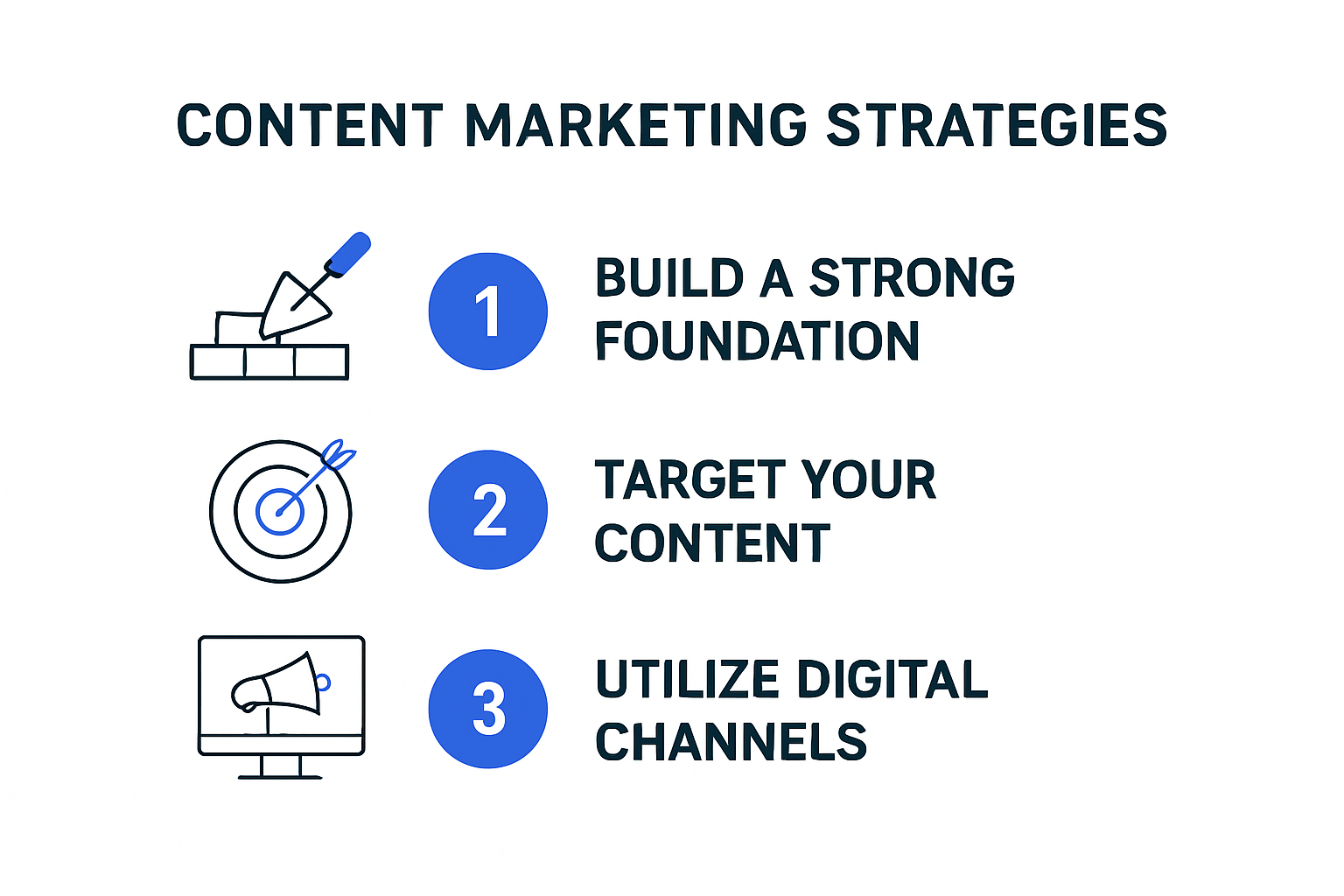
Building a Strong Content Foundation
Successful content marketing begins with a rock-solid foundation that transforms random content into a strategic business growth engine. Businesses that approach content development systematically are significantly more likely to achieve their marketing objectives and drive meaningful engagement.
Understanding Your Content Strategy Framework
Developing a comprehensive content strategy requires a methodical approach. Explore our comprehensive content strategy guide to understand the intricate process of building a robust framework. According to research from Coursera, effective content strategies typically involve seven critical steps:
- Goal Alignment: Clearly define specific, measurable objectives that connect your content efforts to broader business outcomes
- Audience Research: Develop deep insights into your target audience’s preferences, pain points, and content consumption habits
- Content Audit: Systematically evaluate existing content assets for performance, relevance, and potential optimization opportunities
The key is not just creating content but creating purposeful content that resonates with your target audience and drives actionable results.
Crafting a Consistent Brand Narrative
Consistency is the cornerstone of effective content marketing. Research from arXiv highlights that maintaining brand consistency across digital platforms builds trust and enhances customer retention. This means developing a unified voice, visual style, and messaging approach that remains coherent across all content channels.
To achieve this, businesses must:
- Develop Clear Brand Guidelines: Create a comprehensive document outlining tone, style, messaging principles, and visual standards
- Train Content Creators: Ensure all team members understand and can authentically represent the brand’s unique voice
- Implement Regular Content Reviews: Consistently monitor and align content with established brand narratives
Measuring and Iterating Content Performance
Building a strong content foundation is an ongoing process of measurement, learning, and refinement. Successful organizations treat content not as a static asset but as a dynamic, evolving strategy.
Key performance indicators should include:
- Engagement metrics (time on page, social shares)
- Conversion rates
- SEO performance
- Audience feedback and sentiment
By adopting a data-driven approach, businesses can continuously optimize their content strategy, ensuring sustained relevance and effectiveness in an ever-changing digital landscape.
Remember, a robust content foundation is not about producing more content but about producing more meaningful, strategically aligned content that drives genuine business growth.
Tailoring Strategies for Different Industries

Content marketing is not a one-size-fits-all approach. Each industry demands a nuanced strategy that reflects its unique characteristics, audience expectations, and competitive landscape. Learn more about industry-specific content optimization to understand the critical importance of customization.
Industry-Specific Content Architecture
Successful content marketing requires deep understanding of industry-specific dynamics. Research from the National Institutes of Health reveals that organizations with dedicated content marketing units that have specialized employees and task autonomy are more likely to develop innovative and targeted content solutions.
Key considerations for industry-specific content strategies include:
- Regulatory Compliance: Understanding and integrating industry-specific legal and ethical guidelines
- Technical Complexity: Adapting content complexity to match audience technical expertise
- Audience Personas: Developing detailed, industry-specific audience profiles that capture unique professional needs
Strategic Content Differentiation by Sector
Different industries require markedly different content approaches:
Legal Services
- Focus on authoritative, research-backed content
- Emphasize case studies and professional expertise
- Maintain strict confidentiality and professional tone
Healthcare
- Prioritize clear, accessible medical information
- Use patient-friendly language
- Incorporate trust-building elements like professional credentials
Technology
- Highlight innovation and cutting-edge solutions
- Use technical depth balanced with understandable explanations
- Showcase product capabilities through detailed demonstrations
Automotive
- Create visually engaging content
- Blend technical specifications with lifestyle narratives
- Use video and interactive content to demonstrate features
To help compare content approaches across industries, the following table summarizes the primary focus points for each sector discussed above.
| Industry | Key Content Focus | Tone/Style | Notable Elements |
|---|---|---|---|
| Legal | Authority, research, expertise | Professional, confidential | Case studies, accuracy |
| Healthcare | Clear, accessible info, trust-building | Friendly, trustworthy | Credentials, patient-centric language |
| Technology | Innovation, technical depth, product demos | Technical, approachable | Demonstrations, balanced explanations |
| Automotive | Visuals, lifestyle narratives, interactivity | Engaging, dynamic | Videos, specs, storytelling |
Adaptive Content Intelligence
Modern content strategies must evolve continuously. This means:
- Regular audience research and persona refinement
- Monitoring industry trend shifts
- Leveraging AI and analytics for content personalization
- Developing flexible content frameworks that can quickly adapt to emerging market needs
The goal is not just to create content but to develop a responsive, intelligent content ecosystem that speaks directly to each industry’s unique requirements. By understanding and implementing industry-specific nuances, businesses can transform generic content into powerful, targeted communication tools that drive engagement and business growth.
Leveraging Digital Channels for Maximum Reach
In the rapidly evolving digital marketing landscape, businesses must strategically navigate multiple channels to maximize their content’s reach and impact. Explore our comprehensive guide on media outreach strategies to understand how to effectively amplify your digital presence.
Multi-Platform Content Distribution
Research from arXiv reveals that e-commerce companies implementing a diversified social media strategy across multiple platforms can experience a 2% to 5% increase in total web sales. This demonstrates the critical importance of a strategic, integrated approach to digital content distribution.
Key strategies for effective multi-platform content distribution include:
- Platform-Specific Optimization: Tailor content format and messaging to each platform’s unique audience and technical specifications
- Cross-Channel Consistency: Maintain a unified brand narrative while adapting to platform-specific nuances
- Strategic Content Repurposing: Transform core content into multiple formats to maximize reach and engagement
Emerging Content Formats and User Engagement
Research published in MDPI highlights a significant shift towards user-generated content and interactive formats. Modern digital strategies must embrace:
Video Content
- Short-form video experiences
- Live streaming interactions
- Behind-the-scenes and authentic storytelling
Interactive Content
- Quizzes and assessments
- Interactive infographics
- Personalized content experiences
User-Generated Content
- Customer testimonial campaigns
- Community-driven storytelling
- Collaborative content creation
To summarize how content formats and engagement strategies are evolving, the table below organizes the emerging types and their primary engagement benefits.
| Format Type | Examples | Engagement Benefits |
|---|---|---|
| Video Content | Short-form videos, livestreams, behind-the-scenes | Real-time interaction, authenticity |
| Interactive Content | Quizzes, assessments, infographics | Increased participation, personalization |
| User-Generated | Testimonials, community stories, collaborations | Trust, community-building |
Data-Driven Content Personalization
Advanced digital channels demand sophisticated personalization strategies. Businesses must leverage:
- Advanced analytics for audience segmentation
- AI-powered content recommendation engines
- Real-time content adaptation based on user behavior
- Predictive content modeling
Successful digital channel strategies in 2025 will prioritize creating adaptive, intelligent content ecosystems that dynamically respond to audience needs. By combining technological innovation with authentic storytelling, businesses can create meaningful connections that transcend traditional marketing boundaries.
The future of digital content is not about broadcasting messages but creating interactive, personalized experiences that genuinely resonate with target audiences.
Measuring and Optimizing Results for Growth
In the dynamic world of content marketing, measuring and optimizing results is not just a strategy but a critical survival mechanism for business growth. Discover our comprehensive approach to performance tracking to transform raw data into actionable insights.
Advanced Analytics and Performance Metrics
Research from arXiv demonstrates that integrating Large Language Models (LLMs) into e-commerce marketing content optimization can lead to significant performance improvements. Specifically, businesses witnessed a 12.5% increase in Click-Through Rates (CTR) and an 8.3% increase in Conversion Rates (CVR) by leveraging AI-driven content strategies.
Key performance metrics for content marketing in 2025 include:
- Engagement Depth: Measuring time spent, scroll depth, and interaction quality
- Conversion Efficiency: Tracking direct and assisted conversions
- Audience Growth: Monitoring audience expansion and retention rates
- Content ROI: Calculating precise revenue attributed to specific content pieces
AI-Powered Content Optimization
Innovative research introducing SOMONITOR reveals a groundbreaking approach to content optimization. This explainable AI framework combines Large Language Models with marketing analytics to:
- Process high-performing competitor content
- Identify core content pillars
- Generate detailed, data-driven content briefs
- Enhance overall campaign effectiveness
Practical AI Optimization Strategies
- Implement real-time content performance tracking
- Use predictive analytics for content recommendation
- Develop adaptive content models that learn from audience interactions
- Create personalized content experiences based on individual user data
Continuous Improvement Framework
Successful content marketing in 2025 demands a holistic approach to continuous improvement:
- Regular Performance Audits: Conduct monthly and quarterly content performance reviews
- Agile Content Development: Create flexible content strategies that can quickly adapt to performance insights
- Cross-Channel Performance Integration: Develop unified metrics that capture performance across multiple digital platforms
- Predictive Optimization: Use machine learning to anticipate content performance before publication
The future of content marketing is not about creating more content but about creating smarter, more targeted content that delivers measurable business value. By embracing data-driven strategies and cutting-edge technologies, businesses can transform their content from a cost center to a powerful growth engine.
Remember, in the world of digital marketing, what gets measured gets managed. Your content’s potential for growth is directly proportional to your ability to understand, analyze, and optimize its performance.
Frequently Asked Questions
What are the key content marketing strategies for 2025?
To succeed in 2025, businesses should focus on building a strong content foundation, tailoring strategies for different industries, leveraging multi-channel digital distribution, and measuring performance with advanced analytics and AI-powered optimization.
How can a business create a consistent brand narrative?
A consistent brand narrative can be established by developing clear brand guidelines, training content creators, and implementing regular content reviews to ensure coherence in messaging and visual style across all platforms.
What are the benefits of data-driven content personalization?
Data-driven content personalization enhances user engagement by providing tailored experiences that resonate with individual audience preferences, improving conversion rates, and ultimately driving business growth.
Why is measuring content performance important for growth?
Measuring content performance is crucial for understanding engagement, conversion rates, and audience feedback. By optimizing content based on these metrics, businesses can enhance their marketing strategies and achieve greater results.
Propel Your 2025 Growth With Targeted Content and Real Results
You have read about the game-changing power of strategic, data-driven content and how quickly outdated approaches can leave your business behind. As digital landscapes evolve, many businesses struggle to turn content into real growth. If you are tired of generic marketing and want every piece of your strategy to work smarter for your brand, 12AM Agency delivers exactly what you need. Our proven systems align with the latest industry shifts discussed in this article, including AI-powered content, advanced analytics, and platform diversification that can boost sales and engagement.
Ready to move from strategy to action? Discover how our full-service digital marketing solutions—from AI-driven SEO management to customized cross-channel campaigns—help you achieve measurable business growth in a crowded 2025 market. Visit 12AM Agency today to request your free consultation and start building meaningful, revenue-driving content now.
Recommended
- Top Local Business Marketing Ideas for 2025 Growth | 12AM Agency
- Top Digital Marketing Trends 2025 for Business Growth | 12AM Agency
- Social Media for Small Business Growth in 2025 | 12AM Agency
- What Is Digital Marketing? Essential Guide for Business Growth 2025 | 12AM Agency
- Social Media Marketing for Businesses: Strategies That Work in 2025 | Ibrandmedia