


Content marketing seems like just another trend, but businesses that use it right are seeing incredible growth. Over 80% of successful companies have a documented content marketing strategy. That might sound like a lot of writing and videos, but the real shift is much bigger. While most brands focus on flashy ads and quick sales, the brands with lasting power are quietly building trust and driving long-term results with value-driven content. This is where the smart money goes, and the impact keeps multiplying.
Table of Contents
- What Is Content Marketing And Why It Matters
- Key Types Of Content Marketing Strategies
- How Content Marketing Fuels Business Growth
- Best Practices For Different Industries
Quick Summary
| Takeaway | Explanation |
|---|---|
| Content marketing builds long-term relationships | Focus on creating valuable content that addresses audience needs, fostering trust and engagement over quick sales. |
| Diversify content types for greater reach | Utilize blogs, videos, podcasts, and interactive media to connect with different audience segments effectively. |
| High-quality content improves SEO performance | Regularly producing well-researched and relevant content enhances online visibility and organic traffic from search engines. |
| Tailor strategies to industry needs | Customize content marketing approaches depending on specific industry characteristics and audience expectations for better impact. |
| Measure and adapt based on performance | Continuously analyze content results and audience feedback to refine strategies and ensure ongoing engagement and effectiveness. |
What Is Content Marketing and Why It Matters
Content marketing represents a strategic approach that transforms how businesses communicate with their target audience. Unlike traditional advertising that interrupts consumers, content marketing creates genuine value by delivering informative, engaging, and relevant materials that solve real problems.
The Core Definition of Content Marketing
At its essence, content marketing is a deliberate strategy focused on creating and distributing valuable, consistent content to attract and retain a clearly defined audience. Research from the United States Congress House Report emphasizes that this approach goes beyond simple promotion, positioning content as a critical tool for driving meaningful customer engagement and ultimately generating profitable actions.
Businesses using content marketing don’t just push products. They establish authority, build trust, and create meaningful connections by addressing audience needs through various content formats like blog posts, videos, podcasts, infographics, and educational resources. The goal is not immediate sales, but long-term relationship building that naturally guides potential customers through their purchasing journey.
Why Content Marketing Matters for Modern Businesses
In today’s digital ecosystem, consumers are bombarded with advertisements. They’ve become adept at filtering out traditional marketing noise. Content marketing offers a strategic alternative by providing genuine value. Our guide on SEO and content marketing demonstrates how high-quality content can simultaneously improve search visibility and customer trust.
The statistics underscore its importance. Businesses utilizing content marketing strategies see significantly higher engagement rates compared to traditional advertising. Consumers are more likely to interact with brands that provide helpful, informative content that addresses their specific challenges or interests. This approach transforms marketing from a transactional interaction into a valuable resource that customers actively seek out.
Moreover, content marketing is cost-effective. Unlike paid advertising that requires continuous financial investment, well-crafted content continues generating value long after its initial creation. A single comprehensive blog post can attract potential customers for months or even years, providing ongoing returns on the initial time and effort invested.
For small businesses and large enterprises alike, content marketing represents more than a trend. It’s a fundamental shift in how organizations communicate, educate, and connect with their target audience. By prioritizing genuine value and customer-centric information, businesses can establish themselves as trusted authorities in their respective industries, driving sustainable growth and meaningful customer relationships.
Key Types of Content Marketing Strategies
Content marketing strategies are dynamic tools that enable businesses to connect with their target audience through diverse and engaging formats. Understanding the various types of content marketing strategies allows organizations to craft comprehensive communication approaches that resonate with different audience segments and achieve specific business objectives.
See exactly where your profile stands right now.
Our GBP audit shows your current rank position across your market, how your profile completeness scores against competitors, and the specific gaps holding you back from the Map Pack.
Blog and Written Content Marketing
Blog content remains a foundational strategy for businesses seeking to establish thought leadership and improve online visibility. According to StatCounter research, written content continues to be a primary method for delivering valuable information and attracting organic search traffic. Effective blog strategies involve creating in-depth, research-backed articles that address specific audience pain points, answer critical questions, and provide actionable insights.
Successful blog content goes beyond surface-level information. It requires deep subject matter expertise, original research, and a commitment to solving real-world problems. Businesses can leverage different blog formats including how-to guides, industry trend analyses, case studies, and expert interviews to maintain reader engagement and demonstrate comprehensive knowledge.
Multimedia Content Marketing Approaches
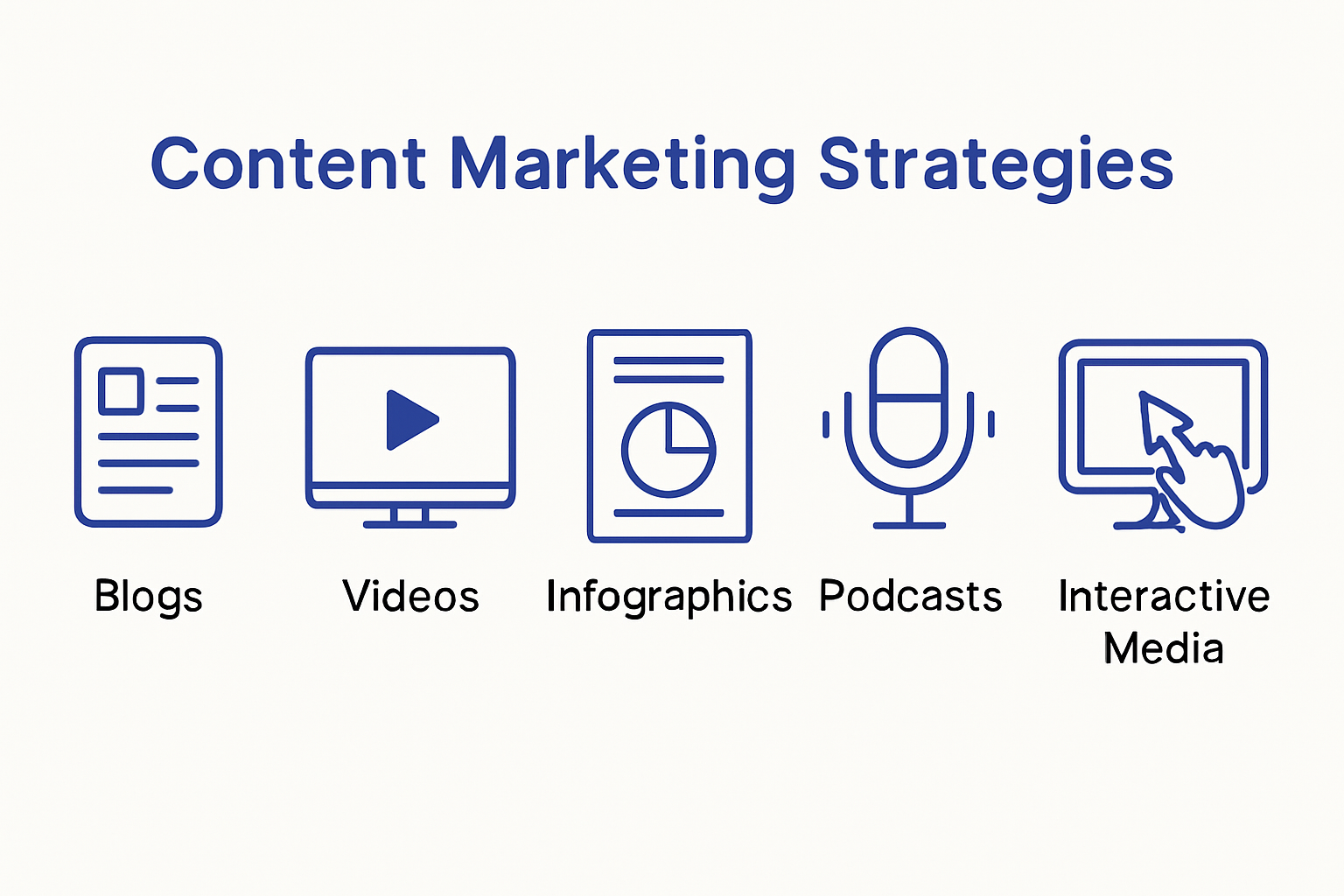
Modern content marketing extends far beyond traditional written formats. Our strategic content guide highlights the importance of diversifying content types to capture audience attention. Video content, podcasts, infographics, and interactive media have become increasingly critical in capturing and maintaining audience interest.
Video marketing, in particular, has experienced exponential growth. Short-form videos, webinars, tutorials, and behind-the-scenes content allow businesses to create more personal and engaging connections with their audience. Podcasts offer another powerful medium for delivering in-depth discussions, industry insights, and expert interviews that can position a brand as a thought leader.
Social Media and Interactive Content Strategies
Social media platforms have transformed content marketing by enabling real-time interaction and immediate audience feedback. Interactive content strategies such as polls, quizzes, live streams, and user-generated content campaigns create dynamic engagement opportunities. These approaches not only capture audience attention but also provide valuable insights into customer preferences and behaviors.
Effective social media content marketing requires a nuanced understanding of each platform’s unique characteristics. LinkedIn might demand more professional, industry-focused content, while Instagram thrives on visually compelling, storytelling approaches. The key is to adapt content style and presentation to match the specific platform’s audience expectations and communication norms.
By implementing a multi-channel content marketing strategy that combines written, visual, and interactive elements, businesses can create a robust communication ecosystem. This approach ensures consistent messaging across different platforms while catering to varied audience preferences and consumption habits. The most successful content marketing strategies are those that remain flexible, data-driven, and committed to delivering genuine value to their target audience.
To help businesses quickly compare the core types of content marketing strategies discussed, the following summary table highlights their main features and focus areas.
| Content Marketing Type | Main Features | Primary Focus |
|---|---|---|
| Blog and Written Content | In-depth articles, how-to guides, interviews | Thought leadership, SEO, education |
| Multimedia Content (Video/Audio) | Videos, podcasts, webinars, infographics | Engagement, storytelling, brand personality |
| Social Media & Interactive | Polls, quizzes, live streams, user content | Real-time interaction, audience participation |
How Content Marketing Fuels Business Growth
Content marketing has emerged as a powerful engine for sustainable business growth, transforming how organizations attract, engage, and convert potential customers. By strategically creating and distributing valuable content, businesses can unlock multiple growth pathways that extend far beyond traditional marketing approaches.
Driving Organic Traffic and Visibility
Research from West Virginia University’s Marketing Communications program reveals that 80% of successful companies have a well-documented content marketing strategy. This systematic approach enables businesses to significantly improve their online visibility and organic search rankings. High-quality, relevant content acts as a magnet for potential customers, drawing them to a company’s digital platforms through valuable information that addresses their specific needs and challenges.
Search engines prioritize content that demonstrates expertise, authority, and relevance. By consistently producing in-depth, well-researched content, businesses can improve their search engine optimization (SEO) performance. Our comprehensive guide on SEO and content marketing illustrates how strategic content creation can dramatically increase website traffic and online discoverability.
Building Trust and Establishing Thought Leadership
Content marketing transcends mere promotion by positioning businesses as trusted authorities in their respective industries. Through educational content, detailed guides, and insightful analysis, companies can demonstrate deep understanding and expertise. According to the American Military University, businesses that share informative content beyond direct product advertisements can significantly enhance their social media engagement and audience trust.
This approach of providing genuine value transforms the traditional sales relationship. Instead of pushing products, businesses become problem-solvers and knowledge providers. Potential customers are more likely to engage with and ultimately purchase from companies that have already demonstrated their capability and understanding through high-quality content.
Generating and Nurturing Leads
Content marketing serves as a powerful lead generation and nurturing mechanism. By creating content that addresses different stages of the customer journey, businesses can attract potential customers, provide them with valuable information, and gradually guide them towards making a purchasing decision. Targeted content such as webinars, detailed guides, case studies, and educational resources can effectively capture and maintain audience interest.
The economic efficiency of content marketing is particularly compelling. Unlike traditional advertising that requires continuous financial investment, well-crafted content continues generating value long after its initial creation. A single comprehensive piece of content can attract and engage potential customers for months or even years, providing an exceptional return on investment.
Successful content marketing requires a strategic, data-driven approach. Businesses must continuously analyze their content’s performance, understand audience preferences, and adapt their strategies accordingly. By viewing content not as a one-time effort but as an ongoing conversation with potential customers, organizations can create a sustainable growth engine that consistently attracts, engages, and converts their target audience.
Best Practices for Different Industries
Content marketing is not a one-size-fits-all strategy. Each industry demands a nuanced approach that speaks directly to its unique audience, challenges, and communication dynamics. Understanding and implementing industry-specific content marketing practices can dramatically improve engagement, trust, and ultimately, business outcomes.
Travel and Hospitality Industry Content Strategies
Research from the Virginia Tourism Corporation reveals critical insights for content marketing in the travel sector. The key is creating evergreen content that captures the imagination while providing practical value. Travel businesses should focus on storytelling that goes beyond destination descriptions, offering immersive experiences through multimedia content like virtual tours, local insider guides, and personal travel narratives.
Successful travel content marketing involves understanding the customer journey from inspiration to booking. This means creating content that addresses different traveler personas – from budget backpackers to luxury resort seekers. Interactive content such as destination quiz, travel planning tools, and user-generated content campaigns can significantly enhance audience engagement.
Nonprofit and Social Impact Content Marketing
Georgetown University’s Center for Social Impact Communication emphasizes the transformative power of storytelling in nonprofit content marketing. For organizations in this sector, content is not just about communication but about creating meaningful connections and driving social change. The most effective strategies involve transparent, authentic narratives that showcase real impact, personal stories of individuals helped, and clear calls to action.
Our strategic growth guide highlights the importance of creating content that not only informs but inspires action. Nonprofits should leverage various content formats – impact reports, beneficiary testimonials, behind-the-scenes documentaries, and educational resources that demonstrate their unique value proposition.
Professional Services and Enterprise Content Approaches
The University of Washington’s content strategy guidelines provide a comprehensive framework for professional services and enterprise-level content marketing. These industries require a delicate balance between demonstrating technical expertise and maintaining an approachable, human-centric communication style.
For professional services like legal, consulting, and technology firms, content marketing should focus on thought leadership. This means producing in-depth whitepapers, expert analysis, case studies, and webinars that showcase deep industry knowledge. The content must address complex industry challenges while remaining accessible to both technical and non-technical audiences.
Key considerations for enterprise content marketing include maintaining a consistent brand voice across different platforms, creating content that addresses various stakeholder needs, and developing a robust content governance strategy. This involves close collaboration between marketing, subject matter experts, and leadership to ensure content accurately represents the organization’s expertise and values.
This is the work we do for you. Every week, without exception.
Managing GBP at this level takes 6–8 hours a week when done right. Nova handles the entire system — posts, photos, reviews, Q&A, citations, heatmap tracking — so you can focus on running your business.
Successful industry-specific content marketing requires continuous learning and adaptation. Businesses must remain agile, regularly analyzing content performance, staying attuned to audience feedback, and being willing to experiment with new formats and approaches. By tailoring content strategies to specific industry nuances, organizations can create more meaningful, impactful connections with their target audiences.
The following summary table outlines best practices for content marketing in different industries as detailed in the article, helping readers compare industry-specific strategies at a glance.
| Industry | Key Strategies & Content Types |
|---|---|
| Travel & Hospitality | Storytelling, multimedia (virtual tours, local guides), interactive content |
| Nonprofit & Social Impact | Authentic narratives, impact stories, testimonials, educational resources |
| Professional Services/Enterprise | Thought leadership (whitepapers, webinars), expert analysis, consistent voice |

Frequently Asked Questions
What is content marketing?
Content marketing is a strategic approach focused on creating and distributing valuable, relevant content to attract and retain a clearly defined audience. It aims to build lasting relationships with customers rather than pushing immediate product sales.
Why is content marketing important for businesses?
Content marketing is important because it helps businesses establish authority, build trust, and create meaningful connections with their audience. It offers a cost-effective way to engage consumers who are often resistant to traditional advertising methods.
How does content marketing improve SEO?
High-quality content enhances SEO performance by improving online visibility and search engine rankings. Valuable, well-researched content attracts organic traffic, encouraging search engines to prioritize it as a trustworthy source of information.
What types of content are most effective in content marketing?
Effective types of content include blogs, videos, podcasts, infographics, and interactive media. Diverse formats cater to different audience preferences and help maintain engagement by providing valuable and informative content.
Ready to Turn Content Into Real Business Growth?
Many businesses hit a wall when it comes to content marketing: you invest time and effort into blogs and videos, but your audience remains silent and sales stay flat. If you recognize yourself in these common pain points—like building trust, improving visibility, and growing with value-driven content—there is a smarter way forward. Our digital marketing experts at 12AM Agency specialize in transforming informative strategies into measurable results. We take the guesswork out of SEO, web design, Google Business Profile optimization, and more so your content not only reaches your customers but inspires them to act.
Move from scattered efforts to a unified strategy that is tailored to your industry and goals. Explore our advanced solutions and see how our AI-powered approach and years of experience help businesses like yours capture leads, boost engagement, and strengthen reputation. Learn more at 12AM Agency or get inspired with our strategic growth guide. Take control of your digital future. Start your transformation today.
Recommended
- Content Marketing Strategies for Business Growth in 2025 | 12AM Agency
- The Ultimate Guide to Creating a Content Calendar That Drives Real Growth | 12AM Agency
- Seo and Content Marketing: Boost Traffic and Conversions
- What Is Digital Marketing? Essential Guide for Business Growth 2025 | 12AM Agency
- Website Content Planning for Modern Business Success 2025
- The Future of Video Marketing: Key Trends and Strategies

