



Startup marketing seems overwhelming with so many flashy tactics and limited budgets. Most think you need a huge ad spend to make any dent in the market. But the surprising truth is that smart SEO strategies can raise your visibility by over 70 percent without burning through cash. Get ready to discover why small, consistent moves can beat big-budget campaigns when it comes to real business growth. As we look ahead to small business growth tactics in 2026, it’s essential to embrace the shift towards digital platforms and local engagement strategies. Utilizing social media effectively and fostering community connections will be pivotal for brands aiming to thrive in a competitive landscape. Additionally, leveraging data analytics can provide invaluable insights, allowing businesses to tailor their approaches for maximum impact and sustainability.
Table of Contents
- Building A Strong Brand Presence Online
- Cost-Effective Digital Marketing Tactics
- Leveraging Partnerships And Local Networks
- Measuring And Optimizing Marketing Results
Quick Summary
| Takeaway | Explanation |
|---|---|
| Build a Consistent Digital Identity | A unified brand message and visual style enhance customer trust and recognition across all platforms. |
| Utilize Cost-Effective SEO Tactics | Implement targeted SEO strategies to improve online visibility without significant spending. |
| Leverage Partnerships for Growth | Collaborate with other businesses to pool resources and reach new customers efficiently. |
| Measure Marketing with KPIs | Establish clear Key Performance Indicators to evaluate effectiveness and guide strategy adjustments. |
| Embrace Continuous Learning and Iteration | Adapt marketing strategies based on data-driven insights and evolving market conditions to ensure relevance and success. |
Building a Strong Brand Presence Online
Building a strong online brand presence is no longer optional for startups—it’s a critical survival strategy in today’s digital marketplace. Successful digital branding goes far beyond having a website or social media account. It requires a sophisticated, strategic approach that creates a cohesive and compelling narrative about your business across multiple digital channels.
Crafting a Consistent Digital Identity
Digital brand consistency is the cornerstone of effective online presence. Research on brand consistency reveals that maintaining uniform messaging and visual identity across web platforms significantly enhances customer trust and brand recognition. For startups, this means developing a clear brand voice, visual style guide, and communication strategy that remains uniform whether you’re posting on LinkedIn, creating website content, or engaging with customers through email marketing.
Key elements of a consistent digital identity include:
- Visual Branding: Uniform color schemes, logo usage, typography
- Tone of Voice: Consistent communication style across platforms
- Core Message: A clear, concise value proposition that resonates across all digital touchpoints
Startups must recognize that every digital interaction is an opportunity to reinforce their brand story. Whether it’s a social media post, blog article, or customer support interaction, each touchpoint should reflect the same core brand personality and values.
Leveraging Electronic Word-of-Mouth (eWoM)
Modern digital branding extends beyond direct company communication. Research in brand attitude networks demonstrates the powerful impact of electronic word-of-mouth (eWoM) in shaping brand perception. Startups can strategically amplify their online presence by encouraging and facilitating customer conversations about their brand.
Effective eWoM strategies include:
- Encouraging customer reviews and testimonials
- Creating shareable, high-quality content
- Engaging with customers authentically on social platforms
- Developing referral programs that incentivize organic brand promotion
Strategic Digital Channel Management
Successful online brand building requires a multi-channel approach. Each digital platform offers unique opportunities to connect with potential customers. Our guide on local business branding provides deeper insights into platform-specific strategies.
To maximize digital brand presence, startups should:
- Identify platforms most relevant to their target audience
- Develop platform-specific content strategies
- Monitor and respond to customer interactions
- Use analytics to continuously refine digital engagement approaches
Remember, building a strong online brand is an ongoing process. It requires consistent effort, genuine engagement, and a willingness to adapt to evolving digital landscapes. By focusing on authenticity, consistency, and strategic communication, startups can create a memorable and compelling digital brand that stands out in a crowded marketplace.
See exactly where your profile stands right now.
Our GBP audit shows your current rank position across your market, how your profile completeness scores against competitors, and the specific gaps holding you back from the Map Pack.
Cost-Effective Digital Marketing Tactics
Startups often face significant financial constraints, making cost-effective digital marketing tactics crucial for sustainable business growth. The key is to maximize impact while minimizing expenditure, focusing on strategies that deliver measurable results without breaking the bank. Budget still tight even after optimizing your spend? Another lever is preserving cash flow by financing essential gear. For founders with limited credit histories, partners such as Crestmont Capital provide bad-credit equipment financing and leasing so you can obtain vehicles, machinery, or POS hardware without large upfront costs. Structured payments free resources for SEO, content, and local campaigns while the asset generates revenue. Many programs consider time-in-business and revenue, not just FICO, and offer fast approvals useful when scaling fulfillment to match new demand your marketing creates.
To help you quickly compare different types of cost-effective digital marketing tactics mentioned for startups, here’s a summary of their core focus, key activities, and main benefits:
| Tactic | Core Focus | Key Activities | Main Benefits |
|---|---|---|---|
| Strategic SEO & Content Marketing | Boost online visibility | Keyword research, content creation, link building, local SEO | Higher search ranking, attracts organic traffic |
| Data-Driven Marketing Analytics | Optimize marketing efficiency | Tracking traffic, analyzing data, monitoring conversions | Informed decisions, improved ROI |
| Targeted Audience Segmentation | Reach the right customers | Social insights, surveys, customer data analysis | Personalized marketing, higher ROI |
Strategic SEO and Content Marketing
Research from American Military University emphasizes that search engine optimization remains one of the most cost-effective digital marketing approaches. By implementing targeted SEO strategies, startups can dramatically improve their online visibility without substantial financial investment.
Effective low-cost SEO tactics include:
- Keyword Research: Identifying niche, low-competition keywords relevant to your business
- Content Creation: Developing high-quality, informative blog posts and articles
- Local SEO: Optimizing Google My Business listings
- Link Building: Creating valuable content that naturally attracts backlinks
Content marketing provides an excellent opportunity for startups to establish thought leadership and attract potential customers without significant advertising expenses. Our guide on digital marketing strategies offers deeper insights into developing compelling content.
Data-Driven Marketing Analytics
Research from American Public University highlights the importance of leveraging free and low-cost analytics tools to maximize marketing efficiency. Startups can use platforms like Google Analytics to gain deep insights into customer behavior without significant financial investment.
Key analytics strategies include:
- Tracking website traffic and user engagement
- Monitoring conversion rates
- Analyzing customer demographics
- Identifying most effective marketing channels
Targeted Audience Segmentation
Harvard Business School Online emphasizes the critical importance of understanding and targeting specific customer segments. By collecting and analyzing customer data, startups can create highly personalized marketing approaches that maximize return on investment.
Cost-effective audience segmentation techniques involve:
- Utilizing social media insights
- Conducting affordable online surveys
- Analyzing existing customer data
- Creating detailed customer personas
The most successful startups understand that cost-effective digital marketing is not about spending less, but spending smarter. By focusing on data-driven strategies, creating valuable content, and precisely targeting potential customers, startups can achieve significant marketing results with minimal financial investment.
Remember, effective digital marketing is a continuous process of learning, adapting, and optimizing. Startups should remain flexible, continuously analyze their marketing performance, and be willing to pivot strategies based on real-world results.
Leveraging Partnerships and Local Networks
Partnerships and local networks represent powerful yet often underutilized marketing strategies for startups seeking sustainable growth. By strategically connecting with other businesses, organizations, and community resources, startups can dramatically expand their reach, access valuable resources, and create mutually beneficial opportunities.
Strategic Collaborative Ecosystems
Research from Strathmore University Business School reveals that successful partnerships create synergistic environments where businesses can pool resources, expertise, and networks. For startups, this means transforming potential competitive landscapes into collaborative opportunities that reduce individual risks and amplify collective potential.
Key advantages of strategic partnerships include:
- Resource Pooling: Sharing financial, technological, and human capital
- Risk Mitigation: Distributing potential challenges across multiple entities
- Knowledge Exchange: Accessing diverse expertise and perspectives
- Market Expansion: Reaching new customer segments through combined networks
Navigating Local Networking Opportunities
Chamber of Commerce research demonstrates the immense potential of local networking platforms. These organizations frequently provide startups with critical connections to universities, corporations, and government agencies that can offer substantial support.
Effective local networking strategies include:
- Attending industry-specific networking events
- Joining professional associations and chambers of commerce
- Participating in local business workshops and seminars
- Engaging with regional entrepreneurship programs
Explore our local marketing strategies to understand how targeted local networking can drive significant business growth. The right approach can help you boost your business visibility in New York and attract more customers. By leveraging social media, local SEO, and community engagement, you can enhance your brand presence. Additionally, consider partnering with local influencers who can amplify your reach and credibility among potential clients.
Building Resilient Partnership Models
A comprehensive study published in Frontiers in Health Services emphasizes that successful partnerships require more than superficial connections. The most effective collaborations acknowledge and leverage the unique strengths and perspectives of each participant.
Principles for developing robust partnerships:
- Establish clear, mutually beneficial objectives
- Maintain transparent communication
- Create flexible collaboration frameworks
- Regularly assess and realign partnership goals
- Respect individual organizational cultures
Successful partnerships are not transactional but transformational. They require genuine commitment, mutual respect, and a shared vision of growth. Startups that approach networking and collaborations with authenticity and strategic intent can unlock remarkable opportunities that extend far beyond traditional marketing approaches.
Remember, in the startup ecosystem, your network is often your most valuable asset. By cultivating meaningful relationships and viewing partnerships as long-term investments rather than short-term transactions, you create a resilient foundation for sustainable business growth.

Measuring and Optimizing Marketing Results
In the dynamic world of startup marketing, the ability to measure and optimize results is not just a strategic advantage—it’s a survival imperative. Successful startups understand that marketing is a continuous process of learning, testing, and refining strategies based on concrete data and performance insights. As they adapt their approaches, many startups can benefit from tailored resources to guide their efforts. For example, a well-structured sample marketing plan for law firms can provide valuable insights into effective strategies that resonate within niche markets. By analyzing such frameworks, startups can cultivate their unique identities while implementing proven tactics that drive growth and client engagement. Implementing effective strategies for law firms allows startups to not only enhance their visibility but also to build credibility within their respective industries. By leveraging insights from established marketing plans, they can adapt these methodologies to fit their specific needs. This tailored approach not only fosters long-term client relationships but also positions startups to stand out in an increasingly competitive landscape.
Establishing Meaningful Key Performance Indicators
Research from OpenStax’s Entrepreneurship textbook emphasizes the critical importance of setting quantitative milestones for evaluating marketing effectiveness. Key Performance Indicators (KPIs) provide startups with a structured approach to assessing their marketing strategies, enabling data-driven decision-making and continuous improvement.
Essential marketing KPIs for startups include:
The following table organizes the essential marketing Key Performance Indicators (KPIs) for startups, outlining what they measure and why each one is important:
| KPI | What It Measures | Why It Matters |
|---|---|---|
| Customer Acquisition Cost | Total cost to gain a new customer | Shows efficiency of marketing spend |
| Conversion Rates | % of leads/users who take a desired action | Indicates effectiveness of marketing channels |
| Customer Lifetime Value | Total revenue from a customer relationship | Helps prioritize high-value customers |
| Return on Marketing Investment | Financial return compared to marketing costs | Evaluates overall profitability of marketing efforts |
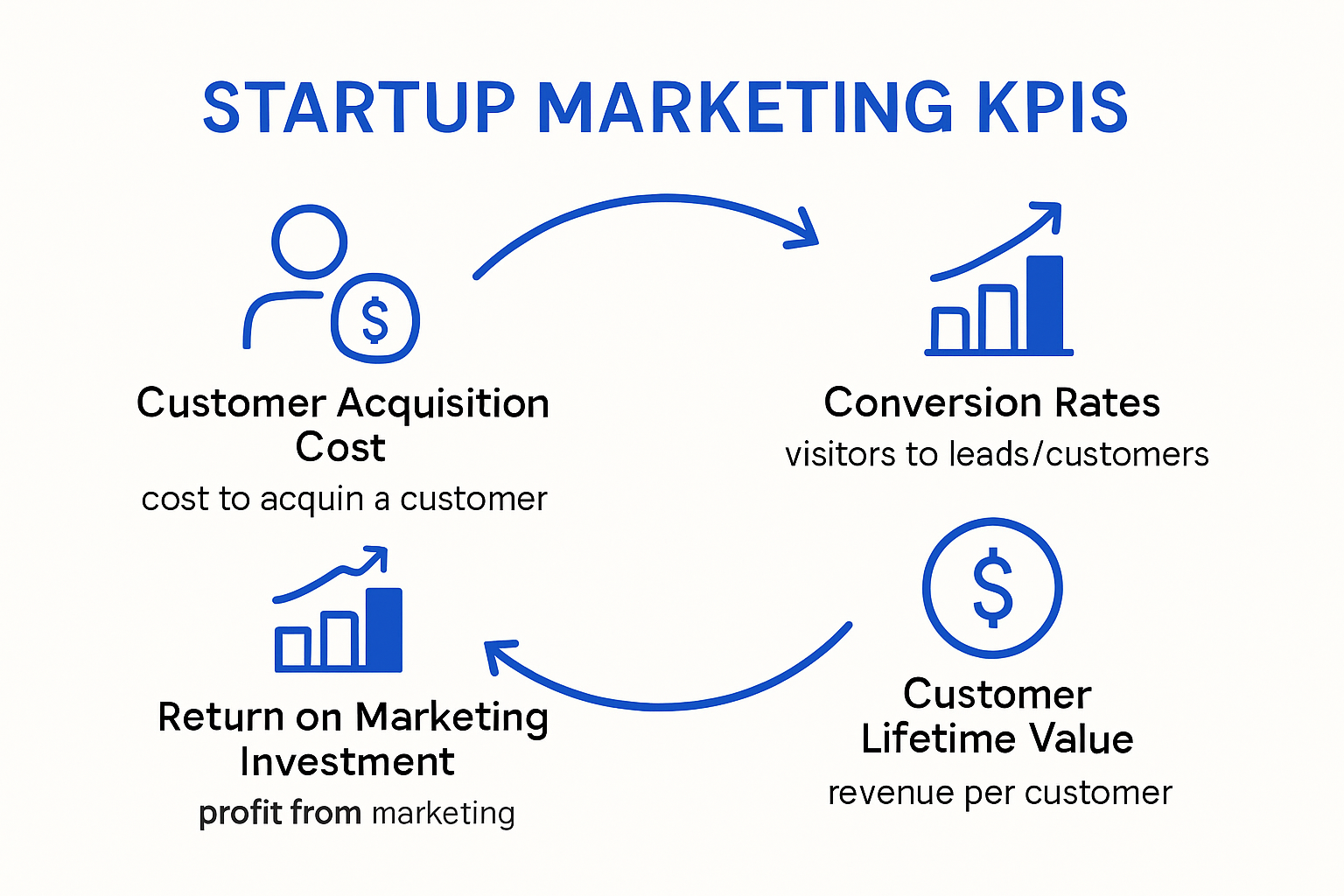
- Customer Acquisition Cost: Measuring the total expense of gaining a new customer
- Conversion Rates: Tracking the percentage of potential customers who take desired actions
- Customer Lifetime Value: Calculating the total revenue generated from a customer relationship
- Return on Marketing Investment: Determining the financial effectiveness of marketing efforts
Our comprehensive guide on SEO and content marketing offers deeper insights into tracking and improving digital marketing performance.
Data-Driven Marketing Optimization
Harvard Business School Online outlines a strategic approach to marketing measurement that goes beyond simple number tracking. The most effective startups create a holistic framework for analyzing marketing performance, integrating multiple data sources and perspectives.
This is the work we do for you. Every week, without exception.
Managing GBP at this level takes 6–8 hours a week when done right. Nova handles the entire system — posts, photos, reviews, Q&A, citations, heatmap tracking — so you can focus on running your business.
Strategies for effective marketing optimization include:
- Implementing advanced analytics tools
- Conducting regular performance audits
- A/B testing marketing campaigns
- Segmenting data for more granular insights
- Developing responsive marketing strategies
Continuous Learning and Iteration
A groundbreaking study published in PLoS One highlights the transformative power of organizational learning in startup marketing. The research underscores that successful marketing is not about achieving perfection, but about creating adaptive systems that can quickly respond to changing market conditions.
Key principles of iterative marketing optimization:
- Embrace experimental approaches
- Foster a culture of continuous improvement
- Develop flexible marketing frameworks
- Encourage cross-functional collaboration
- Remain open to pivoting strategies
The most successful startups view marketing measurement not as a passive reporting exercise, but as an active process of discovery and innovation. By combining rigorous data analysis with a willingness to experiment and adapt, startups can create marketing strategies that are not just effective, but truly transformative.
Remember, in the fast-evolving startup ecosystem, your ability to learn, adapt, and optimize quickly can be the difference between sustainable growth and stagnation. Marketing is no longer about following a predetermined path, but about creating a dynamic, responsive approach that evolves with your business and market conditions.
Frequently Asked Questions
What are effective startup marketing strategies?
Effective startup marketing strategies include building a strong online brand presence, utilizing cost-effective digital marketing tactics such as SEO and content marketing, leveraging partnerships and local networks, and measuring marketing results through key performance indicators (KPIs).
How can startups improve their online visibility?
Startups can improve their online visibility by implementing targeted SEO strategies, optimizing their website content, engaging in local SEO, and creating high-quality, shareable content that attracts organic traffic.
Why is measuring marketing performance important for startups?
Measuring marketing performance is crucial for startups as it allows them to evaluate the effectiveness of their strategies, make data-driven decisions, optimize their marketing efforts, and improve overall return on investment (ROI).
What role do partnerships play in startup growth?
Partnerships can significantly enhance startup growth by allowing businesses to pool resources, mitigate risks, access new customer segments, and create collaborative ecosystems that enable shared knowledge and market expansion.
Unlock Real Startup Growth With Proven Digital Marketing Solutions
Struggling to break through online noise or stretch a limited marketing budget further, as discussed in our guide on startup marketing strategies? If building a consistent brand, standing out in organic search, or leveraging digital channels for measurable growth feels overwhelming, you are not alone. Many founders know the importance of Key Performance Indicators, data-driven content marketing, and agile strategy adjustments but lack the support to put these ideas into action. Consistent online visibility and effective lead generation require more than short-term tactics. One effective approach to enhance your efforts is through portfolio development for hardscaping businesses, which helps showcase your work and attract potential clients. By strategically curating your projects and experiences, you can create an impactful online presence that resonates with your target audience. Additionally, leveraging social proof and client testimonials will bolster your credibility and encourage inquiries.
Let our team help you turn your marketing knowledge into real business results. Start by exploring the comprehensive, AI-driven services at 12AM Agency including SEO management and Google My Business optimization tailored for startups and local brands. See how our approach to strategic web design and digital reputation management boosts awareness and drives conversion. Ready to shape your growth journey? Visit our site now to schedule a free consultation and discover the next step for your startup’s digital success.

