





Every business is chasing growth, but the secret sauce for scale in 2025 looks a lot different than it did just a few years ago. New tools and smarter strategies now make it possible to pinpoint ideal customers with surgical precision. The real shock is that artificial intelligence and machine learning are transforming lead generation so fast that old approaches risk falling flat. Instead of relying on tried and tired tactics, the companies winning in 2025 are the ones combining deep data insights with real human understanding, redefining how leads are found and turned into loyal customers.
Table of Contents
- Understanding Modern Lead Generation Strategies
- Best Digital Tools For Lead Generation Success
- Industry-Specific Lead Generation Approaches
- Measuring And Optimizing Your Lead Generation Results
Quick Summary
| Takeaway | Explanation |
|---|---|
| Leverage data for lead generation | Treat customer data as a strategic asset to create targeted marketing campaigns based on behavior and preferences. |
| Adopt integrated digital tools | Combine CRM, lead capture, and analytics tools to optimize your lead generation efforts effectively. |
| Focus on content quality | Develop niche-specific content to address target audience pain points and attract high-quality leads organically. |
| Utilize AI for predictive insights | Implement AI-driven tools for lead scoring and automation to enhance engagement and conversion rates. |
| Measure and adapt continuously | Regularly analyze performance metrics and customer feedback to refine lead generation strategies for better results. |
Understanding Modern Lead Generation Strategies
Lead generation has transformed dramatically in recent years, shifting from traditional outbound tactics to sophisticated digital strategies that leverage technology and data-driven insights. Modern businesses recognize that effective lead generation is no longer about casting a wide net, but about precision targeting and creating meaningful connections with potential customers.
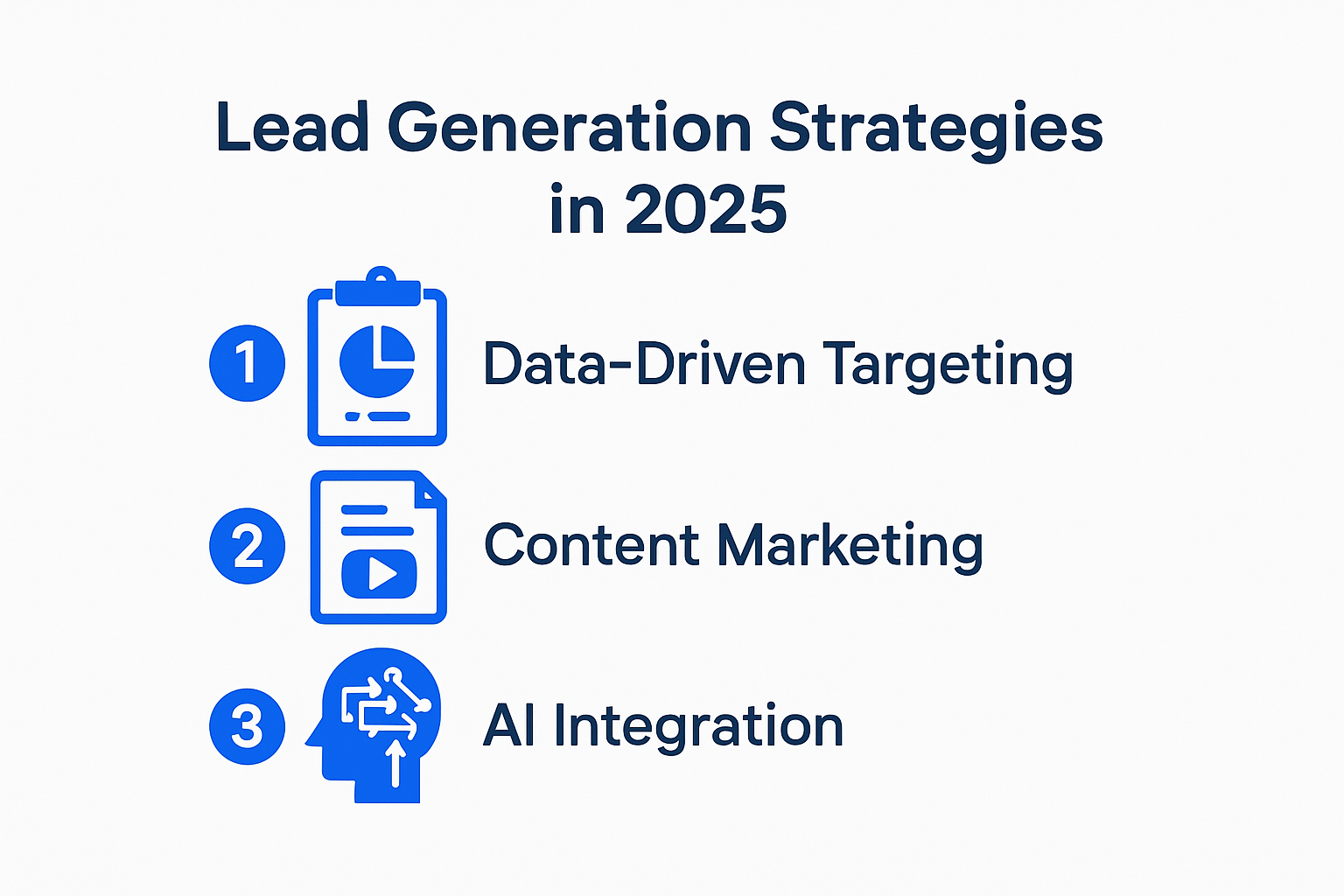
The Evolution of Digital Lead Acquisition
The landscape of lead generation strategies has undergone significant changes driven by technological advancements and changing consumer behaviors. Research from Pew Research Center reveals that digital platforms have become increasingly critical in connecting businesses with potential customers. Traditional methods like cold calling and print advertising have given way to more interactive and personalized approaches that leverage data analytics, artificial intelligence, and targeted digital marketing.
Businesses now have access to unprecedented tools for understanding and engaging potential leads. Advanced customer relationship management (CRM) systems, predictive analytics, and machine learning algorithms enable companies to identify and nurture prospects with remarkable precision. These technologies allow for granular segmentation, enabling businesses to create highly targeted marketing campaigns that speak directly to specific customer personas.
Data-Driven Lead Generation Techniques
The cornerstone of modern lead generation is data. Successful organizations are now treating customer data as a strategic asset, using sophisticated analytics to understand customer behaviors, preferences, and potential buying signals. By integrating multiple data sources, businesses can create comprehensive customer profiles that inform more effective marketing strategies.
Social media platforms have emerged as powerful lead generation channels. With billions of users worldwide, platforms like LinkedIn, Facebook, and Instagram offer unprecedented opportunities for businesses to connect with potential customers. Sophisticated targeting options allow companies to reach specific demographics, interests, and professional backgrounds with remarkable accuracy.
Companies are also increasingly adopting inbound marketing strategies that focus on creating valuable content that attracts potential leads organically. Learn more about our targeted lead generation approach that combines cutting-edge digital techniques with strategic content marketing. This approach involves developing high-quality, informative content that addresses specific customer pain points, positioning the business as a trusted resource and naturally drawing potential leads into the sales funnel.
Emerging Technologies in Lead Generation
Artificial intelligence and machine learning are revolutionizing lead generation strategies. These technologies enable predictive lead scoring, allowing businesses to prioritize and focus on the most promising prospects. Chatbots and automated communication tools can engage potential leads 24/7, providing immediate responses and gathering critical information even outside traditional business hours.
The future of lead generation lies in personalization and intelligent automation. By combining advanced data analytics, AI-driven insights, and strategic content marketing, businesses can create more meaningful and effective lead generation strategies that deliver higher conversion rates and more sustainable growth. The key is to remain adaptable, continuously learn from data, and leverage emerging technologies to stay ahead of rapidly changing market dynamics.
Successful lead generation in 2025 will require a holistic approach that integrates technology, data, and human insight to create genuinely compelling customer experiences.
Best Digital Tools for Lead Generation Success
In the rapidly evolving digital marketing landscape, businesses must leverage sophisticated technological tools to capture and convert potential leads effectively. The right digital tools can transform lead generation from a hit-or-miss endeavor into a precision-driven strategy that delivers consistent, high-quality results.
Comprehensive CRM and Data Enrichment Platforms
Customer Relationship Management (CRM) systems have become the backbone of modern lead generation strategies. According to Salesforce, top-tier CRM platforms now offer advanced features like verified B2B contact data, sophisticated search filters, and real-time data enrichment. These tools enable businesses to create detailed customer profiles, track interactions, and prioritize leads with unprecedented accuracy.
Companies like HubSpot and Salesforce have developed integrated platforms that go beyond traditional contact management. They provide comprehensive solutions that combine lead tracking, email marketing, social media integration, and advanced analytics. Explore our strategic approach to digital marketing services to understand how these tools can be strategically deployed for maximum impact.
Advanced Lead Capture and Conversion Tools
Research from TechnologyAdvice highlights the critical role of specialized lead generation tools. Landing page builders like Unbounce and Leadpages allow businesses to create highly optimized, conversion-focused web pages that capture potential customer information quickly and efficiently. These platforms offer drag-and-drop interfaces, A/B testing capabilities, and integration with email marketing systems.
Email marketing platforms such as Constant Contact and ActiveCampaign have evolved to become sophisticated lead nurturing ecosystems. They offer automated email sequences, segmentation tools, and advanced analytics that help businesses understand and engage potential leads at different stages of the buying journey. Machine learning algorithms now power these platforms, enabling more personalized and timely communication.
Cutting-Edge Analytics and Prospecting Tools
Yesware’s analysis emphasizes the importance of specialized prospecting tools like LinkedIn Sales Navigator and ZoomInfo. These platforms provide access to extensive professional databases, allowing businesses to identify and target potential leads with remarkable precision. Advanced filtering options enable companies to search for prospects based on specific industries, job titles, company sizes, and other critical parameters.

Analytics tools such as Google Analytics and Kissmetrics have become indispensable for understanding lead generation performance. These platforms offer deep insights into user behavior, conversion paths, and campaign effectiveness. Businesses can now track every stage of the customer journey, from initial website visit to final conversion, enabling continuous optimization of lead generation strategies.
The most successful businesses in 2025 will be those that view digital lead generation tools not as isolated solutions but as an integrated ecosystem. By combining CRM platforms, specialized capture tools, advanced analytics, and intelligent automation, companies can create a dynamic lead generation machine that consistently delivers high-quality prospects. The key is to remain adaptable, continuously learn from data, and leverage emerging technologies to stay ahead of rapidly changing market dynamics.
To help compare the primary categories of digital tools used for lead generation, the following table summarizes their main purposes and leading examples mentioned in the article:
| Tool Category | Main Purpose | Example Platforms |
|---|---|---|
| CRM & Data Enrichment | Manage customer data; enrich and segment leads | Salesforce, HubSpot |
| Lead Capture & Conversion | Capture leads and optimize conversion | Unbounce, Leadpages |
| Email Marketing & Lead Nurturing | Nurture leads through automation and segmentation | Constant Contact, ActiveCampaign |
| Prospecting & Database Tools | Find and filter new lead opportunities | LinkedIn Sales Navigator, ZoomInfo |
| Analytics & Performance Tracking | Analyze user behavior and campaign performance | Google Analytics, Kissmetrics |
Industry-Specific Lead Generation Approaches
Lead generation is not a one-size-fits-all strategy. Each industry demands a nuanced approach that addresses unique market challenges, customer behaviors, and communication preferences. Successful businesses in 2025 will differentiate themselves by developing targeted lead generation strategies that resonate deeply with their specific sector’s dynamics. This is where effective strategies for business leads come into play, as they allow companies to tailor their messaging and outreach efforts. By leveraging data analytics and customer insights, organizations can create personalized experiences that not only attract potential clients but also foster long-term relationships. Emphasizing collaboration and innovation will further enhance their ability to navigate an evolving marketplace successfully.
Targeted Content and Precision Marketing
According to 6sense, creating industry-specific content is a powerful mechanism for attracting high-quality leads. Businesses must develop specialized resources like whitepapers, case studies, and video tutorials that directly address the unique pain points of their target audience. For instance, a cybersecurity firm targeting financial institutions might produce a detailed case study demonstrating how their solutions protected a similar organization from a sophisticated cyberattack.
Learn about our industry-specific SEO strategies that help businesses create targeted content that speaks directly to their ideal customer profile. By understanding the specific language, challenges, and expectations of each industry, companies can craft messaging that feels personalized and immediately relevant.
Multichannel Engagement Strategies
Research from Workshop Digital highlights the importance of combining multiple digital marketing approaches for maximum impact. For manufacturers, this means integrating Search Engine Optimization (SEO) with Pay-Per-Click (PPC) advertising to create a comprehensive lead generation ecosystem. SEO provides long-term organic visibility, while PPC offers immediate targeted reach across digital platforms.
Platforms like LinkedIn have become particularly powerful for industry-specific lead generation. Companies can precisely target professionals based on job titles, industries, and specific roles. A technology solution provider, for example, can target Chief Information Officers, while a medical equipment manufacturer can focus on hospital administrators and procurement managers.
Professional Network and Thought Leadership
Research from ResearchGate emphasizes the critical role of professional networks in modern lead generation. Establishing thought leadership through consistently high-quality, industry-specific content can transform a company’s approach to lead acquisition. By sharing deep insights, addressing complex industry challenges, and demonstrating genuine expertise, businesses can attract leads who are not just interested, but actively seeking their specific solutions.
Successful industry-specific lead generation in 2025 will require a sophisticated blend of targeted content, precise digital marketing, and authentic professional engagement. Companies must move beyond generic marketing tactics and develop strategies that demonstrate a profound understanding of their specific industry’s ecosystem, challenges, and opportunities.
The most effective lead generation approaches will be those that combine technological sophistication with genuine industry expertise, creating meaningful connections that transform potential leads into long-term business relationships. In this context, family law client acquisition strategies must prioritize trust and relatability, as clients often seek legal representation during vulnerable times. By leveraging data-driven insights alongside empathetic communication, firms can tailor their outreach efforts to address specific client needs. This not only enhances the likelihood of converting leads but also fosters loyalty that can pave the way for referrals and repeat business.
Below is a table summarizing the industry-specific lead generation approaches described in this section along with sample tactics and intended outcomes: As we look ahead, it’s crucial for law firms to stay ahead of the curve by developing innovative law firm marketing strategies for 2026 that emphasize digital engagement and personalized client outreach. Analyzing current trends will help firms identify unique opportunities to connect with potential clients and build lasting relationships. Engaging with technology and exploring new platforms can enhance visibility and deliver measurable results in a competitive landscape.
| Approach | Example Tactics | Intended Outcome |
|---|---|---|
| Targeted Content | Whitepapers, case studies, and video tutorials | Attract leads with relevant, authority content |
| Multichannel Engagement | Combine SEO and PPC; use LinkedIn for targeting | Maximize reach & precise audience targeting |
| Thought Leadership | Share in-depth industry insights and expert commentary | Build credibility and attract motivated leads |
Measuring and Optimizing Your Lead Generation Results
In the data-driven landscape of 2025, measuring and optimizing lead generation results is no longer an optional strategy but a critical business imperative. Successful organizations understand that continuous measurement, analysis, and refinement are the keys to transforming potential leads into sustainable revenue streams.
Advanced Analytics and Performance Metrics
Research from a groundbreaking 2023 study introduces an innovative end-to-end framework for maximizing marketing effectiveness under budget constraints. This approach integrates causal inference and optimization techniques, enabling businesses to precisely track and improve their lead generation performance. Modern analytics go beyond traditional metrics like conversion rates, diving deep into complex attribution models that reveal the true impact of each marketing touchpoint.
Explore our comprehensive lead generation optimization strategies to understand how advanced analytics can transform your marketing approach. Key performance indicators now include multi-dimensional metrics such as lead quality score, customer acquisition cost, lifetime value prediction, and engagement velocity.
Artificial Intelligence in Performance Optimization
A groundbreaking 2025 research paper presents a principled approach to sales optimization using artificial intelligence. By leveraging machine learning algorithms, businesses can now predict lead behavior with unprecedented accuracy. These AI-driven systems analyze vast datasets to identify patterns, scoring leads based on their likelihood to convert and recommending personalized engagement strategies.
The Neural Optimization with Adaptive Heuristics (NOAH) framework, detailed in a 2024 study, demonstrates how AI can revolutionize marketing performance. By continuously learning and adapting, these systems can dynamically adjust lead generation strategies in real-time, maximizing efficiency and reducing wasted resources.
Continuous Improvement and Adaptive Strategies
Optimizing lead generation is an ongoing process that requires a commitment to continuous learning and adaptation. Successful businesses implement robust feedback loops that allow for rapid iteration of marketing strategies. This involves not just analyzing quantitative data, but also gathering qualitative insights through customer interviews, surveys, and direct feedback.
The most effective lead generation optimization strategies in 2025 will be those that combine sophisticated technological tools with human insight. While AI and advanced analytics provide powerful capabilities, the most successful approaches will be those that maintain a human-centric approach, understanding the nuanced motivations and needs of potential customers.
Businesses must view lead generation optimization as a holistic ecosystem, integrating data analytics, artificial intelligence, human creativity, and strategic thinking. By embracing a dynamic, adaptive approach, companies can create lead generation systems that are not just responsive, but predictive and proactive.
The future of lead generation lies in the ability to transform raw data into actionable insights, leveraging cutting-edge technologies while maintaining a deep understanding of human behavior and market dynamics. Organizations that master this balance will be positioned to achieve unprecedented growth and success in the competitive business landscape of 2025.
Frequently Asked Questions
What are the top lead generation strategies for 2025?
The top lead generation strategies for 2025 include leveraging data-driven insights, adopting integrated digital tools, focusing on high-quality content, utilizing AI for predictive analytics, and continuously measuring and optimizing results.
How is artificial intelligence changing lead generation?
Artificial intelligence is transforming lead generation by enabling predictive lead scoring, automating customer engagement through chatbots, and providing personalized marketing strategies based on detailed data analysis.
What digital tools should businesses use for lead generation?
Businesses should use comprehensive CRM platforms, advanced lead capture and conversion tools, cutting-edge analytics tools, and prospecting databases to create an integrated lead generation strategy that drives quality results.
Why is content quality important for lead generation?
High-quality content is essential for lead generation because it addresses specific customer pain points, builds trust, and positions the business as a valuable resource, ultimately attracting high-quality organic leads.
Ready for Smarter Lead Generation in 2025?
You already know from this article that the rules of lead generation are changing fast. Keeping up with AI-enabled tools, truly data-driven strategies, and ever-shifting customer expectations leaves many business owners feeling overwhelmed or falling behind. If you are struggling to connect with the right audience, or if you have noticed your old methods are not delivering high-quality leads, it is time to turn information into real transformation. The difference between flatlined growth and breakthrough results in 2025 will be your ability to turn analytics, advanced content, and AI-powered insights into action.
Meet the team at 12AM Agency, where we use the exact strategies you just read about to drive measurable business growth. Our approach combines personalized SEO, effective PPC campaigns, and advanced AI review management so your business can reach and engage the ideal customer. Tired of guesswork? Request your consultation today and see how a fully tailored, technology-backed lead generation strategy can boost your results now. Visit https://12amagency.com and start converting insights into new revenue before your competitors do.