




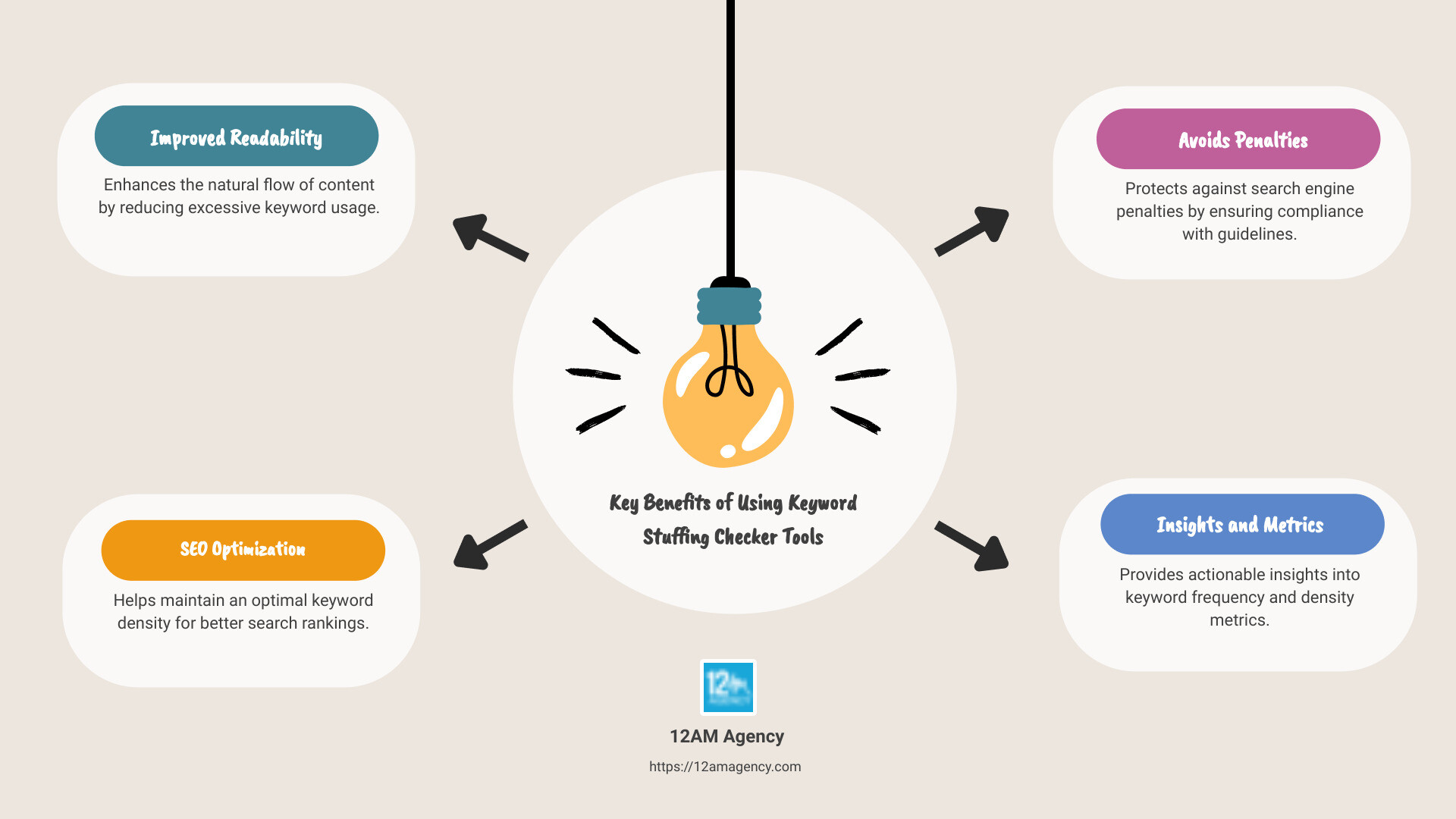
Keyword stuffing checker tool quickly identifies keyword repetition patterns in your content, helping you optimize for search engines while maintaining a natural flow. Here’s how it supports you:
- Automatically evaluates keyword frequency and density.
- Highlights instances of over-optimization.
- Provides actionable insights for SEO-friendly content.
Is your content’s SEO losing its edge due to excessive keywords crammed into sentences? Ensuring your key phrases fit naturally can enhance readability and search rankings. Search engines like Google can penalize sites that excessively stuff keywords, potentially dropping them in rank or removing them from search results altogether.
Attention to content quality is crucial. Overloaded phrases may not only hinder readability but also drive away potential visitors. With insightful metrics on keyword density and frequency, the keyword stuffing checker tool empowers you to create optimized yet engaging content.
I’m Robert Portillo. With experience in digital marketing, I’ll guide you through using the keyword stuffing checker tool to improve your content strategy smoothly. Let’s dive deeper into its benefits and implementation.
Keyword stuffing checker tool vocab to learn:
Understanding Keyword Stuffing
Keyword stuffing is a notorious tactic in the field of black-hat SEO. It involves cramming a webpage with excessive keywords in an attempt to manipulate search engine rankings. While it might seem like a shortcut to boost visibility, it often backfires, leading to severe penalties from search engines like Google.
Why Is Keyword Stuffing a Problem?
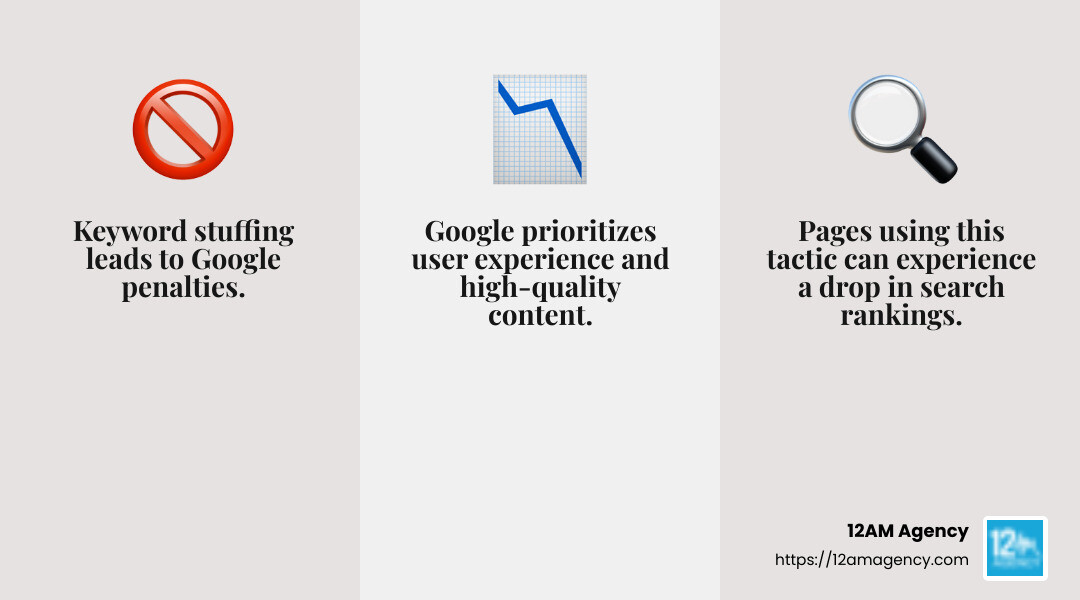
Search engines are designed to provide users with the most relevant and high-quality content. When they detect keyword stuffing, it signals that a page is prioritizing search engine manipulation over user experience. This practice can lead to severe Google penalties.
The Impact of Google Penalties
Google’s algorithms are adept at identifying keyword stuffing. Pages caught using this tactic may experience:
- Lower search engine rankings: Instead of climbing the search results, your content might plummet.
- Reduced organic traffic: With lower visibility, fewer users will find and visit your site.
- Potential de-indexing: In severe cases, Google might remove your page from search results entirely.
Search Engine Rankings and User Experience
For a website to rank well, it’s crucial to balance keyword usage with content quality. Google’s focus is on rewarding pages that offer valuable and readable content. Here’s what you should aim for:
- Natural keyword integration: Keywords should flow seamlessly within the text, enhancing readability.
- Engaging content: Focus on providing value to your audience, not just meeting keyword quotas.
How to Identify Keyword Stuffing
Identifying keyword stuffing in your content is crucial for maintaining a healthy balance between SEO and readability. Let’s explore how to spot this unwelcome practice by focusing on keyword density, readability, and a natural tone.
Keyword Density
Keyword density is a simple metric that shows how often a keyword appears in your content. You calculate it by dividing the number of times a keyword appears by the total word count, then multiplying by 100 to get a percentage.
While there isn’t a magic number for the perfect keyword density, staying below 3% is generally recommended. This helps avoid the trap of keyword stuffing. If your content has a high keyword density, it might be time to revise it.
Readability
Readability is all about how easy it is for your audience to read and understand your content. When keywords are forced into sentences, it can make the text awkward and difficult to follow. This not only frustrates readers but also signals to search engines that your content might be trying too hard to rank.
To maintain readability:
- Vary your sentence structure: Avoid repetitive patterns that make the text monotonous.
- Use synonyms and related terms: This keeps your content fresh and engaging.
- Break up long paragraphs: Shorter paragraphs improve flow and readability.
Natural Tone
A natural tone ensures that your content feels authentic and engaging. When keywords are overused, they disrupt the natural flow of writing, making it sound robotic.
Here’s how to maintain a natural tone:
- Read your content aloud: This helps spot awkward phrases or forced keyword placements.
- Focus on the message: Make sure the content serves the reader’s needs first and foremost.
- Use keywords strategically: Integrate them where they naturally fit, rather than forcing them into every sentence.
Top 5 Keyword Stuffing Checker Tools
When it comes to keeping your content clean and SEO-friendly, using a keyword stuffing checker tool is essential. Let’s explore the top five tools that can help you maintain the right balance between keyword optimization and readability.
Jungle Scout
Jungle Scout is a powerhouse for Amazon keyword research. It helps sellers find high-volume keywords that can boost product visibility. While primarily designed for Amazon, it offers insights into keyword trends that can be useful for spotting over-optimization in your content. By understanding these trends, you can ensure your content remains relevant and competitive.
CheckSERP
CheckSERP focuses on keyword density and competitor analysis. It provides a comprehensive report on how your keywords are distributed throughout your content. This tool is invaluable for identifying areas where keyword usage might be excessive, allowing you to make necessary adjustments. It also offers insights into your competitors’ keyword strategies, giving you an edge in SEO performance.
Small SEO Tools
Small SEO Tools offers a suite of features for keyword analysis and SEO performance evaluation. This tool goes beyond basic keyword counting by analyzing how keywords interact with the rest of your content. It ensures that your keywords improve rather than hinder your SEO efforts. With its user-friendly interface, you can quickly identify any over-optimization issues and refine your content strategy accordingly.
Keyword Density API
The Keyword Density API is a robust tool for analyzing keyword density and detecting over-optimization. It aligns with Google’s algorithm updates to ensure your content meets current SEO standards. By providing detailed reports on keyword usage, it helps you maintain a natural tone and avoid penalties from search engines. This tool is particularly useful for web developers and content creators who need precise keyword metrics.
GoogleRankings.com
GoogleRankings.com offers a comprehensive site analysis that includes keyword usage and SEO performance metrics. This tool evaluates your site’s overall health and highlights areas where keyword stuffing may be affecting your rankings. By using GoogleRankings.com, you can ensure your content is not only optimized for search engines but also valuable to your audience.
Each of these tools offers unique features that cater to different aspects of keyword optimization. By integrating one or more into your content strategy, you can effectively manage keyword usage and maintain high-quality content that resonates with both search engines and readers.
Using a Keyword Stuffing Checker Tool Effectively
To use a keyword stuffing checker tool effectively, you’ll want to focus on three key areas: keyword frequency, meta tags, and stop-words. These elements play a crucial role in maintaining a balance between SEO optimization and content quality.
Keyword Frequency
Keyword frequency is about how often a keyword appears within your content. While it’s important to use keywords to help search engines understand your page, overusing them can lead to keyword stuffing. A good rule of thumb is to keep your keyword density below 3%. This ensures that keywords appear naturally and don’t disrupt the flow of your content.
Tip: Use a keyword stuffing checker tool to automatically calculate keyword density. This saves time and helps you spot any potential overuse instantly.
Meta Tags
Meta tags are snippets of text that describe a page’s content; they don’t appear on the page itself but in the page’s code. These include the title tag and meta description. While they are important for SEO, stuffing them with keywords can backfire.
Ensure that your meta tags are concise and accurately represent the content. A keyword stuffing checker tool can help you evaluate the keyword distribution in your meta tags to maintain their effectiveness without over-optimization.
Stop-Words
Stop-words are common words like “and,” “the,” and “is” that search engines typically ignore. Some keyword stuffing checker tools allow you to filter out these words to get a clearer picture of your keyword usage.
By customizing the stop-word list in your tool, you can focus on the more impactful keywords that contribute to your site’s SEO. This way, you can refine your content and ensure the keywords you use are relevant and valuable.
Using a keyword stuffing checker tool with these elements in mind can drastically improve your content’s SEO performance. It helps you refine keyword usage, ensuring your content remains engaging and search-friendly.
Frequently Asked Questions about Keyword Stuffing
How to check for keyword stuffing?
Checking for keyword stuffing involves examining your content to see if keywords appear naturally or if they’re awkwardly forced into the text.
- Natural Context: Keywords should fit seamlessly into sentences. If they disrupt the flow, it might indicate keyword stuffing. A keyword stuffing checker tool can help identify unnatural repetition by highlighting keyword frequency and density.
- Forced Repetition: Overusing keywords can make content sound unnatural. If a phrase appears too often, especially outside its natural context, it might be considered forced repetition. Use a keyword stuffing checker tool to pinpoint these instances and adjust accordingly.
Is keyword stuffing illegal?
While keyword stuffing isn’t illegal, it is considered a black-hat SEO tactic. This means it’s a deceptive practice aimed at manipulating search engine rankings.
- Google’s Spam Policies: Google and other search engines have strict policies against keyword stuffing. They aim to deliver valuable content to users, and keyword stuffing detracts from this goal. Violating these policies can lead to penalties.
Does Google penalize keyword stuffing?
Yes, Google does penalize keyword stuffing. Engaging in this practice can lead to several negative outcomes.
- Search Engine Penalties: Google’s algorithms are designed to detect and penalize keyword stuffing. This can result in your site being pushed down in search rankings or even removed from search results entirely.
- Traffic Decrease: As a result of penalties, your website may experience a significant decrease in organic traffic. Lower visibility on search engines means fewer visitors, which can impact your site’s reputation and revenue.
In summary, avoiding keyword stuffing is crucial for maintaining your site’s SEO health. Using a keyword stuffing checker tool can help ensure your content is both user-friendly and search engine-friendly.
Conclusion
At 12AM Agency, we specialize in crafting personalized, results-driven strategies that improve your digital marketing efforts. Our expertise spans across SEO, PPC, website design, and mobile app development. By focusing on your unique needs, we ensure that your business stands out online.
Keyword stuffing can significantly harm your search engine rankings. It disrupts the natural flow of your content and risks penalties from search engines like Google. That’s why use tools like a keyword stuffing checker tool to maintain the quality of your content. These tools help you identify and eliminate over-optimization, ensuring your content remains engaging and authoritative.

Our team at 12AM Agency is dedicated to helping you steer the complexities of SEO with ease. By integrating cutting-edge tools and strategies, we help you achieve better visibility and engagement online. Whether you’re a local business or a large enterprise, our custom approaches are designed to meet your specific goals.
Take control of your SEO strategy today. Visit our keyword density checker to explore how our tools can keep your content clean and SEO-friendly. Let us partner with you to transform your digital presence and drive lasting results.