





Digital marketing is evolving fast and 2025 is set to change the rules even more. Most people think staying ahead is about posting on social media or running endless ads. But businesses that use predictive modeling and AI-driven analytics see up to a 2% to 5% increase in web sales just by fine-tuning their strategies across platforms. So while everyone else is playing catch-up, you could be using the next wave of digital marketing fundamentals to pull ahead for good.
Table of Contents
- Core Principles Of Digital Marketing Fundamentals
- Key Channels And Tools For Online Success
- Effective Strategies For Different Industries
- Measuring Results And Optimizing Performance
Quick Summary
| Takeaway | Explanation |
|---|---|
| Understand Your Audience Deeply | Create detailed customer personas based on demographic and psychographic research to enhance engagement and conversions. |
| Develop Multi-Dimensional Content | Focus on valuable content across various formats like articles, videos, and podcasts to meet audience needs effectively. |
| Leverage Advanced Analytics | Use comprehensive tracking beyond click-through rates to evaluate customer lifetime value and improve marketing strategies. |
| Implement Targeted Social Media Strategies | Diversify your social media presence and tailor content for each platform to maximize engagement and sales. |
| Utilize Predictive Performance Modeling | Adopt AI-driven insights to anticipate market changes and optimize campaigns proactively before significant resources are committed. |
Core Principles of Digital Marketing Fundamentals
Digital marketing has transformed how businesses connect with customers, requiring a strategic approach that goes beyond traditional advertising. Understanding the fundamental principles is crucial for sustainable business growth in 2025 and beyond.
Audience Understanding and Targeting
The cornerstone of effective digital marketing is precise audience comprehension. Learn more about targeted marketing strategies that enable businesses to create personalized experiences. According to Southern New Hampshire University, understanding your target audience involves deep demographic and psychographic research. Modern businesses must analyze customer behaviors, preferences, pain points, and digital interaction patterns.
This means moving beyond basic demographic data and diving into intricate customer journey mapping. Successful digital marketing requires creating detailed customer personas that reflect real-world complexities. By segmenting audiences and developing tailored messaging, businesses can dramatically improve engagement rates and conversion potential.
Content and Value Creation
Content remains the driving force of digital marketing strategies. According to St. Kate University, content marketing is a fundamental pillar of digital engagement. The key is not just generating content but creating genuinely valuable, relevant, and actionable information that addresses specific audience needs.
In 2025, content must be multi-dimensional. This includes written articles, video content, interactive experiences, podcasts, and emerging formats driven by artificial intelligence. The goal is to provide solutions, answer questions, and establish brand authority. Businesses that focus on educational, problem-solving content will distinguish themselves in crowded digital marketplaces.
Data-Driven Decision Making
The emergence of advanced analytics and artificial intelligence has revolutionized marketing decision-making. A 2025 study in the Journal of Marketing Education highlights the critical importance of ethical, data-driven strategies. Modern digital marketing fundamentals require continuous measurement, analysis, and optimization.
Key performance indicators (KPIs) must go beyond traditional metrics like click-through rates. Businesses need comprehensive tracking of customer lifetime value, engagement depth, conversion quality, and long-term relationship building. Advanced tools now enable real-time performance tracking, allowing marketers to make instantaneous strategic adjustments.
The digital marketing landscape in 2025 demands a holistic, integrated approach. By mastering audience understanding, creating exceptional content, and leveraging data-driven insights, businesses can build robust, adaptive marketing strategies that drive sustainable growth and meaningful customer connections.
Successful digital marketing is no longer about broadcasting messages but creating genuine, value-driven interactions that resonate with increasingly sophisticated digital consumers.
Key Channels and Tools for Online Success
In the rapidly evolving digital marketing ecosystem, understanding and leveraging the right channels and tools is critical for businesses seeking online success. The strategic selection and integration of digital platforms can dramatically enhance brand visibility, engagement, and conversion potential.
Social Media and Multi-Platform Strategies
Social media remains a powerful marketing channel, with strategic diversification being key to success. Explore advanced online presence techniques to maximize your digital footprint. According to a comprehensive study on multi-platform social media strategies, companies employing a diversified approach across different platforms experienced a notable 2% to 5% increase in web sales. This underscores the importance of not just being present on social media, but crafting nuanced, platform-specific content strategies.
Each social media platform offers unique opportunities for engagement. LinkedIn provides professional networking and B2B marketing potential, Instagram excels in visual storytelling, Twitter enables real-time communication, and TikTok offers innovative short-form video content. The key is to understand the specific audience demographics, content preferences, and interaction patterns of each platform.
Here is a comparison table summarizing the unique strengths of major social media platforms and their marketing focus as mentioned in the article:
| Platform | Unique Strength | Marketing Focus |
|---|---|---|
| Professional networking | B2B marketing | |
| Visual storytelling | Visual branding, engagement | |
| Real-time communication | Timely updates, trends | |
| TikTok | Short-form, creative video content | Virality, youth engagement |
Artificial Intelligence and Marketing Automation
Large Language Models (LLMs) are revolutionizing marketing capabilities. Research from scholarly publications highlights how these advanced AI technologies can enable personalized customer engagement, generate real-time insights, and automate content creation. However, businesses must approach AI integration ethically, maintaining transparency and respecting data privacy.
Marketing automation tools now offer unprecedented capabilities in customer segmentation, personalized messaging, and predictive analytics. These technologies allow businesses to create highly targeted campaigns, track customer interactions across multiple touchpoints, and dynamically adjust marketing strategies based on real-time data.
Search Engine Optimization and Visibility
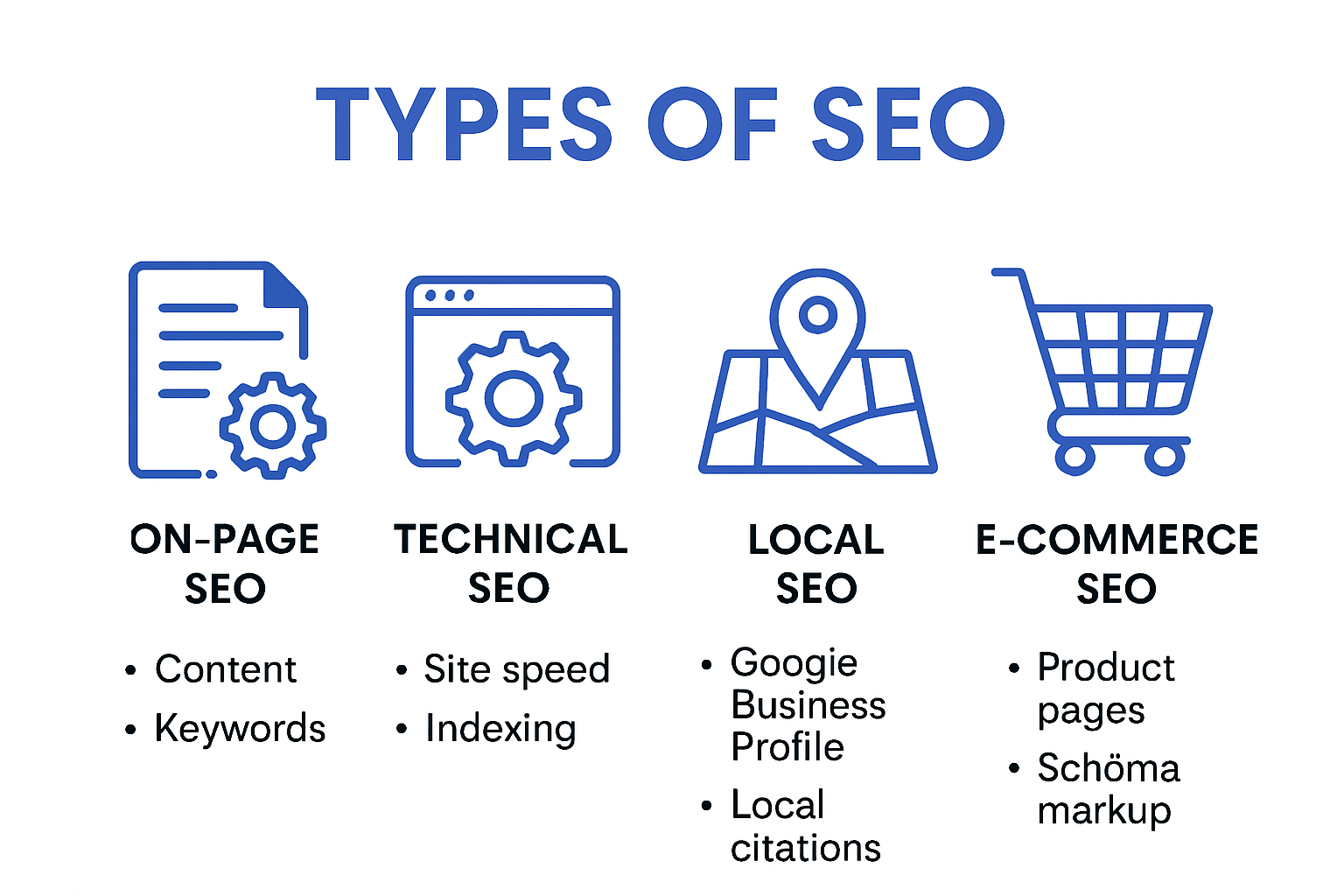
Search Engine Optimization (SEO) remains a cornerstone of digital marketing success. The American Marketing Association outlines several critical SEO approaches for 2025: on-page optimization, technical SEO, local SEO, and e-commerce SEO. Each type of SEO contributes uniquely to improving online visibility and search engine rankings.
Modern SEO goes beyond keyword stuffing. It requires creating high-quality, relevant content, ensuring technical website performance, building authoritative backlinks, and providing an exceptional user experience. Tools like advanced keyword analyzers, site speed optimizers, and AI-powered content recommendation engines have become essential for businesses looking to improve their search rankings.
Successful digital marketing in 2025 demands a holistic, integrated approach. By strategically utilizing social media, embracing AI technologies, and implementing sophisticated SEO techniques, businesses can create a robust online presence that drives meaningful engagement and sustainable growth. As businesses adapt to the evolving landscape, understanding the impact of ai on content creation becomes essential. This technology not only streamlines production processes but also enhances the personalization of marketing messages. With AI’s capabilities, brands can deliver tailored content that resonates more deeply with their target audiences, fostering stronger connections and driving conversions.
Remember, the digital landscape is dynamic. Continuous learning, adaptation, and a willingness to experiment with emerging technologies will separate innovative businesses from their competitors.
Effective Strategies for Different Industries
Digital marketing is not a one-size-fits-all approach. Each industry requires nuanced strategies that address unique challenges, target audiences, and market dynamics. Businesses must develop tailored digital marketing approaches that align with their specific sector’s characteristics and customer expectations.
Small and Medium Enterprise (SME) Digital Transformation
Small and medium enterprises face distinct digital marketing challenges that demand innovative solutions. Discover targeted marketing strategies designed for business growth. According to research examining digital marketing in emerging markets, SMEs can significantly enhance operational effectiveness through strategic digital implementations. A systematic literature review focusing on Malaysia’s education sector revealed a positive impact, with an average effect size of 0.45 in improving business performance through digital marketing techniques.
Key strategies for SMEs include leveraging cost-effective digital channels, implementing lean marketing approaches, and focusing on highly targeted local marketing efforts. This might involve utilizing social media platforms, developing localized content, and creating personalized customer engagement strategies that maximize limited marketing budgets.
Industry-Specific Digital Marketing Approaches
Different industries require specialized digital marketing strategies that address their unique market dynamics. In the agri-food sector, research from 2024 highlights the importance of data-driven strategies for reducing advertising costs and increasing profitability. Artificial intelligence is playing a transformative role across various industries, enabling more precise and efficient marketing approaches.
For instance, the food industry can leverage AI to create personalized product recommendations, while healthcare providers can develop targeted patient education campaigns. Automotive businesses might focus on immersive digital experiences, such as virtual showrooms and interactive product demonstrations. Each industry requires a nuanced approach that considers specific customer behaviors, technological capabilities, and market trends.
The following table summarizes examples of digital marketing applications tailored to different industries as discussed:
| Industry | Digital Marketing Focus | Example Application |
|---|---|---|
| Agri-food | Data-driven strategies | Reduce ad costs, increase profitability |
| Food | AI-powered personalization | Product recommendations |
| Healthcare | Targeted education campaigns | Patient outreach via digital content |
| Automotive | Immersive digital experiences | Virtual showroom, interactive demos |
Technology and Personalization Strategies
Artificial intelligence is revolutionizing industry-specific marketing approaches. Research from 2024 demonstrates AI’s potential in creating highly personalized marketing experiences across various sectors. In the food marketing industry, AI enables predictive analytics that enhance customer satisfaction and operational efficiency.
Advanced technologies now allow businesses to develop hyper-personalized marketing strategies. This includes using machine learning algorithms to predict customer preferences, creating dynamic content that adapts to individual user behaviors, and developing sophisticated customer segmentation techniques. The key is to balance technological capabilities with genuine customer value and ethical data usage.
Successful digital marketing in 2025 requires a sophisticated understanding of industry-specific nuances. Businesses must remain adaptable, continuously learning and evolving their strategies to meet changing market demands. By combining industry knowledge, technological innovation, and customer-centric approaches, companies can develop powerful digital marketing strategies that drive meaningful growth and engagement.
Remember, the most effective digital marketing approach is one that authentically addresses your specific industry’s unique challenges and opportunities.
Measuring Results and Optimizing Performance

In the dynamic world of digital marketing, measuring results and continuously optimizing performance is not just a strategy it is a fundamental requirement for sustainable business growth. Businesses must develop sophisticated approaches to track, analyze, and improve their marketing efforts in real-time.
Advanced Analytics and Performance Metrics
Explore strategic performance measurement techniques to transform data into actionable insights. According to Yale School of Management’s digital marketing research, effective digital marketing requires a comprehensive approach to analytics that goes beyond traditional metrics.
Modern performance measurement involves tracking multidimensional key performance indicators (KPIs) that provide a holistic view of marketing effectiveness. These include customer acquisition cost, lifetime value, engagement depth, conversion quality, and cross-channel performance. Advanced businesses are moving beyond surface-level metrics to understand the intricate relationships between different marketing activities and their ultimate business impact.
Below is a summary table highlighting key performance metrics that modern digital marketers should track, as referenced in the article:
| Key Performance Indicator | Description |
|---|---|
| Customer Acquisition Cost | Cost to acquire a new customer |
| Lifetime Value | Revenue per customer over their lifetime |
| Engagement Depth | Quality and frequency of customer interactions |
| Conversion Quality | Effectiveness of turning leads into valuable customers |
| Cross-channel Performance | Effectiveness across multiple marketing channels |
Budget Allocation and Channel Optimization
Optimizing marketing budget allocation has become increasingly sophisticated. Research from computational marketing introduces innovative strategies like combinatorial bandit budget allocation, which dynamically adapts marketing spend across multiple channels based on real-time performance data. This approach allows businesses to quickly reallocate resources from underperforming channels to those generating the highest return on investment.
Successful channel optimization requires continuous experimentation and data-driven decision-making. Businesses must develop robust testing frameworks that allow for rapid hypothesis validation, whether it involves comparing different ad creatives, testing messaging variations, or evaluating emerging marketing platforms. The goal is to create a learning ecosystem where each marketing initiative provides actionable insights for future improvements.
Predictive Performance Modeling
Advanced artificial intelligence and machine learning technologies are transforming how businesses predict and optimize marketing performance. These technologies enable predictive modeling that can forecast potential campaign outcomes, identify potential customer segments, and recommend strategic adjustments before significant resources are committed.
Predictive performance modeling involves creating complex algorithms that analyze historical data, current market trends, and emerging patterns to generate forward-looking insights. This approach allows businesses to move from reactive to proactive marketing strategies, anticipating market shifts and customer behavior changes before they become apparent.
Successful digital marketing in 2025 demands a holistic, data-driven approach to performance measurement. By integrating advanced analytics, intelligent budget allocation, and predictive modeling, businesses can create marketing strategies that are not just responsive but genuinely anticipatory.
Remember, in the world of digital marketing, data is not just a measurement tool it is a strategic asset that can differentiate your business in an increasingly competitive marketplace.
Frequently Asked Questions
What are the core principles of digital marketing for business growth in 2025?
The core principles include deep audience understanding, value-driven content creation, and data-driven decision-making. These principles help businesses tailor their marketing strategies to engage customers effectively.
How can small and medium enterprises (SMEs) leverage digital marketing?
SMEs can enhance their online presence by utilizing cost-effective digital channels, localized content strategies, and personalized customer engagement to maximize their marketing resources and impact.
Why is artificial intelligence important in digital marketing?
Artificial intelligence is crucial because it enables personalized customer engagement, automates marketing processes, and provides real-time insights, enhancing overall marketing effectiveness and efficiency.
What are effective measurement techniques for digital marketing performance?
Effective measurement techniques involve tracking multidimensional key performance indicators (KPIs) such as customer acquisition cost, lifetime value, and cross-channel performance, allowing businesses to gain insights into their marketing effectiveness.
Ready to Transform Your Digital Marketing Results in 2025?
Staying ahead in 2025 means more than just keeping up with digital trends. It means mastering audience understanding, predictive analytics, and personalized engagement, all covered in the article you just explored. Many business owners find themselves overwhelmed by fast-changing algorithms and the pressure to drive measurable results. If you are feeling uncertain about the next step or if your online presence is not generating the leads you want, you are not alone. Your ambitions of stronger online visibility, higher conversions, and sustainable growth are within reach, but only with the right strategy and support.
Start building your competitive edge now. Experience the difference with a partner who combines AI-driven analytics, strategic SEO, and flawless web experiences. Our team at 12AM Agency specializes in tailored solutions for every industry, whether you need expert SEO management or want to enhance your reputation with AI review management. Let us help you move from uncertainty to confidence. Book your first strategy session today and unlock the full growth potential of your digital marketing for 2025.
Recommended
- Top Digital Marketing Trends 2025 for Business Growth | 12AM Agency
- What Is Digital Marketing? Essential Guide for Business Growth 2025 | 12AM Agency
- Unlock Growth: Essential Digital Marketing Strategies for Small Business Owners in 2025 | 12AM Agency
- Content Marketing Strategies for Business Growth in 2025 | 12AM Agency
- Digital Marketing Strategy Guide 2025 for Small Businesses
- Top Digital Marketing Channels for Success in 2025