



AI quantitative analysis SEO and marketing services are rapidly changing how businesses approach online visibility and growth. They leverage advanced data analytics to improve search engine optimization and adapt marketing strategies effectively. Here’s a quick look at what ai quantative analysis SEO and marketing services offer:
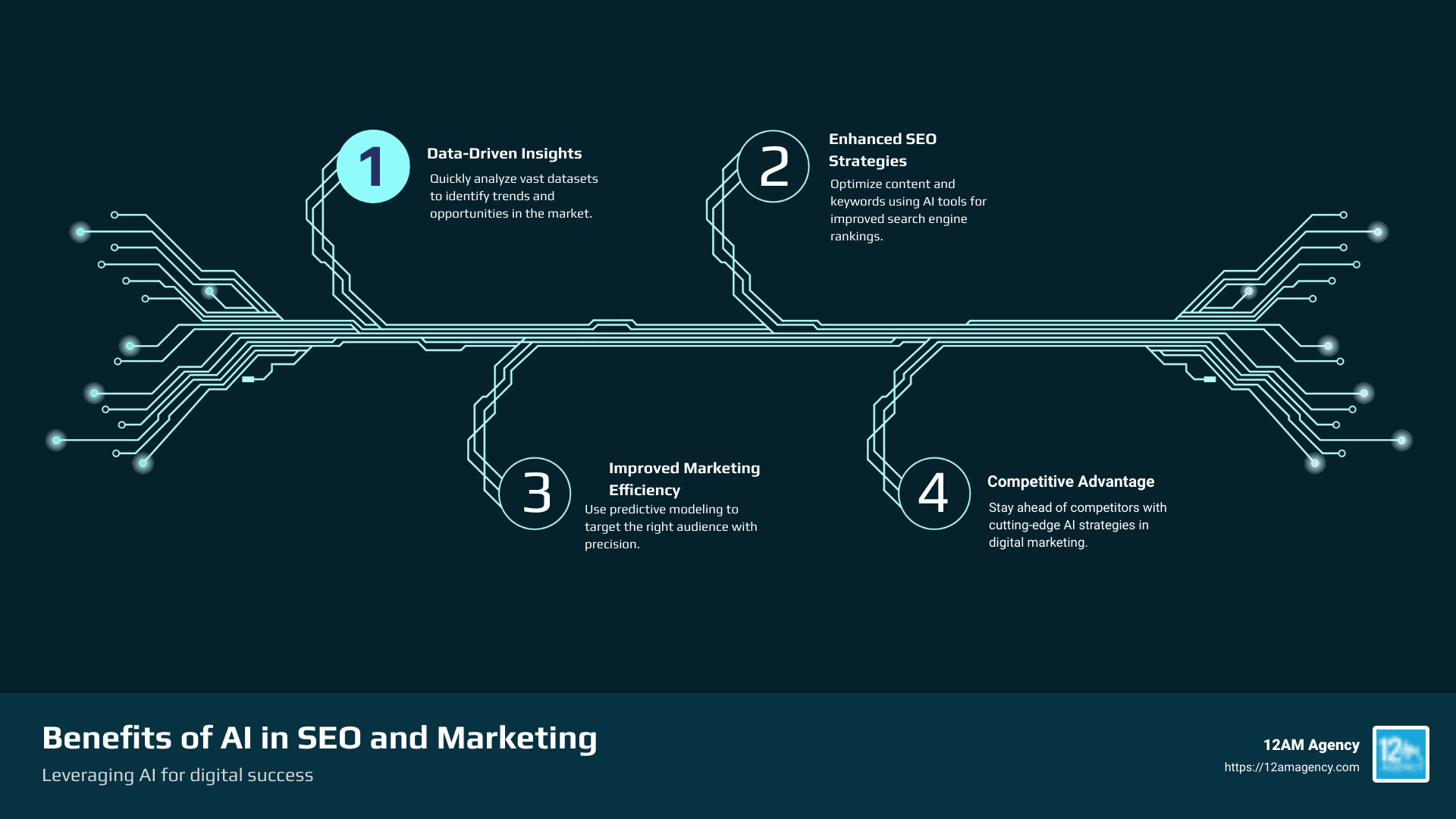
- Data-driven insights: Analyze vast datasets quickly to identify trends and opportunities.
- Improved SEO strategies: Optimize content and keywords using AI tools for better search engine rankings.
- Improved marketing efficiency: Target the right audience with precision using predictive modeling.
- Competitive advantage: Stay ahead of competitors with cutting-edge AI in digital strategies.
As we dive deeper into AI’s role in SEO and quantitative analysis, you’re about to find how these services can lift your business’s digital presence.
My name is Robert Portillo, and I bring to this article a unique blend of engineering background and digital marketing expertise. With nearly two decades in corporate settings followed by experience in AI quantitative analysis, SEO, and marketing services, I’m committed to helping businesses open up their full digital potential.
Terms related to ai quantative analysis seo and marketing services:
– generative ai and seo
– gpt 3 seo
– use chat gpt for seo
What is Quantitative Analysis in SEO?
Quantitative analysis in SEO is all about using numbers and data to make smart decisions. It’s like having a map that shows you where to go in the vast world of search engine optimization. This approach relies heavily on data-driven strategies, AI tools, predictive modeling, and machine learning to boost your SEO efforts.
Data-Driven SEO
At its core, data-driven SEO uses real numbers and facts to guide your decisions. It’s about understanding what works, what doesn’t, and why. By analyzing web traffic, user behavior, and search trends, businesses can tailor their SEO strategies to meet specific goals. One crucial aspect of optimizing online presence involves tracking SEO metrics for business websites. By monitoring these metrics, companies can identify strengths and weaknesses in their digital marketing efforts. This approach enables businesses to enhance performance and drive more targeted traffic to their sites.
For instance, using platforms like Google Analytics, you can track metrics such as bounce rate, session duration, and conversion rates. This helps identify which parts of your website engage visitors and which need improvement. With these insights, you can make informed choices that improve your site’s performance.
AI Tools in SEO
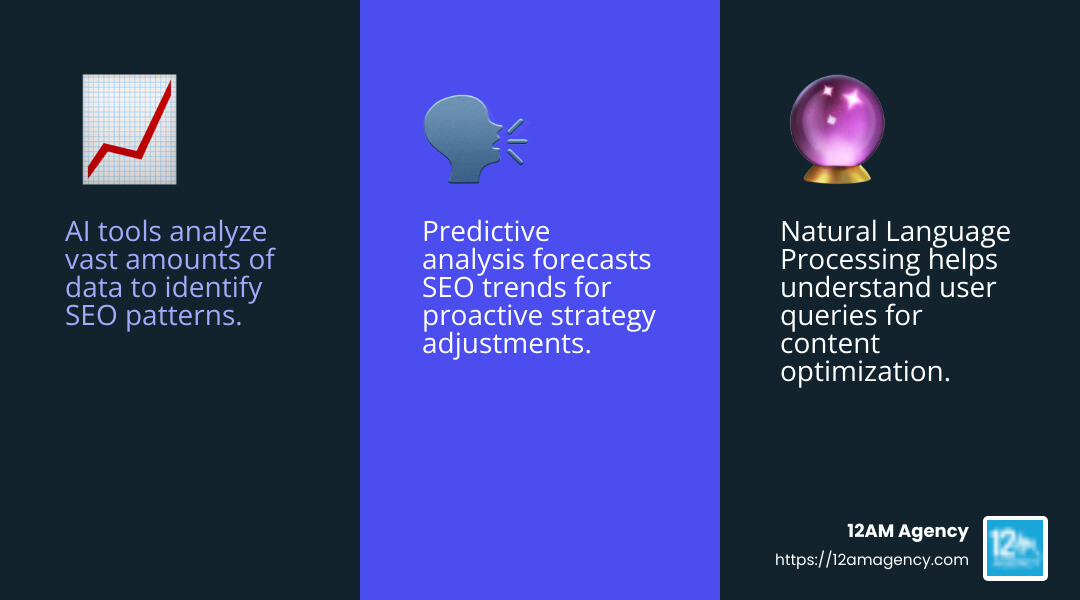
AI tools are the superheroes of modern SEO. They can process vast amounts of data faster than any human can. These tools help identify the best keywords, optimize content, and even predict future trends.
Consider tools like SEMrush or Moz, which use machine learning algorithms to suggest high-performing keywords. They analyze search volume, competition, and even predict how likely you are to rank for specific terms. This means you can spend less time guessing and more time implementing effective strategies.
Predictive Modeling
Predictive modeling is like having a crystal ball for your SEO efforts. It uses historical data to forecast future outcomes. With this, you can anticipate changes in search engine algorithms and adjust your strategies accordingly.
For example, by analyzing past data, you might predict an increase in mobile searches. This could prompt you to focus on mobile optimization, ensuring your site remains user-friendly across all devices.
Machine Learning in SEO
Machine learning is a type of AI that learns from data patterns. It helps refine SEO strategies by continuously improving them based on new data. Think of it as a self-updating guide that keeps your SEO tactics fresh and relevant.
Machine learning tools can analyze user interactions on your site, identifying what content keeps them engaged. This allows you to optimize your site for better user experience, ultimately leading to higher search rankings.
In summary, quantitative analysis in SEO leverages data, AI, predictive modeling, and machine learning to craft effective strategies. By embracing these technologies, businesses can improve their online presence and stay ahead of the competition.
See exactly where your profile stands right now.
Our GBP audit shows your current rank position across your market, how your profile completeness scores against competitors, and the specific gaps holding you back from the Map Pack.
The Role of AI in Quantitative Analysis for SEO
AI-powered tools are revolutionizing the way we approach quantitative analysis in SEO. These tools sift through mountains of data, providing insights that were once impossible to gather manually. Imagine having a digital assistant that never sleeps, constantly analyzing trends and user behaviors to fine-tune your SEO strategy. By measuring seo performance effectively, marketers can identify what’s working and what needs adjustment in real-time. This data-driven approach allows teams to allocate resources more efficiently, ensuring that every effort contributes to improved visibility and engagement. The result is a more streamlined workflow that fosters continuous growth and adaptation in an ever-evolving digital landscape. In addition to measuring seo visibility in personalized search, businesses can leverage real-time analytics to understand how different demographics engage with their content. This understanding enables marketers to tailor their strategies to meet the unique preferences of various audience segments, ultimately enhancing user experience. By prioritizing insights gained from these metrics, companies can stay ahead in the competitive landscape and drive more targeted traffic to their websites.
Data Analytics
At the heart of AI’s impact on SEO is its ability to perform advanced data analytics. AI tools like Google Analytics and BrightLocal offer a treasure trove of information about your audience. They track metrics like page visits, bounce rates, and session durations, giving you a clear picture of what’s working on your site and what needs tweaking.
Using AI, you can dive deeper into these metrics, uncovering patterns that can guide your SEO efforts. For example, if you notice a high bounce rate on certain pages, AI can help identify whether the issue is with content, design, or something else entirely.
Natural Language Processing (NLP)
Natural Language Processing (NLP) is another game-changer. It allows AI to understand and interpret human language, making it invaluable for SEO. By analyzing search queries and user-generated content, NLP tools can help you optimize your website’s content to better match user intent.
Consider this: with NLP, you can tailor your content to answer the exact questions your audience is asking. This not only improves user satisfaction but also boosts your site’s ranking on search engines.
Predictive Analysis
Predictive analysis is like having a roadmap to the future. AI uses historical data to anticipate trends and shifts in search behavior. This means you can proactively adjust your SEO strategies to stay ahead of the curve.
For instance, if predictive analysis indicates a rising interest in a particular topic within your niche, you can create content around that topic before it becomes saturated. This foresight gives you a competitive edge, allowing you to capture traffic before your competitors even realize the trend.
Incorporating AI into your quantitative analysis in SEO not only improves efficiency but also provides a level of accuracy and insight that was previously unattainable. With AI, you’re not just reacting to changes; you’re anticipating them, ensuring your SEO strategies are always a step ahead.
Benefits of AI Quantitative Analysis in SEO and Marketing Services
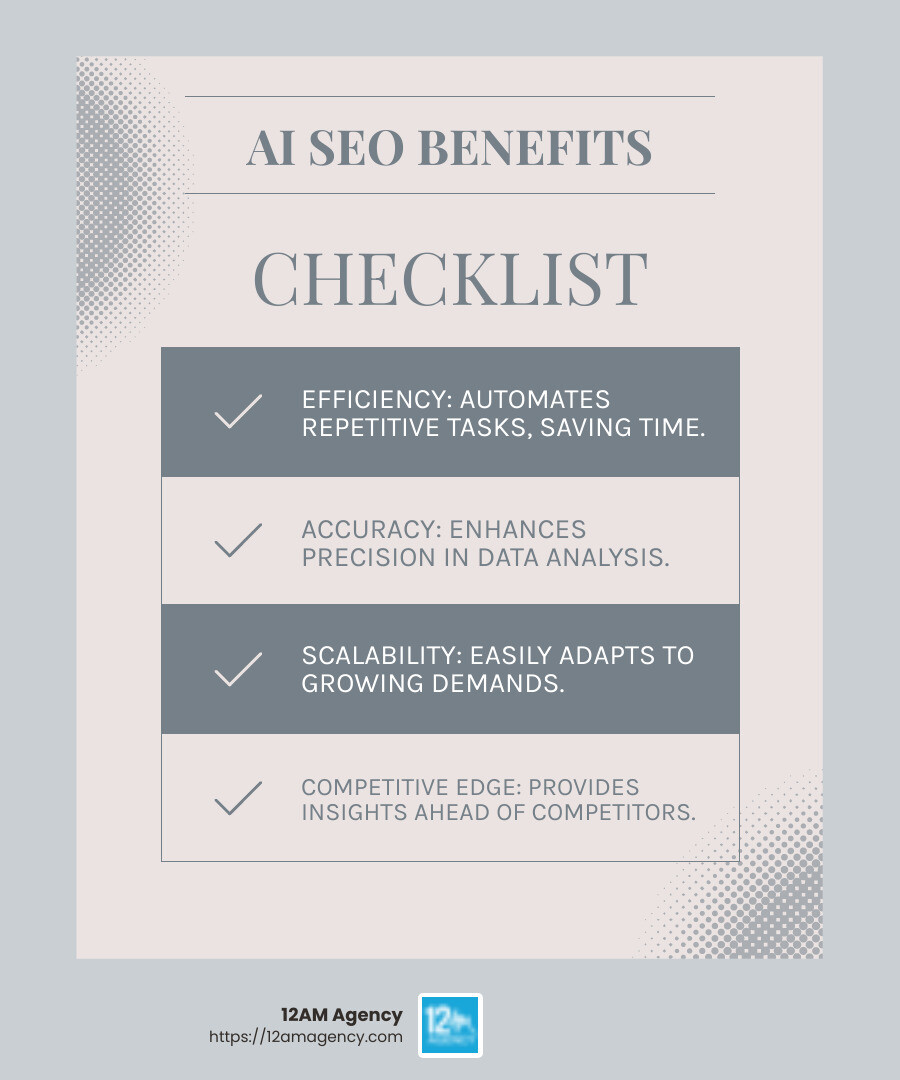
Efficiency is one of the biggest advantages of using AI in SEO. Imagine having a tireless assistant that can analyze vast amounts of data in seconds. AI tools automate repetitive tasks like data entry and report generation, freeing up your time for strategic planning. This means you can focus more on growing your business rather than getting bogged down by mundane tasks.
Accuracy is another game-changer. AI can process and analyze thousands of data points with precision. This leads to more accurate keyword research and better optimization suggestions. For instance, AI tools like SEMrush and Moz provide insights that help you target the right keywords and improve your content’s relevance. This precision ensures that your SEO efforts are always on point.

Scalability is a breeze with AI. As your business grows, so do your SEO needs. AI tools can easily handle this increased demand. Whether you’re publishing more content or expanding your keyword list, AI scales with you. This means you can effortlessly adapt to the changing landscape of digital marketing without missing a beat.
Competitive edge is crucial in today’s market. AI gives you that edge by providing insights that your competitors might miss. Predictive analysis helps you anticipate market trends, allowing you to stay ahead. For example, during the SEOwind AI Writing Challenge, AI-generated content led to a 77.69% increase in clicks and a 124.77% rise in impressions. This demonstrates how AI can significantly boost your online presence and keep you ahead of the competition.
Incorporating AI into your quantitative analysis in SEO not only improves efficiency but also provides a level of accuracy and insight that was previously unattainable. With AI, you’re not just reacting to changes; you’re anticipating them, ensuring your SEO strategies are always a step ahead.
Next, we’ll explore how AI tools improve SEO strategies through advanced keyword research, content optimization, and SERP analysis. Utilizing effective anchor text strategies for SEO can significantly enhance the relevance of your internal and external links. By ensuring that the text is descriptive and linked to appropriate content, you can improve user experience and boost search engine rankings. Moreover, incorporating variations of targeted keywords within your anchor text can help in diversifying your backlink profile.
How AI Tools Improve SEO Strategies
AI-Powered Keyword Research
Keyword research is a cornerstone of any successful SEO strategy. AI-powered tools like Google Keyword Planner, Moz Keyword Explorer, and SEMrush Keyword Magic Tool revolutionize this process. These tools sift through massive datasets to identify keywords that align with user intent and current trends. This means you can focus on the most relevant search terms that will drive traffic to your site.
For example, SEMrush Keyword Magic Tool offers a comprehensive keyword database, allowing marketers to explore related keywords and long-tail variations that might otherwise go unnoticed. This precision helps businesses target their audience more effectively, improving visibility and engagement.
AI-Driven Content Optimization
Once you have the right keywords, the next step is content optimization. AI tools like Grammarly, Hemingway Editor, and Yoast ensure that your content is not only engaging but also SEO-friendly. These tools analyze your text for readability, keyword usage, and overall structure.
Grammarly checks for grammar and punctuation errors, while Hemingway Editor focuses on sentence clarity and simplicity. Yoast, on the other hand, provides SEO-specific suggestions, such as keyword density and meta description optimization. Together, these tools help create content that resonates with readers and search engines alike.
AI Content Writing Tools
Creating content can be time-consuming, but AI content writing tools like SEOwind and Hubspot AI Blog Writer streamline this process. These platforms generate high-quality articles custom to your chosen keywords and topics. They use natural language processing to ensure the content is coherent and aligned with your brand voice.
During the SEOwind AI Writing Challenge, AI-generated content showed a significant boost in engagement metrics. This illustrates how AI can efficiently produce content that attracts and retains audience interest, giving your brand a competitive edge.
SERP Analysis Tools
Understanding how your content performs on search engine results pages (SERPs) is crucial. Tools like SEOwind, Serpstat, and Ahrefs offer detailed SERP analysis. They track keyword rankings, monitor competitors, and provide insights into what factors influence your position on search engines.
For instance, Ahrefs provides a comprehensive overview of your site’s backlink profile, helping you build a robust link-building strategy. Serpstat offers visibility analysis, showing how your site ranks for specific keywords over time. These insights are invaluable for refining your SEO strategies and staying ahead of the competition.
By leveraging these AI-driven tools, businesses can improve their SEO strategies with precision and efficiency. Whether it’s through advanced keyword research, optimized content, or insightful SERP analysis, AI provides the tools necessary to thrive in the digital landscape. The impact of AI on digital marketing is reshaping how brands engage with their audiences. With predictive analytics, businesses can tailor their campaigns to meet consumer demands in real time. As a result, companies can create personalized experiences that drive higher conversion rates and brand loyalty.
Top AI Tools for Quantitative Analysis in SEO
The right tools can make all the difference in your SEO strategy. Here are some top AI tools that can lift your quantitative analysis efforts:
Frase.io
Frase.io excels in content optimization by using AI to understand search intent. It analyzes top-ranking pages to suggest relevant topics and questions. This tool helps you create content that’s not only informative but also aligned with what users are actively searching for.
Scalenut
Scalenut offers a comprehensive suite of AI-driven features for SEO. It focuses on content creation, providing insights into trending topics and keyword suggestions. By analyzing competitor strategies, Scalenut helps you craft content that stands out.
Diib
Diib harnesses AI to provide actionable insights into your website’s performance. It offers a health score for your site and suggests improvements. Diib’s predictive analytics can forecast traffic growth, helping you plan your SEO strategies effectively.
Alli AI
Alli AI is a powerhouse for on-page optimization. It automates SEO tasks like meta tag updates and internal linking. With its user-friendly interface, even SEO beginners can quickly implement changes that boost site performance.
Surfer
Surfer is known for its data-driven approach to on-page SEO. It analyzes over 500 factors to provide a detailed optimization plan. Surfer’s content editor integrates seamlessly with tools like Google Docs, making it easy to optimize content in real-time.
NeuronWriter
NeuronWriter uses AI to assist in content creation and optimization. It provides keyword suggestions and analyzes readability, ensuring your content is both engaging and SEO-friendly. This tool is perfect for writers looking to improve their SEO skills.
Jasper
Jasper, formerly known as Jarvis, is a popular AI writing assistant. It generates content based on your keywords and topics, ensuring consistency with your brand voice. Jasper’s ability to produce high-quality text makes it a favorite among content marketers.
Keyword Insights
Keyword Insights offers deep analysis of keyword data, helping you understand search intent and user behavior. It clusters keywords into themes, allowing you to create targeted content that resonates with your audience.
These tools exemplify the power of AI quantitative analysis in SEO and marketing services. By integrating them into your workflow, you can streamline processes, improve accuracy, and gain a competitive edge in the digital landscape.
Case Studies: Success Stories with AI Quantitative Analysis
To truly appreciate the impact of AI quantitative analysis in SEO and marketing services, let’s dive into some compelling success stories. These case studies showcase how AI-driven strategies can transform digital marketing efforts.
SEOwind AI Writing Challenge
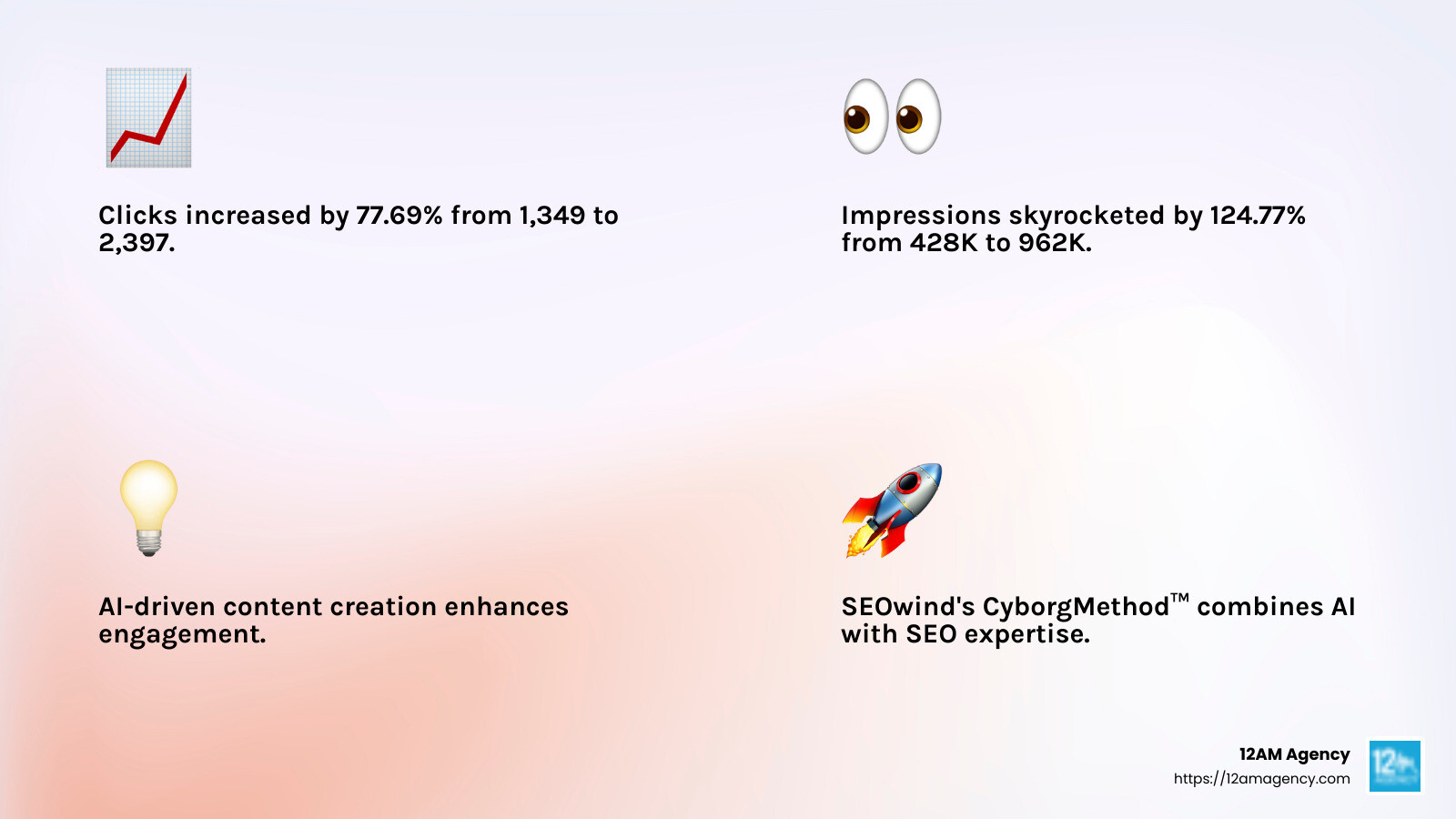
SEOwind started on a bold experiment to demonstrate the power of AI in content creation and SEO. Their AI Writing Challenge involved publishing over 100 articles in just 30 days using their proprietary CyborgMethod™, which combines AI with SEO expertise.
The results were nothing short of impressive:
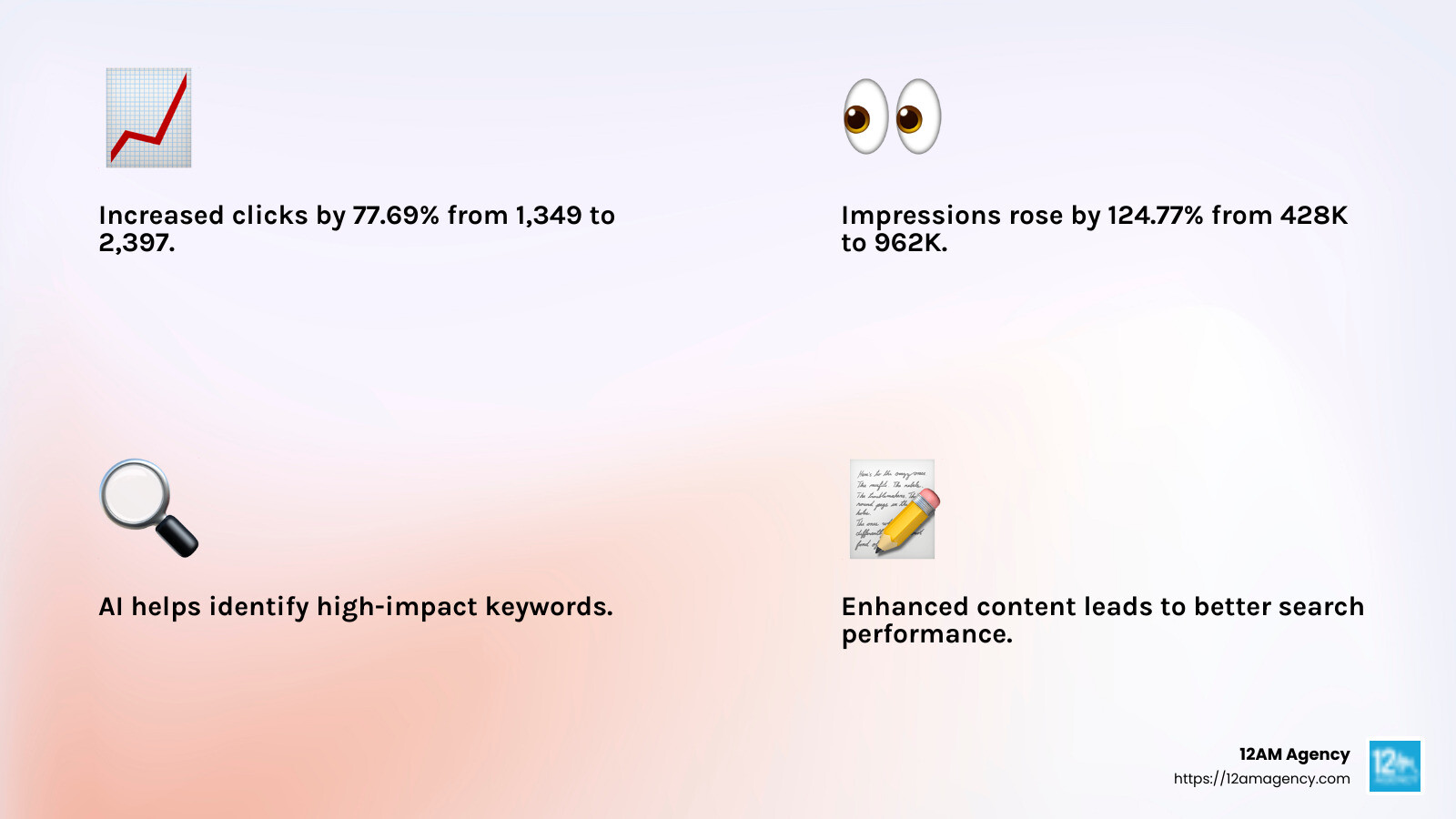
- Clicks increased by 77.69%: From 1,349 to 2,397 clicks.
- Impressions skyrocketed by 124.77%: From 428K to 962K impressions.
This case study highlights how AI can significantly boost engagement and visibility, even with limited resources.
WebFX Client Results
WebFX has been a leader in leveraging AI for SEO and digital marketing. Their approach integrates AI tools with human expertise to deliver exceptional client results.
This is the work we do for you. Every week, without exception.
Managing GBP at this level takes 6–8 hours a week when done right. Nova handles the entire system — posts, photos, reviews, Q&A, citations, heatmap tracking — so you can focus on running your business.
One notable success involved a client who wanted to improve their online presence and drive more revenue. WebFX employed AI-powered tools to optimize their SEO strategy, focusing on:
- Keyword research: Identifying high-impact keywords that align with the client’s goals.
- Content optimization: Enhancing existing content for better search engine performance.
- SERP analysis: Monitoring changes in search engine result pages to adapt strategies in real-time.
The outcome was a substantial increase in traffic and revenue, showcasing how AI can deliver tangible business results.
These case studies illustrate the transformative potential of AI in SEO and marketing. By using advanced tools and techniques, businesses can achieve remarkable growth and stay ahead in the digital landscape. Employing ai optimization strategies for search engines can significantly enhance a company’s visibility and relevance online. As algorithms evolve, staying updated with the latest developments ensures that marketing efforts yield the best possible results. This proactive approach not only drives traffic but also fosters deeper engagement with target audiences. the impact of ai on global search is undeniable, as it reshapes how information is retrieved and presented to users. Businesses that leverage these advancements can create more personalized experiences, leading to increased customer satisfaction. As these technologies continue to evolve, companies must adapt their strategies to maintain their competitive edge.
Frequently Asked Questions about AI Quantitative Analysis in SEO and Marketing Services
How can AI be used in SEO?
AI is a game-changer in SEO. It uses AI-powered analysis tools to dive deep into data, uncover patterns, and predict trends. This means smarter, faster decisions for your SEO strategy. AI helps with pattern recognition, finding what works and what doesn’t in your content and keywords. It also excels in keyword targeting, ensuring your content hits the mark with your audience.
AI tools like Frase.io and Scalenut are popular for their ability to analyze and optimize content. They help you understand what your audience is searching for and how to meet their needs effectively.
What is the best AI tool for SEO?
There are many AI tools out there, each with its strengths. Here are some top contenders:
- Frase.io: Known for its content optimization capabilities.
- Scalenut: Great for content creation and strategy.
- Diib: Offers insights into website performance and improvement areas.
- Alli AI: Focuses on automating SEO tasks.
- Surfer: Helps with on-page SEO and content planning.
- NeuronWriter: Assists in creating engaging, SEO-friendly content.
- Jasper: An AI writing tool that helps generate creative content.
- Keyword Insights: Specializes in keyword research and analysis.
Each tool offers unique features, so the best choice depends on your specific needs and goals.
How is AI changing marketing and SEO?
AI is reshaping the landscape of marketing and SEO. It’s all about data analysis. AI can sift through massive amounts of data to find valuable insights. This means you can tailor your strategy to fit current content themes and trending keywords. As a result, businesses need to stay informed about the effects of AI on search rankings, as this technology can influence which websites are prioritized in search results. Understanding these changes is crucial for maintaining visibility and driving traffic to your content. Embracing AI tools can provide a competitive edge in optimizing online presence and engaging with the audience effectively. As businesses adapt to AI advancements in SEO strategy, they can enhance their content creation process by leveraging machine learning algorithms to predict user behavior. This proactive approach allows marketers to anticipate shifts in consumer preferences and adjust their tactics accordingly. By integrating AI-driven tools, companies can optimize their websites to improve not just search rankings, but also user experience, leading to higher engagement and conversion rates.
AI also helps in understanding audience interests. By analyzing search patterns and behavior, AI tools can predict what your audience wants. This allows marketers to create content that resonates and attracts more visitors.
Tools like Surfer and NeuronWriter help you stay on top of trends, ensuring your content is always relevant. With AI, you can adapt quickly to changes in the market, keeping your business competitive in the changing digital space.
Conclusion
In today’s digital world, having a partner who understands the intricacies of AI and SEO is invaluable. At 12AM Agency, we pride ourselves on offering personalized, results-driven strategies that align with your business goals. Our team, based in Dallas, Texas, is dedicated to helping you steer the complexities of digital marketing with ease.
We believe in the power of AI quantitative analysis in SEO and marketing services. By leveraging advanced AI tools, we can improve efficiency, accuracy, and scalability in your marketing efforts. This gives you a competitive edge, ensuring your brand stands out in the crowded digital landscape.
Our approach is simple yet effective. We focus on understanding your unique needs and crafting strategies that deliver measurable results. Whether it’s through SEO, PPC, website design, or mobile app development, our goal is to help you succeed.
Ready to lift your digital presence? Explore our SEO services and see how we can transform your online strategy. Let’s work together to achieve your business objectives and open up new opportunities in the digital space. As we navigate the trends shaping the conversation economy, it’s crucial to adapt your approach to engage effectively with your audience. Leveraging insights from these trends can enhance your brand’s storytelling and foster deeper connections with your customers. By staying ahead of the curve, you can ensure that your digital strategies resonate and drive meaningful interactions.

