




Website redesign sounds like a creative facelift for your online business. Most people only focus on colors or layout swaps, but 75 percent of users judge a company’s credibility based on its website design. Turns out, redesign is less about looks and more about strategy. The real shift happens when a redesign transforms your site into a powerful machine for trust, impact, and real results.
Table of Contents
- What Is Website Redesign And Why Is It Important?
- Key Principles Of Effective Website Design
- The Role Of User Experience In Website Redesign
- Adapting To Trends: How To Stay Current In Web Design
- Measuring Success: Metrics In Website Redesign
Quick Summary
| Takeaway | Explanation |
|---|---|
| Website redesign enhances credibility. | A well-designed website influences user perception of trustworthiness and legitimacy. |
| Focus on user experience for redesign success. | Prioritizing intuitive navigation and engagement fosters user satisfaction and retention. |
| Ongoing adaptation to trends is crucial. | Modern web design requires constant evolution to meet emerging technologies and user expectations. |
| Use data metrics to measure success. | Quantitative metrics provide objective insights to evaluate the impact of design changes on business outcomes. |
What is Website Redesign and Why is it Important?
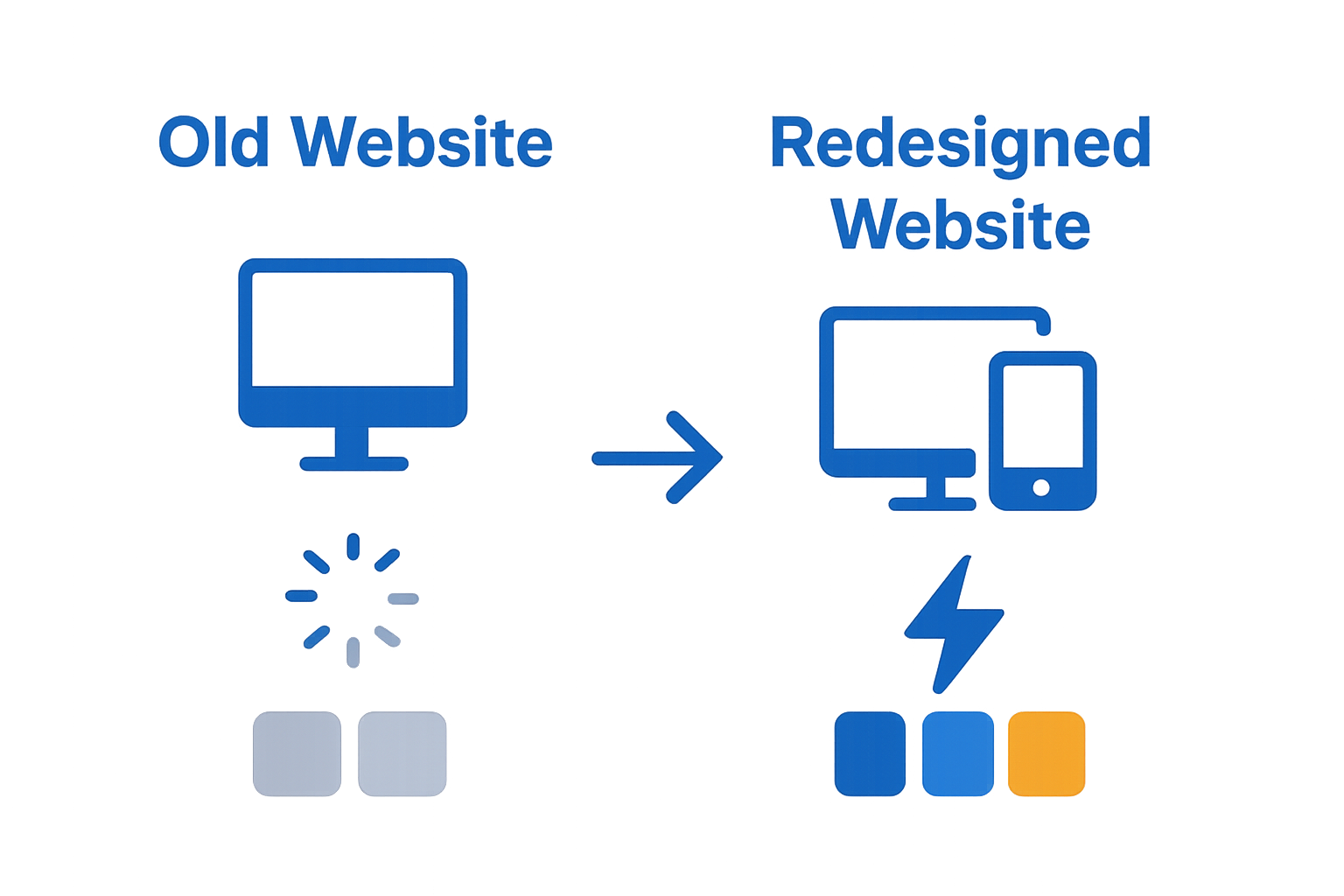
Website redesign is a comprehensive strategic process of dramatically transforming a website’s visual appearance, user experience, functionality, and overall digital performance. Unlike minor updates, a full redesign represents a holistic reimagining of how your digital presence communicates with potential customers and supports your business objectives.
Understanding the Core Purpose of Website Redesign
At its essence, website redesign goes far beyond aesthetic changes. It represents a strategic realignment of your digital platform with evolving business goals, user expectations, and technological capabilities. Our comprehensive web design services highlight the multifaceted nature of this critical digital transformation.
Key motivations for website redesign typically include:
Below is a table summarizing the key motivations for website redesign as described in this section, along with a brief explanation for each motivation.
| Motivation | Explanation |
|---|---|
| Improve user experience and navigation | Enhance usability so visitors can find information and complete tasks easily |
| Enhance mobile responsiveness | Ensure optimal performance and visuals on all devices, especially smartphones |
| Update outdated design elements | Replace old layouts, colors, and visuals to reflect current design standards |
| Increase conversion potential | Optimize site structure and calls to action to drive more leads or sales |
| Reflect current brand positioning | Align the website with updated branding, messaging, and business strategy |
- Improving user experience and navigation
- Enhancing mobile responsiveness
- Updating outdated design elements
- Increasing conversion potential
- Reflecting current brand positioning
The Strategic Significance of Digital Modernization
According to Stanford University’s Web Credibility Research, 75% of users make judgments about a company’s credibility based purely on website design. This statistic underscores why website redesign isn’t just a cosmetic exercise but a fundamental business strategy.
Modern website redesign integrates multiple critical elements: user interface design, search engine optimization, performance optimization, and conversion rate enhancement.
It transforms your digital storefront from a static information portal into a dynamic, interactive platform that actively engages and converts potential customers.
See exactly where your profile stands right now.
Our GBP audit shows your current rank position across your market, how your profile completeness scores against competitors, and the specific gaps holding you back from the Map Pack.
The most successful website redesigns are not one-time events but part of an ongoing digital evolution, continuously adapting to technological advances, shifting user behaviors, and emerging design trends. By treating your website as a living, breathing digital asset, you position your business to remain competitive and relevant in an increasingly digital marketplace.
Key Principles of Effective Website Design
Effective website design transcends mere visual appeal, representing a sophisticated intersection of user psychology, technological functionality, and strategic communication. Successful design creates an intuitive digital environment that seamlessly guides visitors toward desired actions while delivering a memorable brand experience.
User-Centered Design Philosophy
The foundational principle of modern website design centers on understanding and anticipating user needs. Explore our guide on design aesthetics to gain deeper insights into creating compelling digital experiences.
According to Usability.gov’s Interface Design Guidelines, effective design integrates several critical elements:
- Consistent visual language and navigation
- Clear information hierarchy
- Intuitive interaction patterns
- Responsive and adaptive layouts
- Accessibility for diverse user capabilities
Technical and Aesthetic Convergence
Website design is not a binary choice between beauty and functionality but a harmonious blend of both. Technical performance and aesthetic appeal must work synergistically to create engaging digital experiences. This means optimizing loading speeds, ensuring cross-device compatibility, and maintaining visual coherence.
Key technical considerations include:
- Minimizing page load times
- Implementing responsive design principles
- Ensuring cross-browser and cross-device compatibility
- Maintaining clean, semantic code structure
- Integrating robust security protocols
Ultimately, exceptional website design serves as a silent communicator, translating brand identity, values, and offerings into a digital language that resonates instantly with visitors. By prioritizing user experience, technical excellence, and strategic communication, businesses can transform their websites from static information repositories into dynamic, conversion-driving platforms.
The Role of User Experience in Website Redesign
User experience (UX) represents the critical backbone of successful website redesign, transforming digital platforms from mere information repositories into intuitive, engaging environments that anticipate and fulfill user expectations. Beyond aesthetic considerations, UX design focuses on creating meaningful, seamless interactions that guide visitors effortlessly toward their desired objectives.
Understanding UX as a Strategic Approach
Learn how UX directly impacts SEO rankings, revealing the profound connection between user satisfaction and digital performance. UX design is not a singular discipline but a comprehensive strategy that integrates psychological, technological, and design principles.
Critical UX considerations during website redesign include:
- Mapping user journey and interaction pathways
- Analyzing user behavior and pain points
- Creating intuitive navigation structures
- Developing clear, compelling call-to-action elements
- Ensuring consistent and predictable interaction patterns
Psychological Foundations of User Experience
According to Nielsen Norman Group’s UX Research, effective user experience hinges on five fundamental quality components: learnability, efficiency, memorability, errors, and satisfaction. These elements determine how quickly users understand and navigate a digital interface, and how likely they are to return and recommend the platform.
This table compares the five fundamental quality components of user experience as described by Nielsen Norman Group, providing a clear definition for each concept.
| UX Quality Component | Definition |
|---|---|
| Learnability | How easily users can accomplish basic tasks during their first interaction |
| Efficiency | How quickly users can perform tasks once they are familiar with the design |
| Memorability | How easily returning users can reestablish proficiency after a break |
| Errors | Frequency and severity of user errors, and how easily users can recover |
| Satisfaction | How pleasant the overall experience is for the user |
Key psychological principles that drive exceptional UX include understanding cognitive load, minimizing user friction, and creating predictable interaction models. Successful website redesign recognizes that users seek not just information, but an emotionally satisfying and effortless digital journey.
Ultimately, user experience transcends technical implementation. It represents a human-centered approach to digital design, where every visual element, interaction flow, and navigational choice is meticulously crafted to create a profound, intuitive connection between the user and the digital platform.

Adapting to Trends: How to Stay Current in Web Design
Web design is a dynamic landscape that continuously evolves, demanding constant vigilance and adaptability from digital professionals. Staying current isn’t merely about following aesthetic shifts, but understanding the deeper technological and user experience transformations that drive digital innovation.
The Ecosystem of Digital Evolution
Discover the latest digital marketing trends that are reshaping how businesses approach online engagement. The web design ecosystem is a complex interplay of emerging technologies, user expectations, and strategic communication methodologies.
Critical areas of ongoing digital transformation include:
- Artificial intelligence integration
- Advanced responsive design techniques
- Immersive user interaction models
- Accessibility and inclusive design principles
- Sustainable and performance-optimized development
Strategic Approaches to Trend Adaptation
According to Smashing Magazine’s Design Trends Report, successful trend adaptation requires a nuanced approach that balances innovation with fundamental user experience principles. Technological fluency must be complemented by a deep understanding of human interaction dynamics.
Key strategic considerations for maintaining design relevance include:
- Continuous professional development
- Regular technology and design skill audits
- Engagement with design community networks
- Experimental prototyping and user testing
- Investment in cross-disciplinary learning
Ultimately, staying current in web design is not about chasing every passing trend, but developing a robust, adaptive mindset that can quickly integrate meaningful innovations while maintaining core user-centric design principles. The most successful digital experiences emerge from a delicate balance between cutting-edge technology and timeless human-centered design philosophy.
Measuring Success: Metrics in Website Redesign
Website redesign success cannot be determined by subjective impressions but requires a comprehensive, data-driven evaluation framework. Effective metrics provide objective insights into the tangible impact of digital transformation, revealing how strategic changes translate into measurable business outcomes.
Quantitative Performance Indicators
Learn more about digital marketing KPIs that illuminate the broader context of digital performance measurement. Quantitative metrics offer concrete evidence of website redesign effectiveness, moving beyond aesthetic considerations to demonstrate real-world business impact.
Critical quantitative metrics include:
- Conversion rate improvements
- Reduced bounce rates
- Increased average session duration
- Enhanced page load speed
- Improved mobile responsiveness scores
Comprehensive Evaluation Frameworks
This is the work we do for you. Every week, without exception.
Managing GBP at this level takes 6–8 hours a week when done right. Nova handles the entire system — posts, photos, reviews, Q&A, citations, heatmap tracking — so you can focus on running your business.
According to Google’s Web Performance Best Practices, successful website redesign measurement requires a holistic approach that integrates technical performance, user experience, and business objectives. Comprehensive evaluation demands examining both objective data points and nuanced user interactions.
Key strategic measurement considerations include:
- Establishing baseline performance metrics
- Implementing robust analytics tracking
- Conducting comparative analysis
- Collecting qualitative user feedback
- Continuous monitoring and iterative optimization
Ultimately, website redesign metrics transcend simple numerical assessments. They represent a sophisticated diagnostic tool that reveals the intricate relationship between design choices, user behavior, and organizational goals. By developing a mature, data-informed approach to measurement, businesses can transform website redesign from a periodic aesthetic update into a strategic mechanism for continuous digital improvement.
Ready to Turn Your Website Redesign Into Real Business Results?
Are you struggling with an outdated website design or losing valuable customers due to poor user experience? The article highlights how a powerful website redesign is not just about looks but about aligning digital strategy with business goals, boosting credibility, and driving quantifiable growth. If you want your digital presence to work harder for you and leave a memorable impact, now is the time to act. See how our web design experts can transform your site into a conversion engine built on proven best practices.

Partner with a team that understands the value of data-driven redesign, intuitive navigation, and cutting-edge technology. Take the next step toward measurable performance increases and stronger brand credibility. Start your journey with a free strategy session at Contact Us and explore our actionable resources for improving user experience and SEO. Let us guide you in making every redesign decision count. Act now to unlock your website’s full potential.
Frequently Asked Questions
What is website redesign?
Website redesign is the strategic process of transforming a website’s visual appearance, user experience, functionality, and overall digital performance to better align with business objectives and user expectations.
Why is user experience important in website redesign?
User experience is crucial because it influences how effectively visitors interact with your site. A well-designed UX can enhance user satisfaction, increase engagement, and ultimately drive conversions.
How can I measure the success of a website redesign?
Success can be measured using quantitative metrics such as conversion rate improvements, reduced bounce rates, increased session duration, and enhanced page load speeds, along with qualitative user feedback.
What are some key principles of effective website design?
Key principles include user-centered design, technical and aesthetic convergence, consistent visual language, clear information hierarchy, and responsiveness across devices.
Recommended
- 10 Ways to Improve Your Website’s Design Aesthetics Today | 12AM Agency
- Web Design and Development Services | 12 AM Agency
- How To Prepare For the 2021 Google Page Experience Update
- 10 Ways to Improve Your Website’s Design Aesthetics Today | 12AM Agency
- Effective Website Design: Key Principles and Proven Strategies 2025

