





Every business wants to outsmart its rivals, but most have no clue what their competitors are truly doing under the hood. Think you can just trust your gut and win anyway? Studies show that companies using structured competitive analysis are 60 percent more likely to grow market share than those who guess. The real surprise is that competitive analysis is less about copying the competition and more about exposing what makes your brand extraordinary.
Table of Contents
- What Is Competitive Analysis In Marketing?
- Why Competitive Analysis Matters For Businesses
- How Competitive Analysis Works: Key Concepts Explained
- Practical Applications Of Competitive Analysis In Marketing
- Real-World Examples Of Successful Competitive Analysis
Quick Summary
| Takeaway | Explanation |
|---|---|
| Understand your competition | Analyzing competitors’ strategies and strengths helps in identifying market positions. |
| Utilize data-driven decisions | Competitive analysis offers actionable insights for informed strategic decision-making. |
| Identify market opportunities | Evaluating competitors can reveal gaps in the market to explore for growth. |
| Anticipate market shifts | Proactive analysis allows businesses to foresee changes and adapt their strategies accordingly. |
| Leverage technology for insights | Use AI and data analytics to enhance your understanding of competitive landscapes. |
What is Competitive Analysis in Marketing?
Competitive analysis in marketing is a strategic research process where businesses systematically examine their market competitors to understand their strategies, strengths, and weaknesses. Competitive analysis enables organizations to develop informed strategic insights that drive competitive advantages and improve market positioning.
Core Components of Competitive Analysis
Competitive analysis involves multiple critical dimensions that help businesses gain comprehensive market intelligence. These dimensions include:
- Strategic Market Positioning: Understanding how competitors position themselves in the market
- Performance Evaluation: Assessing competitors’ financial performance, market share, and growth trajectories
- Strategic Asset Analysis: Examining competitors’ unique capabilities, technologies, and resources
Strategic Purpose and Methodology
The primary purpose of competitive analysis transcends mere observation. It provides actionable intelligence that helps businesses:
- Make data-driven strategic decisions
- Identify potential market opportunities
- Develop effective differentiation strategies
- Anticipate competitive threats and market shifts
Professional competitive analysis typically involves structured research methodologies, including qualitative and quantitative assessment techniques. This might include reviewing public financial reports, analyzing marketing materials, conducting customer interviews, and utilizing advanced market research tools.
Businesses can learn more about advanced competitive intelligence techniques that leverage cutting-edge AI and data analytics to gain deeper market insights. By understanding competitors comprehensively, organizations can craft more effective marketing strategies that capitalize on market gaps and unique value propositions.
The table below summarizes the core components of competitive analysis, providing a quick reference for understanding each dimension and its purpose in the marketing strategy process.
| Core Component | Description |
|---|---|
| Strategic Market Positioning | Understanding how competitors position themselves in the market |
| Performance Evaluation | Assessing competitors’ financial performance, market share, and growth trajectories |
| Strategic Asset Analysis | Examining competitors’ unique capabilities, technologies, and resources |
| Data Collection Methods | Includes reviewing public reports, marketing materials, customer feedback, and market tools |
| Interpretation & Analysis | Turning collected data into actionable competitive insights |
Why Competitive Analysis Matters for Businesses
Competitive analysis serves as a strategic compass for businesses navigating complex market environments.
According to research from the Small Business Administration, understanding competitive landscapes is crucial for sustainable business growth and strategic decision making.
Strategic Market Intelligence
Competitive analysis transforms raw market data into actionable strategic intelligence. By systematically examining competitors, businesses gain critical insights that inform multiple aspects of organizational strategy:
- Identifying market opportunities and potential gaps
- Understanding emerging industry trends
- Recognizing potential competitive threats
- Benchmarking performance against industry standards
Risk Mitigation and Strategic Planning
Beyond surface level observations, competitive analysis helps businesses proactively manage market risks. Companies can anticipate potential disruptions, adapt their strategies, and develop robust contingency plans. This forward-looking approach enables organizations to:
- Predict potential market shifts
- Develop innovative differentiation strategies
- Allocate resources more effectively
- Maintain competitive relevance
Modern businesses cannot afford to operate in isolation. Investing in digital marketing strategies requires a comprehensive understanding of the competitive ecosystem. Competitive analysis provides the foundational intelligence needed to make informed strategic decisions, ultimately driving sustainable business growth and market positioning.
How Competitive Analysis Works: Key Concepts Explained
Competitive analysis operates as a systematic intelligence gathering process that transforms complex market data into strategic insights. According to research from the Small Business Administration, understanding how competitive analysis functions requires a comprehensive approach to data collection and strategic interpretation.
Data Collection and Information Gathering
The foundational stage of competitive analysis involves multiple intelligence gathering techniques:
- Reviewing public financial reports and annual statements
- Analyzing marketing materials and digital presence
- Monitoring social media and digital communication channels
- Examining product offerings and pricing strategies
- Investigating customer reviews and market feedback
Strategic Analysis and Interpretation
Beyond raw data collection, competitive analysis demands sophisticated interpretation.
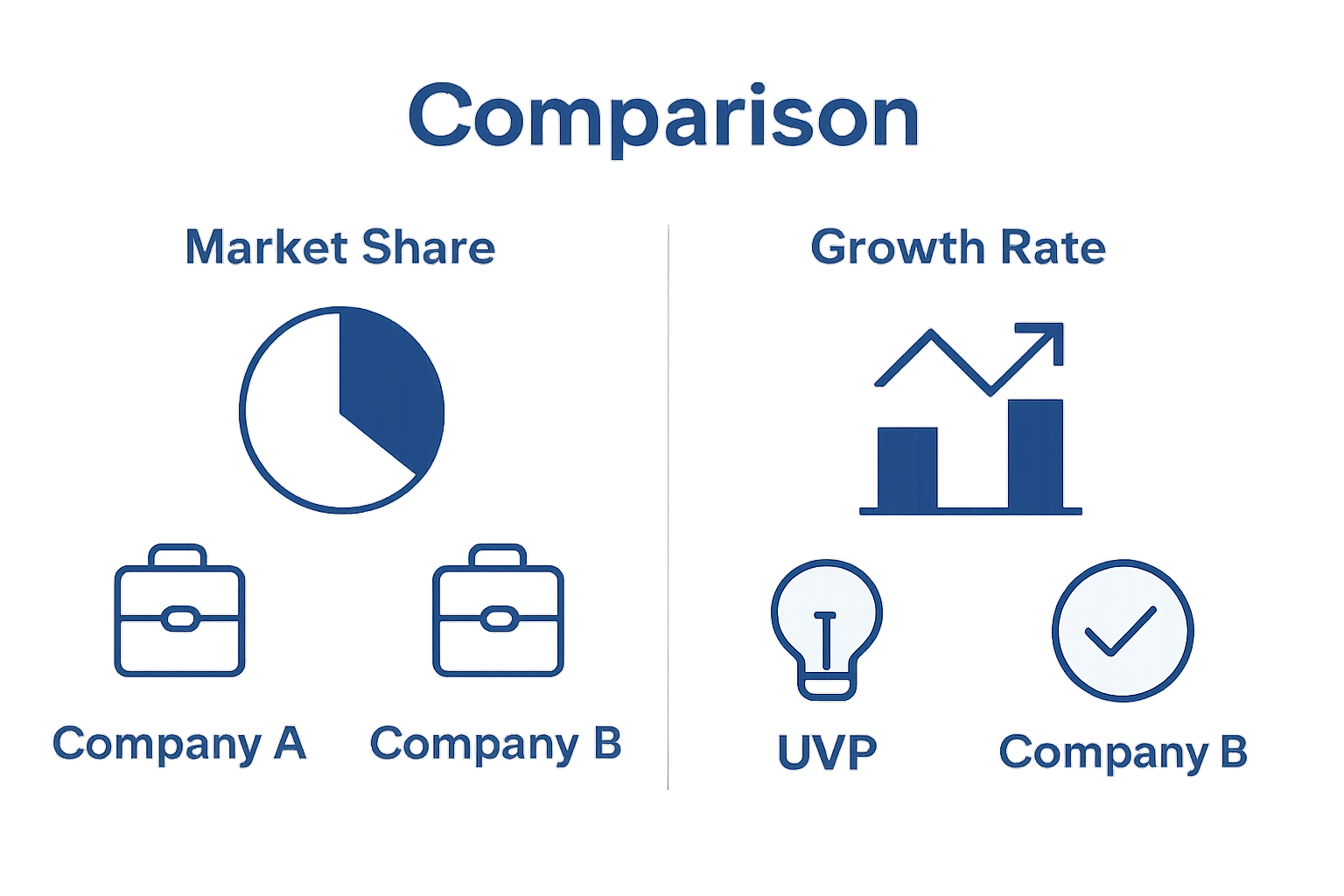 Businesses must transform gathered information into actionable strategic insights by:
- Identifying unique competitive advantages
- Evaluating market positioning strategies
- Recognizing potential vulnerabilities in competitors’ approaches
- Developing predictive models of market behavior
Modern businesses increasingly leverage advanced technologies to enhance competitive intelligence. Explore how AI can revolutionize competitive analysis techniques by providing deeper, more nuanced market insights. The integration of artificial intelligence and data analytics enables organizations to move beyond traditional research methods, offering more precise and predictive competitive understanding.
Practical Applications of Competitive Analysis in Marketing
Competitive analysis translates strategic intelligence into actionable marketing initiatives. According to research from the Small Business Administration, businesses can leverage competitive insights to drive targeted marketing strategies and organizational growth.
Product and Service Positioning
Competitive analysis enables precise market positioning by helping businesses understand their unique value propositions:

- Identifying gaps in current market offerings
- Determining pricing strategies relative to competitors
- Developing targeted product features
- Highlighting distinctive competitive advantages
Marketing Channel and Communication Strategies
Understanding competitors’ communication approaches allows businesses to develop more effective marketing strategies:
- Analyzing competitors’ digital marketing channels
- Evaluating messaging and brand communication styles
- Identifying underserved audience segments
- Developing differentiated marketing narratives
Startup marketing strategies particularly benefit from comprehensive competitive analysis. By understanding the competitive landscape, emerging businesses can craft targeted approaches that maximize limited marketing resources, creating strategic advantages that enable rapid market penetration and sustainable growth. The insights gained through competitive analysis transform marketing from a reactive process to a proactive, intelligence-driven strategic function.
This table outlines how competitive analysis is practically applied in marketing, highlighting the specific benefits and outcomes businesses can achieve across different focus areas.
| Application Area | Key Benefits |
|---|---|
| Product and Service Positioning | Helps identify market gaps, refine features, and set pricing |
| Marketing Channels & Communication | Improves messaging, targets audiences, and differentiates brand |
| Market Opportunity Identification | Reveals underserved segments and new market possibilities |
| Risk Mitigation & Contingency | Supports prediction of shifts and proactive strategic planning |
| Benchmarking & Performance | Enables comparison to industry standards and performance tracking |
Real-World Examples of Successful Competitive Analysis
According to research from the Small Business Administration, competitive analysis transforms theoretical strategies into practical business intelligence. Real-world examples demonstrate how systematic market research can drive extraordinary business transformations.
Technology Sector Competitive Intelligence
Strategic competitive analysis has been instrumental in technological innovation and market dominance:
- Apple’s iPhone development by understanding smartphone market gaps
- Netflix disrupting traditional entertainment through competitor content analysis
- Tesla revolutionizing electric vehicle markets by analyzing automotive industry limitations
- Google’s search engine improvements by continuously monitoring competitor technologies
Retail and Consumer Goods Strategies
Successful businesses leverage competitive analysis to refine their market positioning:
- Amazon’s marketplace expansion by analyzing retail competitor weaknesses
- Starbucks’ global strategy through comprehensive international market research
- Coca-Cola’s product diversification by tracking beverage market trends
- Nike’s marketing campaigns designed after detailed competitor communication analysis
Managing social media effectively represents another critical domain where competitive analysis provides strategic advantages. By understanding competitors’ digital communication strategies, businesses can develop more targeted, responsive marketing approaches that resonate with their specific audience segments. These real-world examples illustrate how systematic competitive analysis transforms raw market data into actionable strategic insights, enabling businesses to innovate, differentiate, and ultimately outperform their competitors.
Unlock Market Advantage with Expert Competitive Analysis
If you are feeling hindered by unclear market trends or uncertain about your competitive edge, it is time for a change. As highlighted in the article, many businesses struggle to turn competitor data into real marketing strength. Outdated strategies make it easy for competitors to outpace you. You need actionable intelligence—not just reports—and the right digital marketing partner to transform insights into growth. Our team at 12AM Agency specializes in converting complex market data, as discussed in competitive analysis, into clear, effective strategies covering everything from AI-powered SEO to local service ads and digital reputation management. We help businesses just like yours identify unique opportunities, improve market positioning, and drive sustainable growth in even the busiest markets.
Ready to stop guessing and start gaining? Connect with us now at Contact Us for a personalized consultation. Discover firsthand how we turn in-depth analysis into higher visibility and more qualified leads. The market moves quickly. Stand out and secure your competitive advantage today with help from the experts at 12AM Agency.
Frequently Asked Questions
What is competitive analysis in marketing?
Competitive analysis in marketing is a strategic research process where businesses systematically evaluate their market competitors to understand their strategies, strengths, and weaknesses, helping to drive competitive advantages and improve market positioning.
Why is competitive analysis important for businesses?
Competitive analysis provides actionable intelligence that helps businesses make informed strategic decisions, identify market opportunities, develop differentiation strategies, and anticipate competitive threats, ultimately driving sustainable growth and market positioning.
How do businesses conduct competitive analysis?
Businesses conduct competitive analysis through various methods, such as reviewing public financial reports, analyzing marketing materials, monitoring social media channels, and examining customer feedback. This data is then interpreted to gain strategic insights.
What are the practical applications of competitive analysis in marketing?
Competitive analysis aids in precise market positioning, informing product and service offerings. It also enhances marketing channel strategies by analyzing competitors’ communication approaches and identifying underserved audience segments.