





Building a brand online seems daunting when you hear that over 70 percent of consumers say a consistent brand presence makes them trust a company more. Most people think it all comes down to fancy logos or clever social media tricks. Turns out, the real difference is found in understanding your audience and using small strategic steps that stack up to major results.
Table of Contents
- Step 1: Analyze Your Target Audience And Market
- Step 2: Establish Your Unique Value Proposition
- Step 3: Develop A Consistent Visual And Verbal Brand Identity
- Step 4: Create And Optimize Your Online Assets
- Step 5: Engage And Grow Your Digital Community
- Step 6: Monitor Performance And Adjust Your Strategy
Quick Summary
| Key Point | Explanation |
| 1. Understand Your Target Audience | Conduct thorough market research to define customer personas and digital behaviors. |
| 2. Define Your Unique Value Proposition | Clearly articulate what makes your brand unique and why customers should choose you. |
| 3. Develop a Consistent Brand Identity | Create a unified visual and verbal identity that communicates your brand’s story across platforms. |
| 4. Optimize Your Online Assets | Build and maintain a professional website, social media profiles, and content platforms to represent your brand. |
| 5. Engage with Your Digital Community | Foster genuine connections on social media to turn followers into brand advocates and drive growth. |
Step 1: Analyze Your Target Audience and Market
Building a brand online starts with understanding exactly who you want to reach. Successful digital presence requires precision in audience targeting. Your entire online strategy depends on deeply comprehending your potential customers their motivations, challenges, and digital behaviors.
Begin by conducting thorough market research using powerful free and low-cost tools. Google Analytics, social media insights, and platforms like SurveyMonkey offer comprehensive demographic data. Examine these resources to uncover critical details about your audience age ranges, income levels, geographic locations, and online engagement patterns.
Your research should create a detailed customer persona that goes beyond basic demographics. Map out their typical online journey consider what websites they visit, which social media platforms they prefer, and what type of content resonates with them. According to the U.S. Small Business Administration, understanding customer behaviors is fundamental to developing an effective digital strategy.
As you compile this information, look for patterns and opportunities. What content are they consuming? What problems are they trying to solve? Where are the gaps in current market offerings? These insights will help you craft a unique brand positioning that speaks directly to your ideal customers needs and desires.
Verify your research by cross-referencing multiple data sources and creating a comprehensive audience profile.
Below is a summary table of audience analysis tools with their main purpose to help you select the best resources for building your brand online.
| Tool | Primary Purpose |
| Google Analytics | Analyze website traffic and user behavior |
| Facebook Audience Insights | Gather detailed demographics for Facebook |
| LinkedIn Analytics | Track engagement and company page growth |
| Instagram Business Insights | Monitor follower demographics and engagement |
| Twitter Analytics | Review tweet performance and audience stats |
Step 2: Establish Your Unique Value Proposition
Your unique value proposition transforms a generic business into a memorable brand that stands out in a crowded digital marketplace. This critical step defines precisely why customers should choose you over every other option available. Think of it as your digital elevator pitch condensed into a powerful statement that immediately communicates your brand’s core strength and distinctive advantage.
Crafting an exceptional value proposition requires deep introspection about your business capabilities. Start by identifying what makes your offering genuinely different. This isn’t about being slightly better but about being fundamentally unique. Analyze your competitors thoroughly and pinpoint the specific problems you solve that others cannot or do not address as comprehensively. According to the U.S. Small Business Administration, understanding your competitive landscape is crucial to defining your market position.
Write your value proposition by answering three critical questions: What specific problem do you solve? Who are you solving it for? Why are you the best solution? Your statement should be clear, concise, and compelling. Avoid industry jargon and focus on tangible benefits that resonate emotionally and logically with your target audience. Learn more about our custom branding approach to refine your unique positioning.
Value proposition elements to consider:
- Direct problem solution
- Target audience specificity
- Measurable outcomes
- Emotional and rational appeal
- Differentiation from competitors
Test your value proposition by presenting it to potential customers and collecting honest feedback. The right statement will generate immediate interest and curiosity.
A truly effective value proposition feels authentic, addresses a genuine need, and communicates your brand’s distinct personality. Remember that this is not a permanent fixture but a living statement that can evolve as your business grows and market dynamics shift.
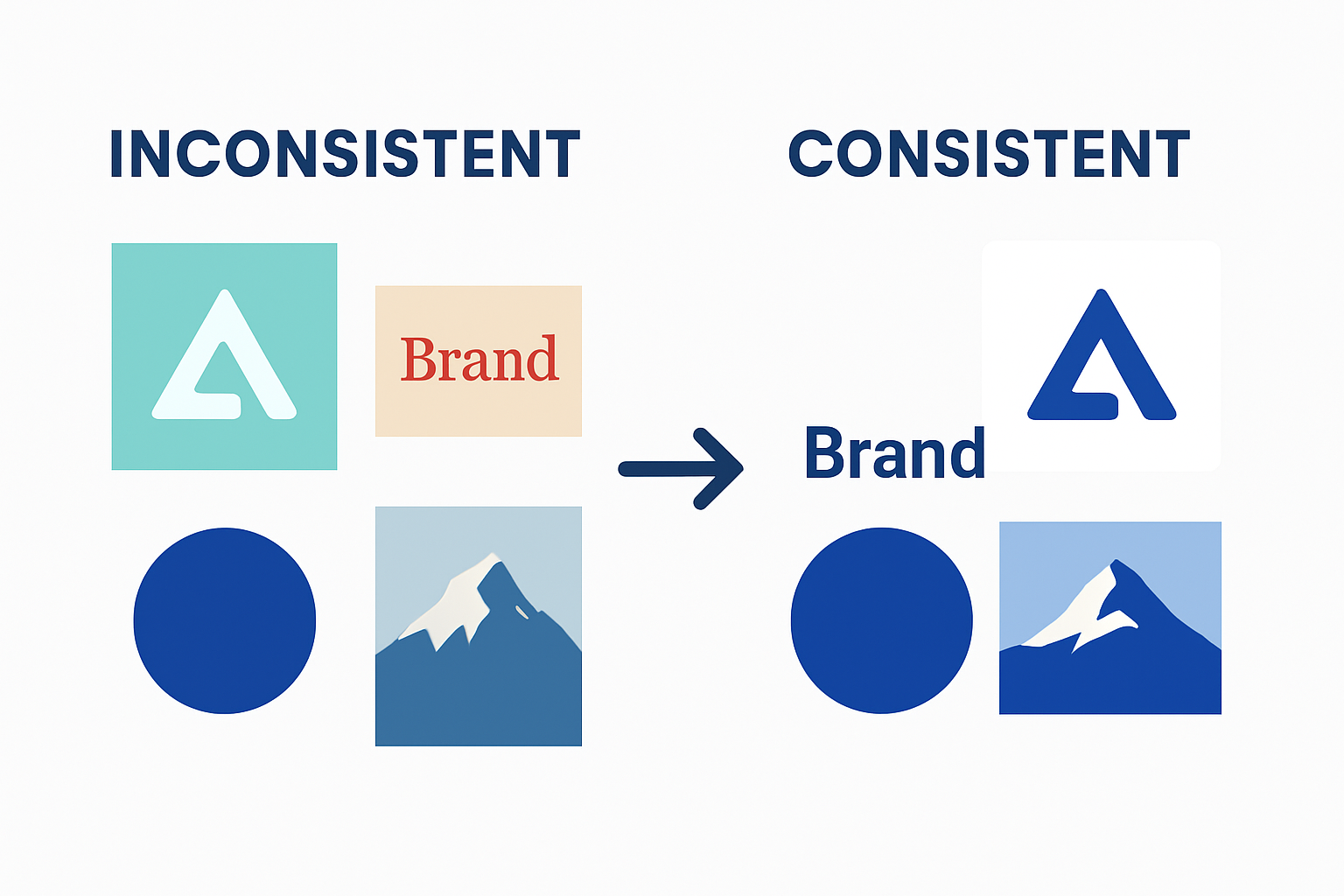
Step 3: Develop a Consistent Visual and Verbal Brand Identity
Creating a memorable brand requires more than just a logo. Your visual and verbal identity forms the core communication strategy that tells your brand’s story across every digital touchpoint. This step transforms abstract business attributes into a cohesive visual language that resonates with your target audience and differentiates you in a crowded marketplace.
Begin by establishing a comprehensive brand style guide that dictates every visual and communication element. Select a color palette that reflects your brand’s personality typically 2-3 primary colors and 1-2 complementary accent colors. Choose typography that communicates your brand’s tone professional, playful, modern, or traditional. These design elements should work harmoniously across websites, social media, email communications, and digital advertisements. Explore our approach to creating unique brand identities to understand the nuanced process of visual storytelling.
According to research on brand visual design, successful brands create a simplified yet powerful visual identity that enhances recognition and consumer memory. This means developing a clean, intuitive design that communicates your core values instantly. Your verbal identity should match your visual strategy use consistent language, tone, and messaging that align with your brand’s personality. Whether you’re crafting social media posts, website copy, or customer communication, maintain a uniform voice that feels authentic and recognizable.
Key brand identity elements to standardize:
- Color palette
- Typography
- Logo variations
- Imagery style
- Communication tone
- Graphic design principles
Verify your brand identity by conducting a comprehensive audit across all digital platforms. Ensure every piece of content looks and sounds like it belongs to the same brand family. Consistency builds trust visual and verbal cohesion transforms casual viewers into loyal customers. Remember that your brand identity is not static it should evolve strategically as your business grows while maintaining its core essence.
Step 4: Create and Optimize Your Online Assets
Building a robust digital presence requires strategic development of online assets that serve as powerful representations of your brand. Your digital ecosystem encompasses more than just a website it includes social media profiles, content platforms, and digital marketing channels that collectively tell your brand’s story and engage potential customers.
Start by developing a professional website that reflects your brand identity and provides clear value to visitors. Ensure your site is mobile responsive, loads quickly, and includes essential elements like clear navigation, compelling content, and prominent contact information. Learn how to implement AI-powered optimization to enhance your digital performance and user experience. Choose a domain name that is memorable, preferably matching your business name, and consider investing in secure hosting that guarantees reliable performance.
According to digital marketing research, creating valuable content is crucial for attracting and retaining an online audience. Develop a content strategy that includes regular blog posts, videos, podcasts, or infographics that demonstrate your expertise and address your target audience’s key challenges. Each piece of content should be optimized for search engines using relevant keywords, meta descriptions, and engaging titles that improve your online visibility.
Verify your online assets by conducting a comprehensive digital audit. Check that all platforms consistently represent your brand visually and verbally, provide accurate contact information, and offer clear pathways for potential customers to engage with your business.
This table organizes the essential online assets discussed, along with their primary function for building a strong digital brand presence.
| Asset | Key Function |
| Professional website | Central hub for brand identity and information |
| LinkedIn company profile | Professional networking and credibility |
| Google Business Profile | Local search visibility and trust |
| Industry-specific social media | Targeted customer engagement |
| Content publishing platforms | Sharing expertise and thought leadership |
| Email marketing infrastructure | Direct communication and nurture leads |

Step 5: Engage and Grow Your Digital Community
Building a digital brand is not about broadcasting messages but creating meaningful connections. Your online community becomes your most powerful marketing asset, transforming passive followers into active brand advocates who amplify your message and drive organic growth. This step focuses on developing genuine interactions that build trust and loyalty across digital platforms.
Begin by selecting social media platforms where your target audience naturally congregates. Instead of attempting to be everywhere, concentrate your energy on 2-3 platforms where you can consistently deliver high quality, engaging content. Develop a content strategy that balances informative posts, interactive elements, and genuine personal connection. Discover how digital marketing can unlock your growth potential to understand strategic community building techniques. Respond to comments promptly, ask thoughtful questions, and create content that encourages dialogue rather than passive consumption.
According to community engagement research, successful digital communities thrive on authentic, value driven interactions. Implement a consistent posting schedule that provides predictability for your audience. Share behind the scenes glimpses of your business, highlight customer success stories, and create content that solves real problems for your target market. Use social media tools like polls, Q&A sessions, and live videos to increase real time engagement and make your audience feel genuinely heard.
Key community engagement strategies:
- Respond to every comment within 24 hours
- Create weekly interactive content
- Share user generated content
- Host monthly live Q&A sessions
- Develop a branded hashtag
- Offer exclusive community insights
Verify your community growth by tracking key metrics like engagement rate, follower growth, and interaction quality. A thriving digital community is not measured by follower count but by the depth of connections and conversations you generate. Remember that building a powerful online community is a marathon, not a sprint consistent, genuine effort yields the most significant long term results.
Step 6: Monitor Performance and Adjust Your Strategy
Building a brand online is an ongoing process of measurement, learning, and strategic refinement. Digital marketing is not a set-it-and-forget-it endeavor it requires continuous monitoring and intelligent adaptation. Your ability to track performance and make data-driven adjustments will determine the long-term success of your digital presence.
Implement a comprehensive analytics strategy using tools like Google Analytics, social media insights, and platform-specific tracking dashboards. These resources provide granular data about website traffic, user engagement, conversion rates, and audience demographics. Learn more about strategic digital marketing performance tracking to understand how top brands optimize their online strategies. Pay special attention to metrics that directly reflect your business goals conversion rates, engagement percentages, and return on investment.
According to digital marketing research, successful brands conduct regular marketing audits to evaluate and refine their strategies. Set up monthly or quarterly review sessions where you critically analyze your digital performance. Examine which content resonates most with your audience, which marketing channels deliver the best results, and where potential improvements can be made. Be prepared to pivot quickly experimental campaigns that underperform should be modified or replaced with more effective approaches.
Key performance metrics to track:
- Website visitor numbers
- Engagement rates
- Conversion percentages
- Social media follower growth
- Content interaction levels
- Customer acquisition cost
Verify your performance monitoring by establishing a consistent review process. Create a dashboard that consolidates your most critical metrics, allowing you to quickly assess your digital brand’s health. Remember that data tells a story your job is to listen and translate those insights into strategic actions. Successful digital branding requires flexibility, curiosity, and a commitment to continuous improvement.
Ready to Transform Your Brand Into a Digital Success Story?
You have just learned what it takes to build a strong online presence—from analyzing your audience to shaping a powerful identity and optimizing every digital touchpoint. But turning those strategies into measurable business growth can feel overwhelming. Many brands struggle to keep up with evolving digital trends, inconsistent brand visuals, and the challenge of truly engaging their ideal audience. If you want more than just theory, now is the time to bridge the gap between knowledge and real-world results.
Let our team at 12AM Agency help you put these steps into action. We specialize in everything from custom branding solutions and AI-driven optimization to full-service digital marketing for businesses that want high-impact transformation. Do not let growth opportunities slip away while your competitors strengthen their digital presence. Start your journey toward a thriving online brand by contacting us today at https://12amagency.com/contact-us/.
Frequently Asked Questions
How do I analyze my target audience for my online brand?
To analyze your target audience, use tools like Google Analytics, social media insights, and surveys to gather demographic data, online behavior, and preferences. Develop detailed customer personas to understand their motivations and challenges, which will guide your digital marketing strategies.
What is a unique value proposition, and why is it important?
A unique value proposition defines why customers should choose your brand over competitors. It highlights the distinct benefits your brand offers and addresses specific problems for your target audience. A compelling value proposition can significantly enhance customer interest and loyalty.
What elements should be included in my brand’s visual identity?
Your brand’s visual identity should include a consistent color palette, typography, logos, imagery style, and graphic design principles. Establishing these elements helps create a cohesive brand presence that resonates with your audience and enhances recognition across digital platforms.
How can I grow and engage my digital community effectively?
To grow and engage your digital community, focus on creating meaningful interactions on 2-3 social media platforms where your audience is active. Share informative and interactive content, respond to comments within 24 hours, and use strategies like live Q&A sessions and user-generated content to foster genuine connections.