




Everyone talks about digital marketing but very few focus on what it means to be truly ethical online. Most people are surprised to learn that 86 percent of consumers are now worried about how companies handle their data. You might expect businesses to keep chasing clicks and conversions at any cost, but the biggest competitive edge today is building trust through honest and transparent marketing.
Table of Contents
- What Is Ethical Digital Marketing?
- Why Ethical Digital Marketing Matters For Businesses
- How Ethical Digital Marketing Works In Practice
- Key Concepts And Principles Of Ethical Digital Marketing
Quick Summary
| Takeaway | Explanation |
|---|---|
| Prioritize transparency in data practices | Clearly communicate data usage to build trust with consumers. Transparent policies encourage informed consumer consent and confidence in your brand. |
| Obtain explicit consumer consent | Always seek permission before collecting personal information; this respects consumer rights and builds trust in your practices. |
| Authentically represent products and services | Ensure truthful, realistic portrayal of offerings to prevent misleading claims, fostering respect and loyalty among consumers. |
| Implement responsible technology use | Use advanced tools ethically, continuously evaluating safeguards to prevent misuse and protect user data integrity. |
| Focus on long-term customer relationships | Build genuine connections through ethical practices, enhancing brand reputation and reducing risks associated with deceptive marketing. |
What is Ethical Digital Marketing?
Ethical digital marketing represents a principled approach to online promotional strategies that prioritize transparency, respect for consumer rights, and responsible data practices. Unlike traditional marketing tactics that might exploit consumer vulnerabilities, ethical digital marketing focuses on building genuine trust and delivering genuine value.
Core Principles of Ethical Digital Marketing
At its foundation, ethical digital marketing operates on several critical principles that differentiate it from manipulative advertising practices. These principles ensure businesses communicate honestly and maintain integrity in their digital interactions.
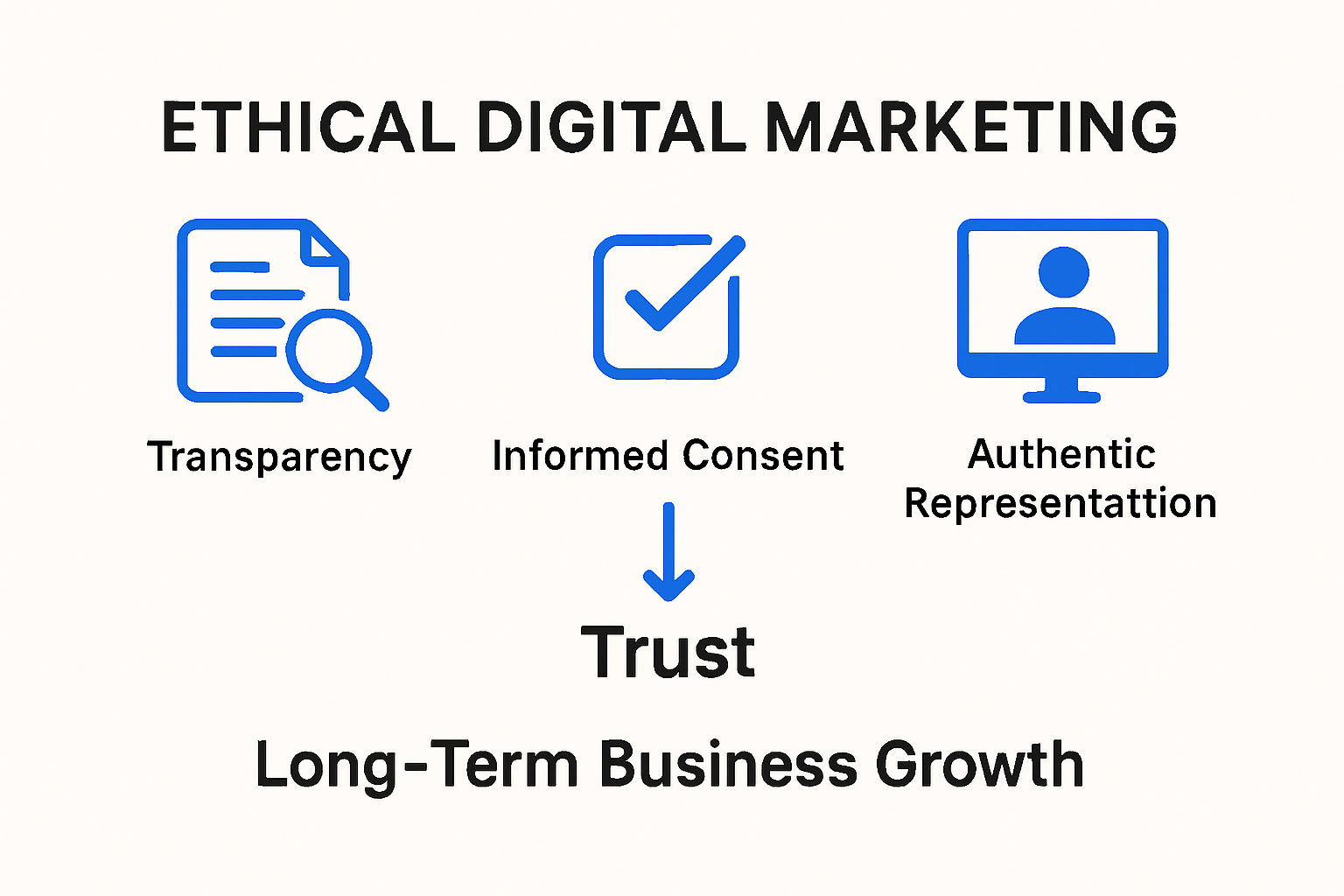
- Transparency in Data Collection: Clearly communicating how user data is collected, stored, and utilized
- Informed Consent: Obtaining explicit permission before collecting or using personal information
- Authentic Representation: Presenting products and services truthfully without exaggeration
To better understand the guiding principles of ethical digital marketing, the table below summarizes their core characteristics and their intended outcomes for consumers and businesses.
| Principle | Description | Benefit to Consumers |
|---|---|---|
| Transparency in Data Collection | Clearly communicate how user data is collected, stored, and used | Builds trust and enables informed choices |
| Informed Consent | Obtain explicit permission before collecting or using personal data | Empowers users and protects privacy |
| Authentic Representation | Present products/services truthfully and accurately | Prevents misleading claims and earns respect |
| Responsible Technology Use | Deploy tools like AI ethically with safeguards | Protects data integrity and mitigates misuse |
| Focus on Long-term Relationships | Build genuine, trust-based customer connections | Enhances loyalty and long-term value |
According to research from the National Institutes of Health, ethical digital marketing practices are increasingly crucial in maintaining consumer trust and protecting individual privacy rights in the digital ecosystem.
The Importance of Consumer Trust
Consumers today are more digitally sophisticated and value brands that demonstrate genuine commitment to ethical practices. By implementing transparent digital marketing strategies, businesses can differentiate themselves in a crowded marketplace.
Key benefits of ethical digital marketing include:
- Building long-term customer relationships
- Enhancing brand reputation
- Reducing legal and reputational risks

See exactly where your profile stands right now.
Our GBP audit shows your current rank position across your market, how your profile completeness scores against competitors, and the specific gaps holding you back from the Map Pack.
Businesses seeking to deepen their understanding of responsible marketing strategies can explore our comprehensive guide on digital strategy.
Why Ethical Digital Marketing Matters for Businesses
In the evolving digital landscape, ethical marketing has transformed from a competitive advantage to a fundamental business requirement. Businesses that prioritize ethical digital marketing practices demonstrate a commitment to building genuine, trust-based relationships with their customers while protecting their fundamental rights and privacy.
The Financial and Reputational Impact
Ethical digital marketing directly influences a company’s bottom line and brand perception. According to research from KPMG, 86% of consumers are increasingly concerned about data privacy, indicating a significant shift in customer expectations and decision-making processes.
Key financial implications of ethical digital marketing include:
- Reduced risk of costly legal challenges
- Enhanced customer loyalty and retention
- Improved brand reputation and market positioning
The following table outlines the key financial and reputational impacts of ethical digital marketing as described in the article, contrasting them with the risks of unethical practices.
| Ethical Practice | Positive Impact | Associated Risk When Ignored |
|---|---|---|
| Reducing Legal Challenges | Lowers the likelihood of lawsuits and regulatory penalties | Exposure to costly fines and lawsuits |
| Enhancing Loyalty & Retention | Increases repeat customers and lifetime value | Loss of customers due to broken trust |
| Improved Brand Reputation | Strengthens market position and public perception | Reputational harm, negative publicity |
Building Consumer Trust in the Digital Age
Modern consumers are sophisticated and value transparency. They actively seek brands that demonstrate genuine commitment to ethical practices, data protection, and responsible communication. Ethical digital marketing serves as a powerful differentiator in crowded markets, allowing businesses to stand out by showcasing their integrity.
Businesses looking to develop comprehensive digital strategies can learn more about strategic marketing approaches.
By embracing ethical digital marketing, companies not only mitigate risks but also create meaningful connections with their audience, ultimately driving sustainable growth and long-term success.
How Ethical Digital Marketing Works in Practice
Ethical digital marketing transitions from theoretical principles to actionable strategies through a comprehensive approach that prioritizes transparency, consent, and responsible data management. Implementing these practices requires a systematic and holistic methodology that integrates ethical considerations into every stage of digital marketing.
Data Collection and Consent Mechanisms
The foundation of ethical digital marketing lies in transparent data collection practices. Businesses must develop robust mechanisms that clearly communicate how user data will be collected, used, and protected. According to research exploring digital marketing ethics, this involves creating explicit consent frameworks that empower users to make informed decisions about their personal information.
Key elements of ethical data collection include:
- Providing clear, understandable privacy policies
- Offering granular consent options
- Enabling easy opt-out mechanisms
- Implementing robust data protection protocols
Authentic Communication and Representation
Ethical digital marketing demands genuine and truthful communication. This means moving beyond manipulative tactics and focusing on delivering real value to consumers. Authentic representation involves:
- Presenting products and services accurately
- Avoiding misleading advertising claims
- Using realistic imagery and testimonials
- Maintaining consistent brand messaging
Businesses committed to ethical practices understand that long-term success stems from building genuine trust rather than pursuing short-term gains through deceptive marketing techniques.
Technology and Ethical Safeguards
Advanced technologies like artificial intelligence and machine learning offer powerful tools for digital marketing, but they must be deployed responsibly. Ethical digital marketing requires continuous monitoring and implementation of safeguards that prevent potential misuse of technology.
Discover how AI can be integrated responsibly in marketing strategies to maintain the delicate balance between technological innovation and ethical considerations.
By embracing these practical approaches, businesses can create digital marketing strategies that respect user privacy, deliver genuine value, and foster meaningful connections with their audience.
Key Concepts and Principles of Ethical Digital Marketing
Ethical digital marketing represents a comprehensive framework that goes beyond traditional marketing approaches by prioritizing transparency, respect, and genuine value creation. Understanding its fundamental principles provides businesses with a robust strategy for building meaningful connections with their audience.
Foundational Ethical Marketing Values
At the core of ethical digital marketing are fundamental values that guide responsible communication and engagement. According to the American Marketing Association, these principles encompass honesty, responsibility, fairness, and citizenship.
Key ethical marketing values include:
- Maintaining complete transparency in marketing communications
- Protecting consumer privacy and personal data
- Ensuring accurate and truthful product representations
- Respecting individual consent and choice
Consumer Rights and Digital Integrity
Consumer protection stands at the heart of ethical digital marketing. This means creating marketing strategies that prioritize user autonomy, informed decision making, and protection from manipulative tactics. Businesses must recognize that modern consumers demand more than just product information they seek genuine, trustworthy interactions.
Ethical digital marketing demands:
- Clear communication about data usage
- Accessible opt-out mechanisms
- Genuine representation of product capabilities
- Commitment to user privacy and security
Technological Responsibility and Governance
As digital technologies evolve, ethical marketing requires continuous adaptation and vigilant governance. Exploring responsible AI integration becomes crucial in maintaining the delicate balance between technological innovation and ethical considerations.
This is the work we do for you. Every week, without exception.
Managing GBP at this level takes 6–8 hours a week when done right. Nova handles the entire system — posts, photos, reviews, Q&A, citations, heatmap tracking — so you can focus on running your business.
By embracing these principles, businesses can transform digital marketing from a transactional process into a meaningful dialogue that respects consumer intelligence and fosters long-term trust.
Transform Trustworthy Principles into Real Digital Growth
Are you struggling to build genuine trust and transparency with your audience in today’s digital world? The article highlights the importance of ethical digital marketing—values like transparent data collection, honest communication, and user privacy. But knowing the principles is only the first step. True success means putting those principles into practice with proven, expert support.
Now is the moment to elevate your brand’s reputation and customer loyalty with a partner who specializes in strategic, ethical digital marketing. At 12AM Agency, we help businesses like yours integrate transparency, informed consent, and real value into every digital campaign. Ready to blend ethics with innovation and see measurable results? Contact us today to start building authentic connections that set you apart from the competition.
For an even deeper understanding, explore our strategic marketing insights and discover how our AI-driven solutions can create a competitive edge for your business.
Frequently Asked Questions
What is ethical digital marketing?
Ethical digital marketing refers to a principled approach to online promotional strategies that prioritize transparency, consumer rights, and responsible data practices, aiming to build trust and deliver genuine value.
Why is consumer trust important in digital marketing?
Consumer trust is crucial as it influences purchasing decisions and fosters long-term customer relationships. Brands that practice ethical digital marketing are more likely to enhance their reputation and reduce legal risks.
What are the core principles of ethical digital marketing?
The core principles include transparency in data collection, informed consent, and authentic representation of products and services. These principles ensure businesses engage honestly with their audience.
How can businesses implement ethical digital marketing practices?
Businesses can implement ethical digital marketing by establishing clear data collection policies, seeking explicit consent from users, maintaining truthful communication, and incorporating technology responsibly to protect consumer privacy.
Recommended
- AI in SEO: Benefits, Risks, and Ethical Concerns | 12AM Agency
- How Digital Marketing Boosts Your Online Presence
- How Does Media Outreach Fit into a Digital Marketing Strategy? | 12AM Agency
- How to Build Brand Trust: Proven Steps for 2025 Success|BM
- Ethical Link Building for Dispensaries and Ecommerce in 2025 – Digital PR Expert | Digital Marketing & Search Leaders

