





Digital advertising has changed the way businesses find customers and it is not slowing down. Businesses now earn $2 in revenue for every $1 spent on pay-per-click ads. That sounds impressive, right? Most people believe all you need is a catchy ad and a big budget to get noticed online. Actually, the real difference comes down to picking the right kind of ad for your audience and industry.
Table of Contents
- Understanding Types Of Digital Advertising
- Which Digital Ads Work Best For Your Business?
- Industry-Specific Digital Advertising Strategies
- How To Choose The Right Digital Ad Channels
Quick Summary
| Takeaway | Explanation |
|---|---|
| Understand digital advertising types | Familiarize yourself with paid search, social media, native ads, and display ads to enhance targeting and engagement. |
| Leverage hyper-targeted messaging | Utilize demographic and behavioral data to craft messages that resonate with your ideal customers for better engagement. |
| Continuously measure ad performance | Track KPIs such as click-through rates and conversions to optimize advertising strategies in real-time. |
| Consider industry-specific approaches | Tailor advertising strategies to your industry’s unique regulations and audience expectations for better results. |
| Adopt a multi-channel strategy | Diversify your advertising across various platforms to reach potential customers at different touchpoints effectively. |
Understanding Types of Digital Advertising
Digital advertising has transformed how businesses connect with potential customers, offering unprecedented targeting capabilities and measurable results. As technology evolves, understanding the various types of digital advertising becomes crucial for businesses seeking to maximize their online marketing strategies.
The Digital Advertising Landscape
Modern digital advertising represents a sophisticated ecosystem of targeted communication channels. According to Southern New Hampshire University, digital marketing encompasses multiple strategies that allow businesses to reach specific audiences with precision and efficiency. The primary goal is no longer just visibility, but creating meaningful engagement that converts potential customers into loyal clients.
Businesses today have access to an array of digital advertising methods that go far beyond traditional marketing approaches. The U.S. Chamber of Commerce highlights four fundamental types of digital advertising that form the backbone of modern online marketing strategies: paid search, social media advertising, native advertising, and display advertising. Each of these approaches offers unique advantages and can be strategically combined to create comprehensive marketing campaigns.
To help clarify the primary types of digital advertising covered in the article, the following comparison table outlines core characteristics, strengths, and ideal use cases for each method.
| Advertising Type | Key Features | Best For |
|---|---|---|
| Paid Search | Keyword-based targeting; PPC; measurable | Lead generation, high-intent users |
| Social Media Advertising | Demographic/interest targeting; engagement | Brand awareness, audience expansion |
| Native Advertising | Blends with content; non-disruptive | User engagement, less ad resistance |
| Display Advertising | Banner/visual ads on websites & networks | Broad reach, visual branding |
Strategic Targeting and Audience Engagement
The power of digital advertising lies in its ability to deliver hyper-targeted messages. Unlike traditional advertising methods, digital platforms allow businesses to segment audiences based on demographics, interests, behaviors, and even real-time interactions. This granular approach means companies can craft messages that resonate specifically with their ideal customer profiles.
Native advertising represents a particularly sophisticated approach to digital marketing. As Wikipedia explains, native ads are designed to blend seamlessly with the platform’s existing content, reducing ad recognition resistance and enhancing user engagement. These ads match the form and function of the platform, making them feel less intrusive and more informative.
Measuring Digital Advertising Success
What sets digital advertising apart from traditional marketing is its unprecedented measurability. Businesses can track virtually every aspect of their advertising performance, from impressions and clicks to conversion rates and return on investment. This data-driven approach allows for continuous optimization and refinement of marketing strategies.
By understanding and leveraging different types of digital advertising, businesses can create targeted marketing strategies that not only reach their audience but also create meaningful connections. The key is to approach digital advertising not as a one-size-fits-all solution, but as a nuanced, adaptable strategy tailored to specific business goals and target audiences.
Which Digital Ads Work Best for Your Business?
Selecting the right digital advertising strategy requires careful analysis of your business goals, target audience, and available resources. Not all digital advertising channels deliver identical results, making it critical to understand which platforms and approaches align most effectively with your specific business objectives.
Matching Advertising Channels to Business Needs
Different industries and business sizes demand unique advertising approaches. Small businesses often benefit most from highly targeted, cost-effective digital advertising methods that maximize limited marketing budgets. For instance, a local service provider might find greater success with geographically targeted social media and search ads compared to broad display advertising campaigns.
Research indicates that pay-per-click (PPC) advertising remains one of the most effective digital advertising strategies across multiple sectors. According to Google Ads, businesses typically earn $2 in revenue for every $1 spent on PPC advertising, demonstrating its potential for delivering measurable return on investment. This approach allows businesses to precisely target potential customers based on specific keywords, demographics, and user intent.
Strategic Considerations for Digital Ad Selection
Choosing the most effective digital advertising channels requires a comprehensive understanding of your target audience’s online behavior. B2B companies might find LinkedIn advertising more productive, while e-commerce businesses could see better results from Instagram and Facebook targeted ads. Factors like audience age, professional background, and online browsing habits play crucial roles in determining the most appropriate advertising platforms.
Social media advertising offers unique advantages, with platforms like Facebook providing sophisticated targeting options. Businesses can segment audiences based on interests, behaviors, location, and even past interactions with their brand. Statista reports that global social media usage continues to grow, presenting expansive opportunities for businesses to connect with potential customers through precisely targeted advertising campaigns.
Measuring and Optimizing Digital Ad Performance
Successful digital advertising is not just about selecting the right platforms but continuously monitoring and refining your approach. Key performance indicators such as click-through rates, conversion rates, and cost per acquisition provide critical insights into campaign effectiveness. By implementing strategic marketing techniques, businesses can iteratively improve their digital advertising strategies.

Technology has transformed digital advertising from a one-size-fits-all approach to a highly personalized, data-driven discipline. Small and large businesses alike can leverage advanced targeting capabilities to reach their ideal customers more efficiently than ever before. The key is remaining adaptable, continuously learning from campaign performance data, and being willing to adjust strategies as market dynamics and consumer behaviors evolve.
Industry-Specific Digital Advertising Strategies
Digital advertising is not a one-size-fits-all solution. Each industry requires a nuanced approach that considers unique market dynamics, customer behaviors, and regulatory environments. Successful digital advertising strategies must be carefully tailored to address the specific challenges and opportunities within distinct business sectors.
Precision Targeting Across Professional Domains
Different industries demand specialized digital advertising approaches that resonate with their target audiences. For instance, professional service sectors like legal, medical, and financial services require highly sophisticated and compliant advertising strategies. Healthcare providers must navigate strict privacy regulations while creating compelling digital campaigns, whereas legal firms need to establish credibility and expertise through targeted messaging.
Artificial intelligence is transforming contextual advertising across industries. According to research published in the Cornell University Archive, AI-driven advertising techniques are enabling more precise targeting and ethical ad placement, allowing businesses to create more meaningful connections with potential clients. This technological advancement means companies can now develop more nuanced, industry-specific digital advertising strategies that go beyond traditional demographic segmentation.
Vertical-Specific Digital Advertising Approaches
Each industry presents unique digital advertising challenges. Automotive businesses might leverage video advertising showcasing vehicle features, while real estate companies could use immersive virtual tour advertisements. E-commerce platforms benefit from dynamic product listing ads, whereas small businesses seeking digital marketing support require more localized, community-focused advertising strategies.
The Federal Reserve Economic Research highlights the significant shift in digital advertising, emphasizing how technological advancements are enabling more personalized and targeted campaigns across various sectors. This evolution means businesses can now create highly specialized advertising approaches that speak directly to their most valuable customer segments.
Compliance and Strategic Considerations
Industry-specific digital advertising requires deep understanding of sector-specific regulations and audience expectations. Financial services must comply with strict advertising guidelines, while healthcare advertising needs to balance informative content with patient privacy concerns. Technology companies often focus on demonstrating innovation, whereas traditional manufacturing sectors might emphasize reliability and expertise.
Successful industry-specific digital advertising strategies require continuous adaptation. Businesses must remain agile, continuously analyzing performance metrics and adjusting their approaches to match evolving market conditions. The most effective digital advertising transcends generic marketing techniques, instead creating deeply resonant narratives that speak directly to industry-specific pain points and aspirations.
The future of digital advertising lies in understanding that each industry is unique. By developing targeted, sophisticated advertising strategies that recognize the nuanced differences between sectors, businesses can create more meaningful connections with their potential customers and stand out in an increasingly competitive digital marketplace. As companies navigate this landscape, they must also consider the impact of data privacy on advertising, as consumer expectations around transparency and data security continue to evolve. By prioritizing ethical practices in data usage, brands can build trust while still delivering personalized experiences. This balance between innovation and responsibility will be crucial for fostering lasting relationships with consumers in the digital age.
How to Choose the Right Digital Ad Channels
Selecting the appropriate digital advertising channels is a critical strategic decision that can significantly impact a business’s marketing success. The complexity of digital advertising requires a methodical approach to ensure resources are invested wisely and marketing objectives are effectively achieved.
Understanding Your Marketing Objectives
Before diving into specific digital ad channels, businesses must clearly define their core marketing goals. According to Wiley’s marketing research, aligning advertising channels with specific objectives such as brand awareness, customer engagement, or direct sales conversion is fundamental to developing an effective digital advertising strategy.
Key objectives might include:
- Increasing brand visibility
- Generating qualified leads
- Driving website traffic
- Boosting direct sales
- Enhancing customer retention
Each objective demands a unique approach and potentially different digital advertising channels. For instance, brand awareness might require broad social media campaigns, while lead generation could benefit from more targeted search and display advertising. In the case of effective advertising for garage door services, incorporating local SEO tactics can enhance visibility in community searches. Additionally, utilizing customer testimonials in online ads can build trust and credibility among potential clients. Understanding the unique needs of homeowners in a specific area will further tailor the marketing strategy for maximum impact.
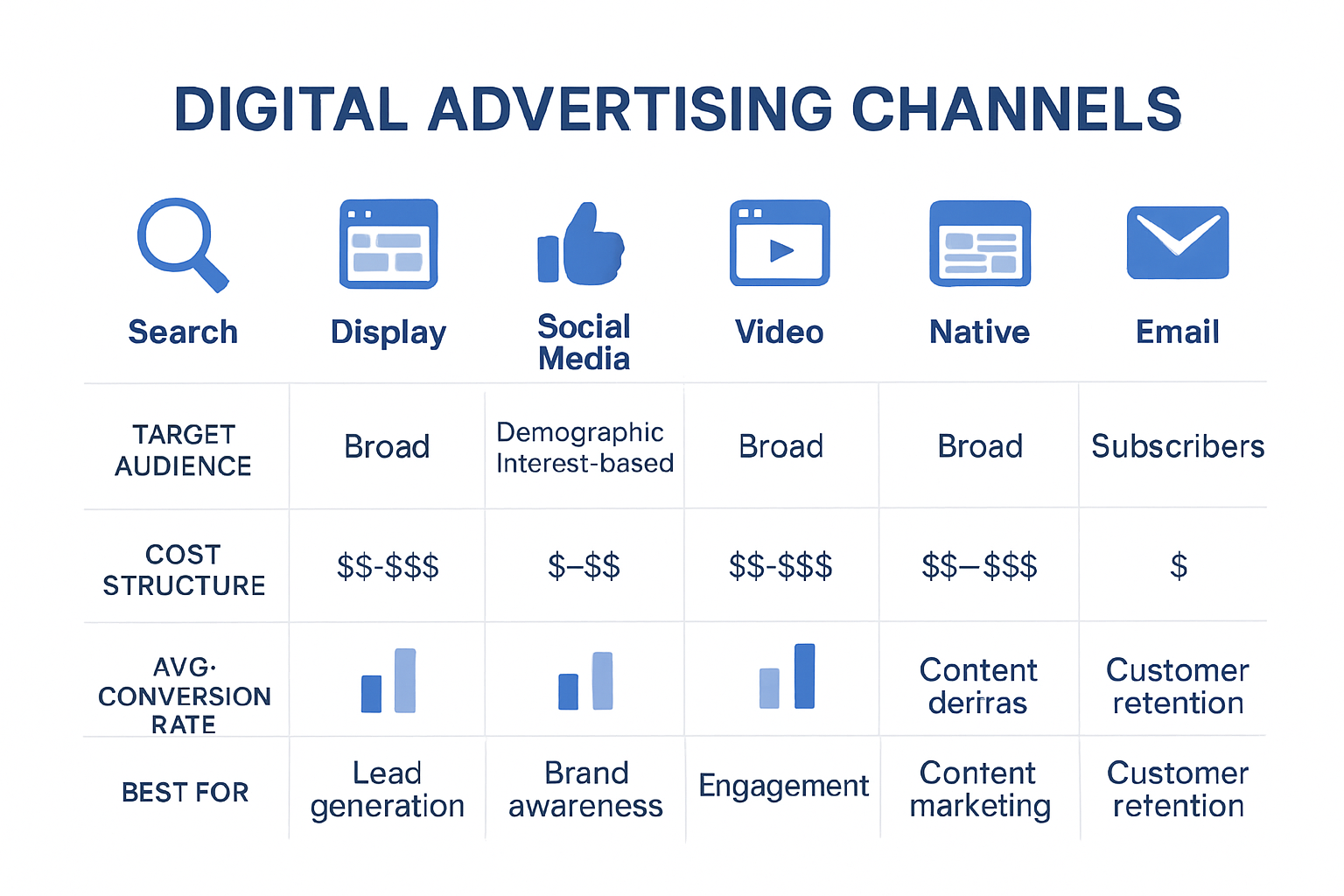
To support your decision-making process in selecting ad channels, here’s a checklist-style table summarizing key marketing objectives and the types of digital advertising channels commonly aligned with each goal, as discussed in the article.
| Marketing Objective | Relevant Ad Channels |
|---|---|
| Brand Visibility | Social Media, Display, Video Ads |
| Qualified Lead Generation | Paid Search, Display, LinkedIn Ads |
| Website Traffic | Paid Search, Social Media, Display |
| Direct Sales | PPC, Shopping/Product Listing Ads |
| Customer Retention | Email Marketing, Social Media |
Audience Research and Channel Selection
Understanding your target audience is paramount in choosing the right digital ad channels. Digital.gov’s research emphasizes the importance of identifying where your potential customers are most active online and what types of content they engage with most frequently.
Demographic factors such as age, profession, interests, and online behavior play crucial roles in channel selection. Younger audiences might be more responsive to Instagram and TikTok advertising, while professional services might find greater success with LinkedIn and targeted search ads. Maximize your ad strategy by conducting thorough audience research and understanding their digital consumption habits.
Multi-Channel Strategy and Performance Tracking
Successful digital advertising rarely relies on a single channel. A multi-channel approach allows businesses to diversify their advertising efforts and reach potential customers through various touchpoints. This strategy involves combining different digital ad channels such as:
- Search engine advertising
- Social media advertising
- Display network ads
- Video advertising
- Email marketing campaigns
Crucial to this approach is continuous performance tracking and optimization. Businesses must regularly analyze key performance indicators (KPIs) like click-through rates, conversion rates, and cost per acquisition across different channels. This data-driven approach enables real-time adjustments and ensures marketing budgets are allocated most effectively.
Choosing the right digital ad channels is not a one-time decision but an ongoing process of research, experimentation, and refinement. By understanding marketing objectives, conducting thorough audience research, and maintaining a flexible, multi-channel strategy, businesses can create powerful digital advertising campaigns that deliver meaningful results.
Frequently Asked Questions
What are the main types of digital advertising?
Digital advertising primarily includes four types: paid search, social media advertising, native advertising, and display advertising. Each type offers unique benefits and can be used to target specific audiences effectively.
How can businesses measure the success of their digital advertising campaigns?
Businesses can measure success through key performance indicators (KPIs) such as click-through rates, conversion rates, return on ad spend, and overall engagement metrics. Continuous performance tracking allows for real-time adjustments to optimize campaigns.
Why is audience targeting important in digital advertising?
Audience targeting is crucial because it allows businesses to deliver hyper-targeted messages to specific user segments based on demographics, interests, and behaviors. This tailored approach helps increase engagement and conversion rates.
How can small businesses maximize their digital advertising budgets?
Small businesses can maximize their budgets by focusing on highly targeted strategies, leveraging cost-effective platforms like social media and PPC advertising, and continuously optimizing their campaigns based on performance data.
Transform Your Digital Advertising Into Measurable Growth
Are you struggling to pick the best advertising channels that actually deliver results? The article highlighted how challenging it can be to navigate the world of paid search, social media ads, and audience targeting, especially when every dollar counts and the pressure is on to show clear returns. You deserve to see real data, real engagement, and leads that turn into customers. At 12AM Agency, we understand how tough it feels to waste budget on campaigns that miss the mark. Our strategies are built on industry-specific insights, data-driven decision making, and AI-powered optimization so your digital advertising never relies on guesswork.
Ready to take the next step? Let our experts craft a campaign that fits your industry, audience, and goals. Explore how 12AM Agency can boost your brand visibility, increase your leads, and help you dominate your market. For industry-tailored strategies and proven results, visit our main site or see what makes us the partner of choice for businesses in your sector. Book a consultation today and get results that matter now.