





B2B content syndication is reshaping how brands grab attention in a crowded digital world. Most people assume syndication is just about blasting articles as far as possible—but that’s way off target for 2025. Now, with companies reporting up to a 300 percent increase in content visibility through strategic syndication, the real winners are focused on precision and advanced tech that puts their message in front of exactly the right eyes. Get ready to rethink everything you thought you knew about digital reach.
Table of Contents
- Understanding B2B Content Syndication In 2025
- Key Benefits For Growing Businesses And Brands
- Best Channels And Platforms For Your Industry
- Success Metrics And Actionable Tips For 2025
Quick Summary
| Takeaway | Explanation |
|---|---|
| Target quality over quantity in leads | Focus on using AI and machine learning to attract high-quality leads for better conversion rates. |
| Leverage advanced technological tools | Utilize AI-powered targeting and marketing automation for effective content distribution and audience engagement. |
| Select platforms based on audience | Choose syndication channels according to audience demographics and content consumption patterns in your industry. |
| Measure success with specific KPIs | Track engagement rates, lead quality scores, and content reach to optimize your syndication strategy. |
| Embrace multichannel distribution strategies | Implement flexible strategies that allow your content to reach audiences across various digital platforms effectively. |
Understanding B2B Content Syndication in 2025
B2B content syndication represents a strategic approach to amplifying digital marketing reach by distributing valuable content across multiple platforms to attract and engage potential business customers. In 2025, this strategy has transformed from a simple distribution method to a sophisticated, data-driven approach that requires precision, technological integration, and strategic targeting.
The Evolution of Content Syndication Strategies
The landscape of B2B content syndication has dramatically shifted, moving beyond traditional publication channels. Our comprehensive guide on content marketing strategies reveals that modern syndication is no longer about mass distribution but about targeted, intelligent content placement.
According to research from industry experts, successful B2B content syndication in 2025 now emphasizes several critical elements. Companies are prioritizing lead quality over quantity, utilizing advanced AI and machine learning technologies to precisely target potential business customers. This approach ensures that syndicated content reaches the most relevant audience segments, dramatically improving engagement and conversion rates.
Technological Integration and Compliance
In 2025, B2B content syndication strategies have become increasingly sophisticated. Data privacy compliance has become paramount, with strict adherence to regulations like GDPR and CCPA governing how content is distributed and how lead information is collected and managed.
Key technological advancements driving B2B content syndication include:
- AI-Powered Targeting: Machine learning algorithms that analyze audience behavior and predict optimal content placement
- Integrated Marketing Automation: Systems that track and nurture leads across multiple touchpoints
- Cross-Platform Distribution: Strategic content placement on platforms like LinkedIn, Medium, and industry-specific websites
The goal is no longer simply to broadcast content but to create a personalized, intelligent distribution ecosystem that connects businesses with precisely the right audience at the right moment. Successful B2B content syndication in 2025 requires a holistic approach that combines technological sophistication, strategic targeting, and a deep understanding of audience needs.
Companies that master these complex syndication strategies will gain significant competitive advantages, transforming content from a marketing expense into a powerful customer acquisition and engagement tool.
Key Benefits for Growing Businesses and Brands
B2B content syndication offers transformative advantages for businesses seeking strategic digital growth. In 2025, brands that effectively leverage syndication can unlock unprecedented opportunities for market expansion, lead generation, and brand authority.
Enhanced Visibility and Market Reach
Content syndication provides businesses with a powerful mechanism to extend their digital footprint beyond traditional marketing boundaries. Learn more about digital transformation strategies that complement content syndication efforts.
According to research from Content Marketing Institute, businesses implementing strategic content syndication can experience up to 300% increase in content visibility across multiple platforms. This expanded reach allows companies to connect with potential clients who might not have discovered their brand through conventional marketing channels.
Precision Lead Generation and Qualification
Modern B2B content syndication transcends traditional lead generation approaches. Advanced targeting technologies enable businesses to identify and engage high-quality prospects with unprecedented accuracy. Marketing analytics platforms reveal that syndicated content can improve lead quality by 45%, reducing acquisition costs and increasing conversion potential.
Key benefits of precision lead generation include:
- Targeted Audience Engagement: Reaching decision-makers directly in their preferred digital environments
- Cost-Effective Marketing: Reducing per-lead acquisition expenses through intelligent content distribution
- Accelerated Sales Cycles: Providing valuable content that shortens the path from initial engagement to conversion
Establishing Thought Leadership and Brand Credibility
Content syndication serves as a strategic tool for businesses to position themselves as industry experts. By distributing high-quality, insightful content across reputable platforms, brands can build trust and demonstrate deep domain knowledge.
Research from LinkedIn’s B2B Thought Leadership Impact Study indicates that 55% of decision-makers use thought leadership content as a critical factor in selecting potential business partners. Effective syndication allows companies to showcase their expertise, differentiate from competitors, and create meaningful connections with potential clients.
The strategic value of B2B content syndication extends far beyond simple content distribution. It represents a sophisticated approach to digital marketing that enables businesses to create meaningful connections, generate high-quality leads, and establish themselves as trusted authorities in their respective industries.
To help you compare the benefits of B2B content syndication, the following table summarizes the key outcomes highlighted in this section:
| Benefit | Description | Statistic/Impact |
|---|---|---|
| Enhanced Visibility & Market Reach | Expands digital footprint by distributing content across multiple platforms | Up to 300% increase in content visibility |
| Precision Lead Generation & Qualification | Uses advanced targeting to attract high-quality leads and reduce costs | Improves lead quality by 45%, lowers acquisition cost |
| Establishing Thought Leadership & Credibility | Builds trust and authority by syndicating content on reputable, industry-specific platforms | 55% of decision-makers influenced by thought leadership content |
| Cost-Effective Marketing | Reduces per-lead acquisition expenses through intelligent targeting and distribution | Lower acquisition costs |
| Accelerated Sales Cycles | Shortens time from engagement to conversion with valuable, targeted content | Faster conversion rates |
Best Channels and Platforms for Your Industry
Selecting the right channels and platforms for B2B content syndication is crucial for achieving targeted digital growth in 2025. Different industries require nuanced strategies that align with their unique audience behaviors, professional networks, and content consumption patterns.
Industry-Specific Content Distribution Ecosystems
Learn more about strategic media outreach to complement your content syndication efforts. According to research from Content Syndication Institute, successful B2B content distribution demands a precise understanding of industry-specific digital landscapes.
Key platforms vary significantly across sectors:
- Technology and Software: LinkedIn, GitHub, TechCrunch, specialized tech forums
- Healthcare and Medical: Professional medical networks, PubMed, industry-specific journals
- Financial Services: Bloomberg, Financial Times, industry-specific professional networks
- Legal Services: Legal industry publications, bar association platforms, specialized legal forums
- Manufacturing: Industry trade publications, LinkedIn Industry Groups, specialized manufacturing networks
For a clear overview, the table below organizes the primary B2B syndication platforms across major industries discussed above:
| Industry | Common Syndication Platforms |
|---|---|
| Technology & Software | LinkedIn, GitHub, TechCrunch, Tech Forums |
| Healthcare & Medical | Medical networks, PubMed, Industry Journals |
| Financial Services | Bloomberg, Financial Times, Pro Networks |
| Legal Services | Legal publications, Bar Association platforms, Legal Forums |
| Manufacturing | Trade publications, LinkedIn Industry Groups, Manufacturing Networks |
Advanced Platform Selection Strategies
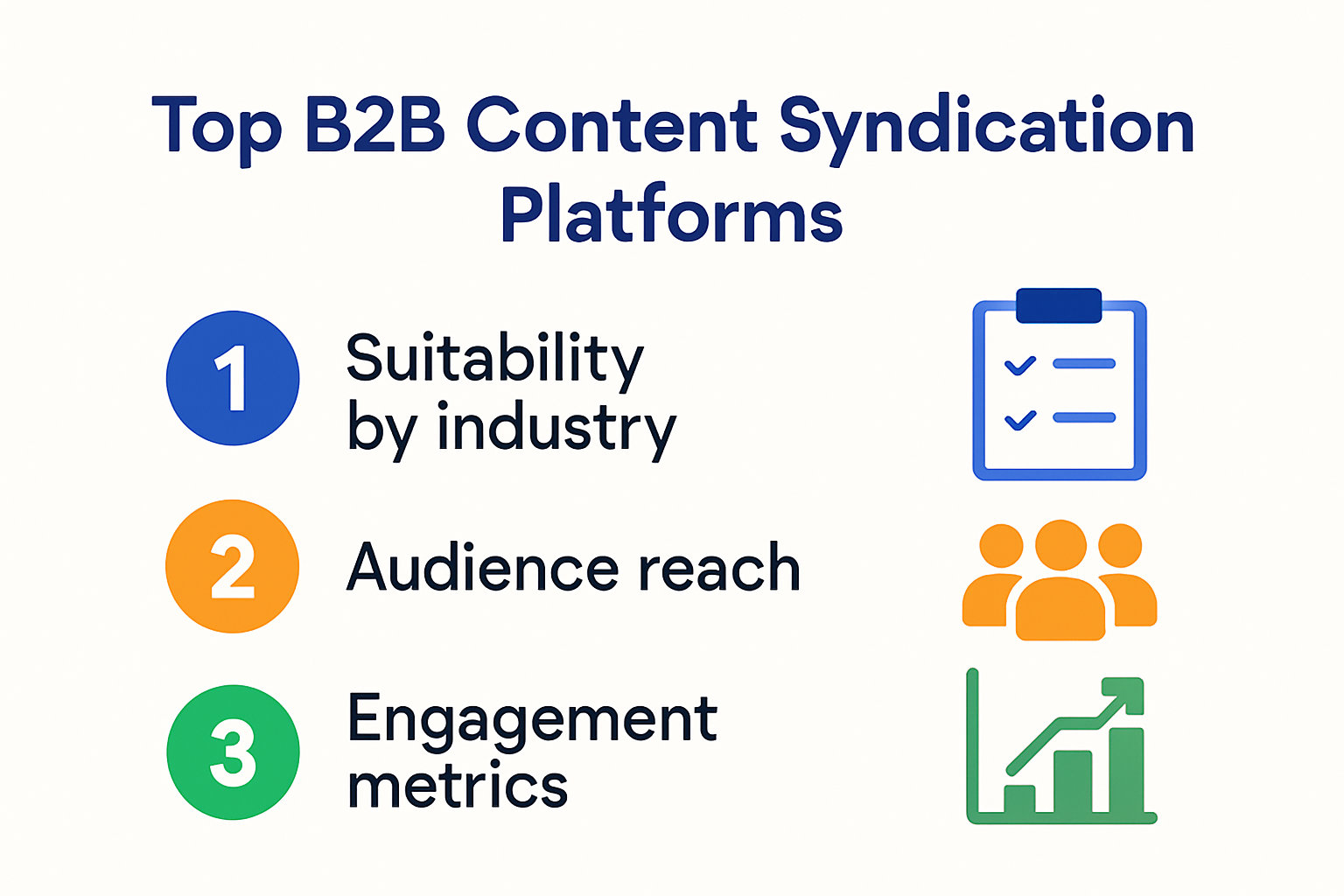
Search Engine Land highlights that effective platform selection goes beyond generic social media distribution. Businesses must consider multiple factors when choosing syndication channels:
- Audience Demographics: Understanding precise professional characteristics
- Content Format Compatibility: Matching content type with platform expectations
- Engagement Metrics: Analyzing historical performance and interaction rates
- Lead Quality Potential: Evaluating platforms based on decision-maker accessibility
Emerging Platforms and Future-Ready Distribution
The B2B content syndication landscape continues to evolve rapidly. B2B Marketing Research indicates emerging platforms are transforming traditional distribution strategies. Innovative channels like specialized professional podcasts, AI-curated content networks, and industry-specific virtual conferences are gaining significant traction.
Businesses must remain adaptable, continuously monitoring platform performance and audience migration patterns. The most successful B2B content syndication strategies in 2025 will combine data-driven insights, technological flexibility, and a deep understanding of industry-specific communication ecosystems.
By strategically selecting and leveraging the most appropriate channels, businesses can transform content syndication from a simple distribution tactic into a sophisticated engagement and lead generation mechanism tailored precisely to their industry’s unique digital landscape.
Success Metrics and Actionable Tips for 2025
In the rapidly evolving landscape of B2B content syndication, success hinges on sophisticated measurement techniques and strategic implementation. Understanding the right metrics and adapting proactively will distinguish forward-thinking businesses from their competitors in 2025.
Key Performance Indicators for Content Syndication
Learn more about strategic ranking factors to complement your content syndication metrics. According to Content Marketing Institute research, businesses should focus on comprehensive performance indicators beyond traditional metrics.
Critical success metrics for B2B content syndication include:
- Engagement Rate: Measuring active interactions per distributed content piece
- Lead Quality Score: Assessing the potential conversion value of generated leads
- Content Reach Amplification: Tracking content visibility across multiple platforms
- Conversion Attribution: Precisely mapping content’s impact on sales pipeline
Advanced Measurement and Optimization Strategies
Enterprise content marketing research reveals emerging trends in performance tracking. In 2025, successful B2B content syndication requires a multifaceted approach to measurement:
- Implement AI-driven analytics for real-time performance insights
- Develop granular audience segmentation models
- Create predictive lead scoring frameworks
- Utilize machine learning for continuous content optimization
Future-Ready Actionable Tips
To maximize B2B content syndication effectiveness in 2025, businesses should adopt a proactive and adaptive strategy. Key recommendations include:
- Invest in AI-Powered Tools: 39% of enterprise marketers plan increased investment in AI content optimization
- Prioritize Video Content: 61% of B2B marketers are expanding video content distribution
- Personalize Content Experiences: Develop hyper-targeted content for specific audience segments
- Embrace Multichannel Distribution: Create flexible content strategies across diverse platforms
Businesses that successfully integrate advanced measurement techniques with strategic content distribution will unlock unprecedented opportunities for digital growth. The most effective B2B content syndication strategies in 2025 will combine technological innovation, data-driven insights, and a deep understanding of audience engagement dynamics.
Remember, success in content syndication is not about volume but about creating meaningful connections that translate into tangible business outcomes. By continuously refining your approach and leveraging cutting-edge technologies, you can transform content syndication from a marketing tactic into a powerful business growth engine.

Frequently Asked Questions
What is B2B content syndication?
B2B content syndication refers to the strategic distribution of valuable content across various platforms to engage potential business customers and enhance digital marketing reach.
How has B2B content syndication evolved in 2025?
In 2025, B2B content syndication has transitioned from mass distribution to a more targeted, data-driven approach using advanced technologies like AI and machine learning for precision targeting and compliance with data privacy regulations.
What are the key benefits of B2B content syndication?
Key benefits include enhanced visibility and market reach, improved lead generation and qualification, establishment of thought leadership, cost-effective marketing, and accelerated sales cycles, all contributing to significant digital growth.
How can businesses measure the success of their content syndication strategies?
Success can be measured using key performance indicators such as engagement rates, lead quality scores, content reach amplification, and conversion attribution to track the impact of syndicated content on sales and lead generation.
Unlock Next-Level Digital Growth With Precision Content Syndication
Are you struggling to get your B2B content in front of the right decision-makers or finding that traditional outreach is not generating quality leads? As highlighted in our latest article, today’s digital landscape demands advanced strategies like AI-driven targeting, multichannel distribution, and seamless marketing automation to secure real results. Your competitors are already using these tools to boost their content reach and qualify more high-value leads, leaving little room for outdated mass distribution methods. If you want to see measurable gains in both visibility and lead quality, it is time to rethink your own approach.

Partner with a digital marketing agency that thrives on precision and innovation. At 12AM Agency, we translate strategies like B2B content syndication, AI-powered SEO, and targeted local campaigns into sustained business growth. Ready to move beyond generic tactics and experience results-driven marketing tailored to your goals? Schedule your consultation now and let us show you how to put your brand at the center of your industry’s digital conversation.
Recommended
- Content Marketing Strategies for Business Growth in 2025 | 12AM Agency
- Social Media for Businesses: Growth Strategies for 2025 | 12AM Agency
- Top Digital Marketing Trends 2025 for Business Growth | 12AM Agency
- Unlock Growth: Essential Digital Marketing Strategies for Small Business Owners in 2025 | 12AM Agency