





Online reputation makes or breaks a business faster than ever, and 86 percent of consumers now read online reviews before making a purchase. Imagine spending years building your brand only to see everything crumble after a single viral post in hours. Most people think positive reviews are enough, but the real secret to business growth in 2025 is adopting proactive strategies to monitor, respond, and shape conversations before your reputation is even at risk.
Table of Contents
- Understanding Online Reputation For Modern Businesses
- Proven Strategies To Build And Protect Your Reputation
- Monitoring And Responding To Reviews Effectively
- Leveraging Technology For Reputation Management Success
Quick Summary
| Takeaway | Explanation |
|---|---|
| Online reputation is essential for business growth. | A positive online reputation influences customer trust and drives business success in a competitive landscape. |
| Implement real-time monitoring for brand mentions. | Regular tracking helps identify and address potential reputation threats promptly, ensuring proactive management. |
| Engage authentically on social media platforms. | Transparency and consistent communication build trust, enhancing brand perception and customer loyalty. |
| Respond to reviews professionally and promptly. | Handling reviews effectively can turn negative experiences into positive interactions, showcasing commitment to customer satisfaction. |
| Leverage advanced technologies for reputation management. | AI-driven tools enhance monitoring and analysis, enabling businesses to respond quickly and accurately to reputation challenges. |
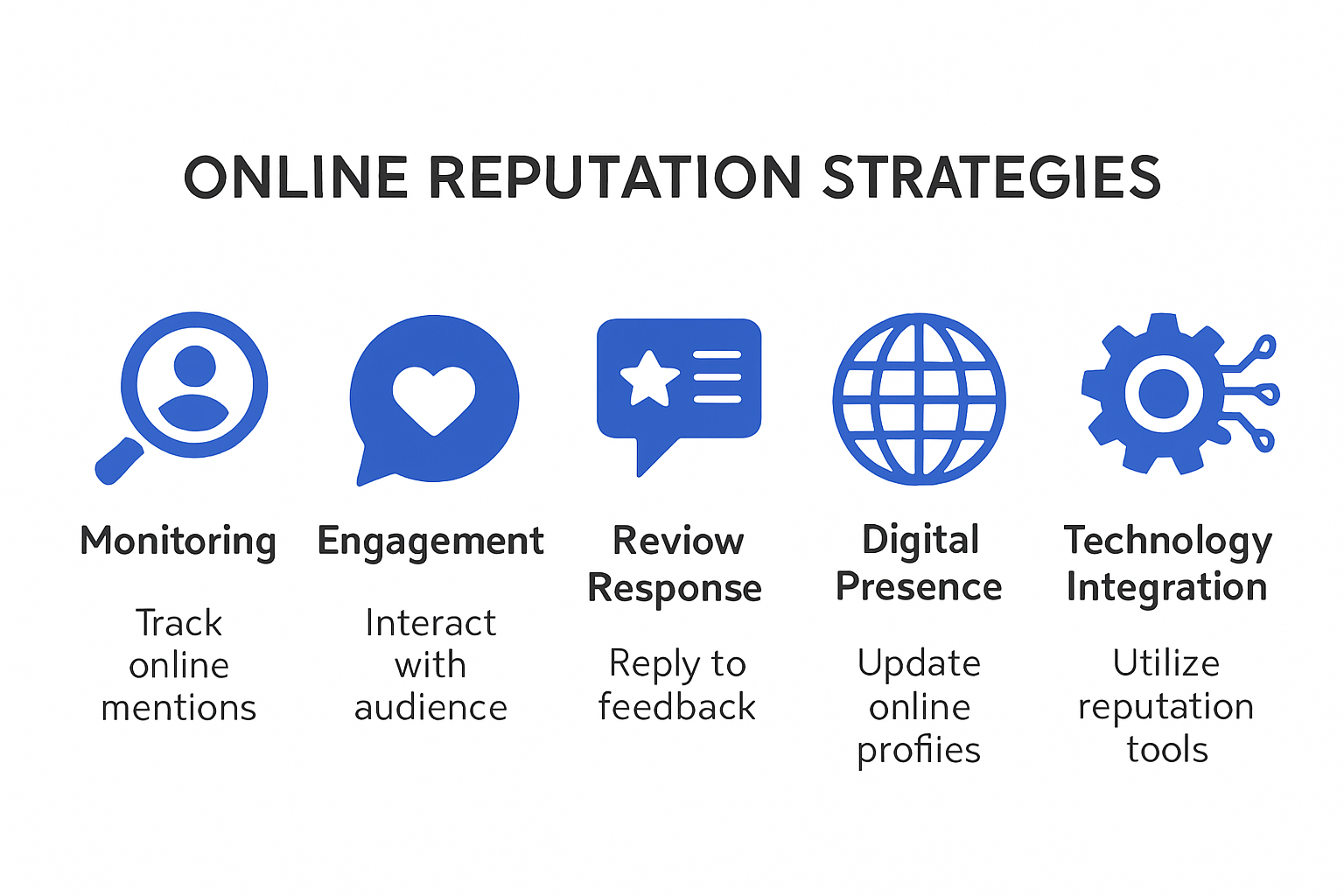
Understanding Online Reputation for Modern Businesses
Modern businesses operate in a digital ecosystem where reputation is no longer just about word-of-mouth. Online reputation has become a critical asset that directly impacts growth, customer trust, and bottom-line performance.
The Digital Reputation Landscape
In 2025, a company’s online reputation is more than just reviews and ratings. It represents a comprehensive digital footprint that encompasses social media presence, search engine results, customer interactions, and brand perception across multiple platforms. Reputation management strategies now require a holistic approach that goes beyond traditional marketing tactics.
According to research from EBSCO, social media platforms have become pivotal in shaping business reputations. A single negative comment or viral post can potentially reach millions of users within hours, making proactive reputation management not just important but essential for survival.
Key Components of Online Reputation
Businesses must understand that online reputation comprises multiple interconnected elements. Customer reviews form the foundation, but they are just the beginning. Search engine results, social media sentiment, professional network interactions, and digital content all contribute to a comprehensive reputation profile.
Research from academic publications highlights that reputation management is no longer a reactive process but a strategic approach involving continuous monitoring, engagement, and strategic content creation. Modern businesses need to view their online reputation as a dynamic ecosystem that requires constant nurturing and strategic intervention.
Reputation Management as a Strategic Imperative
The stakes are higher than ever. According to academic research on digital literacy, online reputation directly influences customer perception, employment opportunities, and overall brand credibility. Businesses that fail to proactively manage their digital presence risk significant competitive disadvantages.
Successful reputation management in 2025 demands a multifaceted strategy that includes:
- Proactive Monitoring: Real-time tracking of brand mentions and sentiment across digital platforms
- Strategic Content Creation: Developing authoritative, trust-building digital content
- Rapid Response Mechanisms: Quick and professional handling of potential reputation challenges
Understanding and leveraging online reputation is no longer optional. It is a critical business strategy that can determine long-term success in an increasingly digital and interconnected world.
Here is a table summarizing the key components that make up a business’s online reputation, as outlined in this section:
| Component | Description |
|---|---|
| Customer Reviews | Direct feedback from customers; forms the foundation |
| Search Engine Results | How the business appears in search listings |
| Social Media Sentiment | Perception and discussions on social media platforms |
| Professional Network Interactions | Engagements and reputation on platforms like LinkedIn |
| Digital Content | Website/blog articles, videos, and other published materials |
Proven Strategies to Build and Protect Your Reputation
Building and protecting online reputation requires a strategic and proactive approach that goes beyond traditional marketing methods. Businesses must develop comprehensive tactics that address the complex digital ecosystem of reputation management.
Developing a Robust Digital Presence
A strong digital presence forms the foundation of effective reputation management. According to research on business reputation management, organizations must prioritize transparency, authenticity, and consistent engagement across multiple digital platforms.
Key elements of a robust digital strategy include:
- Creating high-quality, authoritative content that demonstrates expertise
- Maintaining consistent branding across all digital channels
- Developing a responsive and professional social media presence
Intelligent reputation management services can help businesses navigate the complex landscape of digital reputation.
Active Reputation Monitoring and Response
Businesses must implement sophisticated monitoring systems to track their online reputation in real-time. Research from IGI Global emphasizes the critical importance of utilizing advanced IT systems to sense and respond to potential reputation threats across social media platforms.
Effective monitoring involves:
- Real-time tracking of brand mentions
- Rapid response mechanisms for negative feedback
- Proactive engagement with customer comments and reviews

Strategic Reputation Protection
Protecting online reputation requires a multifaceted approach that combines prevention, monitoring, and strategic intervention. Businesses must develop comprehensive strategies that address potential reputation risks before they escalate.
Critical strategies include:
- Implementing robust crisis communication protocols
- Developing transparent and ethical business practices
- Creating a consistent narrative that aligns with brand values
Modern reputation management is not about hiding negative information but about demonstrating accountability, responsiveness, and commitment to continuous improvement. By adopting a proactive and strategic approach, businesses can transform potential reputation challenges into opportunities for building trust and credibility.
The digital landscape continues to evolve rapidly, making reputation management an ongoing process that requires constant attention, adaptability, and strategic thinking. Businesses that invest in comprehensive reputation management strategies will be better positioned to navigate the complex digital ecosystem and maintain a positive, trustworthy online presence.
Monitoring and Responding to Reviews Effectively
In the digital age, online reviews have become a critical touchpoint for businesses, directly influencing customer perception and purchasing decisions. Effective review monitoring and management are essential strategies for maintaining a strong online reputation.
The Impact of Online Reviews
According to research from the Wharton School, 86% of consumers read reviews for local businesses, with 91% of consumers aged 18 to 34 trusting online reviews as much as personal recommendations. This statistic underscores the critical importance of a robust review management strategy.
Key insights into review impact include:
- Reviews serve as social proof for potential customers
- Negative reviews can significantly deter potential business
- Timely and professional responses can mitigate negative feedback
Reputation management solutions can help businesses navigate the complex landscape of online reviews effectively.
Here is a table highlighting key statistics and impacts of online reviews as discussed above:
| Statistic / Insight | Value / Explanation |
|---|---|
| Consumers who read reviews for local biz | 86% |
| Consumers (18-34) who trust reviews as much as personal recs | 91% |
| Main role of reviews | Serve as social proof |
| Impact of negative reviews | Deter potential business |
| Effect of timely/professional responses | Mitigate negative feedback |
Developing a Strategic Review Monitoring Approach
The U.S. Chamber of Commerce advises that managing online reviews is crucial for maintaining a positive business reputation. Businesses need to establish a systematic approach to monitoring and responding to reviews across multiple platforms.
Effective monitoring strategies include:
- Setting up alerts for brand mentions
- Regularly checking review sites and social media platforms
- Creating a centralized system for tracking and responding to feedback
Crafting Professional and Constructive Responses
According to Queensland Government research, responding to reviews provides an opportunity to demonstrate customer commitment and potentially turn negative experiences into positive interactions.
Best practices for review responses include:
- Responding promptly to all reviews
- Maintaining a professional and empathetic tone
- Offering specific solutions or follow-up actions
- Avoiding defensive or confrontational language
Successful review management goes beyond simple damage control. It represents an opportunity to showcase your brand’s commitment to customer satisfaction, transparency, and continuous improvement. By treating each review as a valuable piece of customer feedback, businesses can transform potential reputation challenges into opportunities for growth and enhanced customer relationships.
In 2025, the businesses that excel will be those who view review management not as a reactive task, but as a strategic component of their overall customer experience and reputation-building efforts.
Leveraging Technology for Reputation Management Success
In the rapidly evolving digital landscape, technology has become an indispensable tool for effective reputation management. Businesses must embrace cutting-edge technological solutions to monitor, analyze, and protect their online reputation with unprecedented precision and efficiency.
Advanced Monitoring and Analysis Technologies
Research from academic publications highlights the critical importance of integrating sophisticated technological tools in reputation management strategies. Modern businesses now have access to advanced technologies that provide real-time insights and comprehensive reputation tracking.
Key technological approaches include:
- AI-Powered Sentiment Analysis: Utilizing machine learning algorithms to detect and interpret brand sentiment across digital platforms. Understanding how to implement AI in business becomes critical at this stage, as organizations must align AI monitoring systems with compliance standards, brand voice guidelines, and customer service protocols.
- Natural Language Processing: Analyzing complex online conversations and extracting nuanced reputation insights
- Comprehensive Digital Footprint Tracking: Monitoring mentions across multiple digital channels simultaneously
Intelligent reputation management solutions can help businesses harness these advanced technological capabilities effectively.
Cutting-Edge Reputation Analysis Techniques
According to groundbreaking research using BERT language models, artificial intelligence is revolutionizing reputation analysis. These advanced technologies can achieve significant improvements in accuracy and sentiment detection, providing businesses with unprecedented insights into their online perception.
Emerging technological strategies include:
- Predictive analytics for reputation risk assessment
- Real-time threat detection and mitigation
- Automated response generation for online feedback
Strategic Technology Integration
Social media reputation management research emphasizes the importance of holistic technology integration. Businesses must view technological tools not as isolated solutions but as interconnected components of a comprehensive reputation management strategy.
Critical considerations for technology implementation:
- Selecting scalable and adaptable technological solutions
- Ensuring data privacy and ethical use of monitoring technologies
- Developing human-AI collaborative approaches
The future of reputation management lies in the seamless integration of advanced technologies with strategic human insight. Businesses that successfully combine sophisticated AI-driven tools with nuanced human understanding will gain a significant competitive advantage.
As we move into 2025, technology will continue to transform reputation management from a reactive process to a proactive, intelligence-driven strategy. The most successful organizations will be those that view technological tools not as replacements for human judgment, but as powerful amplifiers of strategic decision-making.
Frequently Asked Questions
What are the best online reputation strategies for businesses in 2025?
To build and protect an online reputation in 2025, businesses should focus on developing a robust digital presence, actively monitoring and responding to feedback, engaging authentically on social media, and leveraging advanced technologies for real-time insights.
How important are online reviews for business growth?
Online reviews are crucial for business growth, as 86% of consumers read reviews before making a purchase, and 91% of younger consumers trust online reviews as much as personal recommendations.
How can businesses effectively respond to negative reviews?
Businesses can effectively respond to negative reviews by responding promptly, maintaining a professional tone, offering specific solutions, and avoiding confrontational language to turn potentially negative experiences into positive interactions.
What technologies can help with online reputation management?
Advanced technologies like AI-powered sentiment analysis, natural language processing, and comprehensive digital footprint tracking can help businesses monitor, analyze, and protect their online reputation more effectively.
Ready to Safeguard and Grow Your Online Reputation in 2025?
Proactive reputation management now defines business survival. If you feel overwhelmed by the instant impact negative reviews or viral posts can have on your brand, you are not alone. Many business owners hesitate because monitoring online conversations and responding across platforms seems too complex and time-consuming. The strategies in this article reveal that reputation success in 2025 demands real-time monitoring, advanced technology, authentic engagement, and fast, professional review responses.
Are you prepared to turn your reputation into your greatest growth engine? Now is the time to partner with experts who combine AI-driven insights with hands-on review management and digital reputation tools. Discover how 12AM Agency delivers complete reputation management solutions tailored to your business and industry. Start your journey toward stronger, more resilient brand trust today. Visit https://12amagency.com to schedule a personalized digital reputation consultation before your competition does.