



Franchise marketing is changing faster than ever, and 2025 will be a defining year for digital growth. Most people think catchy ads alone win customers, but here’s the surprise. Franchises using AI-powered tools see up to 35 percent higher engagement from personalized campaigns. The real winners are those who leverage smart technology with local focus and unified brand consistency.
Table of Contents
- Understanding The Franchise Marketing Landscape
- Effective Digital Franchise Marketing Strategies
- Building Local And National Brand Consistency
- Measuring Success In Franchise Marketing Campaigns
Quick Summary
| Takeaway | Explanation |
|---|---|
| Emphasize Data-Driven Marketing | Adopt intelligent, data-powered strategies that utilize first-party data collection and advanced analytics to understand customer behavior and enhance personalized marketing efforts. |
| Localize Digital Marketing | Implement localized marketing strategies using geo-targeting and local SEO to improve customer engagement and conversion rates in specific markets, creating tailored content for regional audiences. |
| Ensure Brand Consistency | Develop robust digital brand governance and maintain operational and visual consistency across franchise locations through centralized digital asset management and comprehensive training programs. |
| Utilize Advanced Performance Metrics | Move beyond traditional metrics to focus on customer acquisition cost, return on ad spend, and customer lifetime value, enabling informed decision-making and optimization of marketing investments. |
| Adopt Technological Measurement Frameworks | Implement predictive and prescriptive analytics with AI-powered tools and integrated data dashboards to enhance real-time performance monitoring and actionable insights for strategic growth. |
Understanding the Franchise Marketing Landscape
The franchise marketing world is undergoing a profound digital transformation that demands strategic adaptation and innovative approaches. Businesses are no longer competing just on product quality but on their ability to navigate complex digital ecosystems and connect with customers through sophisticated marketing strategies.
The Digital Evolution of Franchise Marketing
Franchise marketing in 2025 represents a significant shift from traditional advertising models. Emerging marketing strategies now emphasize data-driven decision making, personalized customer experiences, and agile digital infrastructure. According to franchise.org, franchises are facing unprecedented challenges including rising customer acquisition costs and increased online competition. As businesses adapt to these evolving conditions, the focus on leveraging the top franchise marketing platforms 2026 will become crucial for staying competitive. These platforms will provide innovative solutions that integrate advanced analytics and machine learning to enhance customer engagement and streamline marketing efforts. Additionally, franchises will need to prioritize building strong online communities to foster brand loyalty and drive sustainable growth in a rapidly changing landscape.
The decline of third-party cookies has fundamentally reshaped how franchises collect and utilize customer data. Businesses must now develop robust first-party data collection strategies through loyalty programs, interactive digital experiences, and transparent customer engagement mechanisms. This shift requires franchises to create more meaningful digital touchpoints that provide genuine value while respecting user privacy.
Technological Disruption and Marketing Intelligence
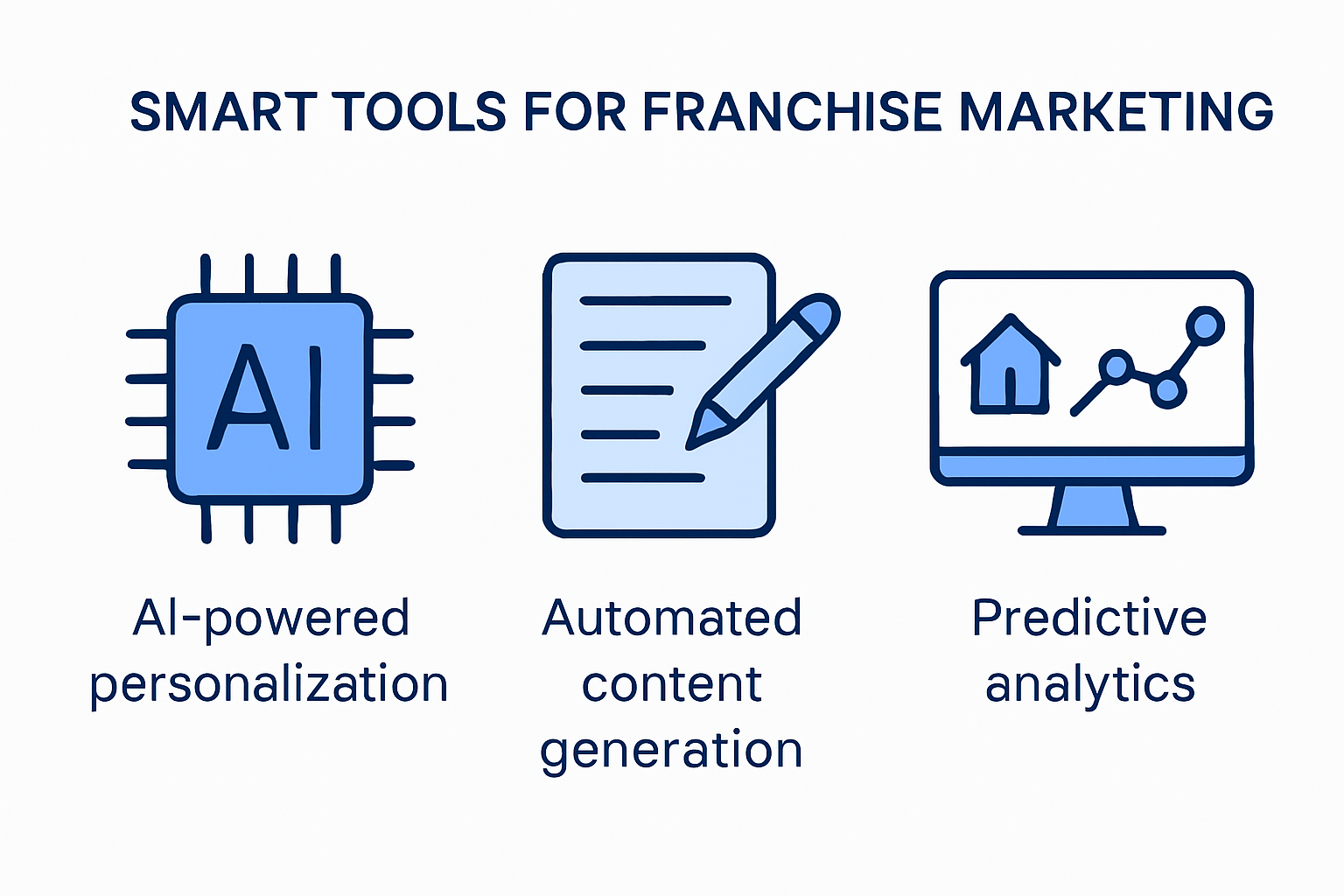
Artificial Intelligence is revolutionizing franchise marketing by enabling unprecedented levels of personalization and operational efficiency. Research from industry experts indicates that AI tools can now generate targeted content, provide instant customer support through advanced chatbots, and deliver sophisticated predictive analytics that help businesses optimize their marketing spend.
Key technological capabilities transforming franchise marketing include:
- Automated Content Generation: AI systems can produce scalable, contextually relevant marketing materials across multiple digital platforms.
- Predictive Customer Behavior Modeling: Advanced algorithms help franchises anticipate customer needs and preferences with remarkable accuracy.
- Hyper-Personalized Marketing Campaigns: Machine learning enables micro-targeting based on intricate behavioral and demographic data patterns.
See exactly where your profile stands right now.
Our GBP audit shows your current rank position across your market, how your profile completeness scores against competitors, and the specific gaps holding you back from the Map Pack.
Franchises that successfully integrate these technological capabilities will gain significant competitive advantages. The ability to rapidly adapt marketing strategies using real-time data insights separates progressive businesses from traditional operators struggling to maintain market relevance.
Understanding this complex marketing landscape requires a holistic approach that balances technological innovation with genuine human connection. Successful franchise marketing in 2025 demands not just technological proficiency but strategic intelligence that transforms data into meaningful customer experiences.
Effective Digital Franchise Marketing Strategies
Franchise businesses must adopt comprehensive digital marketing strategies that leverage cutting-edge technologies and data-driven insights to remain competitive in the rapidly evolving 2025 marketplace. The most successful franchises will integrate multiple digital channels and technologies to create seamless customer experiences.
Localized Digital Marketing Approaches
Geographically targeted marketing has become a critical strategy for franchises seeking to maximize their digital impact. Local digital marketing tactics can significantly enhance customer engagement and conversion rates. According to everything-pr.com, geo-fenced social media ads and Google Local Services ads have demonstrated superior performance compared to national-only campaigns.
Key localization strategies include:
- Hyper-Local Content Creation: Developing location-specific content that resonates with regional audiences
- Targeted Advertising: Utilizing geo-targeting technologies to reach potential customers within specific geographic boundaries
- Local SEO Optimization: Enhancing visibility in local search results through precise location-based optimization techniques
Data-Driven Marketing Intelligence
Franchises must transition from traditional marketing approaches to intelligent, data-powered strategies. Forbes research highlights that AI-powered tools are revolutionizing marketing intelligence by providing unprecedented insights into customer behavior and preferences.
Advanced marketing intelligence techniques include:
- Predictive Customer Modeling: Using machine learning algorithms to anticipate customer needs and preferences
- Real-Time Performance Analytics: Implementing sophisticated tracking and reporting mechanisms to measure marketing effectiveness
- Personalization Engines: Developing dynamic content delivery systems that adapt to individual user behaviors
The integration of first-party data collection strategies becomes paramount in this new marketing environment. Franchise.org emphasizes the critical importance of building robust customer data platforms that respect privacy while delivering personalized experiences.
Successful franchise marketing in 2025 demands a holistic approach that combines technological innovation, strategic intelligence, and genuine customer connection. Businesses must remain agile, continuously adapting their digital strategies to meet evolving market demands and consumer expectations.
Building Local and National Brand Consistency
Franchise brands face a complex challenge in maintaining a unified brand identity while allowing individual locations to connect with local markets. The delicate balance between national brand standards and local market responsiveness requires strategic planning and sophisticated digital tools.
Digital Brand Governance Strategies
Local business branding demands a comprehensive approach that ensures consistent messaging across all franchise locations. According to franchise.org, implementing robust brand guidelines is crucial for maintaining operational and visual consistency.
Key digital brand governance techniques include:
- Centralized Digital Asset Management: Utilizing cloud-based platforms that provide franchisees with approved marketing materials
- Brand Compliance Monitoring: Implementing automated systems that track and validate local marketing efforts against national standards
- Dynamic Brand Guidelines: Developing flexible brand frameworks that allow for localized adaptations while preserving core brand identity
Below is a table summarizing the key digital brand governance strategies and their purposes:
| Strategy | Purpose |
|---|---|
| Centralized Digital Asset Management | Provide franchisees with approved marketing materials |
| Brand Compliance Monitoring | Validate local marketing efforts against national standards |
| Dynamic Brand Guidelines | Allow local adaptations while preserving core brand identity |
Training and Technology Integration
Successful brand consistency relies on more than just digital tools. Research from winsomemarketing.com emphasizes the critical role of continuous training programs in reinforcing brand values and operational procedures.
Effective training and technology integration strategies include:
- Comprehensive Onboarding Programs: Developing immersive digital training modules that communicate brand expectations
- Performance Tracking Systems: Creating transparent mechanisms to measure local franchise adherence to brand standards
- Collaborative Digital Platforms: Implementing communication tools that facilitate real-time feedback and brand alignment
Technology plays a pivotal role in maintaining brand consistency. Phase3mc.com highlights the importance of digital asset management systems that enable franchisors to monitor operations and ensure promotional materials align perfectly with brand messaging.
The future of franchise brand management lies in creating adaptive, technology-driven frameworks that respect local market nuances while preserving the core brand essence. Franchises that successfully navigate this balance will differentiate themselves in an increasingly competitive digital marketplace, building trust and recognition across diverse geographic regions.
Measuring Success in Franchise Marketing Campaigns
In the complex digital marketing ecosystem of 2025, franchises must adopt sophisticated, data-driven approaches to measuring marketing performance. Quantitative and qualitative metrics provide critical insights that enable strategic decision making and continuous optimization of marketing investments.
Advanced Performance Metrics
Successful franchise marketing demands comprehensive performance tracking beyond traditional vanity metrics. Sophisticated marketing analytics enable businesses to understand the true impact of their digital strategies.
Key performance indicators franchises should prioritize include:
- Customer Acquisition Cost (CAC): According to blog.osum.com, this metric represents the total expense associated with acquiring a new customer, encompassing advertising, marketing campaigns, and sales efforts. A decreasing CAC indicates increasingly efficient marketing strategies.
- Return on Ad Spend (ROAS): Research from wahhadesign.com highlights ROAS as a critical metric measuring revenue generated per advertising dollar spent, providing direct insights into campaign profitability.
- Customer Lifetime Value (CLV): Tracking the total revenue a franchise can expect from a single customer relationship over its entire duration.
Below is a table summarizing the key performance metrics for franchise marketing, along with what each measures:
| Metric | What it Measures |
|---|---|
| Customer Acquisition Cost (CAC) | Total cost to acquire a new customer |
| Return on Ad Spend (ROAS) | Revenue generated per advertising dollar spent |
| Customer Lifetime Value (CLV) | Total revenue expected from a single customer relationship |
Technological Measurement Frameworks
Advanced franchises are transitioning from retrospective reporting to predictive and prescriptive analytics. Emerging measurement technologies enable real-time performance monitoring and actionable insights.
Technological measurement strategies include:
- AI-Powered Analytics Platforms: Implementing machine learning systems that can predict marketing performance and recommend optimization strategies
- Integrated Data Dashboards: Creating centralized visualization tools that aggregate performance metrics across multiple marketing channels
- Cross-Channel Attribution Models: Developing sophisticated tracking mechanisms that accurately credit marketing touchpoints in complex customer journeys
This is the work we do for you. Every week, without exception.
Managing GBP at this level takes 6–8 hours a week when done right. Nova handles the entire system — posts, photos, reviews, Q&A, citations, heatmap tracking — so you can focus on running your business.
Successful franchise marketing measurement in 2025 requires a holistic approach that balances quantitative data with qualitative insights. Businesses must develop flexible measurement frameworks that can adapt to rapidly changing digital marketing landscapes, providing actionable intelligence that drives strategic growth and operational efficiency.
By embracing comprehensive, technology-driven performance measurement, franchises can transform marketing from a cost center to a strategic growth engine, making data-informed decisions that continuously enhance customer acquisition, retention, and overall business performance.
Frequently Asked Questions
What are the key franchise marketing strategies for digital growth in 2025?
To achieve digital growth in 2025, franchises should focus on data-driven marketing, localized marketing approaches, maintaining brand consistency, and utilizing advanced performance metrics. Leveraging AI technologies for personalization and operational efficiency is also crucial.
How can franchises enhance customer engagement through digital marketing?
Franchises can enhance customer engagement by implementing localized digital marketing strategies, such as geo-targeted advertising and local SEO, combined with personalized content that resonates with their regional audience.
What performance metrics should franchises prioritize in their marketing campaigns?
Franchises should prioritize metrics such as Customer Acquisition Cost (CAC), Return on Ad Spend (ROAS), and Customer Lifetime Value (CLV). These metrics provide insights into marketing efficiency, profitability, and the potential revenue generated from customer relationships.
How can AI technology impact franchise marketing?
AI technology can significantly impact franchise marketing by enabling hyper-personalized campaigns, automating content generation, and providing predictive analytics. This technology allows franchises to optimize marketing strategies based on real-time data and improves customer experience.
Unlock Real Digital Growth for Your Franchise in 2025
Are you feeling the pressure to keep your franchise competitive as digital marketing trends rapidly shift? The article highlighted how rising customer acquisition costs, the decline of third-party cookies, and the need for unified brand consistency are holding back many franchise owners. If these sound all too familiar, now is the time to transform your approach with real-world solutions designed for modern franchising. Our team at 12AM Agency leverages AI-powered marketing intelligence, robust local SEO strategies, and dynamic brand governance tools so you can attract more customers and see a measurable impact on your bottom line.
Take the next step to elevate your franchise’s marketing. Explore how we help businesses like yours overcome digital hurdles and deliver proven ROI. Visit our digital marketing services for franchises or see our case studies to learn what real results look like. The fastest-growing franchises are already investing in smarter marketing. Do not fall behind
Recommended
- Digital Transformation for the Automotive Industry | 12Am Agency
- 8 Digital Marketing Trends in 2020 | 12AM Agency
- Digital Marketing Agency in Duncanville, TX | 12 AM Agency
- Reasons Why SMBs Should Work with a Digital Marketing Agency
- Digital Transformation | 12AM Agency
- How Does Media Outreach Fit into a Digital Marketing Strategy? | 12AM Agency
- Why Humanize Content in 2025: Boost Connection and Results
- AI Content vs Human Content in 2025: What Works Best?

