



Nearly forty percent of visitors will leave a website if it takes more than three seconds to load. A well-executed website redesign is more than a fresh look. It helps you capture attention, keep users engaged, and drive growth in an increasingly competitive online world. By understanding what holds your current site back and planning each improvement step, you give your business a real edge in reaching its goals.
Quick Summary
| Key Point | Explanation |
|---|---|
| 1. Assess website performance metrics | Conduct a technical audit to analyze speed, mobile responsiveness, and crawl errors before redesigning. |
| 2. Map user journey effectively | Understand user navigation based on analytics and heatmap data to create a seamless experience. |
| 3. Create a cohesive brand style guide | Define colors, typography, and visual elements to ensure consistent brand representation across all platforms. |
| 4. Prioritize mobile optimization and speed | Implement responsive design and site speed enhancements to improve user experience and search rankings. |
| 5. Gather user feedback through testing | Conduct thorough user testing and collect feedback to identify improvement areas before launch. |
Table of Contents
- Step 1: Assess Current Website Performance And Set Goals
- Step 2: Plan Content, Structure, And User Experience Improvements
- Step 3: Design Visual Elements And Integrate Brand Identity
- Step 4: Implement Technical Seo And Mobile Optimization
- Step 5: Test Website Functionality And Gather User Feedback
- Step 6: Launch Redesigned Website And Monitor Ongoing Results
Step 1: Assess current website performance and set goals
Before diving into a website redesign, you need a crystal clear understanding of your current digital landscape. This step is about taking a comprehensive snapshot of your website’s performance and establishing strategic goals that align with your business growth objectives.
Start with a thorough technical audit. Check your website’s core performance metrics including page load speed, mobile responsiveness, and potential crawl errors that might be hurting your search rankings. Our guide on setting marketing goals can help you create targeted performance benchmarks.
Utilize analytics tools like Google Analytics to review key performance indicators. Look beyond basic traffic numbers. Analyze metrics such as bounce rate, average session duration, and conversion rates. These insights reveal how effectively your current website engages potential customers.
Conduct a content review to identify which pages perform well and which need improvement. Remove outdated content and highlight your strongest materials. Consider using heatmap tools to understand user interaction patterns and identify potential usability issues.
Pro Tip: Don’t just collect data. Transform insights into actionable strategies that directly support your business growth objectives.
Your goal is not just to redesign a website but to create a strategic digital asset that drives measurable business results. In the next step, we’ll translate these performance insights into a comprehensive redesign roadmap.
Ready to dig deeper? Let’s move forward.
Step 2: Plan content, structure, and user experience improvements
After assessing your website’s performance, it is time to transform those insights into a strategic redesign plan. This step focuses on creating a user-centric website that not only looks great but delivers an exceptional experience that converts visitors into customers.
Start by mapping out your user journey based on the heatmap and analytics data from your previous audit. Understand how users currently navigate your site and identify potential friction points. Check out our guide on improving website design aesthetics to ensure your visual elements support a smooth user experience.
Prioritize content clarity and structure. Reorganize your website architecture to create logical navigation paths that guide users exactly where they want to go. This means streamlining menus, creating intuitive page hierarchies, and ensuring each page serves a clear purpose in the user journey.
See exactly where your profile stands right now.
Our GBP audit shows your current rank position across your market, how your profile completeness scores against competitors, and the specific gaps holding you back from the Map Pack.
Consider your content strategy carefully. Not all pages are created equal. Some will need complete rewrites while others might require minor tweaks. Focus on creating compelling copy that speaks directly to your target audience’s needs and pain points. Eliminate jargon and communicate value propositions clearly and concisely.
Pro Tip: Your website structure should mirror your customer’s mental model. Think like your user would think.

Evaluate your visual design elements. Ensure consistent branding color schemes typography and imagery that reflect your business personality. Modern web design is about creating an emotional connection while maintaining professional clarity.
In the next step, we will dive into the technical implementation of these improvements. Stay focused and strategic your website transformation is taking shape.
Step 3: Design visual elements and integrate brand identity
Your website is more than just a digital storefront it is a powerful visual representation of your brand’s personality and promise. This step focuses on creating a cohesive visual experience that communicates your unique brand story and connects emotionally with your target audience.
Learn more about our custom branding approach to understand how strategic design can elevate your digital presence. Start by defining your core visual brand elements. This includes selecting a color palette that reflects your brand’s essence establishing a consistent typography system and creating a visual language that speaks directly to your ideal customers.
Consider your brand’s personality. Are you bold and innovative or calm and professional? Your visual design should communicate these characteristics through carefully chosen colors fonts and imagery. Every visual element from your logo to your background images should work together to tell a compelling brand narrative.
Create a comprehensive design style guide that outlines your visual standards. This document will ensure consistency across all digital platforms and help your team maintain a unified brand appearance. Include specific guidelines for color usage font styles image treatments and logo placement.
Pro Tip: Think beyond aesthetics. Your visual design should solve user problems and make information consumption effortless.
Pay special attention to visual hierarchy. Use design principles to guide users eyes naturally through your content. Larger headings bolder colors and strategic whitespace can help direct attention and improve user engagement.
In the next step we will bring these design concepts to life through technical implementation. Your brand is about to get a powerful visual upgrade.
Step 4: Implement technical SEO and mobile optimization
Technical SEO and mobile optimization are the backbone of your website’s digital performance. This critical step ensures your website not only looks great but performs exceptionally across all devices and search engine algorithms.
Learn more about our technical SEO strategies to understand the nuances of search engine optimization. Start with responsive design the foundation of mobile optimization. Your website must adapt seamlessly to different screen sizes smartphones tablets and desktop computers providing a consistent user experience.
Focus on site speed as a primary optimization goal. Compress images optimize code leverage browser caching and minimize unnecessary scripts. Mobile users are impatient and will abandon slow loading websites within seconds. Use tools like Google PageSpeed Insights to identify and resolve performance bottlenecks.
Prepare for mobile first indexing by ensuring your mobile version contains the same high quality content as your desktop site. This means readable typography clear navigation intuitive touch interfaces and fast loading elements. Google predominantly uses mobile versions of content for ranking and indexing.
Pro Tip: Mobile optimization is not just about technical performance it is about creating an intuitive seamless experience that keeps users engaged.
Implement structured data markup to help search engines understand your content better. Use schema markup for rich snippets which can improve click through rates and provide more context about your pages in search results.
In the next step we will validate and test these technical improvements to ensure your website delivers an exceptional digital experience. Your website is transforming into a high performance digital asset.
Step 5: Test website functionality and gather user feedback
You are now at the most critical phase of your website redesign validating and refining your digital masterpiece before launching it to the world. This step is about ensuring every element functions flawlessly and truly resonates with your target audience.
Explore our web design services and testing methodologies to understand comprehensive evaluation techniques. Start by conducting rigorous functional testing across multiple devices and browsers. Check every link form submission navigation menu and interactive element to confirm seamless performance.
Utilize advanced analytics and user behavior tracking tools. Implement solutions like Screaming Frog for technical analysis Google Analytics for performance metrics and Hotjar for understanding user interaction patterns. These tools provide invaluable insights into how real users experience your website helping you identify potential friction points before launch.
Create a structured user testing protocol. Recruit a diverse group of testers representing your target audience demographic. Provide them specific tasks and scenarios to navigate through your website while capturing their feedback thoughts and emotional responses. Look beyond technical functionality and focus on intuitive user experience.
Pro Tip: The most successful websites are not perfect they are continuously improved based on real user feedback.
Prepare a comprehensive feedback collection mechanism. Design short surveys usability questionnaires and direct interview opportunities. Quantitative data like click through rates and time on page combined with qualitative insights will give you a holistic understanding of your website performance.
In the final step we will integrate all gathered insights to make final refinements. Your website is almost ready to make a powerful digital impact.
Step 6: Launch redesigned website and monitor ongoing results
Your website redesign journey culminates in this pivotal moment a strategic launch that transforms your digital presence. This step is about introducing your refined website to the world while establishing a robust monitoring framework to track performance and continuous improvement.
Learn about avoiding common website marketing mistakes to ensure a smooth transition. Begin with a soft launch strategy. Consider releasing your website to a limited audience first gathering immediate feedback and making final refinements before a full public rollout.
Prioritize mobile optimization and Core Web Vitals as your primary performance indicators. Google increasingly emphasizes mobile responsiveness speed and user experience as critical ranking factors. Use tools like Google PageSpeed Insights and Google Search Console to track your websites performance across different devices and network conditions.
Set up comprehensive analytics tracking. Configure goals in Google Analytics to measure key performance metrics such as conversion rates bounce rates user engagement and site traffic. Pay special attention to how different audience segments interact with your new website design.
Pro Tip: Continuous monitoring is not about perfection it is about progressive improvement.
Establish a regular performance review schedule. Conduct monthly or quarterly audits of your website analyzing user behavior technical performance and alignment with your original redesign objectives. Be prepared to make incremental adjustments based on real world data and user feedback.
Your website is now a living digital asset ready to evolve and grow with your business. The journey of digital excellence has just begun.
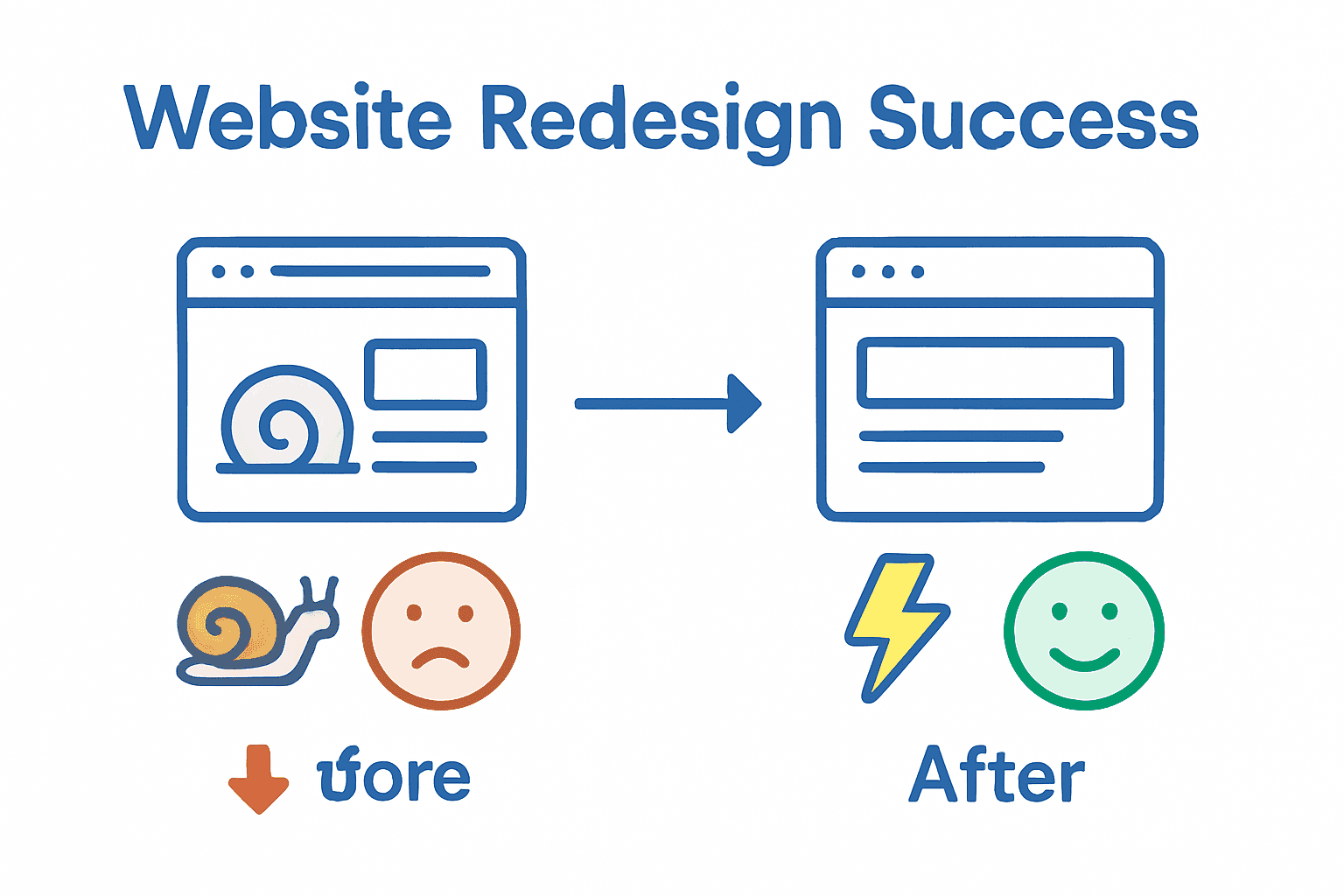
Here’s a comparison of key actions in each website redesign step:
| Step | Main Focus | Key Actions |
|---|---|---|
| Assess & Set Goals | Performance Review | Audit speed, mobile, errors Analyze KPIs Content review |
| Plan Content & UX | Structure & Clarity | Map user journey Reorganize pages Refine copy |
| Design & Branding | Visual Elements | Define colors Set typography Create style guide |
| Tech SEO & Mobile | Optimization | Implement responsive design Speed up site Add structured data |
| Test & Gather Feedback | Validation & Insights | Functional tests User testing Collect feedback |
| Launch & Monitor | Continuous Improvement | Soft launch Set analytics Ongoing reviews |
Transform Your Website Into a Growth Engine
This is the work we do for you. Every week, without exception.
Managing GBP at this level takes 6–8 hours a week when done right. Nova handles the entire system — posts, photos, reviews, Q&A, citations, heatmap tracking — so you can focus on running your business.
Are you feeling overwhelmed by outdated website performance, messy navigation, or an inconsistent brand image? The Website Redesign Checklist for Business Growth Success guides you through each step, from assessing your technical foundation to implementing a strong brand presence and ensuring flawless mobile optimization. Yet, you might find challenges in translating analytics, content upgrades, and advanced design strategy into measurable business results. Many businesses get stuck turning data and design insights into a cohesive digital solution that drives real growth.
You do not have to tackle this transformation alone. Our team at 12AM Agency has helped businesses like yours turn website limitations into revenue-generating assets. We specialize in strategic analysis, intelligent design, and technical optimization tailored to your industry, whether you are in legal, dental, automotive, franchising, or enterprise markets. See our proven web design and testing methodologies and discover our custom branding approach to elevate your entire digital presence.
Ready to stop losing leads and start converting visitors into loyal customers?
Let us help you build a website that does more than look good. Connect with our experts at https://12amagency.com/contact-us/ for a personalized redesign consultation and make your next website launch a powerful business milestone. Act now to gain an edge with innovative, AI-driven strategies that deliver fast, measurable results.
Frequently Asked Questions
What metrics should I assess during a website performance review?
To ensure strong business growth through your website redesign, assess metrics such as page load speed, mobile responsiveness, and bounce rates. Focus on obtaining a comprehensive snapshot of these metrics to identify areas for improvement and set measurable goals for enhancement.
How can I effectively plan my website’s user experience?
Start by mapping out user journeys based on existing analytics data and feedback. Identify pain points and streamline navigation to ensure users can easily find what they need—this can involve reorganizing menus or enhancing content clarity.
What visual elements should I consider for my website redesign?
Define a cohesive visual style by selecting a consistent color palette, typography, and imagery that aligns with your brand identity. Create a style guide to maintain branding consistency across the site, ensuring each element contributes to an engaging user experience.
How do I optimize my website for mobile devices?
Prioritize responsive design to ensure your site adapts seamlessly to various screen sizes. Implement best practices like compressing images and optimizing code to enhance load speed, making your mobile site user-friendly and quick—aim to reduce load times to under three seconds.
What steps should I take to gather user feedback effectively?
Conduct structured user testing sessions with a diverse group representing your audience. Ask them to complete specific tasks on the site while capturing their feedback on usability; this approach helps identify both functional and emotional responses, providing insights for further refinements.
How can I monitor my redesigned website’s performance after launch?
Set up comprehensive analytics tracking to measure key metrics such as conversion rates and user engagement. Conduct monthly performance reviews to analyze data trends and make necessary adjustments to improve the website based on user interaction and feedback.
Recommended
- 10 Ways to Improve Your Website’s Design Aesthetics Today | 12AM Agency
- Understanding Managing Business Growth: Key Concepts Explained | 12AM Agency
- The Ultimate DIY SEO Audit: A 10-Step Guide for Small Business Owners | 12AM Agency
- 10 Ways to Improve Your Website’s Design Aesthetics Today | 12AM Agency
- Effective Website Design: Key Principles and Proven Strategies 2025
- Understanding SEO Best Practices for Your Business – My Blog

