




Every business talks about standing out, but branding is what actually sets you apart. Studies show that strong brands increase customer loyalty and can command premium prices. Most people think branding is all about a good logo or catchy colors, but the real magic happens when your brand builds trust and lasting connections that make customers come back again and again.
Table of Contents
- What Is Branding And Its Core Elements?
- The Role Of Branding In Establishing Trust And Credibility
- How Branding Influences Customer Perception And Loyalty
- The Impact Of Effective Branding On Business Growth
- Key Concepts Of Successful Branding Strategies
Quick Summary
| Takeaway | Explanation |
|---|---|
| Branding creates unique business identity | A strong brand differentiates a company from competitors, enhancing recognition and trust. |
| Consistent messaging builds trust and loyalty | Consistent communication fosters reliability, helping customers feel confident in their purchasing decisions. |
| Emotional connections enhance customer retention | Brands that resonate emotionally convert purchases into long-term loyalty, reflecting customers’ values and identities. |
| Effective branding drives business growth | Strategic branding attracts customers and supports market positioning, leading to increased sales and competitive advantages. |
| Authenticity is vital for brand success | Genuine communication about values builds trust and engages modern consumers seeking real connections with brands. |
What is Branding and Its Core Elements?
Branding represents a strategic process of creating a unique and memorable identity for a business that distinguishes it from competitors. According to the American Marketing Association, branding involves crafting a distinctive presence through design, symbols, and messaging that communicates a company’s core values and personality.
The Fundamental Components of Branding
At its core, branding encompasses several critical elements that work together to form a comprehensive identity. These elements go beyond mere visual design and touch on deeper psychological and emotional connections with target audiences.
- Visual Identity: Includes logos, color palettes, typography, and design elements that create immediate visual recognition
- Brand Messaging: The verbal and written communication that articulates a company’s mission, values, and unique value proposition
- Brand Personality: The human characteristics and emotional attributes associated with the brand
Branding as a Strategic Business Asset
Branding is not just about aesthetics but a powerful strategic tool that influences customer perception and business growth. A well-developed brand can command premium pricing, build customer loyalty, and create significant competitive advantages. Read more about developing strategic branding approaches on our local business branding guide.
By understanding and intentionally crafting each element of branding, businesses can create a cohesive and compelling narrative that resonates with their target audience, transforms customer interactions, and drives sustainable growth.
To help clarify the fundamental building blocks of branding discussed above, the following table summarizes each core component and its main function within a brand strategy.
| Core Branding Component | Description | Key Function |
|---|---|---|
| Visual Identity | Logos, color schemes, typography, and imagery that make a brand instantly recognizable | Drives recognition and creates first impression |
| Brand Messaging | Verbal and written communication conveying mission, values, and unique value proposition | Articulates what the brand stands for |
| Brand Personality | Human traits and emotional associations connected to the brand | Shapes emotional connection and relatability |
| Consistency | Uniform messaging and design across all platforms | Builds trust and reliability |
| Transparency | Openness in business practices and value communication | Enhances credibility and authenticity |
| Reliability | Delivering promised value, products, or services with high quality standards | Encourages repeat business and trust |
The Role of Branding in Establishing Trust and Credibility
Branding serves as a powerful mechanism for building trust and credibility with target audiences by consistently communicating a company’s values, reliability, and professional commitment. Research demonstrates that strong brand image significantly influences consumer perception and reduces purchasing uncertainty.
See exactly where your profile stands right now.
Our GBP audit shows your current rank position across your market, how your profile completeness scores against competitors, and the specific gaps holding you back from the Map Pack.
Psychological Foundations of Brand Trust
Trust emerges through predictable and transparent interactions that signal reliability and authenticity.
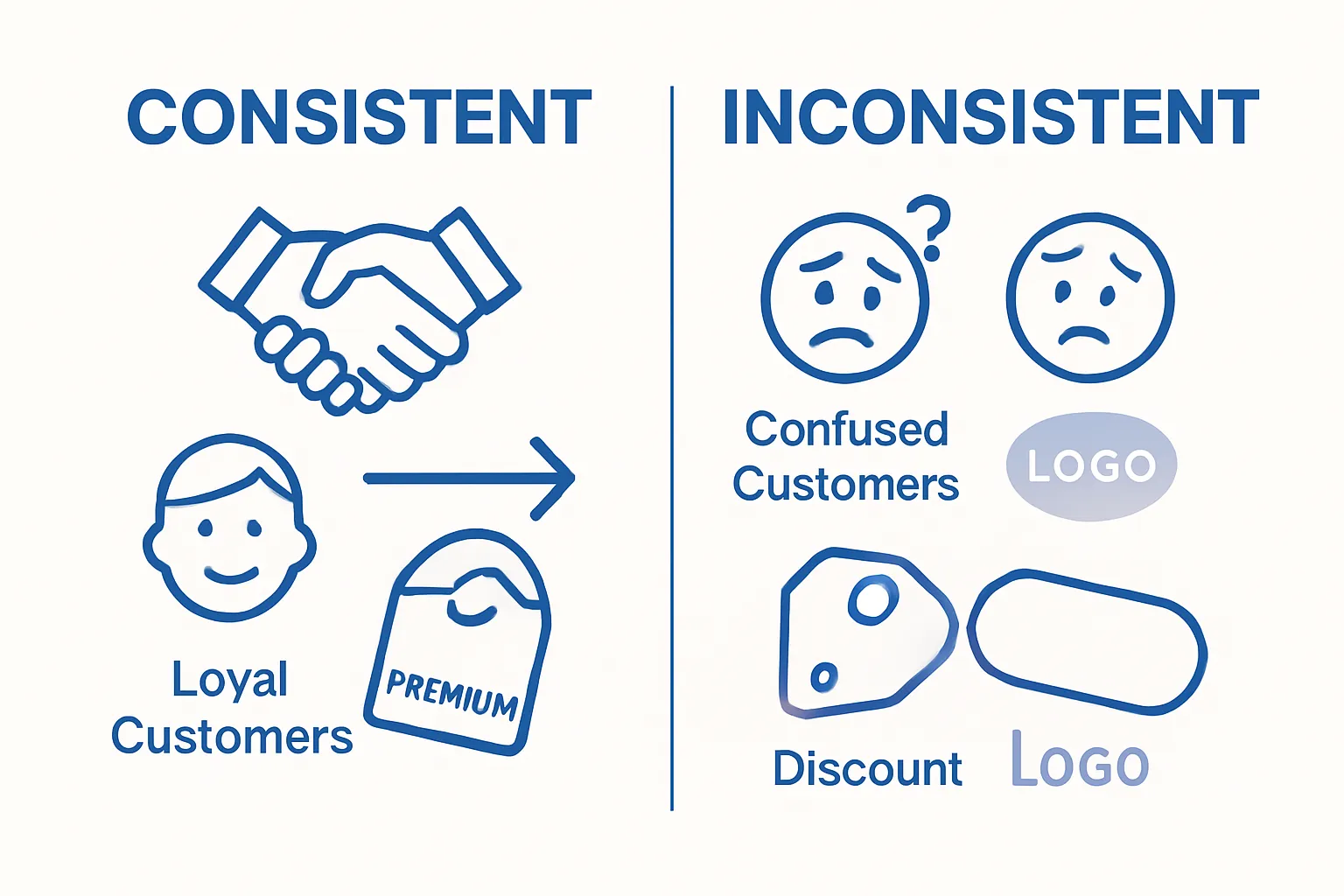 Organizations establish credibility by delivering consistent experiences that align with their stated brand promise. These experiences create psychological signals that help consumers feel confident in their purchasing decisions.
- Consistency: Maintaining uniform messaging and visual representation across all platforms
- Transparency: Openly communicating business practices and values
- Reliability: Delivering promised products or services with high-quality standards
Credibility Through Strategic Brand Communication
Effective brand communication transforms abstract brand values into tangible consumer experiences. By articulating clear narratives and demonstrating genuine commitment to customer needs, businesses can differentiate themselves from competitors. Explore our insights on building strategic brand communication approaches.
Brands that invest in developing authentic, consistent, and meaningful connections create lasting relationships with their audiences. This approach transcends traditional marketing tactics by fostering emotional engagement and generating long-term customer loyalty through genuine representation of organizational values and commitment to excellence.
How Branding Influences Customer Perception and Loyalty
Branding functions as a sophisticated communication strategy that profoundly shapes customer perceptions and emotional connections with businesses. Research indicates that effective branding significantly influences customers’ attitudes and willingness to establish long-term relationships.
The Psychological Mechanisms of Brand Perception
Customer perception emerges through a complex interplay of visual, emotional, and experiential signals that a brand consistently transmits. These signals create mental associations that extend beyond product features, transforming rational purchasing decisions into emotionally driven experiences. Learn more about strategic reputation management techniques for building strong brand perceptions.
- Emotional Resonance: Brands that connect on an emotional level create deeper customer loyalty
- Visual Storytelling: Consistent visual elements communicate brand personality and values
- Experience Alignment: Matching brand promises with actual customer interactions
Loyalty as a Branding Outcome
Successful brands transform transactional relationships into emotional commitments by delivering consistent, meaningful experiences. Customers do not just purchase products they invest in brands that reflect their personal values, aspirations, and identity. The most powerful brands create communities rather than merely selling commodities, generating profound psychological attachments that transcend traditional consumer behavior.

By understanding and strategically developing these nuanced psychological connections, businesses can create brands that customers do not just recognize but actively choose and advocate for in an increasingly competitive marketplace.
The Impact of Effective Branding on Business Growth
Effective branding represents a strategic investment that directly influences an organization’s growth trajectory and market positioning. Research confirms that strong, well-managed brands contribute substantially to enterprise expansion by attracting new customers and increasing market share.
Strategic Growth Through Brand Development
Brands function as powerful growth accelerators by creating competitive differentiation and establishing unique value propositions. Organizations that strategically develop their brand identity can transform market perception, command premium pricing, and generate sustainable competitive advantages. Discover strategies for avoiding common branding pitfalls that could hinder growth.
- Market Differentiation: Creating unique brand positioning that stands out from competitors
- Customer Acquisition: Attracting higher-quality leads through compelling brand narratives
- Premium Positioning: Enabling price optimization through perceived brand value
Financial Implications of Brand Investment
Branding transcends aesthetic design and becomes a quantifiable business asset.
Companies with robust brand identities experience enhanced financial performance through increased customer loyalty, reduced marketing acquisition costs, and improved investor confidence. Strong brands generate emotional and economic value, transforming traditional transactional relationships into long-term strategic partnerships.
By systematically investing in brand development, businesses can create sustainable growth mechanisms that adapt to changing market dynamics while maintaining a consistent and compelling organizational identity.
This table outlines how branding influences major business growth factors, illustrating the connection between effective brand development and measurable business benefits.
| Branding Impact Area | How Branding Achieves It | Business Benefit |
|---|---|---|
| Market Differentiation | Establishes unique value and positioning compared to competitors | Stands out in crowded markets |
| Customer Acquisition | Attracts quality leads with compelling brand stories and messaging | Grows customer base efficiently |
| Premium Positioning | Builds perceived value enabling higher pricing | Increases revenue and margins |
| Customer Loyalty | Fosters emotional bonds and consistent experiences | Drives repeat business and advocacy |
| Financial Performance | Enhances investor confidence and reduces marketing acquisition costs | Grows long-term value and sustainability |
Key Concepts of Successful Branding Strategies
Successful branding strategies require a holistic approach that integrates multiple dimensions of organizational communication and market positioning. Research highlights key factors that fundamentally influence brand success, including relevance, clear positioning, continuous innovation, and consistent brand promise delivery.
Strategic Brand Architecture
Brand strategies must be meticulously constructed with a comprehensive understanding of target audience psychology, competitive landscape, and organizational capabilities. This involves developing a multidimensional framework that goes beyond superficial visual design to create deep, meaningful connections with customers.
- Audience Understanding: Developing precise customer personas and emotional mapping
- Competitive Analysis: Identifying unique market positioning opportunities
- Consistent Messaging: Aligning communication across all organizational touchpoints
Core Components of Brand Strategy
Effective brand strategies integrate multiple sophisticated elements that work synergistically to create compelling market narratives. These components transform brands from mere visual identities into powerful communication platforms that resonate with target audiences.
Authenticity emerges as a critical strategy, requiring businesses to develop genuine, transparent communication that reflects actual organizational values and capabilities. Modern consumers increasingly seek brands that demonstrate real commitment beyond marketing rhetoric.
This is the work we do for you. Every week, without exception.
Managing GBP at this level takes 6–8 hours a week when done right. Nova handles the entire system — posts, photos, reviews, Q&A, citations, heatmap tracking — so you can focus on running your business.
By systematically developing these interconnected strategic elements, organizations can create branding approaches that not only differentiate them in competitive markets but also establish meaningful, long-lasting connections with their target audiences.
Unlock Real Business Growth With Strategic Branding
Are you struggling to stand out in a crowded market or finding it hard for customers to remember your business? As explained in “Understanding Why is Branding Important for Growth,” building trust, credibility, and a cohesive brand identity is not just about looking good. It is about creating emotional connections, influencing perception, and driving loyalty that translates directly into business growth. Without a clear brand strategy, you risk missing out on loyal customers and falling behind competitors who successfully shape how they are seen.

Now is the time to turn those insights into action. Let our experts at 12AM Agency help you develop a high-impact branding strategy that aligns with your goals, speaks your audience’s language, and drives measurable results. Take the next step and connect with our digital marketing team to schedule your personalized strategy session today. Start building a brand that customers trust and remember, and see how powerful your growth can become. Visit 12AM Agency Contact Us to get started now.
Frequently Asked Questions
What is branding, and why is it important for business growth?
Branding is the process of creating a unique identity for a business that distinguishes it from competitors. It is important for growth because a strong brand can improve customer loyalty, enhance market perception, and allow businesses to command premium pricing.
How does branding influence customer perception?
Branding influences customer perception by establishing emotional connections through consistent messaging, visual identity, and brand personality. These elements shape how customers view and feel about the brand, affecting their purchasing decisions.
What are the core components of an effective branding strategy?
Core components of an effective branding strategy include visual identity (logos and design), brand messaging (communication of values and mission), and brand personality (characteristics that resonate emotionally with customers).
How can branding contribute to customer loyalty?
Branding contributes to customer loyalty by creating meaningful experiences and emotional resonance with the brand. When customers identify with a brand’s values and receive consistent quality, they are more likely to remain loyal and advocate for that brand.
Recommended
- Local Business Branding: Stand Out with These Proven Strategies | 12AM Agency
- Should You Get a Logo Before You Get a Loan? – 12AM Agency
- 8 Branding Mistakes to Avoid for Business Growth | 12AM Agency
- Understanding Branding on a Budget: Key Insights | 12AM Agency
- Mastering the Product Marketing Approach: Proven Strategies to Elevate Your Brand

