




Small business owners are spending more time than ever trying to crack the social media code. Turns out, over 54 percent of social media users actively research products before ever making a purchase. Most businesses think posting flashy ads and chasing likes will move the needle. The real win comes when you pick the right platforms and build your brand with content that actually means something to your audience.
Table of Contents
- Choosing The Right Social Media Platforms
- Building A Strong Brand Presence Online
- Effective Content Strategies For Business Growth
- Measuring Social Media Success And Roi
Quick Summary
| Takeaway | Explanation |
|---|---|
| Choose the Right Platforms | Focus on 1-2 platforms that align with your target audience demographics for efficient engagement and resource allocation. Recommended platforms for 2025 include LinkedIn, Instagram, TikTok, Facebook, and X (Twitter). |
| Build an Authentic Brand Presence | Leverage digital channels to create meaningful connections through consistent storytelling, interactive content, and strong visual branding. Monitor engagement and sentiments to adapt your approach. |
| Implement Effective Content Strategies | Apply the 80/20 Rule for content creation by dedicating 80% to audience value and 20% to promotion. Develop diverse content formats that educate, entertain, or provide insights that resonate with your audience. |
| Measure Social Media ROI Effectively | Use sophisticated tracking metrics like customer acquisition cost, engagement quality, and conversion rates to assess the deeper impact of your social media efforts beyond just likes. |
| Continuously Adapt and Learn | Stay agile by regularly analyzing performance data and evolving your strategies in response to audience feedback and platform changes to maintain a competitive edge. |
Choosing the Right Social Media Platforms
Selecting the appropriate social media platforms is crucial for small businesses seeking strategic digital growth in 2025. With numerous platforms available, a targeted approach ensures efficient resource allocation and maximum audience engagement.
Understanding Platform Demographics and Audience Alignment
Successful social media strategy begins with understanding platform-specific demographics and user behaviors. Learn more about strategic marketing approaches that can help refine your platform selection.
According to the U.S. Small Business Administration, small businesses should concentrate on one or two platforms that closely match their target audience. For instance, LinkedIn remains optimal for B2B professional services, while Instagram and TikTok attract younger demographics seeking visual, engaging content.
The University of Missouri Extension emphasizes that different platforms serve distinct communication purposes. Facebook and X (formerly Twitter) enable community building and direct consumer interactions, whereas Instagram and Pinterest excel in visual storytelling and product showcasing.
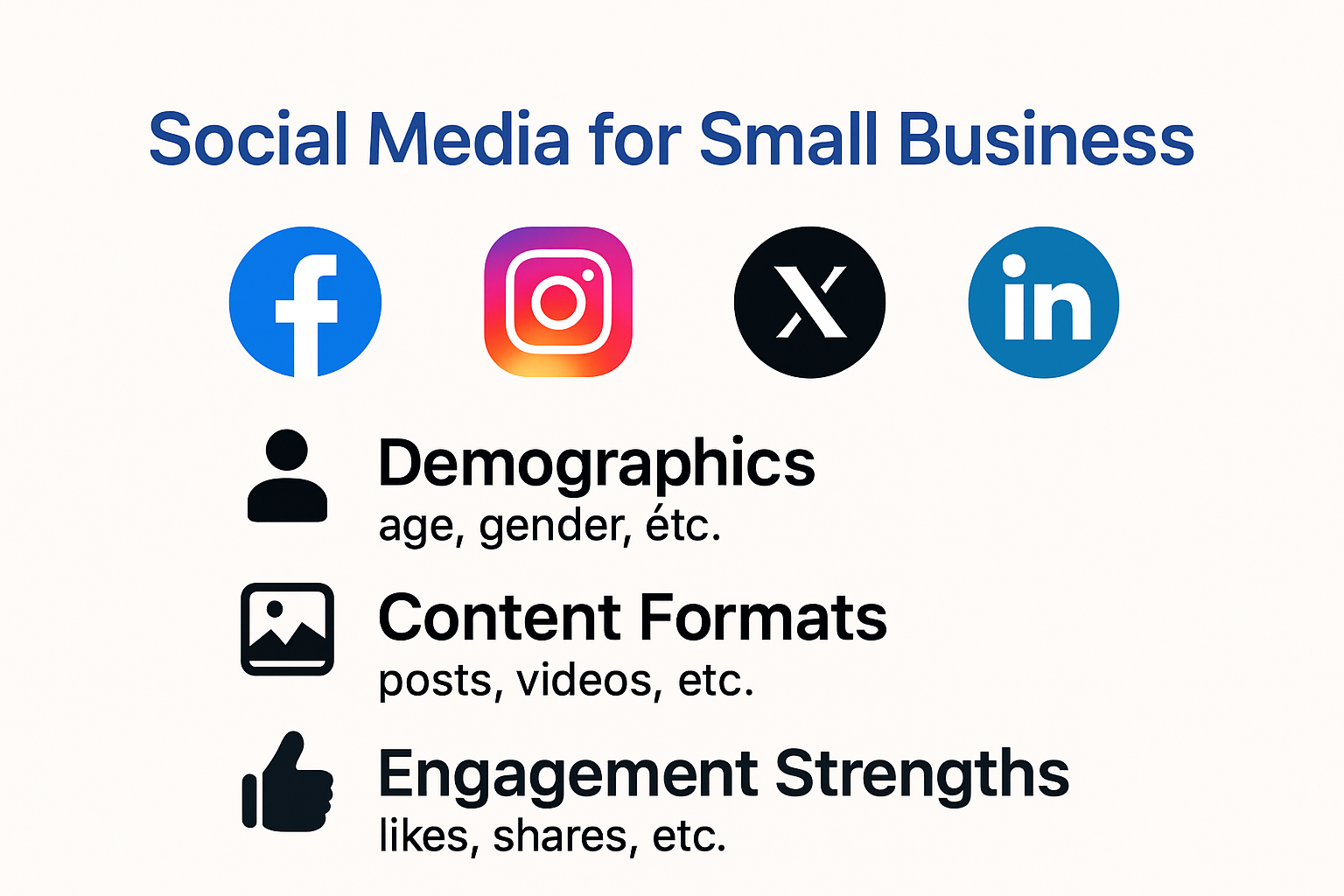
Strategic Platform Selection Criteria
When evaluating social media platforms, consider these critical factors:
See exactly where your profile stands right now.
Our GBP audit shows your current rank position across your market, how your profile completeness scores against competitors, and the specific gaps holding you back from the Map Pack.
- Audience Reach: Analyze platform user demographics against your target market.
- Content Format: Match your business’s content strengths with platform capabilities.
- Engagement Potential: Assess each platform’s interaction and conversion metrics.
A research study analyzing e-commerce strategies revealed that businesses utilizing a diversified, strategic multi-platform approach increased web sales by 2 to 5 percent. This underscores the importance of thoughtful platform selection beyond mere presence.
Optimal Platform Recommendations for 2025
For small businesses in 2025, recommended platforms include:
- LinkedIn: Professional networking, B2B lead generation
- Instagram: Visual branding, product showcasing
- TikTok: Short-form video content, younger audience engagement
- Facebook: Community building, local business marketing
- X (Twitter): Real-time updates, industry conversations
Some businesses looking to accelerate their growth on these platforms even choose to buy YouTube channels, TikTok or Instagram accounts with existing audiences rather than building from zero. Remember that platform effectiveness varies by industry. A dental practice might prioritize Instagram for visual content, while a legal firm might focus on LinkedIn for professional networking. Continuous monitoring and adaptation remain key to social media success.
Here is a comparison table of the main social media platforms recommended for 2025, their key strengths, and primary audience focus to help you make an informed selection:
| Platform | Key Strengths | Primary Audience |
|---|---|---|
| B2B networking, lead generation | Professionals, businesses | |
| Visual branding, product showcasing | Younger, visual-focused users | |
| TikTok | Short-form videos, high engagement | Gen Z, Millennials |
| Community, local marketing | Broad age range, local consumers | |
| X (Twitter) | Real-time updates, conversations | Industry followers, news seekers |
Building a Strong Brand Presence Online
Building a robust online brand presence requires strategic planning and consistent execution across digital platforms. In 2025, small businesses must leverage digital communication channels to create memorable and authentic brand experiences.
Crafting Authentic Digital Brand Narratives
Discover proven local business branding strategies that can transform your online identity. Electronic word-of-mouth (eWoM) activities play a critical role in enhancing brand awareness and image. According to research, social network interactions significantly impact how consumers perceive and engage with brands.
Successful brand storytelling goes beyond mere product promotion. It involves creating meaningful connections through consistent messaging, visual identity, and value-driven content. Generation Y users are particularly responsive to social media advertising that feels genuine and aligns with their personal values.
Strategic Content and Engagement Approaches
Research indicates that consumer perceptions of social media advertisements directly influence advertising value and brand awareness. A study focusing on Instagram revealed that targeted, visually compelling content can dramatically improve brand recognition among younger demographics.
Key strategies for building a strong online brand presence include:
- Consistent Visual Branding: Develop a cohesive color palette, logo usage, and design aesthetic across all platforms
- Authentic Storytelling: Share behind-the-scenes content, employee stories, and brand mission
- Interactive Content: Develop polls, Q&A sessions, and user-generated content campaigns

Measuring and Adapting Brand Performance
A research study analyzing e-commerce strategies demonstrated that businesses utilizing a diversified digital approach could increase web sales by 2 to 5 percent. This underscores the importance of continuous measurement and adaptation.
Implement robust analytics to track:
- Engagement rates across different platforms
- Sentiment analysis of brand mentions
- Conversion rates from social media campaigns
- Audience growth and demographic shifts
Remember that building a strong online brand is an ongoing process. Stay agile, listen to your audience, and be prepared to evolve your digital strategy as consumer preferences and technology change.
Effective Content Strategies for Business Growth
Content strategy remains a critical driver of social media success for small businesses in 2025. By developing targeted, engaging content, businesses can transform their digital presence and drive meaningful growth.
Understanding Content Value and Audience Engagement
Explore advanced SEO content creation techniques to maximize your digital impact. The University of Houston’s Small Business Development Center recommends implementing the 80/20 Rule: dedicate 80% of content to informing and entertaining audiences, with only 20% focused on direct product promotion.
According to the U.S. Small Business Administration, an effective social media strategy is essential for establishing brand identity, reaching new customers, and delivering exceptional customer service. This approach requires understanding audience needs and creating content that genuinely resonates.
Here is a breakdown of the 80/20 Rule for content creation and its intended outcomes for small business social media strategies:
| Content Type | Percentage of Content | Purpose/Outcome |
|---|---|---|
| Inform/Educate/Entertain | 80% | Build brand loyalty, engage audience |
| Promote/Sell | 20% | Drive direct sales, product awareness |
Strategic Content Development Techniques
Successful content strategies in 2025 demand a multi-dimensional approach. Key techniques include:
- Storytelling: Create narrative-driven content that connects emotionally with your audience
- Diversity: Develop content across multiple formats (video, text, infographics)
- Value-Driven Approach: Focus on solving audience problems and addressing their specific interests
Business owners must recognize that modern consumers seek authentic, helpful content that goes beyond traditional advertising. Each piece of content should aim to educate, entertain, or provide actionable insights.
Measuring Content Performance
To ensure continuous improvement, implement robust content performance tracking:
- Engagement rate analysis
- Conversion tracking
- Audience sentiment evaluation
- Content reach and impressions
Remember that content strategy is not static. Regular analysis and adaptation are crucial. Stay attuned to emerging trends, audience feedback, and platform algorithm changes to maintain a competitive edge in the dynamic digital marketing environment.
Measuring Social Media Success and ROI
Measuring social media success extends beyond traditional metrics in 2025. Small businesses must adopt sophisticated approaches that capture the nuanced value of digital engagement and strategic investment.
Evolving ROI Measurement Frameworks
Discover advanced digital marketing strategies that transform how businesses track performance. According to the MIT Sloan Management Review, contemporary ROI measurement should focus on understanding consumer motivations and the intrinsic value customers derive from brand interactions.
Recent research reveals compelling insights into social media’s impact. ResearchGate studies indicate that 54% of social media users actively research products on these platforms, while 71% are more likely to make purchases based on social media referrals.
Key Performance Indicators for Social Media Success
Effective ROI tracking requires a comprehensive set of metrics that go beyond simple engagement numbers:
- Customer Acquisition Cost: Calculate the precise investment required to convert social media interactions into paying customers
- Engagement Quality: Assess depth of interactions, not just surface-level likes and shares
- Conversion Rate: Track how social media interactions translate into tangible business outcomes
Small businesses should develop sophisticated tracking mechanisms that capture both quantitative and qualitative data. This approach provides a more holistic understanding of social media’s true business impact.
Advanced Analytics and Strategic Insights
This is the work we do for you. Every week, without exception.
Managing GBP at this level takes 6–8 hours a week when done right. Nova handles the entire system — posts, photos, reviews, Q&A, citations, heatmap tracking — so you can focus on running your business.
Modern social media ROI measurement involves multi-dimensional analysis:
- Customer lifetime value assessment
- Sentiment analysis of brand interactions
- Cross-platform performance comparison
- Predictive engagement modeling
Remember that social media success is not just about immediate financial returns. It represents a long-term investment in brand building, customer relationships, and digital presence. Continuous learning, adaptation, and strategic refinement are key to maximizing your social media performance in the dynamic digital landscape of 2025.
Frequently Asked Questions
What are the best social media platforms for small businesses in 2025?
The best social media platforms for small businesses in 2025 include LinkedIn for B2B networking, Instagram for visual branding, TikTok for engaging younger audiences, Facebook for community-building, and X (formerly Twitter) for real-time industry conversations.
How can small businesses measure their social media success?
Small businesses can measure social media success by using key performance indicators such as customer acquisition cost, engagement quality, and conversion rates. Additionally, tracking sentiment analysis and audience growth can provide deeper insights into overall performance.
What types of content should small businesses prioritize on social media?
Small businesses should focus on the 80/20 Rule for content creation, dedicating 80% of efforts to informative and entertaining content while only 20% should be promotional. This approach cultivates audience engagement and builds brand loyalty.
How can small businesses create an authentic brand presence on social media?
To create an authentic brand presence, small businesses should craft consistent digital narratives, utilize engaging visual branding, and develop interactive content that resonates with their audience. Monitoring engagement and adapting based on audience feedback is also crucial.
Turn Social Media Insights Into Actionable Growth Today
Are you investing valuable time into social media but struggling to turn engagement into real business growth? The article highlights the frustration small businesses feel when likes and views do not lead to new leads, loyal customers, or measurable ROI. You want content that delivers results. You need to choose the right platforms, implement effective strategies, and continuously measure performance — but you might not know where to start.
Our team at 12AM Agency transforms digital marketing challenges into tailored solutions. We help small businesses move beyond guesswork with advanced SEO management and data-driven content strategies built for your audience. Experience firsthand how our innovative approach can boost your visibility, strengthen your brand online, and drive real conversions. Take the first step toward smarter social media and bigger opportunities. Visit our website now to unlock your strategic advantage.
Recommended
- Reasons Why SMBs Should Work with a Digital Marketing Agency
- 8 Digital Marketing Trends in 2020 | 12AM Agency
- Your Organization Needs a Logo to Extend Your Brand
- Essential Media Outreach Strategies for Brand Growth | 12AM Agency
- 8 Reasons Why SMBs Should Work with a Digital Marketing Agency
- 8 Reasons Why SMBs Should Work with a Digital Marketing Agency
- Why Humanize Content in 2025: Boost Connection and Results

