





Every business leader knows social media is everywhere and packed with potential, but most still treat it as just a digital billboard. Shockingly, over 72% of Americans are active on social media and yet most brands miss out on truly connecting with this massive audience. The real secret for 2025 is that generic posts and surface-level stats are history and it is the businesses digging deeper and crafting tailored strategies who are about to leave everyone else behind.
Table of Contents
- Why Social Media Matters For Businesses
- Choosing The Right Platforms For Your Industry
- Effective Strategies To Increase Engagement And Reach
- Measuring Success: Key Metrics For Social Media
Quick Summary
| Takeaway | Explanation |
|---|---|
| The Importance of Social Media | Social media serves as a crucial growth engine for businesses, providing unprecedented opportunities to engage with over 72% of Americans actively using these platforms. |
| Targeting and Platform Selection | Choosing the right social media platforms is key; businesses must align their strategies with platform demographics to maximize engagement and conversion based on their industry. |
| Content Quality is Essential | Developing authentic, value-driven content is vital, with a focus on video formats, as video is projected to account for 80% of internet traffic by 2025. |
| Measure Deeper Success Metrics | Move beyond vanity metrics and adopt comprehensive performance indicators like engagement rates, customer acquisition cost, and sentiment analysis for meaningful insights. |
| Flexibility and Adaptation | Regular audience research and experimentation are crucial; the ability to adapt strategies based on evolving social media landscapes will drive sustained success. |
Why Social Media Matters for Businesses
In the rapidly evolving digital ecosystem, social media has transformed from a communication platform to a critical business growth engine. Modern businesses cannot afford to ignore these powerful channels that connect brands directly with their target audiences.
The Reach and Impact of Social Media Marketing
The numbers speak volumes about social media’s significance. Pew Research Center reports that over 72% of Americans actively use social media platforms, representing an unprecedented opportunity for businesses to engage potential customers. This massive user base translates into tangible business opportunities across multiple industries.
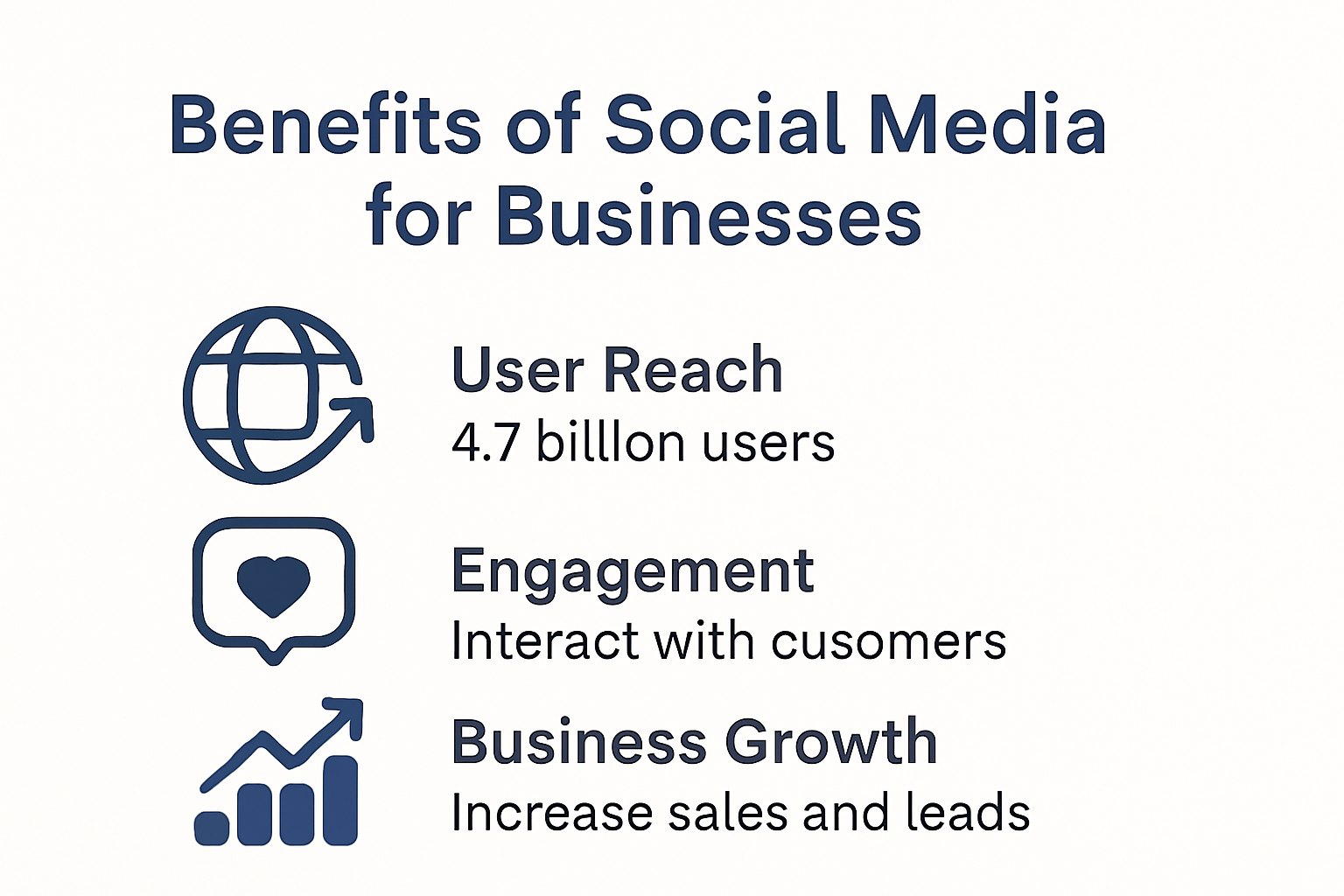
Businesses leveraging social media effectively can achieve multiple strategic objectives. These platforms offer unprecedented targeting capabilities, allowing companies to reach specific demographics with precision. Unlike traditional advertising, social media provides real time interaction, enabling businesses to receive immediate feedback, understand customer sentiments, and adapt their strategies dynamically.
Building Brand Authority and Trust
Social media has become a critical trust-building mechanism for businesses. Consumers now expect brands to have an authentic, transparent online presence. Harvard Business Review suggests that companies demonstrating consistent, genuine communication on social platforms significantly enhance their credibility.
The power of social proof cannot be understated. When potential customers see positive interactions, user generated content, and genuine engagement, they are more likely to trust and choose a brand. Customer testimonials, behind the scenes content, and responsive customer service on social platforms can transform a faceless corporation into a relatable, trustworthy entity.
Driving Business Growth and Conversion
Beyond brand awareness, social media directly impacts business growth. Platforms like Facebook, Instagram, and LinkedIn offer sophisticated advertising tools that enable businesses to target users based on intricate parameters such as interests, behaviors, and demographics. This precision marketing approach ensures higher conversion rates and more efficient marketing spend.
Moreover, social media integrates seamlessly with other digital marketing strategies. Our comprehensive guide on small business growth explores how businesses can create integrated campaigns that leverage social platforms to drive traffic, generate leads, and ultimately increase revenue.
Businesses that strategically approach social media understand it is not just about posting content but creating meaningful connections. By developing a robust social media strategy that aligns with overall business goals, companies can transform these digital platforms from mere communication channels into powerful growth engines.
The future of business marketing is inherently social, data driven, and customer centric. Those who recognize and adapt to this paradigm will not just survive but thrive in the increasingly competitive digital marketplace.
Choosing the Right Platforms for Your Industry
Selecting the appropriate social media platforms is not a one-size-fits-all strategy. Each industry requires a nuanced approach that aligns with specific business goals, target audience behaviors, and content strengths.
Understanding Platform Demographics and Engagement
Successful social media strategy begins with comprehensive audience analysis. Sprout Social reports that different platforms attract distinct demographic groups, making platform selection critical for targeted marketing. For instance, LinkedIn dominates professional networking with 76% of users aged 25-45, while Instagram attracts a younger audience with 59% of users between 18-29 years old.
Businesses must map their ideal customer persona against platform user characteristics. A legal firm targeting corporate professionals will find LinkedIn more effective, whereas a fashion brand might prioritize Instagram and TikTok for visual storytelling and trend-driven content. Understanding these nuances allows for more strategic platform selection and resource allocation.
To help you better understand how major platforms align with specific demographics and use cases, here’s a comparison table summarizing user demographics and content strengths for key social media channels:
| Platform | Key Demographic | Content Strength | Best For |
|---|---|---|---|
| 76% users aged 25-45 | Professional articles, insights | B2B, Professional Services | |
| 59% users aged 18-29 | Visuals, Stories, Reels | Retail, Fashion, Lifestyle | |
| TikTok | Mostly Gen Z/Young Millennials | Short-form video, Trends | Entertainment, Fashion, Brands |
| Broad, but strong 30-65+ presence | Mixed media, Groups | Local, Community, Services | |
| Predominantly female, 18-49 | Visual boards, Shopping | Retail, E-commerce, DIY | |
| YouTube | All ages, especially 18-35 | Video (short/long), Tutorials | Education, Tutorials, Brands |
Industry-Specific Platform Strategies
Different industries benefit from unique social media approaches. Our comprehensive guide on digital marketing strategies highlights how sector-specific content can dramatically improve engagement and conversion rates.
For service-based industries like legal, dental, and automotive sectors, platforms offering professional networking and detailed content work best. LinkedIn and Facebook provide robust targeting options for these businesses. Automotive brands can showcase vehicle features through visual platforms like Instagram, while dental practices can leverage before-and-after content and patient testimonials.
Retail and e-commerce businesses thrive on visually driven platforms. Pinterest and Instagram offer seamless shopping experiences, allowing direct product tagging and click-through purchasing. Franchise businesses can utilize these platforms to create consistent brand messaging across multiple locations, showcasing local teams and community involvement.
Content Alignment and Performance Metrics
Platform selection goes beyond demographics. Content Marketing Institute emphasizes the importance of matching content type with platform strengths. Video-heavy content performs exceptionally well on YouTube and TikTok, while professional articles and industry insights gain traction on LinkedIn.
Businesses should establish clear performance metrics for each platform. Tracking engagement rates, conversion metrics, and audience growth helps refine social media strategies. Tools like Google Analytics and native platform insights provide granular data on content performance, enabling continuous optimization.
The key is flexibility and continuous learning. Social media platforms evolve rapidly, and successful businesses remain adaptable. Regular audience research, content experimentation, and performance analysis ensure that social media strategies remain effective and aligned with changing digital landscapes.
Ultimately, choosing the right social media platforms is about understanding your audience, crafting compelling content, and strategically positioning your brand where your potential customers are most active and receptive.
Effective Strategies to Increase Engagement and Reach
In the dynamic world of social media marketing, businesses must continuously evolve their strategies to capture and maintain audience attention. Increasing engagement and reach requires a multifaceted approach that combines creativity, data-driven insights, and strategic content development.
Content That Connects and Converts
Research from Boston Institute of Analytics highlights the critical importance of creating authentic, value-driven content. Businesses must move beyond generic posts to develop narratives that resonate deeply with their target audience. This means crafting content that is not just promotional, but genuinely useful, entertaining, or educational.
Video content emerges as a paramount strategy, with projections suggesting videos will account for 80% of internet traffic by 2025. Platforms like Instagram Reels, TikTok, and YouTube Shorts offer powerful opportunities for businesses to create short-form, engaging visual content that captures audience attention quickly. The key is to balance entertainment with meaningful brand messaging.
Here is a summary of high-impact engagement techniques discussed in this section and the specific benefits each delivers for businesses:
| Engagement Technique | Description | Business Benefit |
|---|---|---|
| Authentic, Value-Driven Content | Narratives that are useful, entertaining, or educational | Deeper audience trust, higher loyalty |
| Short-Form Video Content | Leveraging Reels, TikTok, Shorts to attract attention | Increased reach & shareability |
| AI-Powered Personalization | Using AI to predict trends & tailor interactions | Improved engagement & relevancy |
| Micro-Influencer Marketing | Partnerships with niche, relatable influencers | Higher credibility, targeted reach |
| Interactive Content | Polls, Q&A, respond to comments actively | Stronger relationships, real-time feedback |
| Experimenting with New Platforms | Using emerging platforms like BeReal, Clubhouse | Early mover advantage, unique audiences |
Advanced Engagement Techniques

Engagement goes far beyond simple likes and shares. World Education Blogs suggests leveraging AI and machine learning to predict content trends and personalize audience interactions. Tools like Facebook Audience Insights and Sprout Social enable businesses to understand their audience at a granular level, allowing for hyper-targeted content strategies.
Micro-influencer collaborations present another powerful engagement strategy. Unlike major celebrities, micro-influencers offer more authentic, relatable connections with niche audiences. These partnerships can significantly boost credibility and reach, especially for businesses targeting specific market segments. Our strategic media outreach guide provides deeper insights into creating meaningful collaborative partnerships.
Measuring and Optimizing Performance
Successful social media strategies require continuous measurement and optimization. Businesses should implement robust analytics tracking using platforms like Google Analytics, Hootsuite, and native platform insights. Key performance indicators should extend beyond surface-level metrics to include engagement rate, conversion rate, and audience sentiment.
Embracing emerging platforms can also provide a competitive edge. Platforms like BeReal and Clubhouse offer unique opportunities for brands to connect with audiences in more intimate, unfiltered ways. The most successful businesses will be those willing to experiment and adapt quickly.
Consistent audience interaction remains crucial. Responding to comments, creating interactive content like polls and Q&A sessions, and showing the human side of your brand can dramatically improve engagement. Social media is fundamentally about building relationships, not just broadcasting messages.
The landscape of social media marketing in 2025 demands agility, authenticity, and a deep understanding of audience preferences. Businesses that can blend technological innovation with genuine human connection will stand out in an increasingly crowded digital marketplace.
Measuring Success: Key Metrics for Social Media
Measuring social media performance is no longer optional but a critical component of strategic business growth. In 2025, businesses must move beyond vanity metrics to develop a comprehensive, data-driven approach to understanding their social media impact.
Establishing Meaningful Performance Indicators
The University of Rochester emphasizes the importance of setting SMART goals that transform social media metrics from abstract numbers into actionable insights. These goals must be Specific, Measurable, Attainable, Relevant, and Time-bound, providing a structured framework for evaluating social media performance.
Key performance indicators extend far beyond simple follower counts. Businesses should focus on metrics that directly correlate with business objectives. These include engagement rate, which measures how actively involved your audience is with content, conversion rates that track how social media interactions translate into tangible business outcomes, and customer acquisition cost specific to social media channels.
Advanced Analytics and ROI Tracking
Digital Impact and Social Agency highlights the critical nature of comprehensive social media analytics. Modern businesses need to integrate multiple metric categories to gain a holistic view of their social media performance. This includes audience growth metrics, brand awareness indicators, customer retention rates, and direct revenue attribution from social media campaigns.
Advanced tracking tools now enable businesses to connect social media interactions directly to revenue streams. Platforms like Google Analytics and native social media insights provide granular data on user behavior, allowing companies to understand the precise journey from social media engagement to conversion. Our guide on small business growth strategies offers deeper insights into implementing these advanced tracking mechanisms.
Qualitative Metrics and Sentiment Analysis
Quantitative metrics tell only part of the story. Businesses must also invest in qualitative analysis that captures audience sentiment, brand perception, and engagement quality. This involves analyzing comment sentiment, measuring the depth of audience interactions, and tracking the types of conversations generated by your content.
Artificial intelligence and machine learning tools now offer sophisticated sentiment analysis capabilities. These technologies can parse through social media interactions to provide nuanced insights into how audiences perceive your brand, identifying potential areas of improvement and emerging opportunities for engagement.
Successful social media measurement in 2025 requires a holistic approach. Businesses must balance quantitative performance metrics with qualitative insights, creating a comprehensive understanding of their social media effectiveness. This means looking beyond surface-level numbers to understand the deeper impact of social media strategies on brand perception, customer relationships, and overall business growth.
The most successful businesses will be those that treat social media metrics as a dynamic, evolving ecosystem. Regular analysis, continuous learning, and agile adaptation will be key to transforming social media from a marketing channel into a strategic business intelligence tool.
Frequently Asked Questions
What are the key benefits of using social media for businesses?
Social media offers businesses numerous benefits, including enhanced brand awareness, improved customer engagement, and increased sales via targeted advertising. It also allows for real-time customer feedback and building trust through authentic interactions.
How can businesses choose the right social media platforms?
Businesses should select social media platforms based on their target audience demographics and industry specifics. Understanding where their potential customers are most active and tailoring content to fit those platforms is crucial for effective engagement.
What types of content perform best on social media?
Content that connects and converts includes authentic, value-driven narratives, especially video content. Engaging formats like short-form videos, user-generated content, and informative articles typically resonate well with audiences and drive higher engagement.
How should businesses measure their social media success?
To measure social media success, businesses should focus on key performance indicators like engagement rates, conversion rates, and customer acquisition costs. Utilizing advanced analytics tools enables companies to track these metrics and optimize their strategies accordingly.
Ready to Turn Your Social Media Into a True Growth Engine?
Many businesses read about the future of social media and feel left behind when it comes to real results. The article revealed a major pain point: generic posts and outdated metrics are holding you back, while real business growth now depends on customized engagement and industry-specific strategies. If you want measurable impact—not just likes—the time for action is now.
Our team at 12AM Agency empowers brands like yours to bridge the gap between social media insights and actual revenue growth. We combine advanced tactics reviewed in our blog, from AI-driven campaign targeting to unique digital marketing solutions for service providers, so you do not just follow trends but set them. Want to see how a tailored plan can increase your visibility, boost engagement, and drive new leads in 2025? Start with a complimentary strategy session at 12AM Agency and get ahead while your competitors lag behind.
Recommended
- Social Media for Small Business Growth in 2025 | 12AM Agency
- Top Local Business Marketing Ideas for 2025 Growth | 12AM Agency
- Top Digital Marketing Trends 2025 for Business Growth | 12AM Agency
- What Is Digital Marketing? Essential Guide for Business Growth 2025 | 12AM Agency
- Social Media Marketing for Businesses: Strategies That Work in 2025 | Ibrandmedia
- Social Media Strategie 2025: Succesvol plannen voor Nederlandse ondernemers – Twizz