




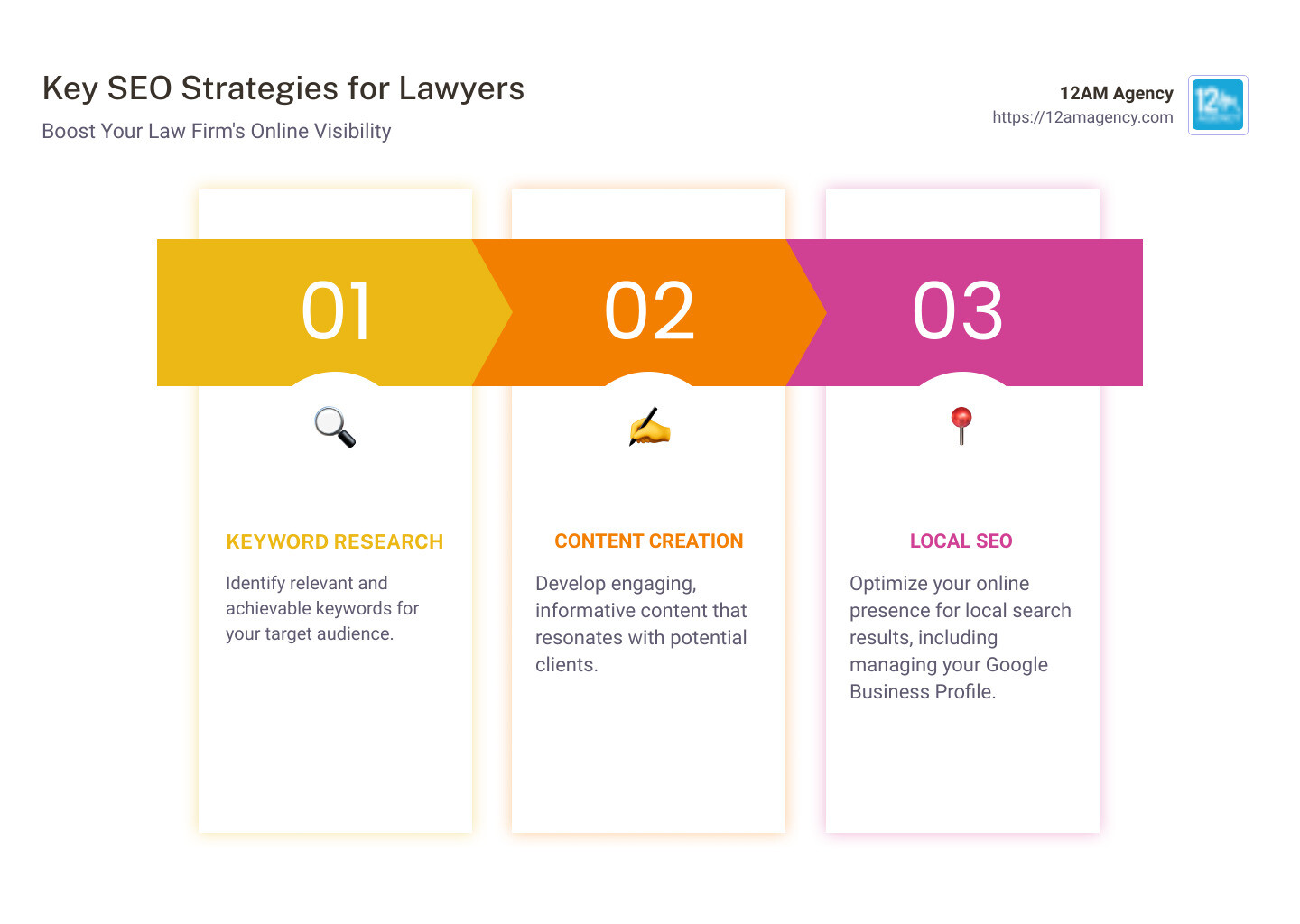
SEO strategies for lawyers are essential tools that can lift a law firm’s digital marketing efforts by significantly enhancing its online visibility. To quickly boost your law firm’s presence on search engines, focus on these key strategies:
- Keyword Research: Identify relevant and achievable keywords for your target audience.
- Content Creation: Develop engaging, informative content that resonates with potential clients.
- Local SEO: Optimize your online presence for local search results, including managing your Google Business Profile.
Having a robust online presence is no longer optional for lawyers looking to stand out. The competition is intense, and clients often find legal services through online search rather than through traditional means. This is where smart, effective SEO strategies come into play, acting as a guide that guides potential clients directly to your services.
My name is Robert Portillo, a digital marketing expert with a particular focus on SEO strategies for lawyers. With experience in helping legal professionals maximize their online reach and convert web traffic into substantial client growth, I am passionate about empowering law firms to harness the full potential of SEO.
Understanding SEO for Lawyers
Law firm SEO is all about making your law firm more visible online. It’s like putting up a big, bright sign on the internet so people can find you when they need legal help. But instead of a physical sign, we’re talking about strategies that help your website show up at the top of search engine results.
Attorney SEO specifically tailors these strategies to meet the unique needs of lawyers. Whether you’re a family lawyer or specialize in personal injury, the goal is the same: to connect with people searching for your specific legal expertise.
Legal SEO involves a combination of tactics that are crucial for any law firm wanting to succeed online. This includes optimizing your website for search engines, creating valuable content, and building links from other reputable sites.
Why is SEO Important for Lawyers?
The legal field is highly competitive. Many people turn to Google when they need an attorney, so having your firm appear on the first page of search results can significantly impact your business. In fact, studies show that 75% of users never scroll past the first page of search results.
SEO strategies for lawyers focus on making sure your law firm stands out in this crowded space. By using targeted keywords, creating high-quality content, and building a strong online reputation through backlinks, you can improve your search rankings and attract more clients.
Key Elements of Law Firm SEO
- Keyword Research: Find the right keywords that potential clients are using to search for legal services. This involves understanding what terms people use and how competitive those terms are.
- Content Creation: Develop content that addresses the needs and questions of your potential clients. This could be blog posts, FAQs, or detailed guides about legal topics.
- Technical SEO: Ensure your website is fast, secure, and mobile-friendly. This helps search engines like Google understand and index your site properly.
- Local SEO: Optimize your online presence to attract clients in your specific geographical area. This includes managing your Google Business Profile and getting listed in local directories.
- Link Building: Acquire high-quality backlinks from reputable sites to improve your site’s authority and search rankings.
In summary, SEO strategies for lawyers are not just about getting more visitors to your website. They’re about attracting the right visitors—those who are looking for your specific legal services. By understanding and implementing these strategies, you can ensure your law firm is easily found by those who need your expertise.

See exactly where your profile stands right now.
Our GBP audit shows your current rank position across your market, how your profile completeness scores against competitors, and the specific gaps holding you back from the Map Pack.
Next, let’s explore how to optimize your content to not only attract visitors but also engage and convert them into clients.
Key SEO Strategies for Lawyers
When it comes to SEO strategies for lawyers, there are three main pillars: keyword research, content creation, and link building. Let’s break these down.
Keyword Research
Think of keyword research as finding the secret phrases that potential clients use when searching for legal services online. It’s like finding the language your clients speak.
- Identify Keywords: Start by listing all the services your law firm offers. Use tools like Google Keyword Planner to find keywords related to these services. For instance, if you’re a divorce lawyer, terms like “divorce attorney near me” or “child custody lawyer” might be relevant.
- Focus on Long-Tail Keywords: These are phrases that are more specific and usually longer, like “best divorce lawyer in Dallas.” They might have less traffic but often convert better because they match user intent more closely.
- Analyze Competition: Check out what keywords your competitors rank for. This can give you insights into what works and where you can find opportunities.
Content Creation
Creating content is about answering your potential clients’ questions and providing them with valuable information. This isn’t just about writing; it’s about crafting content that resonates with your audience.
- Develop Engaging Content: Write blog posts, FAQs, and guides that address common legal questions. For example, a blog post titled “What to Expect in a Divorce Settlement” can attract those seeking information on divorce.
- Keep It Simple: Use clear and simple language. Your content should be easy to read and understand. You’re writing for potential clients, not other lawyers.
- Update Regularly: The legal field changes often. Keeping your content current demonstrates that your law firm is up-to-date and knowledgeable.
Link Building
Link building is like getting votes of confidence from other websites. The more reputable sites that link to yours, the more trustworthy your site appears to search engines.
- Earn Backlinks: Reach out to legal directories, write guest posts, or get mentioned in legal news articles. Each link from a reputable source can boost your site’s authority.
- Local Citations: Get your law firm listed in local business directories. These citations can improve your local search visibility.
- Engage with the Community: Sponsor local events or participate in community activities. This can lead to mentions and links from local news sites or blogs.
By implementing these SEO strategies for lawyers, you can improve your law firm’s online presence. The goal is not just to attract more visitors but to connect with those who are truly in need of your legal expertise.
Next, let’s explore how to optimize your content to not only attract visitors but also engage and convert them into clients.
Content Optimization for Law Firms
Content optimization is key to ensuring that your law firm’s website not only attracts visitors but also engages and converts them into clients. Let’s dig into the essentials: creating high-quality content, effective keyword optimization, and understanding user intent.
High-Quality Content
Creating valuable content is like building a bridge to your potential clients. It’s about providing answers and insights they’re actively seeking.
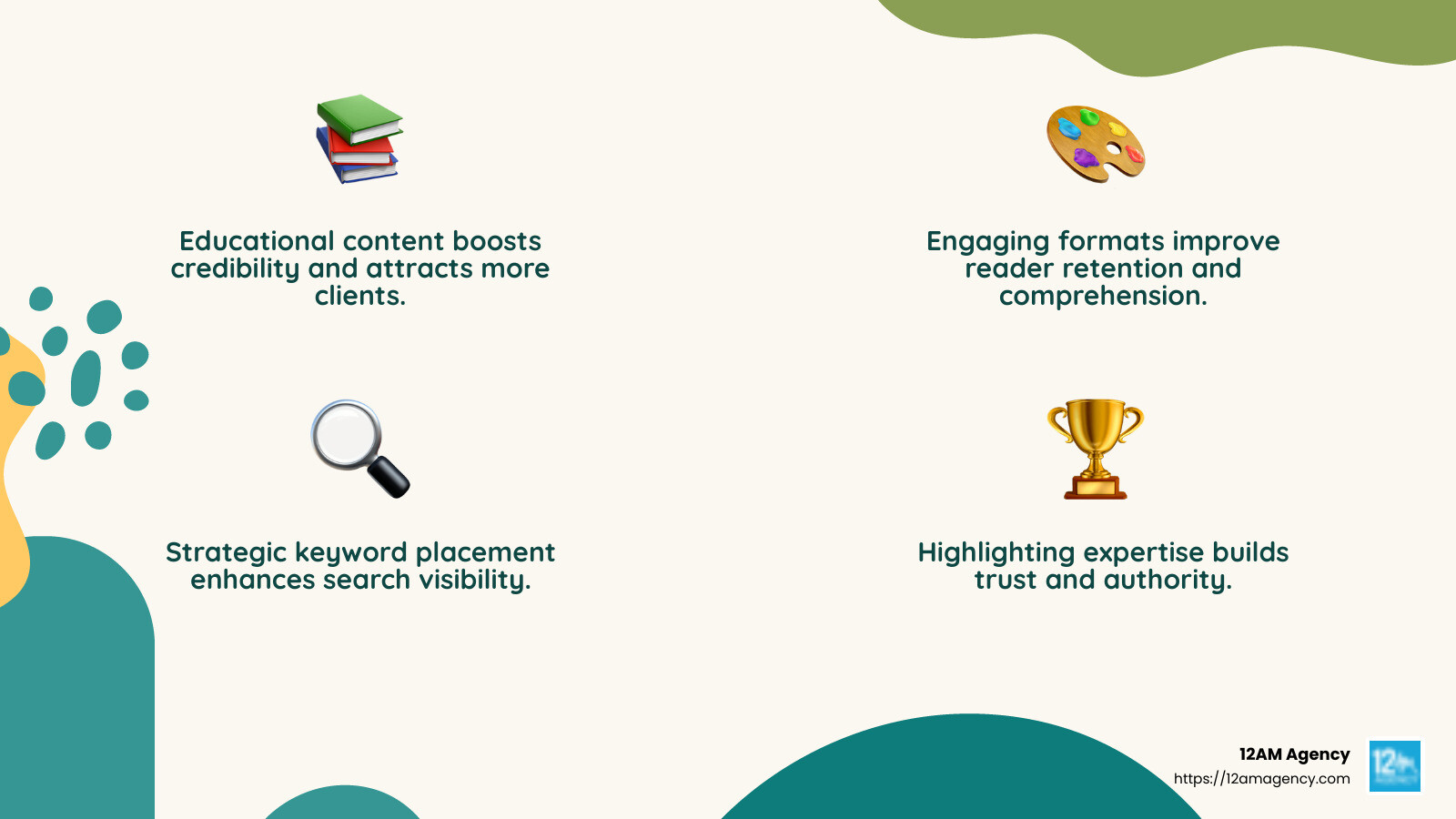
- Educational and Informative: Your content should educate your audience about legal matters. For example, a blog post titled “Understanding Your Rights in a Personal Injury Case” can help potential clients grasp complex topics.
- Engaging Formats: Use different formats like articles, infographics, and videos. Engaging visuals can make complex legal concepts more digestible.
- Credibility: Highlight your firm’s expertise by including case studies, testimonials, and credentials. This builds trust and authority.
Keyword Optimization
Optimizing your content with the right keywords makes it easier for search engines to find you. But remember, it’s about using them naturally.
- Strategic Placement: Incorporate keywords in titles, headers, and throughout the content. For example, if you’re targeting “estate planning attorney,” ensure it appears naturally within your article on wills and trusts.
- Avoid Keyword Stuffing: Overusing keywords can lead to penalties from search engines. Focus on readability and flow.
- Use Synonyms and Related Terms: This approach not only helps with SEO but also makes your content richer and more engaging.
User Intent
Understanding user intent is about knowing what your potential clients are really looking for when they search for legal services.
- Intent-Based Content: Create content that aligns with different stages of the client journey. Someone searching “do I need a lawyer for divorce” is in a different stage than someone searching “divorce lawyer near me.”
- Answer Questions: Use tools like Answer the Public to find common questions related to your practice areas. Address these questions directly in your content.
- Engage with Your Audience: Encourage comments and feedback on your blog posts. This interaction can provide insights into user intent and help tailor future content.
By focusing on these aspects of content optimization, you can create a website that not only ranks well in search engines but also resonates with your audience. Next, we’ll explore how building authority with backlinks can further boost your law firm’s online presence.
Building Authority with Backlinks
Backlinks are like votes of confidence from other websites. They tell search engines that your law firm’s site is trustworthy and authoritative. Here’s how you can build authority through backlinks, off-page citations, and link building.
Backlinks
A backlink is a link from one website to another. When reputable sites link to yours, it signals to search engines that your content is valuable.
- Quality Over Quantity: It’s better to have a few high-quality backlinks from authoritative sites than many from low-quality ones. For example, a link from a legal advice article on a site like Forbes can be more beneficial than multiple links from less reputable sites.
- Relevance Matters: Aim for backlinks from sites relevant to your legal practice. A link from a legal directory like Avvo holds more weight than a link from an unrelated blog.
Off-Page Citations
Off-page citations involve mentioning your law firm on other websites, with or without a direct link. These citations often include your firm’s name, address, and phone number.
- Consistency is Key: Ensure your business information is consistent across all platforms, including legal directories like Justia and Lawyer.com. Inconsistent information can confuse search engines and hurt your rankings.
- Local Citations: Being listed in local business directories can boost your local SEO efforts. Make sure to claim and verify your Google Business Profile for added credibility.
Link Building
Link building is the process of acquiring backlinks from other websites. It’s a crucial part of SEO strategies for lawyers.
- Guest Blogging: Write articles for reputable legal blogs and publications. Include a link back to your site in your author bio. This not only builds backlinks but also establishes you as an expert in your field.
- Networking with Peers: Collaborate with other professionals, like accountants or financial advisors, for mutual link-sharing opportunities. Offering a testimonial for a service you’ve used can also earn you a backlink.
- Create Shareable Content: Develop content that others want to link to, such as original research or interactive tools. An example could be a probate timeline calculator that other legal blogs might reference.
By focusing on these strategies, you can improve your law firm’s online authority and visibility. Backlinks, off-page citations, and strategic link building are essential components of a successful SEO strategy. Up next, we’ll dive into the technical aspects of SEO for law firms. Additionally, implementing effective content strategies for law firm websites can enhance your online presence and engage potential clients. High-quality, informative content not only attracts backlinks but also establishes your firm’s expertise in the legal field. As we explore the technical aspects further, it’s crucial to integrate these content strategies to maximize your overall SEO effectiveness.
Technical SEO for Law Firms
Technical SEO is the backbone of your website’s performance in search engines. It involves optimizing your site’s infrastructure so that search engines can easily crawl and index your pages. Let’s explore some key areas of technical SEO that are crucial for law firms.
Site Structure
A well-organized site structure is like a roadmap for both users and search engines. It helps visitors find the information they need quickly and ensures search engines understand your content.
- Logical Hierarchy: Your website should have a clear hierarchy. This means having a main navigation menu with categories like “Practice Areas” and “About Us.” Under “Practice Areas,” you might list specific services like “Family Law” or “Personal Injury.” This setup helps search engines understand the relationship between different pages.
- Internal Linking: Use internal links to connect related pages within your site. This not only helps users steer but also distributes page authority throughout your site, which can improve search rankings.
- Sitemaps: Submit an XML sitemap to search engines. This file lists all your site’s pages, making it easier for search engines to find and index them. Google provides guidelines on creating and submitting sitemaps.
Mobile-Friendly Design
With more people using mobile devices to search for legal services, having a mobile-friendly site is essential.
- Responsive Design: A responsive design ensures your site looks good on all devices, from desktops to smartphones. This means your site automatically adjusts its layout based on the screen size.
- Fast Loading Times: Aim for a load time of under 2.5 seconds. Slow sites can frustrate users and lead to higher bounce rates. Use tools like Google’s PageSpeed Insights to test your site’s speed and get optimization tips.
- Readable Fonts and Buttons: Ensure that text is legible on small screens and that buttons are easy to tap. This improves user experience and keeps visitors on your site longer, which can positively impact your SEO.
By focusing on a solid site structure and mobile-friendly design, you set the foundation for successful SEO. These technical aspects ensure that both users and search engines can steer your site with ease. Next, we’ll explore how local SEO strategies can help your law firm attract clients in your area.
Local SEO Strategies for Lawyers
Local SEO is essential for law firms looking to attract clients in their specific geographic area. It helps ensure that your firm appears in local search results when potential clients are searching for legal services nearby. Here’s how to optimize your local presence.
Google Business Profile
Creating and optimizing a Google Business Profile is a crucial step in local SEO. This free listing helps your law firm appear in Google Maps and local search results.
- Complete Your Profile: Ensure that your profile is fully filled out with accurate information. Include your firm’s name, address, phone number, and website. Don’t forget to list your practice areas and office hours.
- Photos and Updates: Regularly update your profile with new photos of your office and team. Post updates about your services or any events you’re hosting. This keeps your profile fresh and engaging.
- Client Reviews: Encourage satisfied clients to leave positive reviews. Reviews are a significant factor in local rankings. Respond to reviews, both positive and negative, to show that you value client feedback.
Local Directories
Getting your law firm listed in local directories can boost your visibility and help build credibility.
- Consistent NAP: Ensure your Name, Address, and Phone number (NAP) are consistent across all directories. Inconsistencies can confuse search engines and hurt your local rankings.
- Reputable Directories: Focus on listing your firm in reputable legal directories like Avvo, Justia, and Nolo. These sites have high domain authority and can provide valuable backlinks to your site.
- Local Listings: Consider directories specific to your city or region. These can include local chambers of commerce or business associations, which can help you connect with potential clients in your area.
Location-Based Keywords
Using location-based keywords in your content can improve your chances of appearing in local search results.
- City and Practice Area: Incorporate your city and practice area into your website’s content. For example, use phrases like “divorce lawyer in Austin” or “personal injury attorney in Milwaukee.”
- Content Placement: Include these keywords in strategic places like your homepage, service pages, and blog posts. Also, add them to meta descriptions and title tags for better optimization.
By leveraging Google Business Profile, local directories, and location-based keywords, your law firm can stand out in local search results. These strategies not only improve your visibility but also attract clients who are specifically looking for legal services in your area. Next, we’ll dive into how you can measure the success of your SEO efforts.
Measuring SEO Success
Once you’ve implemented your SEO strategies for lawyers, it’s crucial to measure how well they’re working. This is where tools like Google Analytics come into play. Tracking performance helps you understand what’s driving traffic and conversions, allowing you to calculate your return on investment (ROI).
Google Analytics
Google Analytics is a powerful, free tool that provides insights into how visitors interact with your website. It helps you track:
- Traffic Sources: Understand where your visitors are coming from. Are they finding you through organic search, social media, or referrals from other sites?
- User Behavior: See which pages are most popular and how long visitors stay on them. This can guide you in optimizing content that keeps users engaged.
- Conversion Rates: Track how many visitors are taking desired actions, like booking a consultation or filling out a contact form. This is key to understanding the effectiveness of your SEO efforts.
Performance Tracking
Tracking performance involves more than just Google Analytics. You’ll want to monitor:
- Keyword Rankings: Use tools like Ahrefs or Accuranker to see how your target keywords are performing. Are they moving up in search results?
- Search Visibility: Keep an eye on your overall search visibility. This metric gives you an idea of how often your site appears in search results compared to competitors.
- Backlink Profile: Check the quality and quantity of backlinks to your site. Tools like Moz or SEMrush can help you assess your backlink strategy’s effectiveness.
ROI
Calculating the ROI of your SEO efforts is essential to justify your investment. Here’s how you can do it:
- Cost vs. Revenue: Compare the cost of your SEO activities to the revenue generated from organic leads. This can be tricky, but it’s crucial for understanding the value of your efforts.
- Lead Quality: Consider not just the number of leads, but their quality. Are they converting into paying clients? High-quality leads mean a higher ROI.
- Time Frame: SEO is a long-term strategy. Expect to see significant ROI over months, not days. Be patient and consistent with your tracking efforts.
By using tools like Google Analytics and focusing on performance tracking, you can effectively measure the success of your SEO strategies for lawyers. This data-driven approach ensures that your efforts are not only improving visibility but also driving meaningful business results. Next, we’ll address some frequently asked questions about SEO for lawyers.
Frequently Asked Questions about SEO for Lawyers
What is law firm SEO?
This is the work we do for you. Every week, without exception.
Managing GBP at this level takes 6–8 hours a week when done right. Nova handles the entire system — posts, photos, reviews, Q&A, citations, heatmap tracking — so you can focus on running your business.
Law firm SEO is the practice of optimizing a legal website to improve its visibility in organic search results. This involves strategies like keyword research, content creation, and link building. The goal is to ensure that when potential clients search for legal services, your firm appears prominently in the results.
Law firm SEO is important because it helps you reach clients who are actively searching for legal assistance. For instance, if someone searches for “family lawyer in Dallas,” effective SEO could put your firm at the top of the results, increasing the likelihood that they’ll contact you.
Why is SEO important for lawyers?
SEO is crucial for lawyers because it helps attract potential clients at the moment they need legal services. Unlike traditional advertising, SEO targets people who are already interested in what you offer, making it more effective and cost-efficient.
Consider this: A survey revealed that 70% of law firms reported getting new clients through their website. SEO plays a significant role in this, as it improves your online presence and credibility. By optimizing your site, you can stand out in a crowded market and build trust with prospective clients.
How do I start with SEO for my law firm?
Starting with SEO for your law firm involves several key steps:
- Audit Your Current SEO: Use tools like Screaming Frog to identify strengths, weaknesses, and opportunities on your site. This will give you a clear starting point.
- Keyword Research: Focus on long-tail keywords that are specific to your practice area. Tools like Google Keyword Planner can help you find relevant terms that potential clients are searching for.
- Optimize Your Content: Ensure your website content is high-quality and optimized for the keywords you’ve identified. This includes updating title tags, meta descriptions, and ensuring your content is informative and engaging.
- Build Backlinks: Start developing a backlink strategy by creating content that other sites will want to link to. This could be in the form of blog posts, infographics, or legal guides.
- Claim Your Google Business Profile: This is essential for local SEO. Make sure your profile is complete and accurate to improve your visibility in local search results.
By following these steps, you can lay a strong foundation for your law firm’s SEO strategy. SEO is an ongoing process, so regular updates and optimization are key to maintaining and improving your search rankings.
Next, let’s explore some practical content optimization strategies for law firms to ensure your website not only attracts visitors but also converts them into clients.
Conclusion
At 12AM Agency, we understand the unique challenges law firms face in the digital world. With a base in Dallas, Texas, we’re perfectly positioned to help local law firms improve their online presence. Our approach is simple: we provide personalized, results-driven strategies custom to your specific needs.
Why Choose 12AM Agency?
- Expertise in Legal SEO: We specialize in SEO strategies for lawyers, ensuring your firm stands out in search results. Our team knows the legal industry inside out and can tailor strategies to your practice area.
- Comprehensive Services: From keyword research and content creation to technical SEO and mobile optimization, we offer a full suite of digital marketing services. This means you get everything you need in one place, saving you time and effort.
- Personalized Strategies: We believe that one size does not fit all. Our strategies are customized to your firm’s goals, whether you’re looking to increase visibility, attract more clients, or improve your online reputation.
- Local Focus: Being based in Dallas, we have a deep understanding of the local market. This allows us to develop effective local SEO strategies that connect you with clients in your area.
By partnering with us, you’re not just getting a service provider; you’re getting a dedicated ally committed to your success. We stay on top of industry trends and continuously optimize your campaigns to ensure maximum impact.
Ready to take your law firm’s online presence to the next level? Contact us today and find how our personalized strategies can help you achieve your goals. Let’s work together to make your firm the first choice for clients in Dallas and beyond. Our expertise in best digital marketing for law firms ensures that your firm stands out in a competitive landscape. By leveraging the latest trends and technologies, we can enhance your visibility and connect you with more potential clients. Start your journey towards success by embracing innovative marketing strategies tailored for the legal industry.

