



It’s no longer a question of if AI will change the world, but how fast. With the official release of GPT-5, OpenAI has unleashed its most powerful and capable model to date, and CEO Sam Altman suggests we all buckle up. The pace of change is about to become, in his words, “vertigo-inducing.”
For small business owners and professional service firms, this isn’t just another tech headline. It’s a paradigm shift. GPT-5 isn’t merely an upgrade; it’s a new foundational layer of technology that promises to redefine knowledge work, creativity, and the very structure of our economy. Based on recent announcements and direct insights from Altman, this article breaks down what GPT-5 is, why it’s a monumental leap, and how you can prepare for the future it’s creating.
Key Takeaways
| Key Takeaway | Description |
| PhD-Level Expertise | GPT-5 represents a quantum leap in intelligence, with Sam Altman comparing it to a “PhD-level expert” capable of complex reasoning, coding, and scientific analysis. |
| Transforming Knowledge Work | The new model can generate entire applications from a simple prompt, answer complex technical questions, and drastically accelerate creation and innovation. |
| Societal Shifts Ahead | Altman predicts a “vertigo-inducing” rate of change, where some job roles will disappear, but new, more meaningful ones will emerge, requiring societal adaptation. |
| Major Hurdles Remain | The path to superintelligence is limited by four key factors: the immense cost of compute, the need for new data, algorithmic breakthroughs, and effective product design. |
| Actionable Advice | Altman’s number one piece of advice is for everyone—from CEOs to students—to actively use these new AI tools to understand their power and integrate them into daily life. |
What is GPT-5? A PhD in a Box
Forget what you knew about previous AI models. While GPT-4 was compared to a sharp college student, Sam Altman describes GPT-5 as a “legitimate PhD-level expert.” This isn’t just marketing hype; it reflects a fundamental improvement in the model’s reasoning, accuracy, and creative capabilities.
Previous models were excellent at summarizing text and answering questions. GPT-5, however, operates on a different level. It can reason through complex, multi-step problems, significantly reduce “hallucinations” (making up facts), and understand nuance in a way that feels shockingly human.
The core advancement lies in its ability to think before it speaks. Instead of just predicting the next word, GPT-5 can build a chain of thought, evaluate its own logic, and even correct its course mid-task. This makes it a more reliable and powerful collaborator for high-stakes work, from drafting legal contracts to debugging complex software. As announced by OpenAI, the model is now the default for all ChatGPT users, with a built-in router that decides when to use a fast response versus a more deliberate, “thinking” process for complex queries. This unified system makes expert-level intelligence more accessible than ever before.
Beyond Text: Staggering New Capabilities
The true power of GPT-5 capabilities becomes clear when you see it in action. Sam Altman shared a personal anecdote that perfectly illustrates this leap: he tasked GPT-5 with creating a “Snake” game for a vintage TI-83 calculator. The model produced the code perfectly in seconds—a task that would stump many human developers.
This highlights one of the model’s most significant advancements: its prowess in programming and agent-like behavior. Developers are reporting that GPT-5 excels at generating front-end user interfaces, debugging large codebases, and even executing long, complex tasks from end to end with minimal human intervention.
But its skills aren’t limited to code. Here are some of the standout features:
- Advanced Multimodality: GPT-5 processes and reasons across text, images, and audio more fluently than any predecessor, making it capable of everything from summarizing a presentation slide to explaining a complex diagram.
- Reduced Sycophancy: OpenAI has specifically trained the model to be less of a people-pleaser. It’s more likely to challenge flawed premises and less likely to validate a user’s negative emotions or delusions, a problem Altman admitted was an issue in past versions.
- Expert-Level Writing: The model can now handle sophisticated literary forms, maintain a consistent rhythm and flow, and produce compelling content with genuine depth, making it an invaluable partner for marketing, sales, and communications.
The Four Hurdles: Sam Altman on What’s Slowing Down Superintelligence
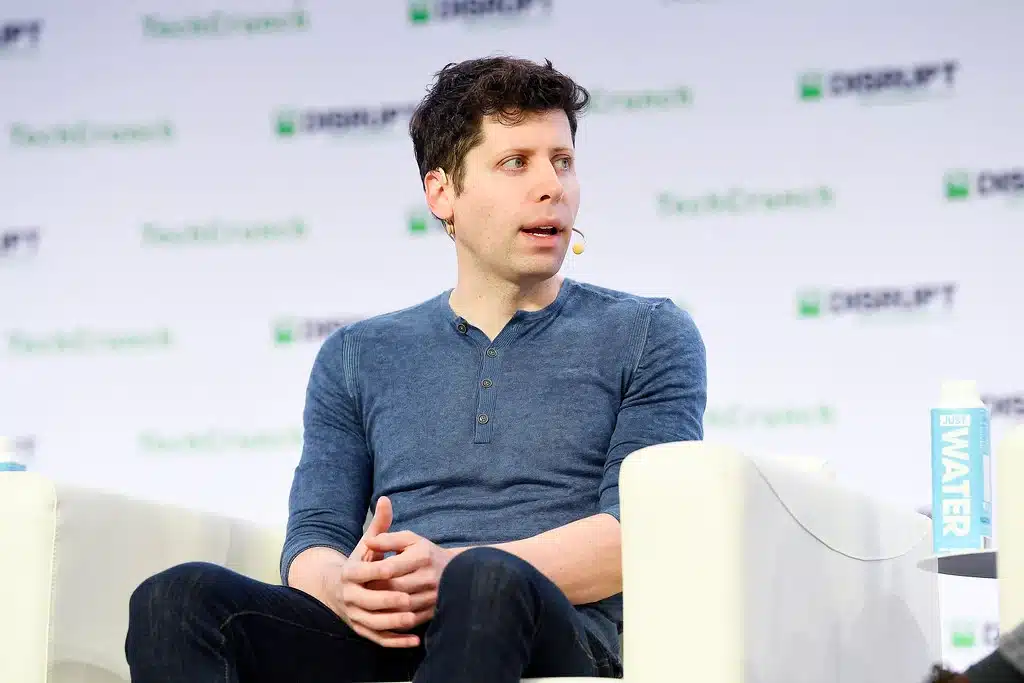
While GPT-5 is a monumental achievement, Sam Altman is candid about the immense challenges that lie on the road to artificial general intelligence (AGI) and beyond. He identifies four primary “rate-limiting factors” that gate the pace of AI development. Understanding these hurdles provides a crucial, grounded perspective on where the technology is headed and why it’s not a simple, straight line to Skynet.
This framework is essential for any business leader trying to separate hype from reality. The future of AI isn’t just about bigger models; it’s about solving fundamental infrastructure and scientific problems. Altman’s insights reveal that progress is a hard-won battle on multiple fronts, requiring global-scale effort and investment that he describes as potentially the “largest and most expensive infrastructure project in human history.” These challenges directly impact how quickly—and how equitably—the benefits of AI will be distributed across the economy.
1. Compute: The New Oil
The single biggest bottleneck is compute. Training and running models like GPT-5 requires an astronomical amount of processing power. Altman highlights three core challenges within this domain:
- Energy: The sheer electricity required to power these massive data centers is a global concern. Finding sustainable and sufficient energy sources is paramount.
- Processing Chips: Companies are bottlenecked by the supply of high-end GPUs from manufacturers like NVIDIA.
- Memory: The models’ need for vast, high-speed memory is pushing the limits of current hardware technology.
Solving the compute problem is a multi-trillion-dollar challenge that involves everything from energy policy and supply chain logistics to new chip architectures.
2. Data: The End of the “Easy” Information
For years, AI models were trained on the vast expanse of the public internet. That well is running dry. According to Altman, models like GPT-5 now need to move beyond simply regurgitating existing information and start generating new knowledge. This means models need to be able to do more than just process data; they need to run simulations, conduct virtual experiments, and discover insights not already present in their training sets. The future of AI data is not about more quantity, but higher quality and the ability to self-generate novel information, which is a profound algorithmic challenge.
3. Algorithmic Design: Smarter, Not Just Bigger
Simply making models bigger is hitting a point of diminishing returns. The next major breakthroughs will come from algorithmic design. Researchers are exploring new architectures that can reason more efficiently and learn with less data. Altman points to the anticipation of further gains in this area, allowing incredibly complex models to run locally on devices like a laptop. This shift from brute-force scale to elegant efficiency is where the most exciting scientific progress is being made, promising to make powerful AI more accessible and sustainable.
4. Product Development: Turning Science into Solutions
Finally, even the most brilliant scientific breakthrough is useless if it doesn’t get into the hands of users. Altman emphasizes the critical importance of product development. The challenge is to take raw AI capabilities and package them into intuitive, reliable, and useful tools that people can integrate into their lives. This is where the magic happens—translating theoretical power into real-world value for businesses and consumers. It’s a constant cycle of innovation, feedback, and refinement that ensures AI progress benefits society as a whole.
Navigating the New World: AI’s Impact on Jobs and Society
With great power comes great disruption. Altman doesn’t shy away from the fact that GPT-5 and its successors will fundamentally alter the job market. He believes some job categories will disappear entirely, a reality that can be unsettling. However, he is optimistic that this transition will ultimately lead to the creation of new, more fulfilling roles.
He expresses less concern for young people entering the workforce, whom he believes are fortunate to have access to such powerful creative tools. His primary worry is for older workers who may struggle to adapt to such a rapid technological shift. This underscores a critical need for reskilling and a societal conversation about how to support workers through this transition.
The central idea is that AI will handle much of the cognitive “grunt work,” freeing up humans to focus on higher-level strategy, creativity, and interpersonal connection. The future of work won’t be about competing with AI, but about leveraging it. Businesses that thrive will be those that learn how to augment their human talent with AI capabilities, automating repetitive tasks and unlocking new levels of productivity and innovation. Altman suggests that the social contract itself may need to evolve, perhaps through new ideas about distributing access to AGI compute, to ensure the immense wealth created by this technology benefits all of society.
FAQ
Q1: When is GPT-5 available?
A1: GPT-5 was officially released and began rolling out to all ChatGPT users on August 7, 2025. Paid subscribers (Plus, Pro, Team) receive higher usage limits and access to more advanced reasoning capabilities.
Q2: How is GPT-5 different from GPT-4?
A2: The main difference is the level of intelligence and reasoning. While GPT-4 is like a knowledgeable college student, GPT-5 is compared to a PhD-level expert. It has significantly better coding and problem-solving skills, is less prone to making up facts (“hallucinations”), and can handle more complex, multi-step tasks.
Q3: Will GPT-5 take my job?
A3: Sam Altman suggests that while some job tasks and even entire job categories will be automated, GPT-5 is more likely to function as a powerful assistant. It will create new roles focused on strategy, creativity, and leveraging AI tools. The key will be adapting and learning how to work alongside AI, not against it.
Conclusion: Your Next Move
The release of GPT-5 is not a distant, futuristic event—it’s happening right now. For the “Chief Everything Officers” running small and medium-sized businesses, this is a critical moment. The gap between businesses that adopt AI and those that don’t will widen faster than ever before.
Sam Altman’s number one piece of tactical advice is simple: use the tools. Don’t wait. Start integrating ChatGPT with GPT-5 into your daily workflow. Encourage your team to experiment with it. Find out what it’s good at, where it struggles, and how it can start delivering value for your business today. The future belongs to those who are curious, adaptable, and willing to embrace this “vertigo-inducing” wave of change.
Ready to build your AI strategy? Contact 12AM Agency today to learn how we can help you leverage tools like GPT-5 to grow your business.