





Every business is fighting for digital attention right now and pay-per-click campaigns are often the quickest path to new customers. Most people assume setting a daily budget and picking a few keywords is enough to win. But the data tells a different story. Advanced research shows that data-driven optimization can yield click-through rate improvements between 42% and 137% and cost-per-click gains of up to 60%. The strategies that deliver these results might surprise you and could completely change how you think about PPC.
Table of Contents
- Understanding The Basics Of PPC Campaign Optimization
- Key Metrics To Track For PPC Success
- Advanced Techniques For Better PPC Results
- Tailoring PPC Optimization To Your Industry
Quick Summary
| Takeaway | Explanation |
|---|---|
| Optimize keyword management strategically. | Organize keywords to improve relevance and minimize unnecessary spending, enhancing overall campaign performance. |
| Track essential metrics for insights. | Focus on Click-Through Rate and Conversion Rate to gauge ad effectiveness and adjust strategies accordingly. |
| Implement advanced bidding techniques. | Use machine learning for adaptive bidding, optimizing ad rankings based on real-time performance and user intent. |
| Tailor strategies to industry specifics. | Customize PPC approaches according to unique market dynamics and customer behaviors relevant to each industry. |
| Incorporate data-driven optimization models. | Utilize comprehensive datasets to refine bidding strategies and improve click-through rates significantly. |
Understanding the Basics of PPC Campaign Optimization
PPC campaign optimization is the strategic process of refining and improving pay-per-click advertising efforts to maximize return on investment and drive more targeted traffic. At its core, this approach transforms digital advertising from a hit-or-miss strategy into a precision-driven performance engine.
The Mathematical Foundation of Keyword Optimization
Keyword management represents the critical first step in PPC campaign optimization. A groundbreaking computational framework reveals that effective keyword strategies require sophisticated multi-level decision-making. Researchers have developed advanced models that analyze keyword performance across market, campaign, and ad group levels, demonstrating that structured keyword management can dramatically improve campaign outcomes.
The research highlights three key dimensions of keyword optimization:
- Strategic Grouping: Systematically organizing keywords to maximize relevance and minimize wasted spend
- Performance Modeling: Using statistical analysis to predict potential click-through and conversion rates
- Budget Allocation: Dynamically adjusting investments based on real-time performance metrics
Adaptive Pacing Strategies for Budget Management
Budget management goes beyond simple spend tracking. Innovative research in online advertising introduces smart pacing techniques that learn from both offline and online data to achieve smooth budget delivery. These advanced strategies enable advertisers to:
- Optimize budget distribution across campaign periods
- Predict and mitigate performance fluctuations
- Ensure consistent ad visibility without sudden spending spikes
By implementing these data-driven approaches, businesses can transform their PPC campaigns from reactive spending to strategic investment. Interested in diving deeper into campaign strategy? Learn how to select a PPC partner that delivers genuine ROI.
Successful PPC campaign optimization requires a holistic approach that combines technical precision, strategic thinking, and continuous performance analysis. While the mathematics behind keyword optimization might seem complex, the fundamental goal remains simple: connect the right message with the right audience at the right time, while maintaining strict cost efficiency.
Business owners and marketing professionals must recognize that PPC is not a set-it-and-forget-it marketing channel. It demands constant attention, granular analysis, and a willingness to adapt strategies based on emerging data and market dynamics. The most successful campaigns are those that treat optimization as an ongoing process of refinement and learning.
Key Metrics to Track for PPC Success
Understanding and monitoring the right performance metrics is crucial for driving successful PPC campaigns. Digital marketing research highlights the critical importance of tracking comprehensive metrics that go beyond surface-level data to provide actionable insights into campaign performance.
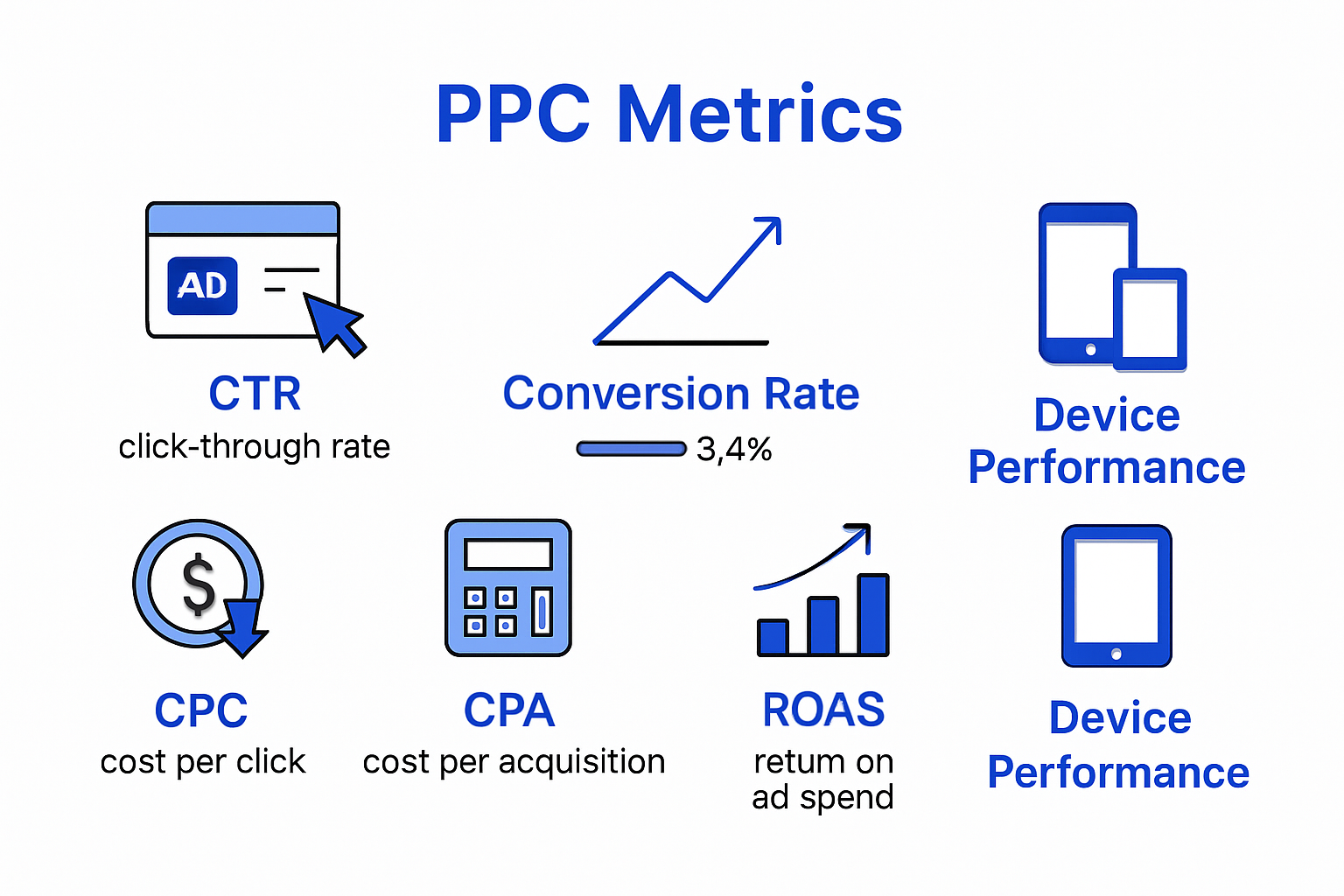
To help you quickly distinguish between core PPC performance metrics, the table below summarizes key metrics, their definitions, and why they matter:
| Metric | Definition | Why It Matters |
|---|---|---|
| Click-Through Rate (CTR) | % of users who click your ad after seeing it | Measures ad relevance and appeal |
| Conversion Rate | % of clicks resulting in a desired action | Indicates campaign effectiveness |
| Cost Per Click (CPC) | Amount spent for each ad click | Tracks ad spend efficiency |
| Cost Per Acquisition (CPA) | Total cost to acquire a customer | Assesses cost-effectiveness of generating customers |
| Return on Ad Spend (ROAS) | Revenue generated relative to ad spend | Evaluates revenue impact of campaigns |
| Quality Score | Google’s rating of ad/keyword/landing page quality | Influences CPC and ad position |
| Device-Specific Metrics | Performance by device type (mobile, desktop, tablet) | Enables targeted optimization strategies |
Click-Through and Conversion Performance Metrics
Click-Through Rate (CTR) and Conversion Rate stand as the foundational metrics for evaluating PPC campaign effectiveness. CTR measures the percentage of users who click on your ad after seeing it, providing a direct indicator of ad relevance and appeal. A high CTR suggests that your ad copy and targeting are resonating with your target audience.
Conversion Rate takes this analysis deeper by tracking the percentage of clicked users who complete a desired action. This might include:
- Purchase Completion: Direct sales transactions
- Lead Generation: Form submissions or contact requests
- Engagement Actions: Downloading resources or signing up for newsletters
Businesses should aim for continuous improvement in these metrics, recognizing that even small incremental gains can significantly impact overall campaign performance.
Financial Performance and Efficiency Metrics
Financial metrics provide the critical lens through which campaign success is ultimately measured. Key indicators include:
- Cost Per Click (CPC): The amount spent for each ad click
- Cost Per Acquisition (CPA): Total cost of acquiring a single customer
- Return on Ad Spend (ROAS): Revenue generated relative to advertising expenditure
Discover strategies for selecting a PPC partner that delivers genuine ROI to maximize your advertising investments.
Advanced Performance Tracking
Beyond basic metrics, sophisticated PPC management involves tracking more nuanced performance indicators. Quality Score represents a critical advanced metric that Google uses to assess the relevance and quality of your keywords, ad copy, and landing pages. A higher Quality Score can lead to lower CPC and better ad positioning.
Device-specific performance metrics have also become increasingly important. Understanding how your ads perform across different devices mobile, tablet, and desktop allows for more targeted optimization strategies. Some campaigns might see dramatically different performance profiles depending on the device type.
Successful PPC campaign management is not about achieving perfection in a single metric but creating a balanced approach that considers multiple performance indicators. Regularly reviewing and adjusting your strategy based on comprehensive metric analysis ensures continuous improvement and maximum return on your advertising investment.
Advanced Techniques for Better PPC Results
Advanced PPC optimization requires sophisticated strategies that go beyond traditional approaches. Cutting-edge research in digital advertising reveals how innovative techniques can dramatically improve campaign performance through intelligent data manipulation and dynamic learning systems.
Here’s a summary of advanced PPC techniques discussed in the article, their core approaches, and key benefits to clarify how these methods enhance campaign performance:
| Technique | Approach/Method | Key Benefit |
|---|---|---|
| Real-Time Bidding & Machine Learning | Adaptive algorithms using reinforcement learning | Responsive, data-driven bidding and improved ad ranking |
| Precision Targeting & Auction | Granular user profiling, cost thresholds, analytics | Optimal publisher selection and profitability tuning |
| Intelligent CPC Optimization | Probabilistic modeling and live data adjustment | More precise bids and improved cost efficiency |
| Automated Creative Optimization | Algorithmic creative testing and modeling | Higher CTR via optimized creative interactions |
Real-Time Bidding and Machine Learning Optimization
Modern PPC campaigns leverage advanced machine learning techniques to transform bidding strategies. Researchers have developed dynamic models that use reinforcement learning to optimize ad ranking and bidding in search advertising. These sophisticated approaches balance multiple critical factors:
- Advertiser Cost Management: Minimizing spending while maximizing potential returns
- User Relevance: Ensuring ads match precise user intent
- Platform Revenue Optimization: Creating win-win scenarios for advertisers and platforms
The core innovation lies in adaptive bidding algorithms that continuously learn and adjust based on real-time performance data. This approach moves beyond static bidding strategies, creating a more responsive and intelligent advertising ecosystem.
Precision Targeting and Auction Strategies
Advanced optimization research demonstrates the power of refined user profiling and strategic auction participation. Key techniques include: optimization strategies for small businesses can significantly enhance their visibility and competitiveness in crowded markets. By leveraging data analytics and targeted marketing efforts, these businesses can tailor their offerings to better meet customer needs. Implementing such strategies not only drives sales but also fosters long-term customer loyalty.
- Developing granular user profiles
- Analyzing publisher website parameters
- Setting precise cost and profitability thresholds
- Expanding search spaces to identify optimal campaign configurations
Interested in maximizing your advertising potential? Learn about selecting the right PPC marketing approach to drive exceptional results.
Intelligent Cost Per Click Optimization
Cost Per Click (CPC) optimization has evolved into a sophisticated science. Innovative research proposes advanced modeling techniques that treat clicks as probabilistic events, enabling more precise bid recommendations. This approach involves:
- Analyzing comprehensive impression and click stream datasets
- Modeling clicks as Bernoulli trials
- Continuously updating bid strategies based on live performance data
- Generating targeted feature recommendations without compromising overall campaign efficiency
The future of PPC campaign optimization lies in this intersection of data science, machine learning, and strategic thinking. Businesses that embrace these advanced techniques can create more efficient, responsive, and profitable advertising strategies. The key is not just collecting data, but developing the analytical capabilities to transform that data into actionable insights.
Successful PPC campaigns now require a holistic approach that combines technical sophistication with deep strategic understanding. By leveraging advanced machine learning techniques, real-time optimization, and intelligent targeting, businesses can move beyond traditional advertising limitations and create truly dynamic marketing ecosystems.
Tailoring PPC Optimization to Your Industry
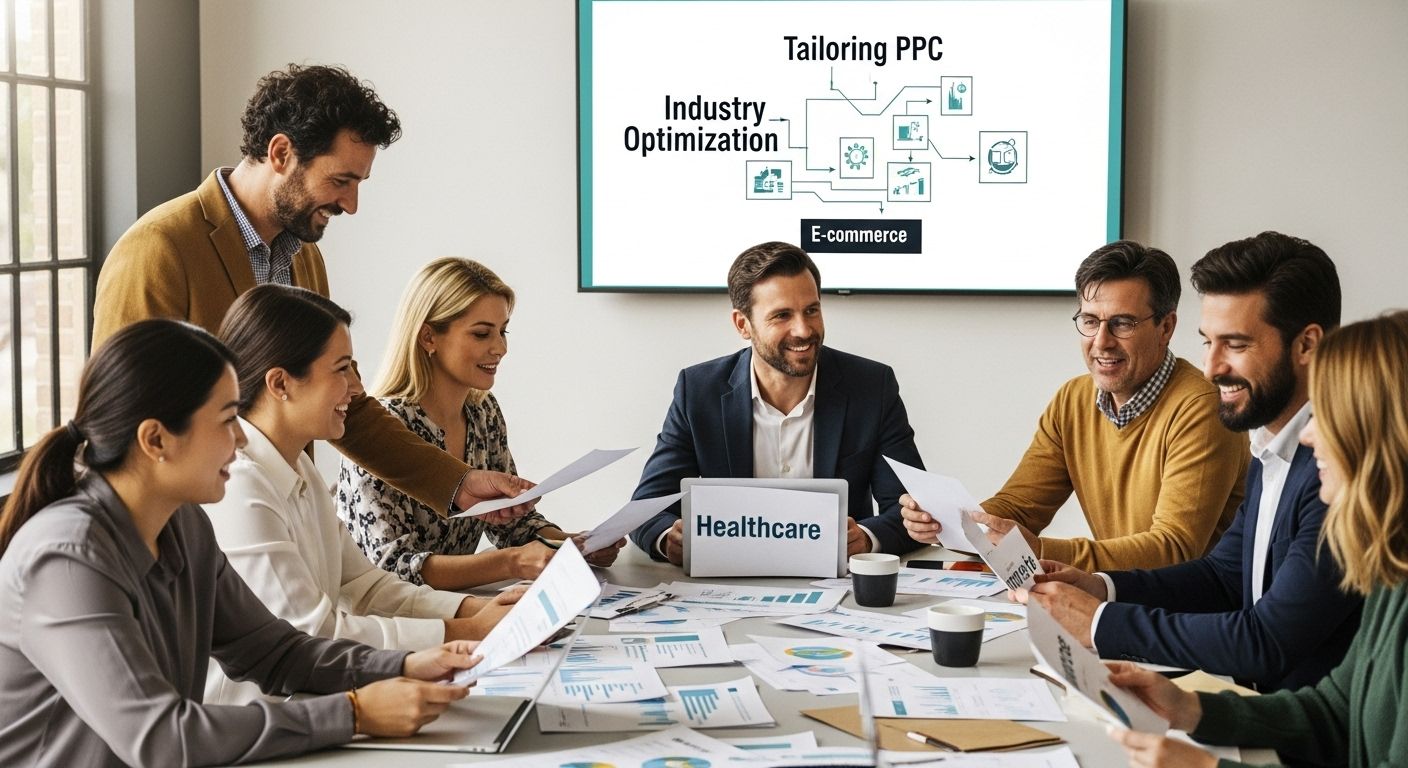
PPC campaign optimization is not a one-size-fits-all strategy. Each industry demands a unique approach that considers specific market dynamics, customer behaviors, and competitive landscapes. Research in digital advertising emphasizes the critical importance of developing industry-specific optimization strategies that go beyond generic advertising techniques.
Industry-Specific Targeting and Profitability Strategies
Different industries require nuanced approaches to Real-Time Bidding (RTB) and campaign configuration. Advanced optimization research reveals that campaign performance varies significantly based on industry-specific parameters. Key considerations include:
- User Profile Refinement: Developing granular audience segments unique to each industry
- Website Parameter Analysis: Understanding industry-specific digital ecosystems
- Profitability Threshold Customization: Setting precise cost parameters that align with industry benchmarks
For instance, e-commerce platforms might prioritize different optimization strategies compared to professional services or healthcare providers. The complexity increases as the required number of visits changes, with average profitability often fluctuating based on industry-specific constraints.
Creative Optimization Across Sectors
Creative elements play a crucial role in industry-specific PPC success. Cutting-edge research introduces an Automated Creative Optimization (AutoCO) framework that demonstrates remarkable results across different advertising contexts. In an extensive study, this approach achieved:
- A 7% increase in click-through rates
- More effective interaction between creative elements
- Advanced modeling of complex marketing interactions
Discover how to maximize your ad spend with the right marketing approach tailored to your specific industry needs.
Data-Driven Optimization Techniques
Precision is paramount in industry-specific PPC campaigns. Innovative research demonstrates the power of data-driven optimization, showcasing impressive results across multiple campaigns:
- CPC gains ranging from 16% to 60%
- Click-through rate improvements between 42% and 137%
- Comprehensive analysis of impression and click stream datasets
Successful PPC optimization requires a deep understanding of industry nuances. Legal services, healthcare, e-commerce, and professional services each demand unique approaches to keyword selection, ad creative, and targeting strategies. The most effective campaigns leverage:
- Industry-specific keyword research
- Targeted audience segmentation
- Customized ad messaging
- Precise performance tracking
Businesses must move beyond generic approaches and develop sophisticated, data-driven strategies that reflect their unique market positioning. The future of PPC optimization lies in hyper-personalized, industry-specific approaches that combine advanced analytics, creative optimization, and deep market understanding.
Frequently Asked Questions
What is PPC campaign optimization?
PPC campaign optimization refers to the process of refining pay-per-click advertising efforts to maximize return on investment and drive targeted traffic by using structured strategies and data analysis.
Why are key metrics important in PPC campaigns?
Key metrics, such as Click-Through Rate (CTR) and Conversion Rate, provide vital insights into the effectiveness of your ads, helping you gauge performance and make informed adjustments for improved results.
How does real-time bidding impact PPC performance?
Real-time bidding allows for adaptive algorithms to optimize bidding strategies based on real-time performance data, improving ad ranking and cost management while matching ads to user intent more closely.
What role does industry specificity play in PPC optimization?
PPC optimization strategies must be tailored to specific industries to account for unique customer behaviors, market dynamics, and competitive landscapes, ensuring campaigns are effective and relevant.
Ready to Accelerate Your PPC Results with Real Experts?
If your team is frustrated by wasted ad spend, unpredictable results, or stalled growth from paid search campaigns, you are not alone. Our latest article highlighted how true PPC campaign optimization requires strategic keyword grouping, adaptive pacing, and advanced data-driven techniques. Most businesses struggle to connect these crucial points and turn insights into ongoing performance gains. That is where the difference lies.
Partner with a results-focused agency that understands the power of machine learning, industry-specific approaches, and continuous improvement. The digital marketing team at 12AM Agency will assess your unique needs and tailor a strategy that applies these proven optimization frameworks directly to your campaigns. Discover how we help you benchmark and boost every PPC metric by scheduling your free consultation now. Transform your paid search investments into a real growth engine by contacting us at https://12amagency.com.