


For most local service business owners—plumbers, landscapers, marketers, cleaners—the dream of “being your own boss” quickly turns into the reality of “owning your own job.”
You’re trapped. Your business is you.
If you take a vacation, revenue stops. If you get sick, customers get angry. You’re the lead technician, the chief salesperson, and the only quality control manager.
You’ve achieved growth, but you haven’t achieved scale. And they are not the same thing.
This is the “owner-operator” trap. The only way out is to deliberately build a business that can run—and grow—without you. It requires a fundamental shift from being a technician to being an architect.
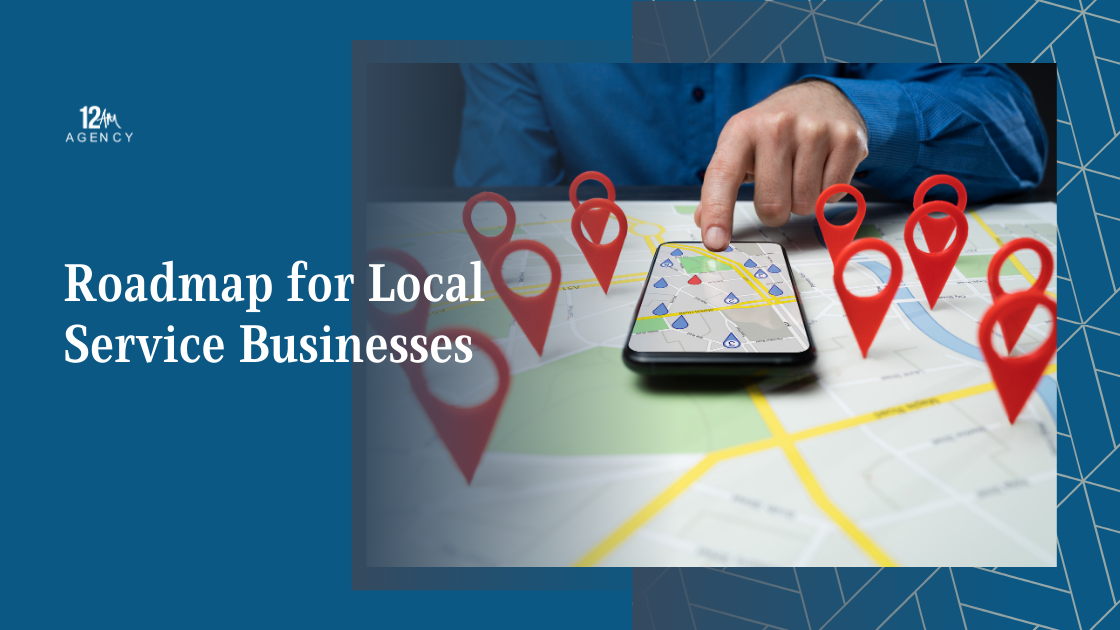
Here is the 6-step roadmap to move from a chaotic hustle to a scalable, predictable local service business.
Key Takeaways
| Problem | Action |
Outcome |
| Your business only grows if you work more hours. You’re trapped. | Shift your mindset from “growth” (adding resources) to “scale” (multiplying output). | You start building a business that can grow without you being the bottleneck. |
| Every new employee makes costly mistakes or asks the same questions. | Create and document Standard Operating Procedures (SOPs) for 80% of your business. | Consistent service delivery, faster employee onboarding, and a less chaotic work environment. |
| Your revenue is tied to “time and materials,” making it unpredictable. | “Productize” your services by offering fixed-price, fixed-scope packages. | Easier sales, clearer customer expectations, and a more predictable revenue stream that’s easier to scale. |
| You’re the only one who can “do it right,” so you can’t hire. | Build a “Growth Team” by hiring for roles, not just tasks, starting with your weakest area. | You buy back your time, allowing you to focus on high-value “owner” tasks like strategy and sales. |
| You’re still relying on word-of-mouth and 1-to-1 referrals. | Build a scalable marketing engine (like Local SEO) that generates leads 24/7. | A predictable flow of new customers that doesn’t depend on your personal networking efforts. |
Step 1: Understand “Growth” vs. “Scale”
This is the most important mindset shift you will ever make.
- Growth is adding resources to add revenue. You hire one more technician to service one more route. You spend one more hour to make one more sale. It’s linear. Your costs grow at the same rate as your revenue.
- Scale is adding revenue without adding proportional resources. It’s building a system that can handle 100 new customers as easily as it handles 10. You create one SOP that trains 50 new hires. You build one SEO-optimized website that generates leads while you sleep.
Growth is you, the owner, running faster on the hamster wheel. Scale is you building a new, automated wheel that runs itself.
Step 2: The Foundation: Systemize or Die
You cannot scale chaos. If your business only runs because of the “heroic” efforts of you and your first hire, you don’t have a business; you have a high-stress co-op.
The first step to scaling is to get the business out of your head. You must create Standard Operating Procedures (SOPs).
This sounds corporate and boring, but it’s the key to freedom. An SOP is just a simple checklist, video, or document that answers the question, “How do we do this?”
- How to answer the phone (the exact script).
- How to load the truck for a job.
- How to send an invoice.
- How to respond to a negative review.
In an interview, pet waste removal entrepreneur Erica Krupin explained how she finally had to implement SOPs—like mandatory “closed gate photos” for her team—after a bad hire almost destroyed her company by letting dogs escape. The SOP wasn’t just a “nice-to-have”; it became a critical tool for quality control and building owner confidence.
Your Goal: Document the 80% of your business that is repeatable. This system, not you, becomes the “boss.” It allows you to delegate tasks with a clear “definition of done.”
Step 3: Productize Your Services
The “time and materials” model, or charging by the hour, is the enemy of scale. It’s unpredictable for you and the customer.
“Productizing” means turning your service into a product with a fixed scope, a fixed price, and a predictable result.
| Traditional Service (Not Scalable) |
Productized Service (Scalable) |
| “I’ll come out and give you an estimate for a yard cleanup.” | “Our ‘Spring Cleanup’ package is $499. It includes X, Y, and Z.” |
| “Our SEO services are $150/hour.” | “Our ‘Local SEO’ package is $2,000/month. It includes…” |
| “Call us for a quote!” | “Choose your package: Bronze, Silver, or Gold.” |
Why is this scalable?
- It’s Easy to Sell: The customer knows exactly what they’re getting and for how much. It removes friction.
- It’s Easy to Fulfill: Your team has a clear “recipe” to follow. It becomes a repeatable, assembly-line process.
- It’s Easy to Build On: You can now sell your “$499 package” at scale without creating a custom quote for every single lead.
This is how you move from being a “job shop” to a “service factory.”
Step 4: Build Your Growth Team (Hire for Roles, Not Tasks)
You can’t do it all. You must hire. But most owners hire wrong. They hire “helpers” or “assistants” they have to manage constantly.
To scale, you must hire for roles and delegate outcomes.
The first hire for most service owners is a technician (another “you”). The second hire (or the first, if you’re smart) should be someone to handle your single biggest bottleneck.
- Hate the phone? Hire a part-time virtual assistant to be your “Client Happiness Coordinator.”
- Buried in paperwork? Hire a bookkeeper.
- Doing all the jobs? Promote your best tech to “Field Manager” and get yourself out of the field.
As Erica Krupin of Side Hustle Nation shared, her business stalled because she wasn’t good at hiring. She’s now leveling up her hiring process because she knows she can’t scale until she can find and retain quality people.
Your goal is to fire yourself from every job in the company, one by one, by replacing yourself with a person or a system.
Step 5: Leverage Technology to Automate Everything
Technology is the “secret weapon” that allows a small local business to operate like a national corporation. You need a “tech stack” that automates the non-billable work.
For a local service business, this is your holy trinity:
- A Field Service CRM (e.g., Jobber, Housecall Pro): This is your command center. It schedules jobs, manages routes, handles customer communication, and takes payments. Krupin calls Jobber her “all-in-one” platform that she “lives in,” automating everything from routing to invoicing.
- A Marketing Automation Tool (e.g., Mailchimp, HubSpot): This tool automatically follows up on leads, asks for reviews, and sends out newsletters, so you don’t have to.
- A “Get Paid” Tool (e.g., QuickBooks, Stripe): Something that automates invoicing and makes it dead-simple for customers to pay you online.
The goal isn’t to be “high-tech.” The goal is to let software handle the $20/hour administrative tasks so you and your team can focus on the $200/hour revenue-generating tasks.
This is the digital transformation that small businesses must embrace to compete and scale.
Step 6: Build a Marketing Engine That Scales
Your final step is to build a marketing system that generates leads as predictably as a machine.
Relying on “word-of-mouth” is not a scalable strategy. It’s hope.
You need a marketing engine that runs 24/7. For a local service business, that engine is Local SEO.
- A fully optimized Google Business Profile.
- A consistent flow of new 5-star reviews.
- A professional website that ranks for your “money” keywords (e.g., “plumber in [Your City]”).
This is the ultimate scaling move. Instead of you cold-calling or networking (1-to-1), you have a digital asset that attracts qualified, high-intent customers to you while you sleep (1-to-many).
This is exactly what we specialize in at 12AM Agency. We build the Local SEO engines that allow service businesses to stop worrying about where their next lead is coming from and start focusing on fulfilling all the new demand.
As this video on high-demand service businesses notes, the key is to be visible where people are looking. For local services, that place is Google.
“To make this business work, you need to be visible. Create a website with local content. Activate your Google Business Profile with real photos and reviews. And promote yourself on social media… The trust you build today turns into calls tomorrow.”
Conclusion: You Have to Build the Ladder to Climb It
Scaling a local service business is a journey from technician to entrepreneur. It’s a conscious choice to stop being the hero who does all the work and start being the architect who builds the system.
It’s not easy. It means trusting others. It means documenting processes. It means spending money on software and marketing.
But this is the only path to true freedom.
If you’re ready to stop being the bottleneck and start building a scalable, sellable asset, the first step is to automate your lead generation.
Contact 12AM Agency today for a free consultation. We’ll show you the gaps in your local marketing and build the SEO engine that finally lets you step back and watch your business grow.
Frequently Asked Questions (FAQ)
What is the first step to scaling a local service business?
The first step is a mindset shift. You must decide to stop being the primary “doer” and start being the “designer” of the business. This is immediately followed by systemization: getting your processes out of your head and into written SOPs (Standard Operating Procedures) so you can delegate.
How do you systemize a service business?
Start small. Take the 80% of tasks that are done the same way every time. Create simple “how-to” guides, checklists, or short phone videos for each.
- Example 1: “The 5-Step Process for Answering a New Lead Call.”
- Example 2: “The 10-Item Checklist for On-Site Job Completion.”
- Example 3: “How to Send a Final Invoice via Jobber.”
Store these in a shared Google Drive, and you have the beginnings of your “Company Operations Manual.”
Can a local business truly “scale”?
Yes, but “scale” for a local business might look different than for a software company. It can mean:
- Geographic Scale: Opening new locations or franchising your system (e.g., a plumber in 5 cities).
- Density Scale: Dominating your home market (e.g., being the #1 landscaper with 1,000 clients in one zip code).
- Efficiency Scale: Increasing your profit margins by automating and streamlining, making more money from the same customer base.
What’s the best marketing for a local service business?
The best marketing is a two-part engine:
- Local SEO: This is your #1 priority. It captures high-intent customers who are actively searching on Google right now for your service. This includes your Google Business Profile, website, and review generation.
- Database Marketing: Building an email list of your past customers and leads to generate repeat business and referrals through newsletters, special offers, and automated “ask for review” campaigns.
How long does it take to scale a service business?
There’s no set timeline, but it’s a multi-year process.
- Year 1-2: The “Hustle” (You are the business, achieving growth).
- Year 2-4: The “Systemize” phase (You are building SOPs, hiring your first team, and productizing your services).
Year 5+: The “Scale” phase (You are the “architect,” working on the business—optimizing systems, building marketing engines, and planning strategy).