

You’re the “Chief Everything Officer” of a growing consumer product brand in New York City. You live and breathe inventory, AOV (Average Order Value), and your Shopify dashboard. You’re in the most competitive city in the world, trying to compete in the most competitive market in the world—global eCommerce.
You’re not just up against the brand in the next showroom; you’re up against Amazon, Zappos, and a million other direct-to-consumer (D2C) brands fighting for the same customer.
You know you need SEO. So you search “Best eCommerce SEO Company NYC” and get hit with a wall of “Top 10” lists, paid directories, and agencies all claiming to be “#1.”
Here’s the hard truth: Most of those lists are useless.
They don’t differentiate between an agency that ranks a local plumber and one that understands the technical complexity of a 50,000-SKU Shopify Plus store. Choosing the wrong partner isn’t just a waste of money; it’s a massive, 12-month setback.
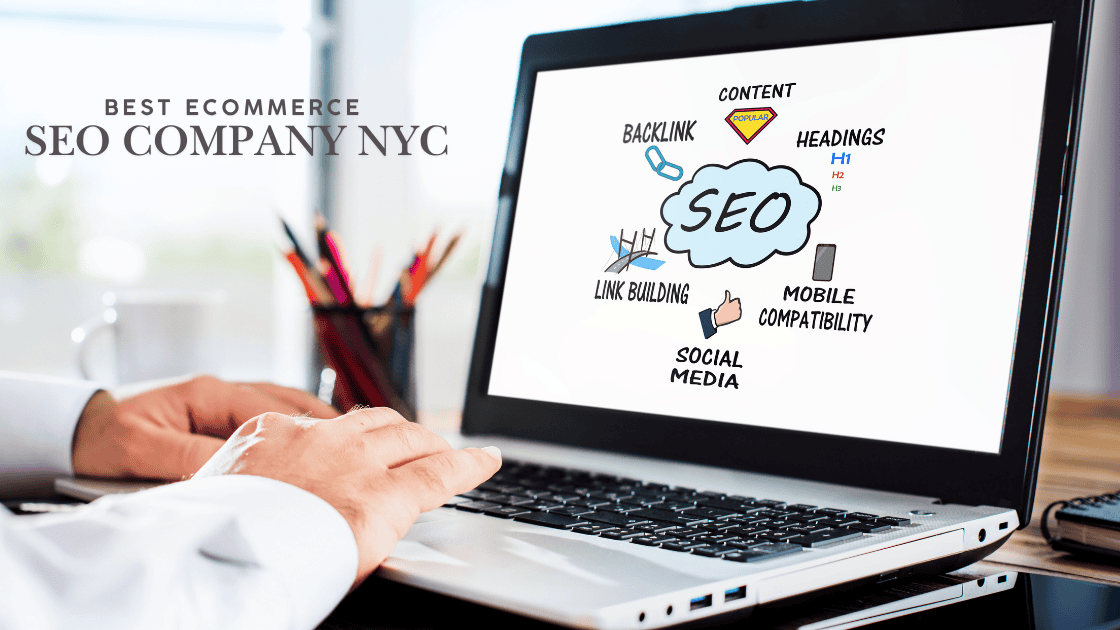
This post isn’t another list. It’s a framework to help you, a busy NYC brand owner, evaluate and find the best eCommerce SEO partner for you.
While we’re a top provider of New York City SEO services, we know that eCommerce SEO is an entirely different beast. It requires a specialized skill set that goes far beyond local search.
What is eCommerce SEO (and How is it Different from Local SEO)?
This is the most important concept you need to grasp.
- Local SEO (for a plumber, lawyer, or dentist) is about dominating one geographic area. The goal is to get one “Map Pack” ranking and one set of location pages to rank.
- eCommerce SEO (for a consumer product brand) is about dominating thousands of national or global searches. The goal is to rank your Category Pages, Product Pages (PDPs), and content for every conceivable search your customer might make.
A local SEO expert knows how to optimize a Google Business Profile. An eCommerce SEO expert knows how to optimize your faceted navigation (the “filter” menu on your category pages) to prevent Google from wasting its crawl budget on millions of useless, thin-content URLs.
They are not the same.
Key Strategies for Successful Consumer Product SEO
When you’re vetting an agency, listen for these strategies. If they don’t bring these up, they aren’t an eCommerce specialist.
1. Optimizing Product Pages vs. Category Pages
This is the core of eCommerce SEO. You have two main types of “money” pages, and they have different jobs.
- Category Pages (The “Digital Storefront”): These pages (e.g., “Women’s Running Shoes,” “Organic Cotton T-Shirts”) are your most valuable. They target broad, high-volume keywords. The goal here is to create a true “hub” of content with descriptive text, helpful guides, and a clear path to your best-selling products.
- Product Detail Pages (PDPs) (The “Virtual Salesperson”): These pages (e.g., “Nike Air Pegasus 41 Blue”) target “long-tail,” high-intent keywords. The goal here is 100% conversion. This involves optimizing product descriptions (often pulling from a PIM), ensuring high-quality images, and implementing a robust review and FAQ schema to dominate the search results.
A great agency will have a clear strategy for both, as Ahrefs explains in this guide to eCommerce strategy.
2. Taming the Technical SEO Beast
eCommerce sites are technical nightmares by default. The #1 skill for a B2C SEO agency is technical mastery.
- Faceted Navigation: As mentioned, those “filter by size, color, brand” menus can create millions of duplicate URLs. A top agency will use rel=”canonical” tags, robots.txt disallows, or meta robots “noindex” tags to control this, focusing Google’s attention on your real pages.
- Site Speed: In eCommerce, speed is money. A 1-second delay can drop conversions by 7%. Your agency must be obsessed with Core Web Vitals, image compression, and code minification. This often overlaps with web design and development, so an agency with both is a huge plus.
- Crawl Budget: Google only has so much time to spend on your site. For a 50,000-product store, you need to ensure Google is spending its time crawling your new inventory and money pages, not old, out-of-stock items from 2018.
3. Content Marketing That Drives Revenue
A generic agency will say, “Let’s start a blog.” An eCommerce agency will say, “Let’s build a content funnel that sells your product.”
- Top of Funnel (Problem Aware): “How to Choose a Running Shoe”
- Middle of Funnel (Solution Aware): “Best Running Shoes for Flat Feet”
- Bottom of Funnel (Product Aware): “Brooks Ghost 15 vs. Hoka Clifton 9”
This content supports your category and product pages, captures links, and builds trust with buyers before they’re ready to purchase.
What to Look for in an eCommerce SEO Company in NYC
You’re a New York brand. You move fast, and you expect results. Your agency needs to match that energy.
Must-Have Skills for a B2C SEO Agency
- Platform Fluency: Do they specialize in your platform? An agency that’s a “Shopify Plus Partner” or a “BigCommerce Expert” is infinitely more valuable than a generic WordPress agency. They’ll know the specific apps, theme limitations, and technical quirks.
- Conversion Rate Optimization (CRO) Mindset: An eCommerce agency’s job isn’t just to get traffic; it’s to help convert that traffic. They should be talking about A/B testing your “Add to Cart” button, improving your checkout flow, and optimizing your UX.
- Data-Driven Keyword Strategy: They should be able to show you how they use data from your PPC campaigns and tools like Ahrefs to find “money” keywords, not just high-volume “vanity” terms.
- A Clear Reporting Framework: This is non-negotiable. Their reports should be in your language: Organic Revenue, Organic Conversion Rate, and Organic Average Order Value. If they just show you “traffic” and “rankings,” they don’t understand eCommerce.
The “NYC Factor”: Why a Local Agency Still Matters
Even for a national eCommerce brand, having a New York City SEO company has benefits.
- Speed & Culture: NYC agencies understand the pace of business here. We’re built to move fast and iterate.
- Brand-First Mentality: NYC is the center of the D2C and fashion worlds. A local agency understands that your brand is an asset. We know how to blend “on-brand” copy with “SEO-optimized” content, a balance many purely technical agencies miss.
- Access & Collaboration: Sometimes, you just need to sit in a room and hash out the Q4 promotional calendar. Having a partner you can meet with in-person is invaluable.
Case Studies: How to Spot a Real eCommerce Pro
Any agency can show you a “traffic went up” graph. When you’re vetting a partner, demand to see an eCommerce SEO case study and ask these questions:
- “Can you show me a client on the same platform as me (e.g., Shopify)?”
- “What was the business problem? (e.g., ‘flat organic revenue,’ ‘poor indexing’).”
- “What technical changes did you make that had the biggest impact?”
- “How did you increase organic revenue and transactions?”
A real pro will be excited to show you this. A pretender will give you vague answers about “increasing traffic.”
Conclusion: Stop Looking for a “Vendor,” Find a “Partner”
You’re not hiring a vendor to “sprinkle some SEO” on your website. You’re hiring a partner to build a sustainable, long-term revenue engine for your brand.
The “best eCommerce SEO company in NYC” isn’t a name on a list. It’s the one that:
- Speaks your language (revenue, conversions, AOV).
- Has the deep technical expertise to handle your site’s complexity.
- Understands your platform (Shopify, BigCommerce, etc.) inside and out.
- Has a proven, transparent process for driving sales, not just traffic.
At 12AM Agency, we are built for the “Chief Everything Officer.” We provide a full-funnel strategy—from our expert eCommerce SEO services to conversion-focused web design—all designed to turn your NYC brand into a national powerhouse.
Ready to see what a true eCommerce partner can do? Contact 12AM Agency for a free, no-obligation strategy session and site audit today.
Frequently Asked Questions
How much does eCommerce SEO cost?
For a serious consumer product brand, eCommerce SEO is a significant investment. In a competitive market like NYC, retainers can range from $3,000 to $10,000+ per month. The cost depends on the size of your catalog (number of SKUs), the technical complexity of your site, and the competitiveness of your product category. Be extremely wary of “cheap” SEO packages.
What’s the difference between Shopify SEO and regular SEO?
“Shopify SEO” is a sub-specialty of eCommerce SEO. It involves all the same principles (technical, content, links) but with a deep, specific knowledge of the Shopify platform. This includes knowing the best SEO apps, how to edit theme liquid files to fix technical issues, and how to optimize Shopify’s “collections” (category pages) and product feeds. If you’re on Shopify, you need a partner who can provide a true Shopify SEO guide and has proven experience.
How do you find the best keywords for consumer products?
It’s a multi-step process:
- Start with “Money” Keywords: These are your category pages (e.g., “men’s leather wallets”).
- Find “Long-Tail” Keywords: These are for your PDPs (e.g., “bifold brown leather wallet with RFID”).
- Analyze Competitors: See what keywords are driving revenue for your top competitors.
- Find “Question” Keywords: Use “People Also Ask” to find questions for your blog and product FAQs (e.g., “how to clean a leather wallet”).
How to choose an eCommerce SEO agency in New York City?
- Ignore “Best Of” Lists: Start by looking for agencies with verifiable eCommerce case studies.
- Verify Their Technical Chops: Ask them to explain (in simple terms) how they would handle faceted navigation and crawl budget on your site.
- Confirm Platform Fluency: Ensure they have deep experience with your platform (e.g., Shopify, BigCommerce).
Find a Culture Fit: Choose a partner who understands the speed and brand-centric nature of your NYC-based business.