




Did you know that websites with a strong focus on user experience can achieve up to 400% higher conversion rates? People often form an opinion about a site within seconds, which means every detail affects how visitors feel and interact with your brand. Understanding the core elements of user experience can transform digital spaces into places where visitors stay longer, return often, and form lasting connections.
Key Takeaways
| Point | Details |
|---|---|
| User-Centered Design is Essential | Effective UX design prioritizes understanding user needs, emotions, and behaviors to create meaningful digital interactions. |
| Core Elements of UX are Interconnected | User research, interaction design, visual design, and usability testing together shape user experiences that are functional and engaging. |
| Strategic UX Enhancements Drive Business Success | Investing in UX can lead to significant revenue growth, customer retention, and competitive advantage, underscoring its importance in digital strategy. |
| Common UX Mistakes Should Be Avoided | Ignoring user research, creating complex navigation, and neglecting mobile optimization can severely hinder user engagement and satisfaction. |
Table of Contents
- User Experience In Web Design Defined
- Core Principles And Elements Of UX
- Types Of User Experience In Websites
- Best Practices For Enhancing Website UX
- Common UX Mistakes And How To Avoid Them
- Impact Of UX On Business Success
User Experience in Web Design Defined
User experience (UX) is the comprehensive journey a person undergoes while interacting with a digital product, focusing not just on visual design but on the entire emotional and functional interaction. According to the design aesthetics research, UX encompasses how users feel, think, and respond throughout their entire website engagement.
At its core, UX design is a user-centered discipline that transcends mere visual appeal. As defined by ISO standards, it considers multiple critical dimensions:
- Utility: Does the website solve the user’s specific problem?
- Usability: How easily can users navigate and accomplish tasks?
- Desirability: Does the design create an emotional connection?
- Performance: How quickly and smoothly does the website function?
Professional UX design isn’t about personal aesthetic preferences but about strategic research and testing. It requires understanding user psychology, analyzing behavior patterns, and creating intuitive digital experiences that feel natural and effortless. This means meticulously mapping user journeys, anticipating potential friction points, and designing interfaces that guide users seamlessly toward their goals.
Ultimately, exceptional UX transforms websites from mere digital spaces into engaging, user-centric platforms that not only meet functional requirements but also create memorable, positive interactions that keep users returning.
Core Principles and Elements of UX
User Experience (UX) design comprises a holistic set of principles and methodologies aimed at creating digital experiences that are not just functional, but deeply meaningful. How UX impacts SEO rankings reveals that these principles extend far beyond aesthetic considerations, directly influencing a website’s performance and user engagement.
According to research in user experience design, the core elements include:
See exactly where your profile stands right now.
Our GBP audit shows your current rank position across your market, how your profile completeness scores against competitors, and the specific gaps holding you back from the Map Pack.
- User Research: Understanding end-user needs through comprehensive analysis
- Interaction Design: Creating wireframes and user flows that guide intuitive navigation
- Visual Design: Implementing accessibility principles like WCAG’s POUR framework
- Information Architecture: Structuring content for logical and seamless user comprehension
- Personas: Developing detailed user profiles to inform design decisions
- Usability Testing: Conducting systematic evaluations through methods like A/B testing
The Kansei Engineering approach introduces a fascinating emotional dimension to UX design. By statistically analyzing user perceptions and aligning design elements with specific emotional keywords, designers can craft web interfaces that resonate more deeply with users’ underlying feelings and motivations. This means moving beyond mere functionality to create experiences that genuinely connect with users on a psychological level.
Here’s a summary of core UX elements and their focus:
| UX Element | Main Focus | Example Application |
|---|---|---|
| User Research | Understanding user needs | Surveys Interviews |
| Interaction Design | Intuitive user flows | Wireframes Navigation patterns |
| Visual Design | Accessibility Visual appeal |
Color contrast WCAG compliance |
| Information Architecture | Logical content structure | Sitemaps Navigation hierarchy |
| Personas | Defining user types | User profiles Empathy maps |
| Usability Testing | Measuring ease-of-use | A/B tests User observation |
Successful UX design is an intricate balance of scientific research, empathetic understanding, and creative problem-solving.
 It requires designers to simultaneously consider technical performance, visual appeal, emotional engagement, and user psychology—transforming websites from static platforms into dynamic, responsive environments that anticipate and fulfill user needs.
Types of User Experience in Websites
User experience is not a one-size-fits-all concept but a nuanced framework that varies dramatically across different digital contexts. Improving website design aesthetics demonstrates how UX can be strategically tailored to meet specific user needs and expectations.
The PACT framework provides a comprehensive approach to understanding UX variations, breaking down experiences into four critical dimensions:
- People: Analyzing users’ physical, psychological, and social characteristics
- Activities: Understanding the specific tasks and goals users aim to accomplish
- Contexts: Examining the situational environments where interactions occur
- Technologies: Evaluating the technological platforms and interfaces involved
Website UX can be categorized into several distinct types:
- Informational UX: Focused on delivering clear, easily digestible content
- Transactional UX: Optimized for smooth, efficient e-commerce and service interactions
- Entertainment UX: Designed to engage and captivate users through interactive experiences
- Social UX: Facilitating community engagement and interpersonal connections
- Productivity UX: Streamlining complex tasks and workflow management
Each UX type requires a specialized approach, considering unique user expectations, technological constraints, and contextual nuances.
The ultimate goal remains consistent: creating digital experiences that feel intuitive, meaningful, and seamlessly aligned with users’ fundamental needs and motivations.
Best Practices for Enhancing Website UX
Website user experience demands a strategic, multifaceted approach that goes beyond aesthetic design. How UX impacts SEO rankings reveals that thoughtful UX design can significantly improve both user satisfaction and search engine performance.
According to research, investing in UX design delivers remarkable returns. Studies demonstrate that strong UX can:
- Raise conversion rates by up to 400%
- Reduce development costs through early issue identification
- Boost user satisfaction and retention
- Provide competitive market advantage
Key best practices for enhancing website UX include implementing Web Content Accessibility Guidelines (WCAG), which ensure websites are:
- Perceivable: Content is easily understood by all users
- Operable: Navigation and interactions are smooth and intuitive
- Understandable: Information is clear and straightforward
- Robust: Website functions across different technologies and devices
Effective UX design requires continuous testing, user feedback integration, and a commitment to creating inclusive digital experiences that adapt to diverse user needs and technological environments.
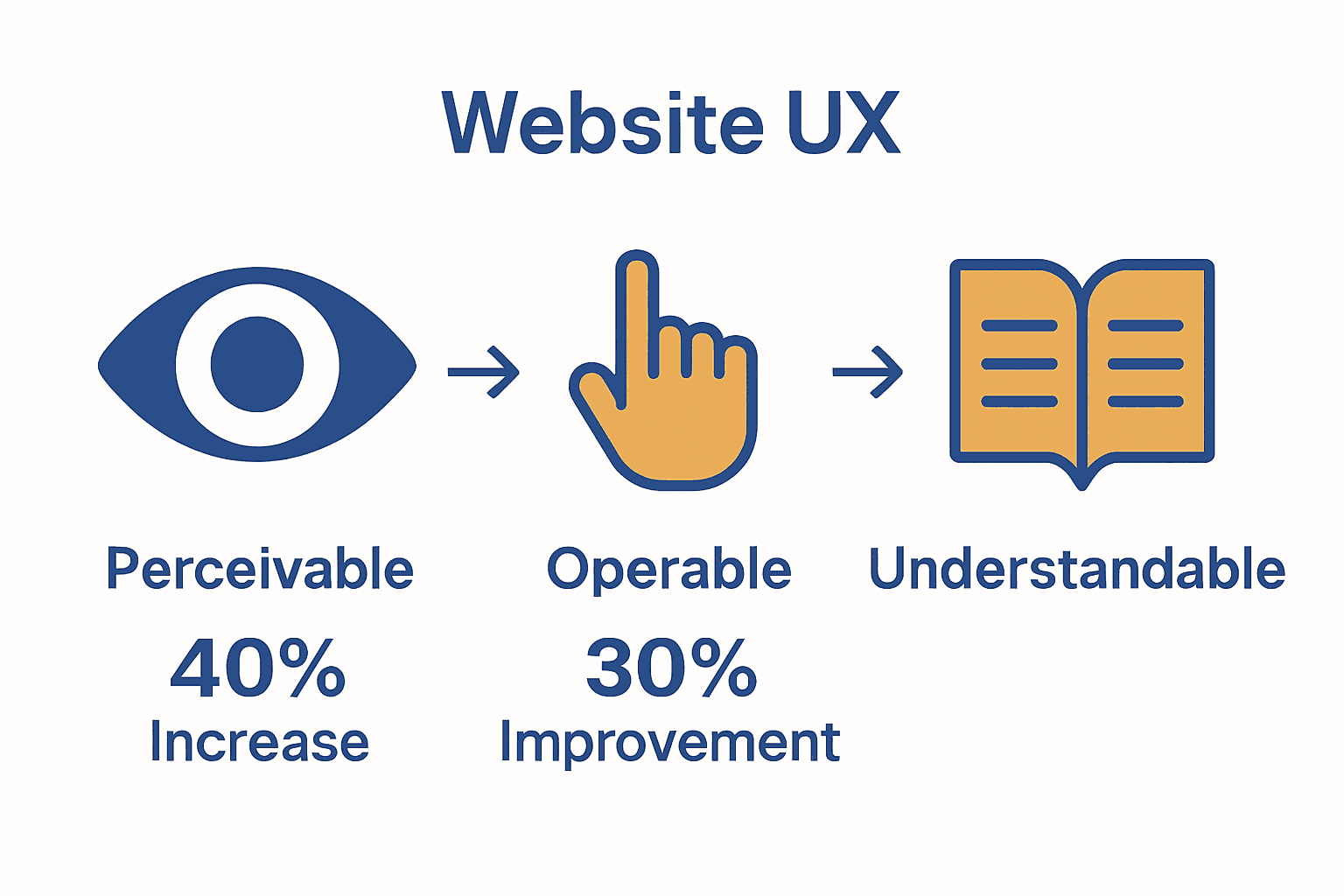 By prioritizing user-centric design principles, businesses can transform their websites from mere information platforms into engaging, responsive digital ecosystems that genuinely connect with their audience.
Common UX Mistakes and How to Avoid Them
User experience design is a delicate balance between creativity and functionality, where even small missteps can dramatically impact user engagement. Improving website design aesthetics highlights the critical importance of strategic design choices.
Research reveals several prevalent UX mistakes that can undermine website effectiveness:
- Ignoring User Research: Designing without understanding user needs
- Complex Navigation: Creating confusing or non-intuitive site structures
- Poor Mobile Responsiveness: Failing to optimize for different device sizes
- Inconsistent Design: Lacking a cohesive visual and interactive style
- Weak Call-to-Action: Unclear or poorly placed interaction points
Some particularly problematic design choices include:
- Oversized sticky headers that obstruct content visibility
- Scroll hijacking that disrupts user control and navigation
- Implementing trendy UI patterns without user testing
- Neglecting web accessibility standards
To mitigate these risks, designers must prioritize comprehensive user research, conduct rigorous usability testing, develop clear style guides, and maintain a relentless focus on creating intuitive, accessible digital experiences. The goal is not just aesthetic appeal, but creating websites that feel natural, responsive, and genuinely aligned with user expectations and needs.
Impact of UX on Business Success
User experience design is no longer a peripheral consideration but a critical strategic driver of business performance. Digital transformation strategies for SMBs underscore how UX can be a pivotal differentiator in competitive markets.
The quantifiable business impacts of exceptional UX are staggering:
- 32% higher revenue growth
- 56% better shareholder returns
- 66% of customers willing to pay premium prices
- Every $1 invested in UX potentially yielding $2 to $100 in returns
Beyond financial metrics, UX delivers transformative business advantages:
- Conversion Rate Boost: Up to 400% increase in user conversions
- Cost Efficiency: Substantial reduction in development expenses
- Customer Retention: Enhanced user satisfaction and loyalty
- Competitive Differentiation: Risk mitigation through strategic design
This is the work we do for you. Every week, without exception.
Managing GBP at this level takes 6–8 hours a week when done right. Nova handles the entire system — posts, photos, reviews, Q&A, citations, heatmap tracking — so you can focus on running your business.
Research reveals an extraordinary potential ROI of up to 9,900% for UX research, positioning user experience not just as a design discipline, but as a fundamental business investment. By prioritizing user-centric design, organizations can create digital experiences that not only meet functional requirements but also forge meaningful connections, driving sustainable growth and long-term competitive advantage.
Elevate Your Website’s User Experience and Drive Real Business Results
Is your website failing to convert visitors despite a visually appealing design? The “Complete Guide to User Experience in Web Design” addresses the frustration of wasted traffic, confusing navigation, and missed growth opportunities due to overlooked UX elements. Many businesses struggle with inconsistent interfaces, poor mobile responsiveness, and neglected user research, all of which can drastically lower conversion rates and undermine SEO. Your users expect seamless journeys, clear paths to action, and a site that works as beautifully as it looks. Why risk letting your competitors get ahead when you can transform these weak points into your biggest competitive edge?
If you recognize any of these UX challenges hurting your business, now is the time to act. Our digital marketing experts at 12AM Agency blend cutting-edge research with creative design and AI-driven strategies to deliver intuitive, high-converting websites tailored to your industry. See how we have helped legal, dental, automotive, and other sectors achieve measurable results through our innovative approach. Ready to reimagine your digital presence and turn your site into a growth powerhouse? Connect with us now and take the next step toward better engagement, stronger conversions, and lasting customer loyalty.
Frequently Asked Questions
What is user experience (UX) in web design?
User experience (UX) in web design refers to the overall journey and emotional interaction a user has with a digital product, focusing on usability, accessibility, and design elements that enhance satisfaction and functionality.
Why is user research important in UX design?
User research is crucial in UX design as it helps designers understand the needs, behaviors, and motivations of end-users, enabling the creation of intuitive and user-centered digital experiences.
How does UX impact a website’s SEO rankings?
A well-designed user experience directly influences SEO rankings by improving user engagement metrics, such as low bounce rates and high on-page time, which search engines recognize as indicators of quality content.
What are some common mistakes in UX design to avoid?
Common mistakes in UX design include ignoring user research, creating complex navigation, neglecting mobile responsiveness, and implementing inconsistent design elements, all of which can diminish user satisfaction and engagement.
Recommended
- 10 Ways to Improve Your Website’s Design Aesthetics Today | 12AM Agency
- How Does UX Affect SEO Rankings? | SEO User Experience
- Can Design Aesthetics Affect User Experience? | 12AM Agency
- How To Prepare For the 2021 Google Page Experience Update
- Effective Website Design: Key Principles and Proven Strategies 2025
- Step by Step Website Launch Guide for Entrepreneurs

